Stress is not a random force that attacks you — stress is fear, and that fear was learned in childhood when your nervous system was calibrated to treat the world as dangerous. If you’ve spent years managing stress with meditation apps, breathing exercises, and productivity hacks — and you still feel like your body is running on high alert — you’re not failing. You’re experiencing the limits of symptom management. The real issue isn’t stress. It’s the childhood emotional blueprint that taught your nervous system to live in a permanent state of fear, shame, and denial.
That’s you — the one who can’t sit still on a Sunday morning without your brain inventing something to worry about, because your nervous system was never taught that stillness is safe.
Stress isn’t something that happens to you. It’s something your body learned to create — and it started decades before your first deadline, your first argument, or your first panic attack.
What Is Stress — And Why Is It Actually Fear?
Stress is the most misunderstood word in mental health. We use it casually — “I’m so stressed,” “work is stressful,” “the holidays are stressful” — as if stress is an external force that attacks us. But stress isn’t external. It’s internal. And when you look at what’s actually happening inside your brain and body during a “stress response,” you find something the mental health industry rarely names: fear.
That’s you — telling everyone you’re “stressed” because saying “I’m terrified” would mean admitting something your survival persona refuses to acknowledge.
When you experience stress, your amygdala — the brain’s fear center — activates your central stress response system. The hypothalamus generates a chemical cocktail of cortisol, adrenaline, and other stress hormones. Your heart rate increases. Your muscles tighten. Your breathing becomes shallow. Your digestion shuts down. Your immune system is suppressed.
This is not a “stress response.” This is a fear response. Your body is preparing to fight, flee, freeze, or fawn — the same survival reaction that would activate if a predator were chasing you. And for most people, this response isn’t triggered by actual danger. It’s triggered by an email from your boss. A text from your partner. Silence from someone you love. A deadline. A disagreement. A quiet Sunday afternoon with nothing to do.
Stress is a euphemism for fear — and by not naming it accurately, the mental health industry has left billions of people managing symptoms of a problem they haven’t been told the truth about, robbing them of the knowledge, skills, and tools to actually heal.
How Your Childhood Emotional Blueprint Created Your Stress Response
Your stress response wasn’t created by your job, your relationship, or your bank account. It was created in childhood — when your nervous system was learning what the world felt like.
That’s you — blaming your career for your anxiety when the real source is a six-year-old’s conclusion that the world isn’t safe.
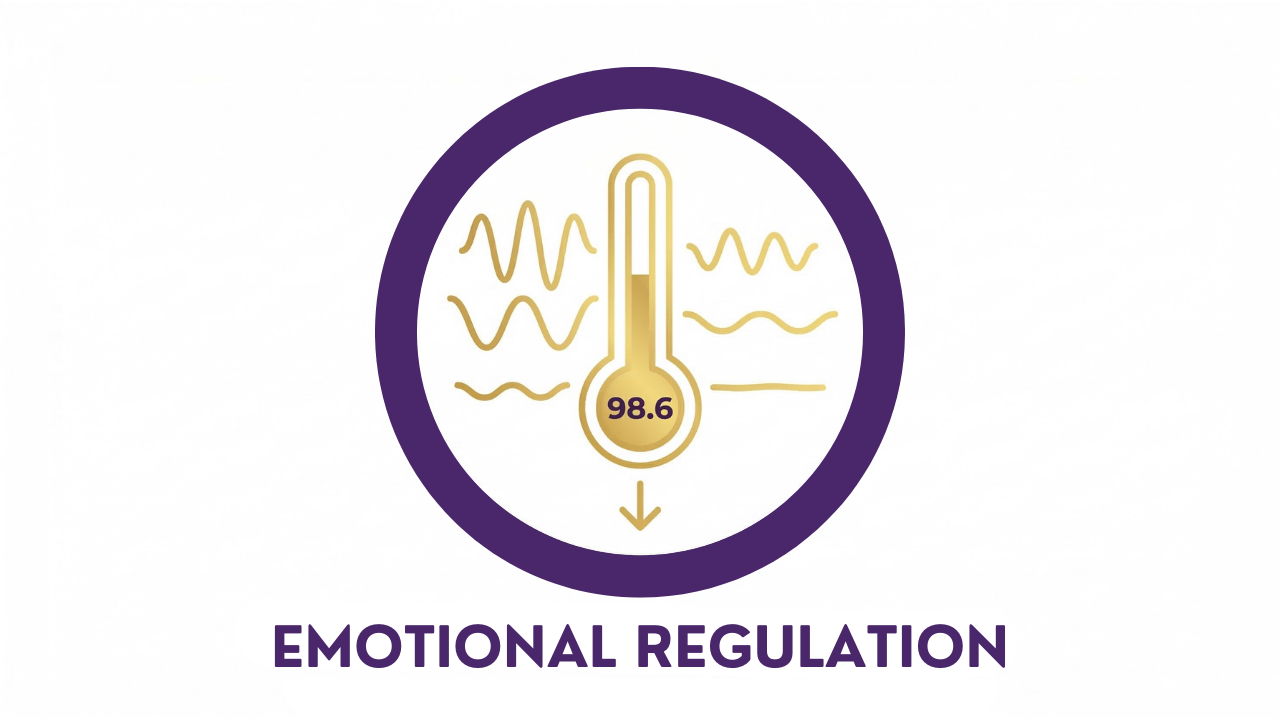
Think of your nervous system like an emotional thermostat. A healthy person’s emotional thermostat should be set at around 98.6 degrees — regulated, calm, responsive. But if you grew up in a chaotic, emotionally unpredictable, or emotionally neglectful home, your emotional thermostat got permanently cranked up to 105 degrees. You’ve been walking around your entire adult life with an emotional fever, but because it happened so gradually throughout childhood, you didn’t notice. It became your “normal.”
Traditional stress management is basically handing you a paper fan and saying, “Here, wave this in front of your face.” You can meditate, breathe, journal, and take bubble baths for the rest of your life — but if you don’t lower the internal emotional thermostat, you will never actually stop being “stressed.” You’ll just get better at performing calm while your body screams underneath.
That’s you — meditating for twenty minutes every morning and still feeling like your chest is tight by noon, because meditation can’t rewire a nervous system that was calibrated for chaos before you could speak.
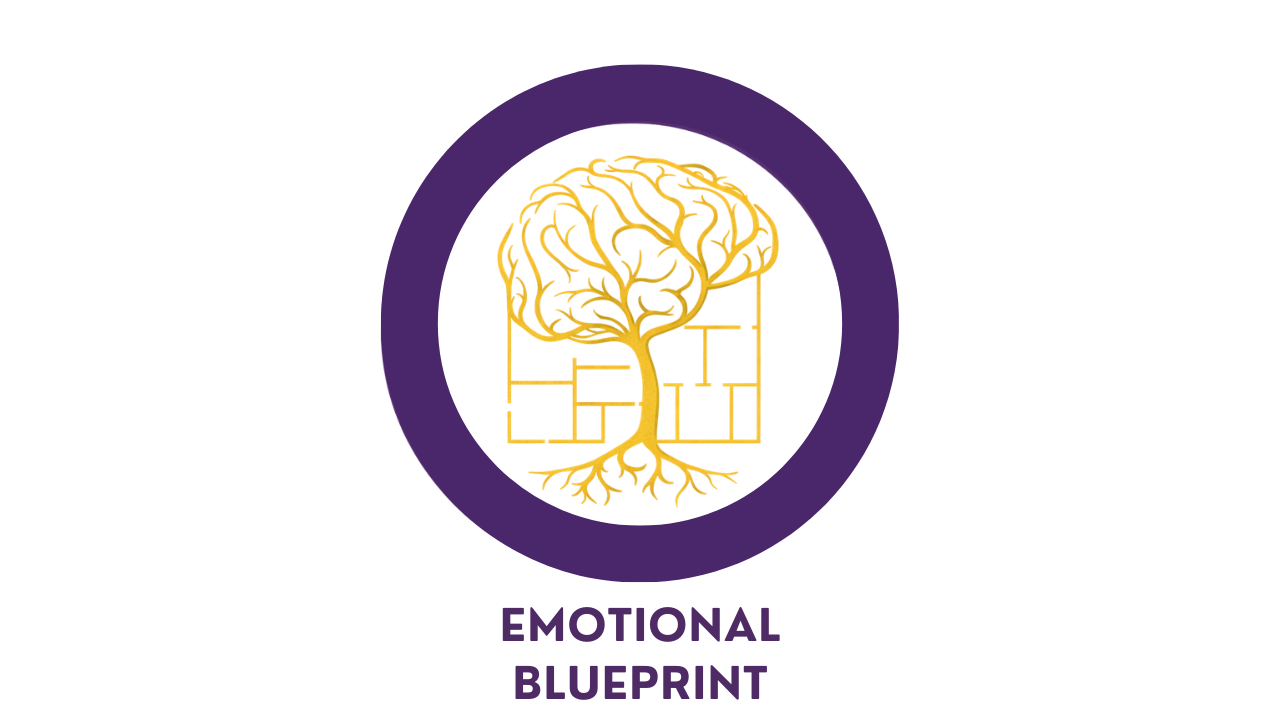
Your brain learned emotions in childhood. It learned what danger feels like, what love feels like, what connection feels like, what rejection feels like. And if your childhood taught you that love was inconsistent, that emotions were dangerous, that your needs were a burden, or that your worth depended on performance — your brain wrote those rules into your emotional blueprint. And your adult stress response is just that blueprint running on autopilot, thousands of times per day.
Your childhood emotional blueprint is the operating system running beneath every stress response you have — your nervous system isn’t reacting to today’s email or today’s argument, it’s reacting to the same fear, shame, and powerlessness it learned before you were old enough to spell your own name.
How the Worst Day Cycle™ Keeps You Trapped in Chronic Stress
To understand why your stress never goes away — no matter how much you manage it — you need to understand the Worst Day Cycle™. This is the neurochemical loop that runs beneath every stress response, every anxiety attack, every sleepless night.
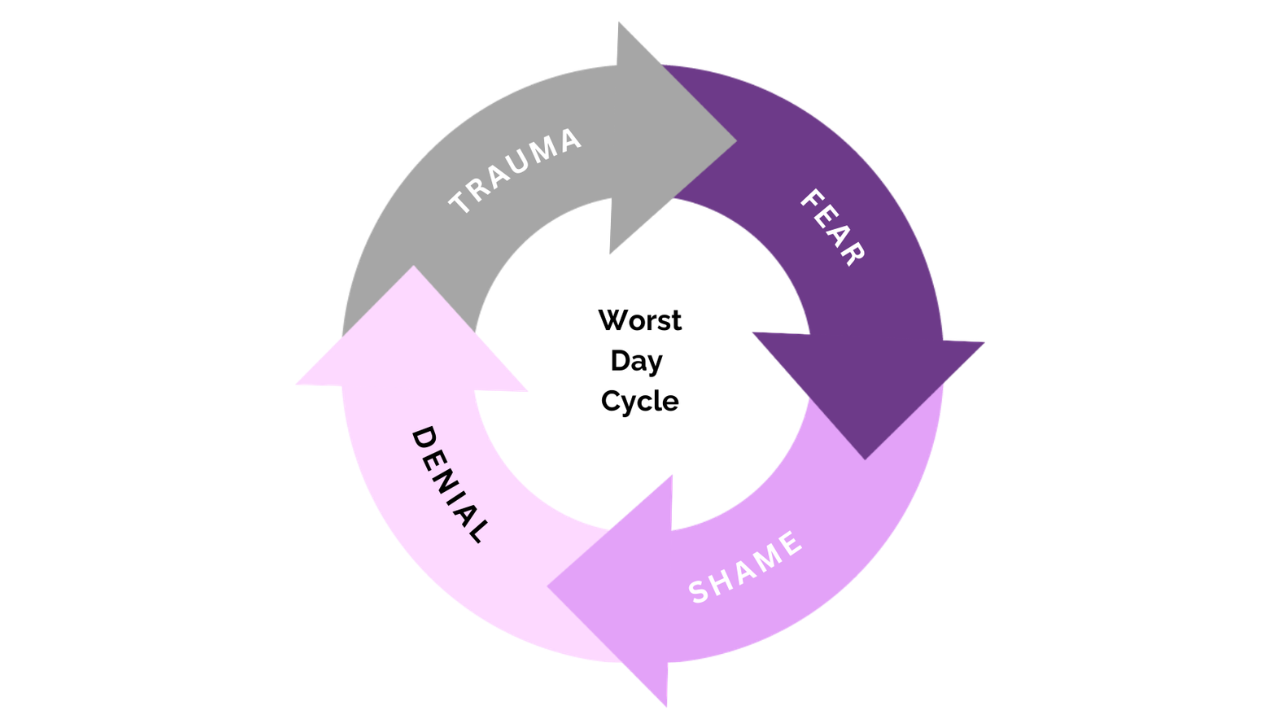
The Worst Day Cycle™ has four stages: Trauma → Fear → Shame → Denial.
Trauma: Any negative emotional experience in childhood that created painful meanings about yourself. It doesn’t have to be dramatic — a parent who was emotionally unavailable, a household where feelings were treated as weakness, a caregiver whose love was conditional on your behavior. These experiences create a massive chemical reaction in the brain and body. The hypothalamus generates chemical cocktails — cortisol, adrenaline, dopamine, oxytocin misfires — and the brain becomes addicted to these emotional states.
That’s you — feeling most alive when you’re in crisis mode, because your nervous system was calibrated for chaos and interprets calm as boring or dangerous.
Fear: Fear drives repetition. The brain conserves energy by repeating known patterns — it can’t tell right from wrong, only known from unknown. Since 70%+ of childhood messaging is negative and shaming, adults repeat these painful patterns in relationships, career, hobbies, health — everything. Your brain keeps pulling you back into the exact same pathways carved in childhood. Think of a sled track in fresh snow — after a few runs, the grooves are so deep that the sled can’t go anywhere else. That’s a neuropathway. You’ve been stuck on that sledding hill running the same neural pathway for decades.
Shame: This is where you lost your inherent worth. “I am the problem.” Not “I made a mistake” — but “I AM the mistake.” This is the core wound underneath your stress. You’re not stressed about the deadline — you’re terrified that if you fail, it will confirm what shame has been telling you since childhood: that you’re not enough.
That’s the shame talking — the voice that turns every minor setback into evidence that you’re fundamentally broken.
Denial: Denial is the survival persona you created to survive the pain. It was brilliant in childhood — absolutely necessary. But in adulthood, it sabotages everything. Denial is what makes you call fear “stress.” Denial is what makes you believe the problem is external. Denial is what keeps you managing symptoms instead of healing the root.
The Worst Day Cycle™ reveals why chronic stress never resolves through management alone — your brain created a neurochemical addiction to childhood emotional patterns, and it repeats those patterns thousands of times per day regardless of your current circumstances.
The Three Root Fears Behind Every Stress Response
Every stress response you’ve ever had can be traced to one of three root fears. These aren’t abstract concepts — they’re the actual nervous system patterns your body learned in childhood. Understanding them gives you the map to your own emotional blueprint.
Fear of Rejection: The fear of rejection is one of our deepest fears. As a species, we will die if we don’t physically and emotionally attach to another human being. When you feel rejected — by a partner, a friend, a boss, a stranger — your nervous system doesn’t process it as an adult inconvenience. It processes it as a childhood survival threat. Because as a child, rejection by your caregivers didn’t just hurt your feelings — it threatened your existence.
That’s you — checking your phone every three minutes because an unanswered text activates the same terror you felt when your parent’s love felt conditional.
Here’s the truth nobody tells you: at no time are you ever actually rejected. A person may say they prefer something or someone else — but that’s their choice about what works for them. It has nothing to do with your worth. When you believe you’ve been rejected, you’ve placed the decision about whether you have inherent worth into another person’s hands. That’s not rejection — that’s the childhood blueprint running.
Fear of Shame (Not Being Enough): The fear of shame is about feeling like you don’t have the knowledge, skills, or tools to handle what’s in front of you. It’s the underlying sense that you’re not capable enough, not smart enough, not prepared enough — that YOU are the problem. And it started when you were a child who genuinely didn’t have the resources to process what was happening — but instead of being given those resources, you were shamed for needing them.
Sound familiar? The feeling that everyone else knows what they’re doing and you’re just faking it — not because you lack competence, but because your childhood taught you that needing help meant you were defective.
Fear of Powerlessness: The fear of powerlessness is about anything you do not control — and your sense of safety disappearing. Think of powerlessness as an “I can’t” statement: “I can’t get someone to hear me, understand me, love me, give me what I need, or see my worth.” How many times did you feel those feelings in childhood? Powerlessness is probably the most devastating of all the fear reactions, because as an organism looking to survive, feeling powerless is primal.
That’s you — lying awake at 2 AM obsessing over something you can’t control, because your nervous system learned in childhood that losing control means losing everything.
Every stress response traces back to one of three childhood fears — rejection (I’ll be abandoned), shame (I’m not enough), or powerlessness (I can’t control this) — and each one was learned before you had the emotional resources to process it.
How Your Survival Persona Uses Stress to Keep You Safe
Your survival persona is the identity you created in childhood to navigate an emotionally unsafe environment. It’s not who you are — it’s who you had to become. And your survival persona uses stress as its primary operating fuel.
There are three survival persona types:
The Falsely Empowered: This persona controls, dominates, and rages. They use stress as fuel — they’re addicted to urgency, crisis, and intensity because those states were the only ones that felt familiar in childhood. They work 80-hour weeks and call it ambition. They micromanage everything and call it leadership. They can’t delegate because trusting others feels dangerous. Their stress isn’t a problem to solve — it’s the only way they know how to feel alive.
That’s you — the one who secretly believes that if you stop being stressed, you’ll stop being productive, and if you stop being productive, you’ll stop being loved.
The Disempowered: This persona collapses, people-pleases, and disappears. They create stress by saying yes to everything, abandoning their own needs, and making everyone else’s emergencies their responsibility. They’re so overwhelmed they can barely function — but they can’t say no because no was never safe. Their stress comes from chronic self-abandonment: every time they swallow their feelings to keep the peace, their nervous system adds another layer of cortisol.
That’s you — the one everyone calls “so selfless” while your body is falling apart from carrying everyone else’s weight.
The Adapted Wounded Child: This persona oscillates between both — controlling one moment, collapsing the next. They swing between manic productivity and total shutdown. Their stress is unpredictable because their survival strategy is unpredictable. They rage, then apologize. They overcommit, then withdraw. They’re exhausted by their own inconsistency.
That’s you — the one who swings between “I’ve got everything under control” and “I can’t handle any of this” and can’t figure out which version of yourself is real.
Your survival persona creates and maintains stress because stress was the emotional environment your childhood nervous system learned to navigate — removing the stress would mean facing the underlying fear, shame, and grief that the persona was built to protect you from.
How Stress Shows Up in Every Area of Your Life
Family: You dread family gatherings. Your stomach tightens the moment you walk through your parents’ door. You manage everyone’s emotions, defuse every conflict, and leave feeling exhausted and invisible. You can’t set boundaries with your family because every time you try, guilt floods your body — the same guilt your childhood taught you to feel whenever you chose yourself over the family system.
That’s you — still performing the role your family assigned you at age six, wondering why holidays feel like emotional combat zones.
Romantic Relationships: Your stress skyrockets in intimate relationships because intimacy activates your deepest fears — rejection, shame, and powerlessness all at once. You either control (falsely empowered), collapse (disempowered), or oscillate between both (adapted wounded child). You confuse the intensity of stress with the intensity of love. You choose partners who activate your childhood blueprint and then wonder why your relationships feel like survival instead of connection.
Sound familiar? The person who feels most “alive” in chaotic relationships because your nervous system mistakes fear for chemistry.
Friendships: You’re the friend everyone calls in a crisis but no one checks on. You give endlessly and receive almost nothing — not because your friends are selfish, but because your survival persona trained you to believe that needing anything makes you a burden. You feel lonely surrounded by people because no one knows the real you. They know your performance.
Work: You overwork because rest feels dangerous. You check email at midnight because disconnecting triggers anxiety. You say yes to every project because saying no might mean you’re not valuable. Your worth is measured in productivity, and your nervous system has convinced you that this is ambition. It’s not. It’s the shame engine running — the childhood belief that you have to earn your right to exist through output.
That’s you — getting promoted for the very stress pattern that’s destroying your health, your relationships, and your sense of self.
Body and Health: Your body has been trying to tell you something for years. Chronic tension in your neck and shoulders. Digestive issues. Insomnia. Jaw clenching. Autoimmune flares. Chronic fatigue. These aren’t random — they’re your nervous system’s last resort when emotional signals have been ignored for decades. Stress isn’t just in your head. It’s in your tissues, your gut, your immune system, your hormones. Your body keeps the score.
Why Stress Management and Coping Skills Can’t Heal Your Nervous System
Here’s the truth the wellness industry doesn’t want you to hear: stress management doesn’t work. Not because the techniques are bad — but because they address the wrong problem.
That’s you — collecting stress management tools like trophies and wondering why your anxiety hasn’t actually changed in years.
Meditation, deep breathing, journaling, exercise, therapy worksheets, gratitude lists — these are all forms of symptom management. They can temporarily calm the surface. But they cannot rewire the emotional thermostat that was set in childhood. You can’t fan your way out of a 105-degree emotional fever.
Here’s why: stress (fear) is not a thought. It’s a biochemical event. Your emotions are neurochemical patterns stored in your body, not intellectual concepts stored in your mind. Thoughts originate from feelings, not the other way around. You cannot think your way out of a nervous system that was programmed for survival before you had language.
That’s you — repeating affirmations while your body is still running the exact same stress chemicals it ran when you were five years old, because affirmations speak to the thinking brain and stress lives in the survival brain.
By not calling stress what it really is — fear — the helping professions have advocated self-deception and false empowerment. We’ve created a culture where being “stressed” sounds impressive, even aspirational. Ask yourself what you assume when someone says they’re “stressed.” The universal implication is that they’re so important, so busy, so accomplished that the demands of their incredible life are overwhelming. We’ve turned a fear response into a status symbol.
Coping skills fail for chronic stress because they manage the symptom (the stress response) without addressing the root cause (the childhood emotional blueprint that calibrated your nervous system to interpret ordinary life as a threat) — you cannot heal a biochemical pattern through intellectual techniques.
How the Emotional Authenticity Method™ Rewires the Stress Response
The Emotional Authenticity Method™ is the daily practice that actually changes your nervous system’s relationship to fear. It works because it targets the body — where stress actually lives — not just the mind.
Step 1: Somatic Down-Regulation. Focus on what you can hear for 15-30 seconds. This isn’t meditation — it’s a nervous system interrupt. You’re sending your body a signal that you’re safe enough to feel. If you’re highly dysregulated, use titration — go slowly, feel a little bit at a time. You’re teaching your nervous system that this feeling won’t destroy you.
That’s you — learning that the first step isn’t “pushing through” the stress. It’s actually pausing long enough to let your body know it’s not in danger.
Step 2: What am I feeling right now? Not “what should I feel?” Not “what’s the appropriate response?” But: what am I actually feeling? Most stressed people don’t know. They’ve been disconnected from their emotions for so long that “stressed” or “fine” is their only vocabulary. Using the Feelings Wheel, you develop emotional granularity — the ability to name specific emotions instead of lumping everything into “stressed.”
Step 3: Where in my body do I feel it? All emotional trauma is stored physically. Your chest tightens. Your stomach drops. Your jaw clenches. Your shoulders climb toward your ears. Locating the feeling in your body is how you move from intellectual understanding to somatic processing — because stress lives in your body, not your thoughts.
Step 4: What is my earliest memory of having this exact feeling? This is where the rewiring happens. You trace today’s stress back to its childhood origin. You realize: this isn’t about today’s deadline. This isn’t about the email. My nervous system is reliving a five-year-old’s terror — and no amount of time management can fix that.
That’s the moment everything shifts — when you see that your “stress” about a work presentation is actually a child’s fear of not being enough, learned the first time your parent rolled their eyes at something you were excited about.
Step 5: Who would I be if I never had this feeling again? This is the vision step. It connects you to the Authentic Self Cycle™ and gives your nervous system a new destination — not more coping, not better management, but actual identity restoration.
Step 6: Feelization. Sit in the feeling of the Authentic Self and make it strong. Create a new emotional chemical addiction to replace the old blueprint. Ask: how would I respond to this situation from this feeling? What would I say? What would I do? Visualize and FEEL yourself operating from your Authentic Self. This is the emotional blueprint remapping and rewiring step — you’re not just imagining a different life, you’re creating a new neurochemical pattern that your brain can become addicted to instead of fear.
The Emotional Authenticity Method™ works because emotions are biochemical events — you cannot change emotional patterns through thoughts alone. Thoughts originate from feelings, not the other way around. Stress management addresses thoughts about feelings. Emotional authenticity addresses the feelings themselves.
How the Authentic Self Cycle™ Replaces Fear With Freedom
The Authentic Self Cycle™ is the healing counterpart to the Worst Day Cycle™. Where the Worst Day Cycle™ traps you in Trauma → Fear → Shame → Denial, the Authentic Self Cycle™ restores your identity through Truth → Responsibility → Healing → Forgiveness.
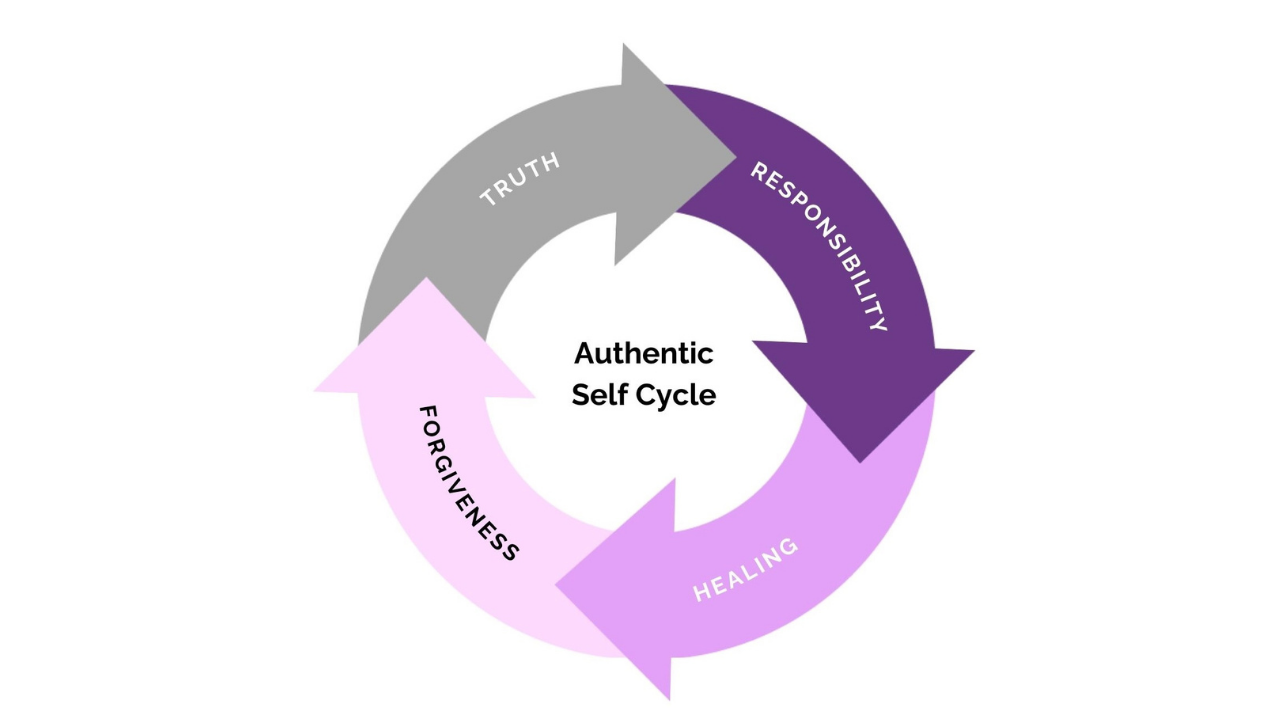
Truth: Name the blueprint. See that “this isn’t about today.” When your heart races before a meeting and your brain says “I’m so stressed,” truth says: “This feeling is from childhood. My boss isn’t my critical parent — my nervous system just thinks they are.” Truth is the moment you stop calling fear “stress” and start telling the truth about what’s actually happening in your body.
That’s the first step out of chronic stress — seeing the pattern instead of being controlled by it.
Responsibility: Own your emotional reactions without blame. “My partner isn’t my parent — my nervous system just thinks they are.” This isn’t about fault. It’s about taking back your power from a childhood that stole it. When you own your reactions, you stop waiting for external circumstances to change so you can feel better. You start changing internally — which is the only place real change happens.
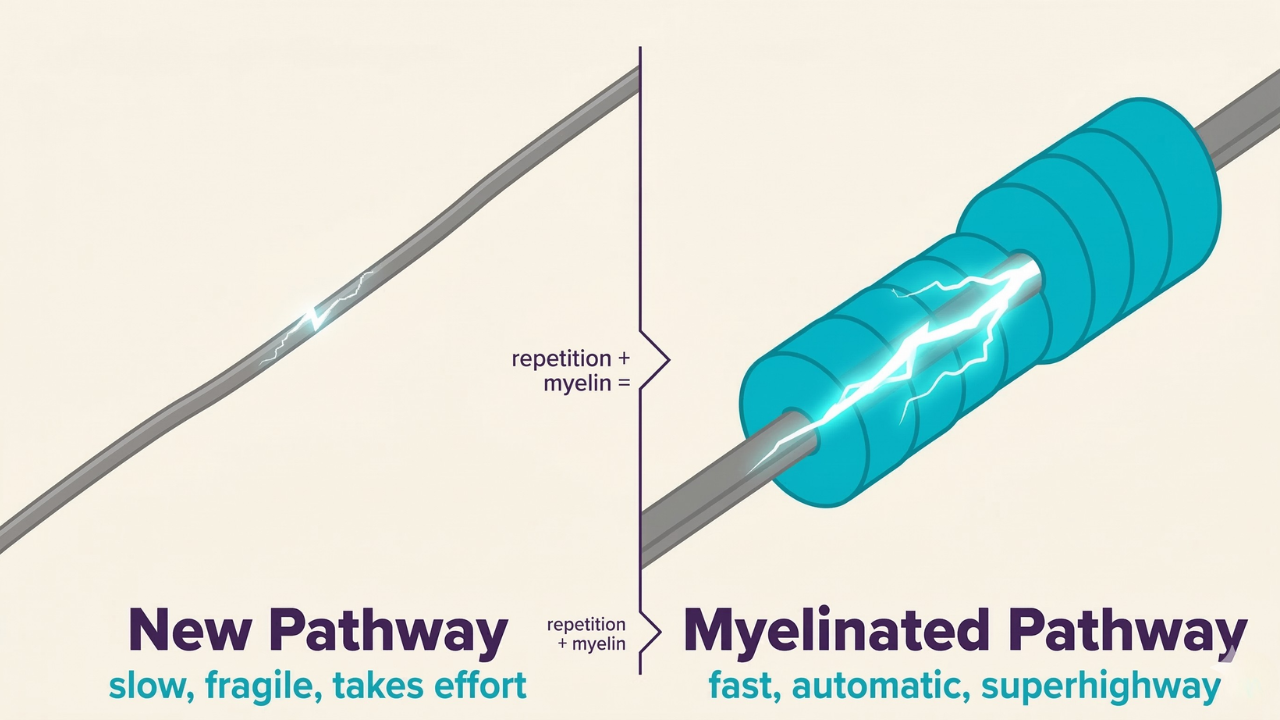
Healing: Rewire the emotional blueprint so conflict becomes uncomfortable but not dangerous, space isn’t abandonment, intensity isn’t attack, and rest isn’t laziness. This is where daily practice does its work — second by second, like the ticks of a clock. The second hand moves in tiny, almost insignificant ticks. But those ticks move the minute hand. The minutes move the hours. Healing works the same way. It’s not dramatic. It’s repetitive. And it’s built on small moments where you choose truth over fear.
Forgiveness: Release the inherited emotional blueprint and reclaim your authentic self. This creates a NEW emotional chemical pattern that replaces fear, shame, and denial with safety, worth, and connection. You don’t become someone new. You finally meet who you always were underneath the survival persona and its addiction to stress.
That’s you — not the stressed, overwhelmed person everyone sees. The calm, grounded human being who no longer needs stress as proof of their worth.
The Authentic Self Cycle™ is an identity restoration system — it doesn’t teach you to manage stress, it replaces the neurochemical pattern that created chronic stress with a new blueprint built on truth, responsibility, and emotional authenticity.
Frequently Asked Questions About Stress and Fear
Is all stress really just fear?
Yes — at the neurochemical level, what we call stress is the body’s fear response. When you experience stress, your amygdala activates the same survival system that responds to physical danger. The hypothalamus releases cortisol and adrenaline — the exact same chemicals produced during fear. The difference is linguistic, not biological. We call it “stress” because society has made fear taboo, especially for high achievers. But your body doesn’t know the difference between a tiger chasing you and a text message that triggers your childhood fear of rejection.
Why does my body feel stressed even when nothing bad is happening?
Your nervous system was calibrated in childhood to interpret the world as dangerous. If you grew up with emotional neglect, unpredictability, or conditional love, your emotional thermostat was set permanently high. Your body isn’t reacting to today — it’s reliving the unhealed emotions from childhood. The Worst Day Cycle™ explains how your brain becomes addicted to stress chemicals and repeats the pattern even in safe environments because familiar pain feels safer than unfamiliar peace.
Can stress be fully healed or just managed?
Chronic stress rooted in childhood trauma can be genuinely healed — not just managed. The Emotional Authenticity Method™ rewires the emotional blueprint at the nervous system level by tracing today’s stress response to its childhood origin and allowing the body to process what was never safe to process as a child. This creates actual neurological change. Management keeps you surviving. Healing lets you actually live.
Why don’t meditation and breathing exercises fix my chronic stress?
Meditation and breathing exercises are forms of symptom management — they temporarily calm the surface but don’t address the root cause. Chronic stress is a biochemical pattern stored in your nervous system, not a thinking error. You cannot think your way out of a body-based fear response. The Emotional Authenticity Method™ works because it targets the body — where trauma actually lives — through somatic processing, not cognitive reframing.
What are the three root fears behind stress?
Every stress response traces to one of three fears learned in childhood: the fear of rejection (I’ll be abandoned and alone), the fear of shame (I’m not enough and never will be), and the fear of powerlessness (I can’t control what happens to me). These fears were first experienced in childhood when you genuinely couldn’t protect yourself, and your adult nervous system continues to react as if those threats are still present. Understanding which fear drives your stress is the first step toward healing it.
How long does it take to rewire a chronic stress response?
Noticeable shifts can happen within weeks of consistent daily practice with the Emotional Authenticity Method™. But rewiring decades of nervous system conditioning takes months and years of repetition — not intensity. Think of a sled track carved into snow over decades. You can’t erase it in a day, but every time you choose a new track, the old one gets a little less deep. The Authentic Self Cycle™ provides the framework for long-term identity restoration beyond stress management.
The Bottom Line
You’re not stressed because life is hard. You’re stressed because your nervous system was programmed in childhood to treat life as a threat.
Every racing heart, every sleepless night, every tight chest, every moment of overwhelm — that’s not a character flaw. That’s a six-year-old’s fear running through an adult’s body. A fear that was never named, never processed, never healed. A fear that got called “stress” because nobody was brave enough to call it what it actually is.
Fear.
And fear can be healed. Not managed. Not medicated. Not meditated away. Actually healed — at the nervous system level, through truth, through feeling, through the willingness to finally stop running from the emotions your body has been carrying since childhood.
That’s you — not the stressed, overwhelmed person your survival persona has convinced you to be. The human being underneath who was born with inherent worth that no amount of childhood pain could actually destroy — only hide.
The stress stops when you stop calling it stress and start calling it fear. The fear dissolves when you trace it to its childhood origin. The origin heals when you finally feel what you were never allowed to feel. And what’s left — underneath all the fear, all the shame, all the denial — is you. The real you. The one who’s been waiting your whole life for someone to say: “You don’t have to perform anymore. You can just be.”
That’s not something you achieve. It’s something you remember.
Recommended Reading
These books complement the frameworks in this article and deepen your understanding of why stress is fear and how to heal it:
Facing Codependence by Pia Mellody — the foundational text on how childhood trauma creates the survival patterns that drive chronic stress.
The Body Keeps the Score by Bessel van der Kolk — the science of how trauma lives in the body, not the mind, explaining why stress management has limits.
When the Body Says No by Gabor Maté — how chronic stress manifests as physical illness when fear responses go unhealed for decades.
In the Realm of Hungry Ghosts by Gabor Maté — the neuroscience of addiction, including the addiction to stress chemicals that the Worst Day Cycle™ creates.
Codependent No More by Melody Beattie — a practical guide to recognizing how people-pleasing and self-abandonment create chronic stress.
The Gifts of Imperfection by Brené Brown — how shame drives the performance-based identity that makes stress feel like proof of worth.
Take the Next Step
If you’re ready to stop managing stress and start healing the fear underneath it, Kenny Weiss offers courses designed for people who are done surviving and ready to live:
Emotional Blueprint Starter Course — Individual ($79) — Your personal roadmap to understanding the Worst Day Cycle™ and identifying which of the three root fears drives your stress response.
Relationship Starter Course — Couples ($79) — For couples ready to stop triggering each other’s childhood fear responses and build real connection.
Why We Can’t Stop Hurting Each Other ($479) — Deep-dive into the Worst Day Cycle™ and how childhood trauma creates the stress patterns that destroy relationships.
Why High Achievers Fail at Love ($479) — Built specifically for high achievers who use stress as fuel and can’t figure out why their relationships keep breaking.
The Shutdown Avoidant Partner ($479) — Understanding avoidant attachment through the lens of trauma chemistry and survival personas.
Tier 1: Mapping the Blueprint ($1,379) — The comprehensive program for learning and practicing the Emotional Authenticity Method™ to rewire your stress response at the nervous system level.
Download the Feelings Wheel — the free tool used in Step 2 of the Emotional Authenticity Method™ to build emotional granularity beyond “stressed” and “fine.”
Explore more: The Signs of Enmeshment | 7 Signs of Relationship Insecurity | 7 Signs of High Self-Esteem | How to Determine Your Negotiables and Non-Negotiables | 10 Do’s and Don’ts for a Great Relationship