Category: Emotional Mastery

  • ⭐Hey You Chase Love (And They Pull Away)

    ⭐Hey You Chase Love (And They Pull Away)

    “You don’t chase them because you love them.
    You chase them because your childhood taught you that love runs away.”

    “You’re not pursuing a partner — you’re pursuing the parent who couldn’t choose you.”

    THE MOMENT YOU START CHASING

    Let’s start with the exact moment it happens.

    Someone pulls away
    maybe a text slows down,
    their tone shifts,
    the energy changes,
    they turn distant,
    or they say “I just need space.”

    Instantly your body:

    • goes into panic
    • your chest tightens
    • your stomach drops
    • your mind races
    • you replay every interaction
    • you start fixing, soothing, chasing
    • you send the long text
    • you over-explain
    • you apologize even when you did nothing wrong
    • you start “performing”
    • you try to become the version of you they’ll choose

    But what you call chasing…

    …is actually your fear hijacking your nervous system.

    This is NOT about them.
    This is not even about adult you.

    This is your unseen childhood wound screaming:

    “DON’T LEAVE ME.”

    THE REAL EMOTIONAL BLUEPRINT BEHIND CHASING

    Chasing doesn’t begin in adulthood.

    Chasing begins the exact moment you learned:

    • love was inconsistent
    • love was unpredictable
    • love was conditional
    • love disappeared
    • love had to be earned
    • love pulled away the moment you needed it
    • love chose work, addiction, siblings, religion, stress, or silence over you

    Chasing love is not a behavior.
    It is a childhood role.

    Here are the five childhood conditions that create adult “chasers”:

    1. YOU GREW UP WITH AN EMOTIONALLY UNAVAILABLE CAREGIVER

    You learned connection comes through pursuit.

    2. YOU LEARNED TO EARN LOVE THROUGH PERFORMANCE

    Achievement = attention.
    Obedience = connection.

    It was all about what you did, how well you did it, and NOT about who you are.

    Your Achievement and Obedience are what got you attention and connection.

    3. YOU WERE THE EMOTIONAL CARETAKER

    Your worth and value came from emotionally fixing, soothing, & stabilizing them

    4. YOU LIVED IN CONFUSION

    Your worth and value came from emotionally fixing, soothing, & stabilizing them

    5. YOU NEVER FELT CHOSEN

    So you lived in the background, like the family pet at the dinner table, yearning for head scratches and any leftover scraps of love.

    So, your adult chasing is simply: Your childhood trying to finish a story it never got to complete.

    THE TRAUMA CHEMISTRY LOOP

    This part is critical.

    Your brain is formed by your emotional experiences as a child, and those experiences create an emotional blueprint we take into adulthood. Id you are a chaser, your brain became addicted to the emotional chemicals produced by:

    • distance
    • unpredictability
    • inconsistency
    • hope + fear cycles
    • intermittent reinforcement
    • longing
    • unreliability

    This emotional cycle of ups and downs is identical to what casinos use.

    Your brain gets dopamine not from love…

    …but from the chase. As a child, you pulled the metaphorical emotional safety and love slot machine handle every day, anxious to see what you were going to get from your caregivers.

    Like the gambler, you were desperate to win. And you are still desperate to win. That is why you keep picking people who mirror the emotional environment of your childhood.

    Now you know why:

    • The avoidant feels magnetic
    • The unavailable feels intoxicating
    • The distant feels “deep”
    • The stable feels boring
    • The present feels unsafe
    • The consistent feels foreign

    Your nervous system isn’t seeking love.

    Your nervous system is seeking what it survived.

    That is because our brains are designed to repeat what they already know emotionally. It follows the emotional blueprint of what we experienced as children. This is what I call The Worst Day Cycle.

    THE WORST DAY CYCLE BEHIND CHASING

    Let’s break it down:

    TRAUMA

    The moment a caregiver didn’t choose you.
    Your blueprint has been formed, which sends you into stage two.

    FEAR

    Your brain and body become chemically addicted to the emotional state of chasing. And the chasing sends you into stage three. SHAME

    You internalize:

    • “If I were enough, they would stay.”
    • “I’m the reason they pull away.”
    • “I need to fix myself.”
    • “I’m unlovable unless I earn it.”

    SHAME

    Your emotional blueprint becomes internalized with mantras like:

    • “If I were enough, they would stay.”
    • “I’m the reason they pull away.”
    • “I need to fix myself.”
    • “I’m unlovable unless I earn it.”
    • So you only have one option. To get any emotional scraps from the dinner table of love,
      you have to cast off your authentic self, redefine what is hurtful, and call it love.
    • Now, the only way you can achieve that and protect yourself from the overwhelming
      emotional pain you are experiencing is to move to stage four.

    DENIAL

    This is where the child you came up with a brilliant life-saving strategy. To protect your authentic self from the pain and loss of care, you create a protective persona of:

    • the fixer, and the giver
    • the perfect partner
    • the calm one
    • the stable one
    • the one who always forgives
    • And the emotionally responsible one

    You chase because your childhood emotional blueprint persona learned that the only way to survive was to chase.

    It’s not who you are —
    it’s who you became to survive.

    WHY YOU CAN’T STOP CHASING EVEN WHEN YOU KNOW BETTER

    You can’t stop because your nervous system was programmed to interpret distance as danger.
    Withholding = abandonment
    Silence = rejection
    Space = disconnection

    So when someone pulls away, your body doesn’t think:

    “Maybe they’re busy.”

    Your body thinks:

    I’m losing love.
    I’m losing worth.
    I’m losing safety.

    Fear takes over,

    Shame floods your system,
    your adult self disappears,
    and your childhood wound starts frantically pulling on the slot machine handle, desperate to win love, finally

    So, you see, you’re not chasing THEM.

    You’re chasing the FEELING of being chosen.

    THE CHILD YOU LEFT BEHIND

    Now here is the tough truth that most people won’t tell you.

    The adult who’s chasing isn’t really you. It is the hurt, unhealed parts of you.
    Depending on your specific childhood environment, it might be

    • the 5-year-old who felt invisible
    • the 7-year-old who never felt picked
    • the 9-year-old who earned approval through perfection as a student or athlete
    • the 12-year-old who emotionally soothed your parent after the divorce
    • the child who learned their needs were inconvenient
    • the child who believed:
      “If I can just be good enough, they will finally choose me.”

    So every time your partner withdraws…

    …your inner child jumps forward and says:

    “I can fix this.
    I can be better.
    I can make them stay.”

    That child STILL doesn’t know you survived.
    Still doesn’t know you’re an adult now.
    Still doesn’t know love can be safe.

    What that means is that chasing is your child trying to rewrite history and find someone to be the caregiver and caretaker of your abandoned heart.

    So, how do you stop the chasing pattern? You can’t do it with superficial strategies that treat the symptoms, like Emotional Intelligence but only with TRUE emotional reprogramming that heals the core.

    The process you are looking for is the Authentic Self Cycle, which is built on developing Emotional Authenticity. That is because Emotional Intelligence has you focus on your emotions today, not the root, the place where all emotions and feelings are learned, childhood, only Emotional Authenticity does that.

    So let’s begin with the Authentic Self Cycle and step one…

    HOW TO STOP CHASING

    Here is how you stop the chasing pattern — not the superficial version, but the TRUE emotional reprogramming: The Authentic Self Cycle

    1. TRUTH

    Identify the original moment you felt:

    “I’m not chosen.”

    This is the root wound behind every chase. This is a critical step because it breaks the wall of denial and exposes the false persona your emotional blueprint had to choose to survive.

    2. RESPONSIBILITY

    Not blame. Not shame. You did the best you could with what you knew at the time.
    So responsibility looks like….

    “This survival pattern kept me safe.
    And now it’s time to let it go.” And I will do that by committing to a process and plan of healing.

    3. HEALING — This is where the Emotional Authenticity Method comes in

    It shows you how to rewire the chasing response by:

    • Showing you how to reparent your inner child and become the parent who chooses you.
      And when you do that, you can…
    • break the shame story
    • heal the fear-based chemical addiction
    • Confront the emotional memory your body is still carrying
    • Create emotional safety inside your own nervous system
    • Teach your body that stability = safety
    • Build tolerance for consistent love

    When you become the parent you needed for yourself, safety becomes familiar, and chasing becomes unnecessary. And the combination of the first three steps leads you into

    4. FORGIVENESS

    Forgiveness is not about focusing on the partner you chased.

    Forgiveness is about the child who had to chase love to survive.

    Forgiveness is the moment you can be the parent to your wounded child and say:

    “I appreciate you for coming up with such a brilliant strategy. You are so smart and so capable, to have figured out how to survive.

    But I want you to know I am here now. It is my job and my promise to you is that I will work every day to become the parent you needed so you can feel safe and not feel like you have to take over anymore. You no longer need to earn love; I will give you all of mine.”

    YOUR JOURNEY TO BEING YOURSELF

    Let’s wrap this up.

    I hope you can now see that when you use the 4 Pillars of the Authentic Self Cycle, through the emotional authenticity method, what you discover that…

    “You do not chase because you’re needy.
    You chase because your childhood taught you that love disappears.”

    But…. More importantly. You deserve to be chosen not by others, but by yourself.”
  • Depression Solutions Without Medication

    Depression Solutions Without Medication

    Depression Solutions Without Medication

    Depression is a debilitating condition that affects millions of Americans. If you’re feeling the burden of depression, today’s Best Day Blog article will provide you with depression solutions without medication. Make sure to check out the in-depth video linked at the bottom.

    In it, we’ll discuss tips and tricks to help those dealing with depression or living with anxiety cope in their day-to-day life. These strategies for coping will work whether you have depression, anxiety, PTSD, or another mental or emotional illness. Unfortunately, in almost all cases, depression medication doesn’t solve depression. In many, it makes the depression worse, and in almost all cases, when coming off it, this is undoubtedly so.

    Medication only medicates the symptoms, but it doesn’t deal with the root cause – and this goes for all depression medications, of which many work only on a psychosomatic basis. There can also be significant negative side effects from depression medication, so you’re in the right place to look for real solutions and answers.

    There are several contributing factors to the issues with depression treatment: problems in the medical community and problems with the way we look at treating mental and emotional health. 

    What are some of the myths and facts about depression?

    Modern research into how the brain works shows us that the way we feel and think creates our biology, which means the old adage that faulty brain chemistry creates depression is mostly wrong. You might be genetically predisposed, but that does not mean it is predetermined. It takes faulty feeling and thinking to trigger that gene of depression to activate. One of the medical issues is that it only looks at biology – take this anecdote as a way of explaining this:

    A car has many different components that make it run smoothly – an engine, tires, windows, batteries, oil, gas, clutches, etc. – but using the anecdote of the car in medicine, they only look at the engine. If the car has a flat tire, prescribing a pill would be akin to ‘Put more gas in the tank!’ rather than looking at the actual issue causing the car to run dysfunctionally. The car will still run, but the root cause of the issue has not been addressed. Pills are not always the most effective treatment for depression. They might be an initial starting point so a person can begin addressing unhealed emotional pain’s root cause.  

    Why won’t your doctor tell you this? Medical research and medical schools are funded by huge pharmaceutical companies, meaning that most doctors are trained to become simply a ‘pill mill.’

    How does illness happen?

    Illness happens when cells break down and cells have receptors. Think of it like the texture of an orange, all the little bumps. Those bumps are the receptors. If there are 1 million receptors on the cell, depression might only 500 of those receptors. Sadly, medication doesn’t just attach to the “depressed” receptors. It attaches to ALL of the receptors This is what causes significant side effects and leads to an activation of the ‘healthy’ cells unnecessarily. So now, all of the latent conditions that may be sitting in the cell receptors that weren’t activated become activated and cause other issues on top of the one you were initially trying to deal with. This leads to further prescribed medication and the start of a long journey of living in a medicated state – this isn’t helpful for a happy and healthy life. 

    Health needs to be bio-psycho-social, a holistic approach that understands that our health isn’t predetermined. We must start bringing in the psychological and emotional factors that create our medical conditions because stored emotional energy creates illness. This is what Candace Pert talks about in her book ‘Molecules of Emotion’, stating ‘If you look underneath your depression, you’ll find anger, If you look underneath your anger, you’ll find sadness, and under sadness is the root of it all – what’s really masquerading all the while – fear.’

    Where did we learn to be afraid?

    Childhood. We’ve all been through perfectly imperfect parenting, and while many believe their childhoods were perfect, it’s not true. Every single one of us has been through levels of shame and trauma, even when a parent was trying their hardest with our upbringing. We are all human. We all make many daily mistakes, even loving parents. Parents are not perfect, and those imperfections leave lasting wounds. Depression results from attempting to minimize, justify and ignore this fact and truth.

    But what happens to a child experiencing that? Alice Miller has several books that provide a deeper understanding that at the heart of this depression is the inability to express emotions. In ‘The Body Never Lies,’ she says. “The point is that the fatigue characteristic of such depression reasserts itself every time we repress strong emotions when we play down the memories stored in the body and refuse them the attention they clamor for.”

    We are depressed because we have suppressed, repressed, minimized, and ignored the anger, sadness, and pain of our childhood. Almost everyone is told growing up that it is not okay for you to be a child, to be imperfect, to feel – most often, children are told to shut down their feelings. 

    The Solutions For Depression

    If you’re here reading this, you know medication has not solved this for you. Because you’ve lived it and know the truth, let’s get to the solutions. 

    Depression Solution Number One:

    Pick up Beverly Engel’s book ‘The Emotionally Abusive Relationship.’ This will help those who are finding it difficult to stomach the truth that you learned this in childhood. Most likely, you may not be aware of what creates perfectly imperfect and dysfunctional parenting. This book will help you understand the different parenting styles and learn more about how they impact you today.

    Depression Solution Number Two:

    Purchase Alice Miller’s books ‘Free From Lies: Discovering Your True Needs.’ ‘The Drama of the Gifted Child, and ‘The Body Never Lies. These three books will help you to discover how the trauma from your childhood is the cause of your depression. 

    It has been proven that genes do not predetermine our life.  The emotional environment the gene is placed into that triggers and activates a gene to ‘switch on and create illness. Therefore, healing depression requires developing new tools, skills, and knowledge to create a new emotional environment to change the cell’s genetic makeup.

    Depression Solution Number Three:

    Go to this link to access my free resources on my website. Look at the Feelings Wheel and the ‘10 Simple Steps to Heal Emotional Pain’. These will help you become an expert in Emotional Authenticity. Understanding how these emotions create biology, realizing that you cannot change depression with THOUGHT! You can only change it with emotion.

    So use the feelings wheel to track your feelings for the next few days. Start with tracking how you feel and where in your body you’re feeling it 3-5 times a day. We store emotional trauma within our body physically, which leads to illness. Becoming aware of where it is in your body will really help.

    Ask yourself when the first time you had this feeling was. Can you remember and trace it back to childhood – that moment you experienced the sentinel feeling? These emotional expressions have been diminished, and part of the healing journey is learning to express these emotions healthily. 

    My ‘10 Simple Steps to Heal Emotional Pain download walks you through the complete healing journey. It gets to the core solution rather than attempting to medicate the symptoms. 

    My video ‘How to Release Emotional Pain’ works together with the above printout. 

    These three free resources will help you to get off the medication and deal with the source of the problem. 

    [embedyt] https://www.youtube.com/watch?v=VFAB-7OmkVo[/embedyt]

  • How To Know If You Have Childhood Trauma?

    How To Know If You Have Childhood Trauma?

    How to know if you have childhood trauma? Most people incorrectly assume that childhood trauma is only created by the typical devastating mistreatment often written about in the media and news. However, it does not require such devastation, and therefore, all of us have been through childhood trauma. This Best Day Blog article aims to bring that truth into reality and consciousness. Living in truth is critical for us to live the happy, healthy, and safe lives we deserve.

    Childhood trauma happens more often than you think?

    As a child, how often were you told, ‘Not right now, just go watch tv, go play in your room, and I’ll be up in a minute!’ How many times as a parent have you said that? If you’re like an average parent, you’ve probably said those same comments thousands of times to your children. 

    These experiences are traumatic.

    It might seem nit-picky to say little comments like those are traumatic. Still, the accumulation of the emotional injuries we all experience are traumatic to our brain and body.

    Parenting is Hard!

    Of course, there will always be examples of severe trauma that can result in very difficult adulthoods and childhoods, but the small stuff causes trauma too. The little comments, looks, abandonments – it’s all normal. Parents get exhausted, feel drained, and need a moment to themselves. It’s ok to admit that sometimes we don’t have the energy to parent. But, in those moments, your child knows it. 

    This brings to light how overwhelming the job of parenting can be. To leave your child without any wounds, you need to be perfect in every moment, which isn’t humanly possible. But, you are not to blame – no parent is to blame.

    Parents must live in truth and take responsibility.

    It’s essential to be able to listen to your child and what they say about your imperfections. Admitting our mistakes is not easy, but as parents, we must take ownership of our perfect imperfections and accept that we leave wounds in our children. Furthermore, any struggle that our child is having is, in part, a direct result of our perfectly imperfect parenting of them. For a parent not to acknowledge that mistakes were made and that those mistakes are showing up in their child’s life is the most traumatic. That is a complete lack of regard for a child’s inherent value and worth. Denial on that level communicates that the child doesn’t even exist.  

    By learning to do this, you can teach your child not to be falsely empowered but rather own up to when we’re wrong with humility and grace. 

    Parents often reach out to me with issues their children are facing. It’s as though they think their child was raised in a vacuum. For a long time, behavioral science has shown that we become our childhood, particularly the first three years of life. Those years are critical, but so many people are oblivious to this fact – your child’s struggles directly reflect your internal struggles, no matter their age. If you see this, it’s time to look in the mirror, look inwards, and start your healing journey to recover from what you’re struggling with. 

    To help your child heal your childhood trauma. 

    Healing can take shape in many different ways. It starts with recognizing the patterns and behaviors we are passing down. This requires an awareness of our childhood experiences. We can then make an intentional effort to change by taking ourselves out of the loop of habit. The result is a positive impact on our child’s emotional development. 

    Unless someone takes responsibility for generations of perfect imperfections, all being passed through you to your child, the pattern will continue. This requires confronting our denial and mastering our emotions.

    If you are interested in beginning your healing journey, these links will help you

    1– My book, Your Journey To Success

    2– My Complete Emotional Authenticity Method

    3– My Perfectly Imperfect Private Group

    4– My Private Coaching

    Learn more here:

    [embedyt] https://www.youtube.com/watch?v=Kk3upkD2QXk[/embedyt]

  • Three Mental Health Awareness Tips

    Three Mental Health Awareness Tips

    It’s no secret that more and more people are struggling with mental health issues these days, and frankly, most people do not see results when they try to address this. So in today’s Best Day Blog article, I’m going to share three counterintuitive tips to train your mental health awareness.

    What’s the first thing we’re all trying to achieve? A life with no pain. And how do we try to do that? By trying to cancel out anything and everything that could cause pain! And this is the problem! The problem with the mental health industry is that they are trying to get you to avoid pain when in fact, the solution is quite the opposite – we must become experts in seeking out pain – let’s get into that.

    1- Seek Out Pain and Become an Expert

    Don’t believe me? Let me share three reasons why this is the key to your positive mental health journey. Firstly, what does every CEO, athlete, politician, actor/actress – anyone who has ever achieved anything significant – tell you about how they achieved it? More often than not, it’s a huge, painful event in their life that led them to figure out a solution – their pain led them to success.

    The problem is that once you’ve been through an experience like this, most people say that they would never want their kids to experience that sort of pain! This is incredibly ironic because they know that they only got to where they are today because of the experience and growth that came from their distress. Of course, it is not the intent to stop people from growing and being successful, but what people don’t realize is that by shielding yourself from pain, you are stunting your growth and development and may never reach your full potential.

    As well as this, it is simply not realistic. The solution to life always has, and always will be, to conquer our pain. The world suffers because no one has taught us how to deal with it.

    The story of Jesus is the perfect example of this and also an example of a misunderstanding of the message being shared. Jesus is revered as, in many religions and cultures, the ideal person being under the watchful eye of God Almighty. However, even under God’s guidance, Jesus suffered horrifically but was able to move through his pain and was still viewed as perfect, as someone who never made a mistake. This pain all leads him to be nailed to the cross, and at this moment, he shouts ‘”My God, my God, why have you forsaken me?’. At this moment, Jesus had admitted the truth, that even he did not believe in his Father, in God, and that he had to have a cataclysmic event to see the truth – the solution was to admit that even he did not trust his Father. The moment he did, he was able to surrender to the cross and rise again.

    Whether you are agnostic or atheist, the same is true. The resurrection happens for all of us when we get to the other side of the pain, yet everyone avoids pain at any cost. However, you cannot become an expert until you learn Emotional Authenticity and how to journey through the pain (not around it). My book ‘Your Journey to Success‘ takes you through this journey and shows you how to face your pain.

    The pills and medicine and advancements in medical care are not helping. On the contrary, the mental health crisis is getting worse – because we keep teaching people not to face their pain. The bottom line is this – for every person who has ever succeeded, the happiest moment of their life was when they conquered what they were struggling with. As such, the solution is not to deny pain. It is to embrace it.

    It’s time to develop the knowledge, skills, and tools to help you navigate your pain. Find teachers and experts that provide you with these. Anyone who claims to be an expert but tells you to run from the pain is a person to be avoided! It would be best to have a teacher who will show you how to go through it and become an expert in overcoming it.

    2- Weight is about pain.

    Weight management would seem to be a physical thing – something you manage by eating in balance and moving your body, but so many people don’t understand that weight is about pain. Dr. Felitti started a study on people who would yoyo in their weight repeatedly and figured out that people eat because they are in pain. Much like medication, food is used to alleviate symptoms. However, neither heals the root cause of internal issues. A research patient said to Felitti,’ you know we eat because we’re in pain?’ and the Adverse Childhood Experience study was born from that moment on.

    The study has been replicated multiple times worldwide with the same results, and those results show that nearly 70% of us have been through childhood trauma and, of that, almost 70%, 88% of them have been through 2 or more experiences of childhood trauma. The problem is that no one talks about this or the side effects of this trauma on us. As such, no one has the knowledge, skills, or tools to deal with it proactively and productively. So instead, many try to medicate it away will food and medications.

    So, the counterintuitive step number two is that we need to become emotionally literate to work with the pain. Most people don’t even know what childhood trauma is – from simple, unintentional abandonment to catastrophic abuse. Almost everybody has experienced trauma of some sort that is, on the whole, unhealed. Studies have shown that up to 70% of adults don’t even feel. They are not in touch with what’s happening inside them, and to the childhood trauma they are carrying around – they are detached.

    This unhealed trauma the majority of people carry causes people to binge eat, drink too much, and generally live unhealthy lives and make unhealthy choices. It’s childhood trauma. It’s not mental health awareness. It’s our feelings that we’re struggling with! We are sad, anxious, depressed, or low – these are all healthy feelings to feel. We can start healing when we can label them as feelings rather than the more obscure or often-stigmatized ‘mental health.’ In my opinion, the struggle is with emotional health – it’s not mental health.

    The Scales of Injustice

    We create what I call the Scales of Injustice because we won’t admit what things are – i.e., calling fear – stress, and emotional health – mental health. On one side, we are all in massive denial because we won’t deal with the truth. When we are not in the truth, we don’t know who we are, so the other side of the scale is low self-esteem. None of us want to admit our true feelings to ourselves, let alone others, and none of us have the self-love and self-esteem to face up to what is the truth.

    As such, addiction, obesity, gambling, illness, and disease are all on the rise. If we could face our denial and tell the truth- ‘I’m scared,’ or ‘I’m feeling inadequate’ – look at what happens. Our self-esteem rises because we can admit that we have weaknesses and perfect imperfections. Truth creates justice.

    Emotional Authenticity creates the truth we need by showing us how to admit that we have feelings and stop sugar-coating those feelings with ambiguity.

    3- Become Negative to Be Truly Positive

    False positivity is not the answer. Studies have shown that if you tell a depressed person to use affirmations, for example, their depression skyrockets – it has the opposite effect – because it is a lie. The Scales of Injustice are swayed towards denial and, therefore, low self-esteem.

    Yes, depression is a chemical imbalance, but the chemical imbalance most often comes from childhood trauma that has never been healed. The repeated firing of the emotional trauma is what causes depression, as well as anxiety – this is what the ACE study by Dr. Felitti shows. However, we are not making progress because we’re not talking about the real issue – that childhood trauma is at the heart of all of this. Instead, with each year, we become more obese and more drugged.

    With Emotional Authenticity, a person can get excited about feeling the pain! Because when you face it head-on, you grow the most. So you start to look forward to uncovering new parts of yourself and conquering things you could never have before. You then create a new definition and relationship with pain – this is a massive part of the mindfulness movement, an understanding that you can allow pain to flow through you and let it go, rather than resisting and denying it.

    To continue avoiding pain is to aid in escalating addiction, health problems, illness, and diseases. So instead, learn Emotional Authenticity and learn to navigate pain, remembering that going through the pain will teach you much more than hiding from it. Once you’ve done this, you’ll no longer worry about pain, you’ll no longer avoid it, and your life will change for the better.

    Are you looking for more solutions? Pick the one that suits your needs best!

    1- My book, Your Journey To Success

    2- My Complete Emotional Authenticity Method

    3- My Perfectly Imperfect Private Group

    4- My Private Coaching

    Learn more here:

    [embedyt] https://www.youtube.com/watch?v=41qt0h3aqao[/embedyt]

  • How To Forgive Yourself

    How To Forgive Yourself

    Are you sick and tired of now knowing how to forgive yourself? I truly believe that nobody deserves to live with that sort of pain, so I will share two different ways to help heal your heart and soul by releasing the guilt and shame you feel.

    We’re all perfectly imperfect, and learning how to embrace this, along with the tips I’m going to give you in today’s Best Day Blog article, will help you start the journey of forgiveness to have a happier life!

    How to start forgiving

    Firstly, I recommend thinking of your favorite animal! What animal do you love – a cat, a dog, a rabbit, a horse? I love Labrador puppies – to me, they are soft, cuddly, and filled with unbridled joy! Picture taking the animal of your choice as a youngster, chaining it up, and leaving it outside. Never touching it or petting it, or providing that baby animal any food, water, love, or sense of care. If you did this to this sweet, innocent animal and mistreated it day after day, what do you think would happen to it? What do you think it would do?

    It would attack you because it has no sense of being cared for, nurtured, and treated with respect. This analogy is very much what you are doing by not forgiving yourself. You’re chaining yourself up and starving yourself of the love, attention, and care you deserve. Your lack of forgiveness is like mini attacks on your soul.

    Forgiveness tip #1 Touch

    For the puppy and you to recover from this mistreatment, you need touch and kind words. If you have been starving yourself of love, affection, and kindness because you can’t forgive yourself for your perfect imperfection, then hug yourself. Depending on how severe your lack of love has been, this may be difficult for you. If you’re not ready to give this to yourself, try getting a massage to introduce this sensation of touch or ask someone close to you to provide you with a hug. If even this is too much, start by simply placing one hand on top of the other in a loving manner and then recognize that the way you’ve been talking to yourself is starving you and leaving you neglected.

    A pervasive example of how you might be chaining yourself up is to blame yourself for how you allowed yourself to get into and stay in a toxic relationship. During the relationship, maybe you experienced physical – neglect or abuse? Now that that relationship is over, you might struggle to forgive yourself for not leaving or ignoring your initial gut feeling? If that sounds like you, guess what? You’re now abusing yourself – you’ve taken on the role of the abuser. When we can’t forgive ourselves, we have chosen to be our abusers.

    So make a new choice now and start the journey to forgiveness. Treat yourself as you would your favorite animal who had been starved of loving care.

    Forgiveness tip #2 Don’t play God!

    Whether you are spiritually minded, this next tip still holds. By not forgiving yourself, you are placing yourself above God. One of the most fundamental underpinnings for many religions is that we are always forgiven no matter what we have done. So, to believe that what we did is unforgivable implies that we know better than God! If the thought of placing yourself in a God-like position goes against your values, this truthful perspective should snap you right into the ability to forgive yourself.

    It’s essential to recognize that there is nothing you did to deserve being chained up and treated as a neglected animal. So today is the day to set yourself free and remove the chain. Give yourself kind love, words, and touch, and nurture yourself. Let the tears stream as you set yourself free and recognize that you are worthy of love, care, and acceptance from everyone and everything.

    Click here to learn 3 simple ways to love yourself!

    Additional solutions:

    4- My Private Coaching

    To learn more, watch the video here:

    [embedyt] https://www.youtube.com/watch?v=E2qMyHsITrc[/embedyt]

  • How To Avoid Suffering

    How To Avoid Suffering

    Suffering is a natural part of life but it doesn’t have to be your entire life. In today’s Best Day Blog article, I’ll share three ways that can help you avoid suffering so you can live a happier, more fulfilling life!

    Step 1- Acceptance

    When it comes to suffering the first step is to accept it! The journey of life is a journey of learning how to get better at handling our suffering. Therefore, complete acceptance is the first key to overcoming it. Accepting that we’re codependent, we attract narcissists, we medicate with pills, food, pot, relationships, whatever it may be, but committing to no longer shaming ourselves for being perfectly imperfect is the first key step. Drop the ‘shoulds’ and ‘coulds.’ ‘I should stop eating too much,’ ‘I should exercise more’ etc. What if, for now, you just accepted that this is how you are and release the pressure and shame for a moment? The truth of the matter is at this moment you are doing the best you can. If you were really capable of doing more you would. Learn to accept the level of perfect imperfection you are currently operating in.

    Underneath, you may not be completely ok with it, but it has not risen to a level where you are ready to make a change.  Until that starts to shift and becomes more weighted the other way, learn to accept yourself for where you are in your journey.

    Step 2- Stop Avoiding

    The second step is to consciously admit that for a period of time we can all be somewhat comfortable living in a way that doesn’t align with our morals and values. The things we do that go against our moral compass and leave us feeling less than loving inside – the overeating, the addiction, the bad relationships – are being used as a tool to avoid what’s underneath. We do these because we fear pursuing the change will cause more suffering than the negative act we are using to cover up our pain.

    The biggest realization I had, and that you can have too, is that it’s the avoidance of pain that creates the pain. This links in with my 5 stages of grief, the first 3 stages of which many people will live their entire lives are shock and denial, bargaining, and then anger. Many will ruminate in the first three stages in order to avoid the final two steps, depression and acceptance.

    This is where the true pain lies and this is where the suffering is. We use the bad habits and addictions in order to avoid the suffering that is in step 4, but everything we are using to cope is, in fact, creating more of it.

    If you feel as though facing the depression and the trauma is too much, you may be projecting onto the depression the idea of it being ‘too big.’ This is normal but it is not true. Sadly, the only way we discover that it is false is by committing to face it. Once we do, that is when we understand the concept of the avoidance of pain creates the pain.

    Step 3- Go right at the suffering?

    Go right at the heart of the suffering.

    When we go towards the pain we discover that often, it’s not as painful as we thought it would be. The amount of joy that can be found in the suffering, once we’ve worked through it, is much, much more than ever could be found in the avoidance. Often, underlying our avoidance is how scared we are to love ourselves – that’s our greatest fear.  A poem by Maryanne Williamson explains this better than anything I’ve ever heard, here is an excerpt from her poem:

    Our deepest fear is not that we are inadequate. Our deepest fear is that we are powerful beyond measure. It is our light, not our darkness that most frightens us. We ask ourselves who am I to be brilliant gorgeous talented and fabulous? Actually who are you not to be all of those things you’re playing small does not serve the world. There is nothing enlightening about shrinking so that other people won’t feel unsure around you. We were born to make manifest the greatness that is within all of us. It is not in just some of us, it is in everyone. As we let our own light shine we consciously give other people permission to do the same. As we are liberated from our own fear, our presence automatically liberates others.

    That is petrifying! To end suffering we have to accept how great we are. That is the journey of life – to make manifest the greatness that lies inside all of us. To admit and acknowledge that we are powerful beings with the capability to change our lives and others’ lives can feel like a lot of responsibility, but when we can learn to understand and appreciate this, we can learn to end the suffering.

    If you would like to learn how to turn this type of emotional misery into Emotional Authenticity I invite you to try out My Complete Emotional Authenticity Method.

    Additional solutions:

    1- My book, Your Journey To Success

    2- My Youtube Channel

    3- My Blog

    4- My Complete Emotional Authenticity Method

    5- My Perfectly Imperfect Private Group

    6- My Private Coaching

    Watch the video and learn even more:

    [embedyt] https://www.youtube.com/watch?v=NIJYNrO1fiM[/embedyt]

  • How To Silence Your Inner Critic

    How To Silence Your Inner Critic

    it is human to make mistakes. But for many of us, we get caught belittling and demeaning ourselves internally for these perfect imperfections. Yet, being able to admit and accept them is part of the healing journey. So, in today’s Best Day Blog article, I will help you move from emotional misery to Emotional Authenticity.

    To achieve this we will look back on how you categorized your memories with messages that you were somehow bad, broken, or not good enough. We will use the ‘3 R’s’ and the ‘3 C’s’ to help help you see them for what they really were – perfectly imperfect moments in your life.

    The 3 R’s

    They are: remove, remedy, and recognize.

    Remove the mantras.

    When we have an inner critic, we have specific mantras that we say to ourselves repeatedly – things like ‘What were you thinking?’ ‘Why did I do that?’ These are self-shaming and victimizing mantras and phrases that we belittle ourselves with. These are things that we have learned from our parents – more so, they are usually things that your parents have said to you when growing up – ‘You’re smarter than that!’, ‘Don’t be stupid!’. Perhaps you’ve not been aware of these at all before, so if you have become entirely detached from this, then I recommend, for the next week, every time you make a mistake, pay attention to what you say to yourself and write down the phrase or mantra that runs through your mind. There will be around 3-5 that they use all the time for most. These mantras have become what they believe is their truth about themselves and how they are.

    Remedy the problem.

    Once you’ve made your list of mantras, it’s time to give them back – to give the pain back – to your parents. Not because you want them to feel pain, but because it was never yours to carry. Spend some time thinking about which mantras you have created from an inner knowing. For example, I always knew my father would not be able to have an open and frank discussion with me, so, if I was upset, my mantra became ‘What’s the point?’

    So when I find myself thinking, ‘what’s the point?’ I give the pain back by saying something like, ‘I love you, Dad. I know you were doing the best you could, but this is your pain, and I will not carry it for you anymore. I’m sad you were never taught or allowed to heal your pain, but this is not my responsibility. It is yours, so I give it back to you.’

    Recognize yourself.

    Now that you’ve cleared away the emotional misery from the past, it’s time to replace it and bring in our authentic selves. The way we do this is by recognizing ourselves. I suggest creating gratitude and accomplishment lists. Express gratitude for everything great in your life AND everything about who you are. If you feel like there isn’t anything you like about yourself, here is a tip, even the act of undertaking this work, is commendable! Be grateful that you’re trying and add this to your list.

    If you feel there is nothing to be grateful for, particularly about yourself, take a moment to pause. This is not true. That is a mantra you are using that needs to be given back. First, recognize this fact and give it back to whoever gave it to you. Then, ask, ‘If I was never to think or feel this mantra again, what would I recognize and be grateful for?’. Try listing 3 of these each day.

    The 3 C’s

    They are: confirm your with, connect with your abilities and clarity.

    Confirm your worth.

    When we get shamed, we get sent a message that we do not have worth and that our needs and wants don’t matter. Make a list of your needs and wants, and think about the times you asked for your needs and wants but were rebuffed. Then, put a plan in place to give yourself these things and confirm your worth to yourself – whatever makes you feel worthy, do it.

    Connect with your abilities.

    When a child is shamed or belittled, as well as suppressing their needs and wants, they also learn that it’s not ok to pursue their abilities – this is part of The Worst Day Cycle which causes us to suppress who we are to survive. Think back – can you remember when your parents shouted at you when you wanted their attention? Do you see you attempted to express your needs and wants? The yelling made it clear, that your needs and wants are a problem for them. As such, you start to learn not to ask for your needs and wants, which leads to an inability to connect with your abilities.

    So, now you have your gratitude and accomplishments written down and understand your needs and wants, you can start to put a plan in place to reconnect with yourself and your abilities. Pick one small thing you can do each day to reconnect with yourself, and you will start to understand your needs and wants more and more. This is all about taking small steps to begin re-loving yourself.

    Clarity.

    Learn about The Worst Day Cycle – I write about it in my book ‘Your Journey to Success’ because we have to know what causes the inner critic, where it came from, why we have it and how to stop it and turn it around. This book will provide clarity on The Worst Day Cycle, and the only way to gain clarity is to gain knowledge! If you’re not sure about the book just yet, I have many videos on my YouTube channel that will help you understand more. In addition, my 5-part series, called ‘Reclaim Your Authentic Self by Becoming Trauma-Informed,’ will take you through aspects of The Worst Day Cycle and clarify the who, what, why, when, and how of the inner critic.

    Ultimately, letting go of our inner critic is all about converting the emotional misery of the past into Emotional Authenticity in the present. When we put a plan in place and become experts, we regain ourselves and our lives. If you are struggling to accomplish this and want to learn the entire process of Emotional Authenticity, this will show you how. The Complete Emotional Authenticity Method

    Additional solutions:

    1- My book, Your Journey To Success

    2- My Youtube Channel

    3- My Blog

    4- My Complete Emotional Authenticity Method

    5- My Perfectly Imperfect Private Group

    6- My Private Coaching

    Watch the Inner Critic video here:

    [embedyt] https://www.youtube.com/watch?v=o9Oigg5OSj8[/embedyt]

  • How To Heal Childhood Emotional Neglect

    How To Heal Childhood Emotional Neglect

    Childhood emotional neglect is experienced as a lack of care, concern, or response to your feelings as a child. It can feel as though your parents:

    1- Didn’t notice that you had feelings

    2- Didn’t take the time to acknowledge them

    3- Or even shamed you for having them.

    As an adult,

    we then carry this trauma through our interactions and shame ourselves for experiencing feelings. or might ignore them altogether. This can lead to health and relationship problems and an inability to recognize or process emotions properly.

    It’s not always malicious or intentional and to some level, we’ve all experienced it. It’s useful to remember that parents are perfectly imperfect people with obligations, responsibilities, and, often, not a lot of free time.

    And so through trying to multitask or look after a sibling or keep the house clean, they may not have been present for your feelings.

    sort of unintentional neglect

    This sort of unintentional neglect isn’t always recognizable until later in life and I certainly only realized in my adult life that I too have experienced this as a child.

    A memorable instance was from a time I was unable to discuss with my parents how something my mother had done had affected me.

    In this particular example, my mother, who was an alcoholic, had deeply embarrassed me and my family at an important meal and for me, it was a very difficult situation to process.

    While my father was able to speak about this with other adult members of the family, if I tried to share how I felt about it I was shut down – the topic was off-limits. This is a primary way that emotional neglect is experienced – the inability to speak about certain topics.

    However, there are ways that you can heal this sort of emotional neglect from childhood and in this article, we’ll look at 7 ways that you can do just that.

    #1 – Discover and validate your needs and wants

    When you can’t talk about certain things, you don’t know or understand your needs and wants.

    With my specific experience, I wasn’t allowed to say to my Dad ‘I don’t want to go because Mom will be embarrassing’ – my feeling unsure or unhappy had no bearing on the outcome of the situation.

    Experiences like this can lead us to feel that our voice and our feelings are insignificant, and can mean we will learn to never ask for what we want or need as an adult.

    I’ve done a video called ‘Codependence Recovery – How to ask for your needs and wants’ which helps you learn how to start understanding what your needs and wants are and how to start asking for them.

    #2 Self-Care

    In moments of emotional neglect as a child, you often have to give away your self-care. Again, this is you not having a choice of what to do or how to spend your time .

    It is all decided for you. To heal from this sort of neglect, self-care that does not include others is a priority. Often, self-care suggestions can include activities that involve others .

    chatting with friends, organizing holidays, etc. – but by doing this you are once again relying on someone else to ultimately provide your needs for you.

    To heal emotional neglect, doing daily self-care will help to nurture and bring you joy from within. This says to your mind ‘I am worthy.

    I want or need this and I will provide it for myself’. It doesn’t matter how small the act of self-care is, as long as it’s something that ‘fills your tank’ and brings you joy each day.

    #3 Don’t assume, gather information

    As a child we’re not able to voice our feelings, so instead of talking through what we think is happening with our parents or others, we make assumptions in our minds.

    This means that as an adult if, for example, your partner is doing something that you’re unsure about, you may not ask them about it.

    Instead, as you did as a child, you might make up scenarios and assumptions in your mind that could be incorrect.

    Remember, adults in your life now are all dealing with the same pain from the past and many are trying, like you, to heal. When we assume something.

    Instead of assuming, ask! Stop and say ‘Can I have some clarity – what did you mean by this, why did you do this.

    Pause and try to steer clear of making up what you assume they mean – gather information and ask for clarity.

    #4 Make requests for care and love

    When you are shut down when asking for love and affection as a child, you’ll carry this on through to adulthood. This experience can lead many to think ‘What’s the point in asking?’.

    This shaming or dismissal of your feelings can mean you’ll find that you’re not able to voice what your emotional needs and wants are in adulthood, especially with someone you are very close with.

    So, try this with people who you’re not as close to first, because if you start asking these requests from those closest to you and get rejected, you’ll wind up feeling even worse.

    By requesting for your wants and needs to mete someone who’s not as close to you. It’s less likely to be as painful if they can not meet them.

    It will feel less like a rejection that comes from the place of your trauma. Then, work your way up to those closer and closer to you.

    #5 Learn to say no

    As a child, you’re not often able to say no to things your parents want you to do. Which means in adult life it can be very difficult for you to feel as though you have permission to say no to things that don’t serve you.

    For example, being with an emotionally or physically abusive spouse can be due to an inability to say no to things you don’t want in your life .

    you will often tend to put people in your life in an authoritative position. It’s why many people with emotional neglect issues can end up with narcissists.

    Remember, it doesn’t make you weak to be unable to stand up for yourself- as you learn more, you can do more to heal and more to stand up for yourself.

    If you have grown up in this sort of environment, it’s not easy to stand up for yourself and it’s not something to blame yourself for.

    However, it is your responsibility to do the work to break the cycle and you can learn more about how to say no with this video: How To Say No to Anyone Without Feeling Guilty.

    #6 Learn to rage

    When we are taught the message that we shouldn’t feel, we stuff rage down. Being embarrassed by my mother, for example – and having no one to talk to about this.

    Being unable to share my feelings with my father or talk them through was a suppression of my feelings and neglect of my emotions.

    Rage was not something I was able to express as a child, and this is often the case in many families that haven’t learned how to work through their own traumas.

    Learning to let the rage out through physical acts – hitting a punching bag, shouting, allowing yourself to feel angry. And learning that it is ok for you to feel this way when you need to will help you to heal from this neglect.

    #7 Learn to grieve

    Learn to feel sadness. There are likely to have been many experiences of grief and sadness in your life that you may be holding on to.

    Giving yourself permission to feel this is important for your growth.

    To heal this, it can help to learn to re-parent yourself. Talk, journal, or meditate on how you feel and say to yourself the things you wish someone had said to you when you were younger.

    It’s not possible to recover from childhood emotional neglect without dealing with the emotional pain and sadness .

    you cannot keep suppressing these feelings, even though they’re difficult to work through – take time and go easy on yourself as you journey through this.

    If you would like to learn more about childhood emotional neglect here are some videos to help you:

    1- ‘What are the Signs of Emotional Neglect

    2- ‘Codependence Recovery: How to Ask For Your Needs and Wants

    3- ‘How to Say No Without Feeling Guilty’

    Are you looking for more solutions? Pick the one that suits your needs best!

    1- My Book, Your Journey To Success
    2- My Complete Emotional Authenticity Method
    3- My Perfectly Imperfect Private Group
    4- My Private Coaching

    To learn more watch the video:

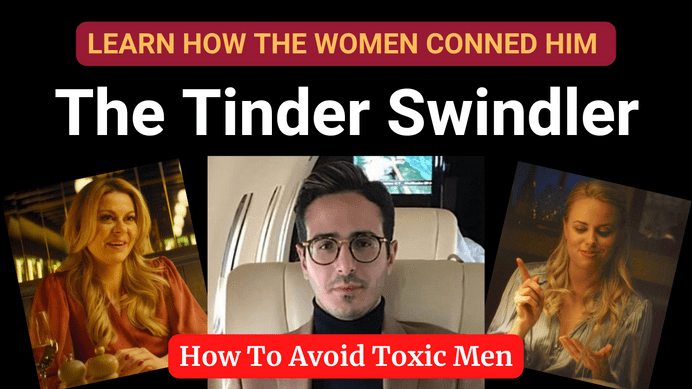
  • The Tinder Swindler: How To Avoid Toxic Men

    The Tinder Swindler: How To Avoid Toxic Men

    The Tinder Swindler on Netflix showed us how women worldwide are susceptible to being conned in life because they don’t realize how they can play an equally responsible role in the dynamic.

    Unfortunately, this is not often discussed in documentaries such as the Tinder Swindler and it’s certainly not something we’re taught growing up so that is what we are going to tackle in today’s Best Day Blog article.

    Before we dive in, though, there are some crucial points to bear in mind:

    1- The Tinder Swindler. aka Simon Leviev was consciously aware that he was conning these women. The women were NOT consciously aware they were conning themselves.
    2-The women are NOT to blame, and they are responsible – I will show you how both are true.
    3-If you notice anger surfacing over the prospect that the women conned themselves, that is a great opportunity to learn how you con yourself!
    4-If you choose not to read the full article due to feeling anger at the content, you will rob yourself of the opportunity to learn how to protect yourself from a similar situation.

    Don’t take the easy route and mistake this for victim-blaming. On the contrary, if you are open to a deeper understanding of human and relationship dynamics, what I am about to share empowers the victims of such crimes, sets them free, and raises people’s ability to create healthy relationships, find love, and defend themselves against predators.

    For many, what I am about to share will challenge most of your current emotions and cultural beliefs.  At first, it will be quite a mouthful, but if you stick with it, you realize it was good for you, because it is healthy and based on truth.

    The explanation for how the women conned themselves comes down to two advances in neuroscience and psychology. The first is by Lisa Feldman Barrett, who shared her discovery in 2017 with her book ‘How Emotions Are Made.’ Her work transformed previous theories on emotions and how our brain processes information.

    Secondly, my development of what I call the Worst Day Cycle, which is a self victimizing process we all live out until we heal the childhood trauma that created it.  Coincidentally, our books came out around the same time, and both combine to create a scientific understanding as to why and how these women conned themselves.

    We Create Our Emotions. Nobody makes us feel anything.

    Lisa Feldman Barrett’s work shows that we create emotions in three ways. Our physiology, the cultural and societal beliefs we are exposed to, and our childhood experiences. In this way, often, our very first experience of feeling a certain way will dictate our future reactions, as our brain assumes that any time we feel that same way, the same events will unfold. You may think you are an adult making decisions but in fact, it is the child inside you that is making the decision.

    For example, suppose you grew up in a physically violent family. In that case, when you are exposed to violence in your relationships, you’ll associate this with family and love – you’ll believe, based on your earliest experiences, that violence=love.

    Below is an excerpt from How Emotions are Made to explain how we are responsible for creating our own emotions. You may often hear people saying things such as ‘You made me feel like this,’ She made me feel this,’ but these are disproven in Barrett’s work, emotions – are not, and cannot be, forced upon us by other people.

    “Emotions are not built-in. They are not universal but vary from culture to culture. They emerge as a combination of the physical properties of your body, a brain that wires itself to adhere to whatever environment it develops in, and your culture and upbringing, which provide that environment. Emotions are not reactions to the world. From sensory input and past experience, your brain constructs meaning and prescribes action.”

    This is so important when analyzing the Tinder Swindler case because it helps to set the scene of understanding as to why these women were able to be conned and unknowingly conned themselves. Their brains made predictive assumptions from their histories that created the illusion that they were innocently duped when in actuality, they played an active role in the duping.

    How do emotions create the women’s conning of themselves?

    Her opening statement below gives a lot of insight into her emotional thinking and how she planted the seeds for her own self-conning:

    “The moment I get nervous, then I know there is something special here. I’m after that all-consuming, kind of what you’ve grown up with. The first memory I have of love is Disney. I had memorized the entire beauty and the beast cassette. I love how she’s just a small-town girl just like me, hoping for something bigger. She meets this person, then she saves him in a sense, and he saves her. They go into a different life together. It just sticks with you like the feeling of a prince coming to save you. I think that even though you know it’s not real, it’s still with you. I think everyone has that little bit of hope deep down inside. It will be as magical as they are portraying it to be.”

    The feeling of nervousness she mentions is a prime example of physiological learning. She formed a prediction in her mind that this was a feeling of love towards Leviev. Because this was a feeling she had experienced previously, her mind immediately associated this sensation of nervousness with love – even though, on this occasion, it could have been a different indicator of fear or worry.

    In particular, the reference to Disney, the Beast in Beauty and the Beast. She was looking for a beast – or a narcissist in today’s terms. Simon Leviev certainly has many narcissistic traits; She believes that Simon (The Beast) is the Prince that she can save, and the way to do this is by giving him money.

    The belief that a person is powerful enough to save another is a God complex. It is also a narcissistic trait but from the disempowered victim position. Her idea that she can save Leviev and change who he is as a person is a crucial part of her swindling herself – it’s important, again, to remember that she is not to blame as this was an unconscious feeling, whereas Simon’s behavior was conscious. She unconsciously believes that she has enough power (a disempowered narcissistic trait) to change him. It is her Disney childhood dream to rescue a beastly man.

    Furthermore, there is such a thing as ‘love addiction,’ which is the fantasy-like creation of a super love for someone in your mind. In her eyes, Simon became the Prince, and she believed they could both save each other. Here she’s creating a fantasy based on a construct of emotions. She has implanted in her mind due to memorizing the Disney story.

    Remember, this is all unconscious to her, but she wants her Disney dream and will do anything she can to have it. Unfortunately, Disney trained her to look for a beast and skewed her view that love is based on intensity and trauma. She’s not to blame for this, and she is responsible on an unconscious level – she’s participating through the false belief that she can save a man by financially conning him to get what she wants. To be the beauty that loves and nurtures the beast into a prince.

    So, to recap, her brain created the following emotional predictions and assumptions:

    1- She equated danger/fear with love – the Beast
    2- The Beast, or Simon, is a prince that she can save
    3- A God complex to get her power back over her fear
    4- She created a love-addicted fantasy of Simon.
    5- She conned herself unknowingly based on her learned emotional experiences

    How The Worst Day Cycle created the conning of themselves

    Trauma in childhood is inevitable simply because we are all human and perfectly imperfect. Each parent will make mistakes that leave wounds in us. It’s important to remember that trauma does not have to be a huge event. Trauma is any experience in life that creates a negative response or feeling. Trauma is the first stage of the cycle. It generates feelings of fear, which is stage two.

    The third stage of the cycle is shame which is a loss of our authentic power. A prominent way parents traumatize us and place this shame in us happens when we make a simple mistake. It was simply the act or behavior that was bad. To solve this dilemma, we create a false self to get our power back.. It becomes a learned emotional response. It is actually a survival instinct. I go into much more detail about this process in my book, ‘Your Journey To Success.’

    In addition, we learn from our parents how relationships work. Therefore, the adult relationships we pursue reflect the relationships we experienced as children.

    Shame turns into false victim power.

    In our culture, there is an unintended consequence to protecting them. Our culture now absolves the victim from any responsibility. This has created tremendous power from the disempowered victim position. Instead of the media and society teaching the public that we make our emotions, that we are all stuck in The Worst Day Cycle and reliving our unhealed pain from childhood, and seeking out the same perfectly imperfect hurtful relationships we experienced as children, they are celebrated. The women now hold power over Simon Leviev and society. Reliving our Worst Day Cycle is a tremendous payoff for us all. Being the victim gives us the power that we lost as children. No one will hold us responsible for the part we played. It WORKS!

    In conclusion

    These women are not to blame. Bypassing responsibility for their feelings, thoughts, and actions onto others.

    Therefore, if we genuinely want to protect victims and take away the predator’s power, we need to start teaching everyone that our upbringing, beliefs, and manufactured emotional projections that create our Worst Day Cycle play a part in our being responsible.

    Unfortunately, for these women, the lack of information on how emotions are made and The Worst Day Cycle enabled Simon Leviev to consciously con them while unconsciously conning themselves.

    For more on this, watch or listen to Lisa Feldman Barrett’s TedTalk – ‘You aren’t at the mercy of your emotions, your brain creates them,‘ Read her book ‘How Emotions Are Made.’
    Then, check out the Worst Day Cycle playlist on my YouTube channel, pick up my book ‘Your Journey To Success,’ and dive in even further with my free masterclass, ‘Your Journey To Emotional Authenticity’!

    Are you looking for more solutions? Pick the one that suits your needs best!

    1- My Book, Your Journey To Success
    2- My Complete Emotional Authenticity Method
    3- My Perfectly Imperfect Private Group
    4- My Private Coaching

    Learn more here:

  • The Bad Vegan and The Worst Day Cycle

    The Bad Vegan and The Worst Day Cycle

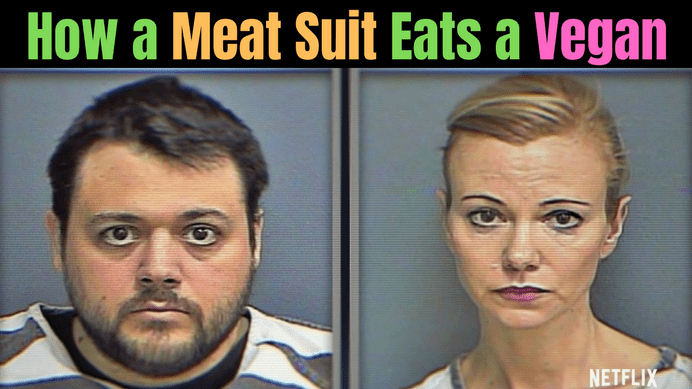
    This Best Day Blog article and accompanying video is an analysis of the happenings that took place in the Netflix docu-series Bad Vegan – Fame. Fraud. Fugitives.

    In this article, I will be discussing what created the attraction between the ‘meat suit’. Otherwise known as Anthony Strangis, and the bad vegan, Sarma Melngailis. Having this information will allow you to protect yourself from falling for a ‘meat suit’ yourself! Throughout the article I’ll be sharing lots of helpful resources so that you can gain the knowledge, skills, and tools that you need so that you don’t ever fall prey to a situation like this.

    What creates a ‘meat suit’ and what creates the vegan who is attracted to them?

    For those who haven’t yet watched the documentary, the ‘meat suit’ is what Strangis calls his human form, his vessel. He believes he is a ‘non-human’ and that his body is simply here as a physical representation of himself – his meat suit. I will refer to him as the ‘meat suit’ from here on out.

    What created the personality of the meat suit, though? Well, it is something I call The Worst Day Cycle. The Worst Day Cycle explains how we end up in relationships like these. Furthermore, it explains how we fall short in reaching our potential. If you would like to learn the full process and how it is operating in your life because yes, it is operating in all of our lives, I discuss it at length in my book ‘Your Journey to Success’. Your cycle may not be as extreme as what was portrayed in Bad Vegan, but everybody on this planet is caught living in The Worst Day Cycle.

    What is the Worst Day Cycle (WDC)?

    On my YouTube channel, I have a 5-part video series which takes you through the WDC called ‘Reclaim Your Authentic Self By Becoming Trauma Informed. You will find that series within my WDC playlist.

    The WDC consists of four parts, trauma, fear, shame and denial. This might be hard to swallow but every single one of us experiences trauma in childhood – this is unavoidable. For the Meat Suit in Bad Vegan he experienced significant neglect and abandonment from his father who often took him gambling when he was a child. He and his mother were also held hostage and he watched as his father held a gun to her head. While many of us do not experience this level of trauma. We do experience emotional injuries from our perfectly imperfect caregivers.

    Worst Day Cycle

    For Sarma the ‘Bad Vegan’, she experienced her parents divorcing at 9 years old which is a difficult experience for anyone to go through and her sister, with all best intention, took on a protective role for her, often talking for Sarma and becoming her voice – this is also what happened in the relationship with Anthony – he became her voice. Sarma ended up playing the prisoner just as she had as a child and therefore subconsciously looked for this in her partners. Someone who could talk for her and ‘protect’ her – the trauma cycle repeats.

    Many people don’t realize that they’ve experienced trauma in their childhoods. They believe they are completely recovered from it, but most often this isn’t the case. My video ‘The Wounded Inner Child’ will help you to understand more about this. When you are living in denial and not accepting that your childhood was less than perfect. You can’t recover or prevent similar events like those that took place in ‘Bad Vegan’ from happening.

    Worst Day Cycle

    When we go through these emotional and traumatic experiences our brain actually becomes emotionally addicted to the explosion of fear chemicals and hormones that are released – we become addicted to the trauma – my video on ‘The Tinder Swindler’ goes into this phenomena in some depth. Because we have been conditioned to minimize and suppress our fears, we are all stuck in it. We’ve never been taught the Emotional Authenticity Method I teach to cope with these difficult emotional life experiences.

    There is a great deal of work in science, medicine and society that has taken place around emotions because we now know that, actually, emotions do run our lives – not our intellect. Emotions come first – every thought we have starts with a feeling, and because we haven’t developed the Emotional Authenticity that we need, our brains automatically replay the unhealed emotions from the past when we experience new things or things that subconsciously trigger the same feelings we experienced as children.

    The Third Stage

    The third stage of the cycle is shame. As a child we must physically and emotionally connect to another human being to survive. Therefore when our parents are imperfect and create emotional injuries inside of us. We adapt and create a false persona to fit in. It is a survival mechanism to protect ourselves. Because it happens so young, we believe it is the real “us”. This loss of the authentic self creates a power vacuum. Shame is ultimately a power dynamic. We use this deep shame core as adults to regain our power. How do we do that? By choosing hobbies, friends, careers and relationships that mirror the injuries of our childhood. We do this because even though we have been hurt, who is responsible for the hurt? Ourselves, we CHOSE, this person place or thing.  The overwhelming truth that we are responsible for our self-victimization send us into denial.

    About Denial

    Denial is the single greatest killer on the planet today. He is the main reason you don’t have the relationship, career or life you want. This is exactly what Sarma was caught in – the shame and denial portions of the cycle. She kept going back, choosing to re-victimize herself (shame) by denying the abuse and lies that were right in front of her. Not because she is a bad person but because as a society we don’t teach about The Worst Day Cycle or how to attain Emotional Authenticity.

    To dive deeper into how denial is the single greatest killer on the planet today, I really recommend checking out my ‘Self-Deception/Denial’ playlist on YouTube so you can learn how your denial is affecting your life and begin the healing journey.

    The Worst Day Cycle is incredibly powerful. People often think that these sorts of experiences can only happen to people who aren’t smart or are defective in some way, but Sarma was a very clever woman. It happens to all of us. Many people find this very difficult to accept – that even the ‘victim’ could be responsible for bad things happening to them, but learning to accept responsibility for this is the only way to heal. Sarma wanted money, she wanted her dog to be saved and she made the choice to stay. She did these things because of The Worst Day Cycle and her lack of Emotional Authenticity.

    Resources and links to help you

    We must become an expert in the worst day cycle and how trauma, fear, shame and denial operate in our lives. My book ‘Your Journey to Success’ goes through this in detail.

    If you would like to start your healing journey then sign up to my free masterclass ‘Your Journey to Emotional Authenticity.’ Learning my Emotional Authenticity method does not take long and you will see very quickly how much better your life becomes and when you have the knowledge, skills, and tools, how easy it is to avoid being eaten by a meat suit!

    Are you looking for more solutions? Pick the one that suits your needs best!

    1- My Book, Your Journey To Success
    2- My Complete Emotional Authenticity Method
    3- My Perfectly Imperfect Private Group
    4- My Private Coaching

    To learn more watch this: