Category: Emotional Blueprint

  • Childhood Trauma Signs: How to Know If You Have Childhood Trauma | Kenny Weiss

    Childhood Trauma Signs: How to Know If You Have Childhood Trauma | Kenny Weiss

    Childhood trauma is any negative emotional experience that created painful, inaccurate beliefs about yourself, others, or the world. It isn’t always dramatic — it can be subtle dismissal, conditional love, perfectionism, or unspoken rules. Most of us don’t realize we carry it because we learned to survive it early. The body remembers what the mind denies.

    Table of Contents

    What Is Childhood Trauma?

    Most people think childhood trauma has to be dramatic — abuse, neglect, loss. The truth is far more subtle and far more common.

    Childhood trauma is any negative emotional experience that created painful, inaccurate beliefs about yourself, others, or the world — and your nervous system learned to fear repeating that experience. It’s the parent who withheld approval. The sibling who was always preferred. The message that your feelings were “too much” or “not enough.” The demand for perfection. The withdrawal of love when you disappointed someone. The unspoken rule that your needs came last.

    That’s you — the one who says “my childhood was fine” while your body tells a completely different story.

    When childhood messaging is shame-based (and statistics show 70%+ of childhood messaging is), your developing brain creates neural pathways of unworthiness. The amygdala, your threat-detection center, becomes hyperactive. Your hypothalamus begins producing chemical cocktails — cortisol (stress), adrenaline (fear), dopamine misfires (addiction to pain), and oxytocin corruption (twisted bonding). By adulthood, your nervous system is addicted to these emotional states because they’re the most familiar states your brain knows.
    How childhood trauma creates chemical addiction in the nervous system

    The brain is energy-efficient. It conserves energy by repeating known patterns, whether those patterns hurt us or heal us. The brain can’t tell right from wrong — it only knows known versus unknown. When your childhood taught you that abandonment, criticism, control, or shame was “normal,” your adult brain will seek situations that feel like home, even when home was painful.

    The most dangerous part? You don’t recognize it’s happening.

    Why You Don’t Recognize It — The Denial Problem

    Your childhood survival persona is brilliant. It protected you. It kept you safe. It helped you navigate an unpredictable, shaming, or conditional environment by becoming someone who wouldn’t trigger the pain again.

    The problem is that in adulthood, your survival persona becomes your saboteur.

    Denial is the final stage of the Worst Day Cycle™ — it’s the survival persona created to survive the pain. In childhood, denial worked. It let you function. It let you go to school, perform, achieve, dissociate from the pain long enough to survive each day. Many high achievers, successful professionals, and “fine on the outside” people are living in deep denial about their childhood wounding.

    That’s you — the one with the perfect resume, the successful career, and the sneaking feeling that something is deeply wrong with your closest relationships.

    Why don’t you see it? Because:

    • Normalization: If everyone in your family did it, it felt normal.
    • Minimization: “It wasn’t that bad” — a defense mechanism that keeps you trapped.
    • Blame-shifting: You blame yourself for how you “turned out” instead of looking at what you survived.
    • Loyalty confusion: Recognizing parental wounding feels like betrayal.
    • Survival persona protection: Your survival persona is still convinced that showing your authentic self = danger.

    The Worst Day Cycle™: How Trauma Perpetuates Itself

    The Worst Day Cycle™ is a four-stage system that explains how childhood trauma doesn’t stay in the past — it repeats in the present through your nervous system.
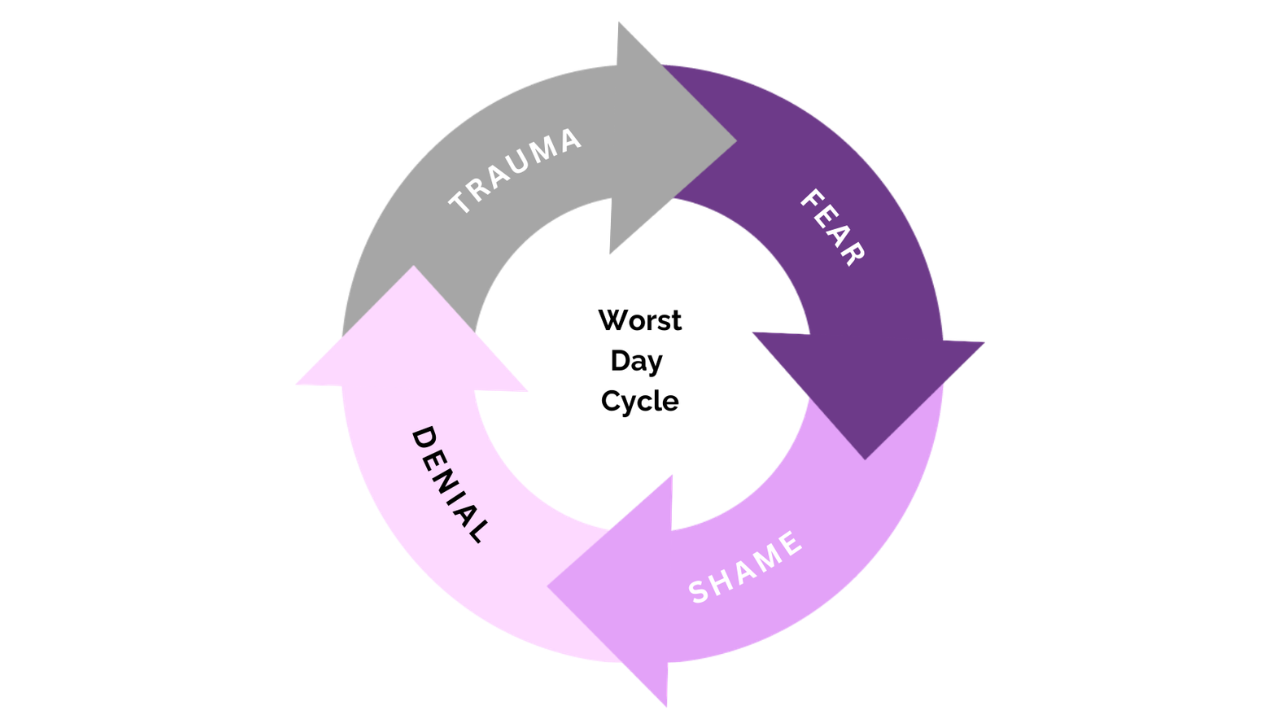
    The Worst Day Cycle framework showing how childhood trauma perpetuates through four stages

    Stage 1: Trauma (The Wound)

    A negative emotional experience created a painful belief. Maybe it was conditional love — “I only matter if I achieve.” Maybe it was enmeshment — “I don’t have a separate identity from my parent.” Maybe it was criticism — “I’m fundamentally flawed.” Maybe it was parentification — “Your emotional needs are my responsibility.” Whatever the wound, it embedded itself in your emotional blueprint.

    Stage 2: Fear (The Hypervigilance)

    Your body learned to be afraid of repeating that experience. The hypothalamus stays on alert. Your nervous system scans constantly for threats that match the original wound. A partner’s distance triggers abandonment terror. A mistake at work triggers shame spirals. A friend’s honesty triggers criticism dread. Fear drives repetition because your brain thinks repetition = safety. If you can predict and control the pain, you won’t be surprised by it.

    That’s you — the one who says “I just saw it coming” after another relationship ends the same way.

    Stage 3: Shame (The Identity Corruption)

    Shame is where you lost your inherent worth. It’s the belief that you are the problem, not what happened to you. Unlike guilt (“I did something bad”), shame says “I am bad.” Shame lives in the body as tension, numbness, contraction. It drives compulsive behaviors — over-achieving, perfectionism, people-pleasing, self-sabotage, addiction, dissociation. Shame is the breeding ground for survival personas.

    Stage 4: Denial (The Survival Persona)

    Denial is not ignorance. It’s a sophisticated psychological defense. It’s the protective identity you created to survive. It tells you: “This doesn’t bother me.” “I’m fine.” “I don’t need anything.” “I’m too strong for this.” The survival persona is brilliant — it worked in childhood. But in adulthood, it prevents genuine intimacy, emotional authenticity, and real healing.
    Emotional Authenticity Method framework for breaking the trauma cycle

    How the cycle repeats: Trauma → Fear (hypervigilance) → Shame (identity corruption) → Denial (survival persona) → Repeated trauma patterns. The cycle spins because your nervous system is addicted to the familiar chemical states of fear, shame, and the dopamine spike of denial/numbing.

    Your Survival Persona: Three Types

    Your survival persona is not your authentic self. It’s a protection system. Understanding which type you developed is the first step to stepping out of denial and into healing.
    Three survival persona types created by childhood trauma and shame

    Type 1: The Falsely Empowered Survival Persona

    You became the fixer, the achiever, the independent one. You learned early that if you could be perfect, successful, or in control, you could prevent the pain. You over-function in relationships. You’re the strong one. The one who “has it all together.” You rarely ask for help because asking = weakness in your emotional blueprint.

    That’s you — the one organizing everyone else’s life while your own is secretly falling apart.

    The falsely empowered persona shows up as workaholism, perfectionism, control-seeking, and the inability to be vulnerable. Relationships feel transactional to you because you’re always the giver, never truly the receiver.

    Type 2: The Disempowered Survival Persona

    You learned to disappear. You became small, quiet, compliant. Maybe the family rule was “don’t speak up” or “your needs don’t matter” or “peace at any cost.” You became the peacekeeper. You read the room. You absorbed everyone’s emotions. You say yes when you mean no. You apologize for existing.

    The disempowered persona shows up as passive-aggression, people-pleasing, difficulty with boundaries, and chronic resentment. You blame others for taking advantage of you, but you never actually said no.

    Type 3: The Adapted Wounded Child

    You oscillate between the two. Sometimes you’re falsely empowered (controlling, critical, managing). Sometimes you’re disempowered (withdrawn, resentful, compliant). You swing between extremes because you never developed a stable sense of self. Your emotional blueprint taught you that relationships are unsafe and unpredictable, so you’re always scanning for danger.
    The Adapted Wounded Child survival persona swinging between control and compliance

    That’s you — the one in the relationship where you’re sometimes the fixer and sometimes the victim, cycling through the same conflict patterns over and over.

    The adapted wounded child shows up as relationship instability, emotional volatility, and the feeling that you’re acting rather than living.

    Childhood Trauma Signs by Life Area: How Your Wound Shows Up

    Childhood trauma doesn’t announce itself. It shows up as patterns, reactions, and behavioral loops. Here’s where to look:

    Signs in Your Family of Origin Relationships

    The definitive sign of childhood trauma family patterns: You’re still trying to get your childhood needs met from people who couldn’t meet them then and can’t meet them now. You’re waiting for the approval that never came. The warmth that was conditional. The love that felt safe. You’ve become skilled at managing their emotions, anticipating their needs, and taking responsibility for their feelings.

    Common family patterns include:

    • Chronic guilt around disappointing parents (even as an adult)
    • Difficulty setting boundaries with family members
    • Taking responsibility for a parent’s happiness or emotional state
    • Defending the parent to others while feeling angry with them privately
    • Minimizing what happened (“It wasn’t that bad”)
    • Feeling obligated to stay in contact even when relationships are painful
    • Repeating family patterns with your own children
    • Enmeshment — not knowing where your emotions end and theirs begin

    That’s you — the one who still feels like a child around your parents, apologizing for things that weren’t your fault.

    Signs in Romantic Relationships

    Childhood trauma in relationships looks like choosing people who echo your original wound, then being shocked when they do. If your parent was emotionally unavailable, you choose unavailable partners. If your parent was critical, you choose critical partners. Your nervous system recognizes the pattern as “familiar = home,” even though home was painful.

    Common romantic patterns include:

    • Choosing emotionally unavailable partners (and trying to fix them)
    • Attracting partners with similar wounds (creating a dysfunction cycle)
    • Inability to tolerate conflict — shutting down, numbing, or over-reacting
    • Hypervigilance to partner’s moods and distance
    • Using sex/intimacy as a way to manage fear of abandonment
    • Difficulty asking for needs to be met (then resenting your partner for not knowing)
    • Oscillating between controlling and compliant, depending on fear level
    • Betrayal and infidelity patterns
    • The ending being identical to the beginning: intense connection followed by gradual disconnection

    That’s you — the one saying “Why do I always end up with the same person?” when you consciously chose someone completely different.

    If you’re noticing these patterns, read our post on relationship insecurity signs and explore enmeshment patterns in depth.

    Signs in Friendships

    Childhood trauma shows up in friendships as boundary confusion, role rigidity, and relationship imbalance.

    • You’re always the listener, never the one being listened to
    • You take on your friend’s problems as your responsibility
    • You feel guilty saying no or taking space
    • You choose friends who need “fixing” (mirroring your family role)
    • You abandon relationships when they require reciprocal vulnerability
    • You feel resentful because “nobody is there for you” (but you never asked)
    • You struggle with friends’ success because their winning feels like your losing
    • Friendships often end in conflict or ghosting when boundaries get tested

    That’s you — the friend who shows up for everyone else’s crisis while your own life quietly crumbles.

    Signs in Work, Achievement, and Performance

    Childhood trauma shows up at work as perfectionism, overfunction, and the inability to ever feel “good enough.”

    • Chronic overworking or over-delivering to feel worthy
    • Perfectionism that prevents you from finishing projects or taking risks
    • Difficulty accepting praise or promotions (imposter syndrome)
    • Choosing careers that require self-sacrifice (proving your worth through suffering)
    • Shutting down during conflict with authority figures (or over-compliance)
    • Difficulty delegating because “nobody does it right”
    • Using work to avoid intimate relationships
    • Fear of being “found out” as not actually competent
    • Success followed by self-sabotage (achieving, then falling apart)

    That’s you — the high achiever with the title, the salary, and the gnawing sense that you’re a fraud.

    Your Body Keeps Score: Physical Signs of Childhood Trauma

    The body holds what the mind denies: Childhood trauma creates measurable changes in nervous system regulation, sleep architecture, immune function, and chronic pain patterns. This is not psychosomatic. This is biology.
    How childhood trauma dysregulates the nervous system and impacts physical health

    Physical signs of childhood trauma include:

    • Chronic tension: Neck, shoulders, jaw clenching (holding the feelings you won’t feel)
    • Sleep disturbance: Insomnia, night terrors, restless sleep (nervous system can’t downshift)
    • Digestive issues: IBS, reflux, constipation (the gut is your second brain; trauma lives here)
    • Chronic pain: Back pain, headaches, fibromyalgia (the body feels the pain the mind denies)
    • Hypervigilance: Always scanning the room, exaggerated startle response, inability to relax
    • Numbness or dissociation: Disconnection from your body, feeling like you’re watching yourself live
    • Immune dysfunction: Frequent illness, slow recovery, autoimmune conditions
    • Sexual dysfunction: Difficulty with arousal, pleasure, or feeling safe during intimacy
    • Appetite dysregulation: Eating too much (numbing), too little (control), or chaotic patterns

    That’s you — the one who “just has a sensitive stomach” or “has always been a light sleeper,” not realizing your nervous system is in chronic fight-or-flight.

    Breaking Free: The Authentic Self Cycle™

    If the Worst Day Cycle™ is how trauma perpetuates, the Authentic Self Cycle™ is how you heal.
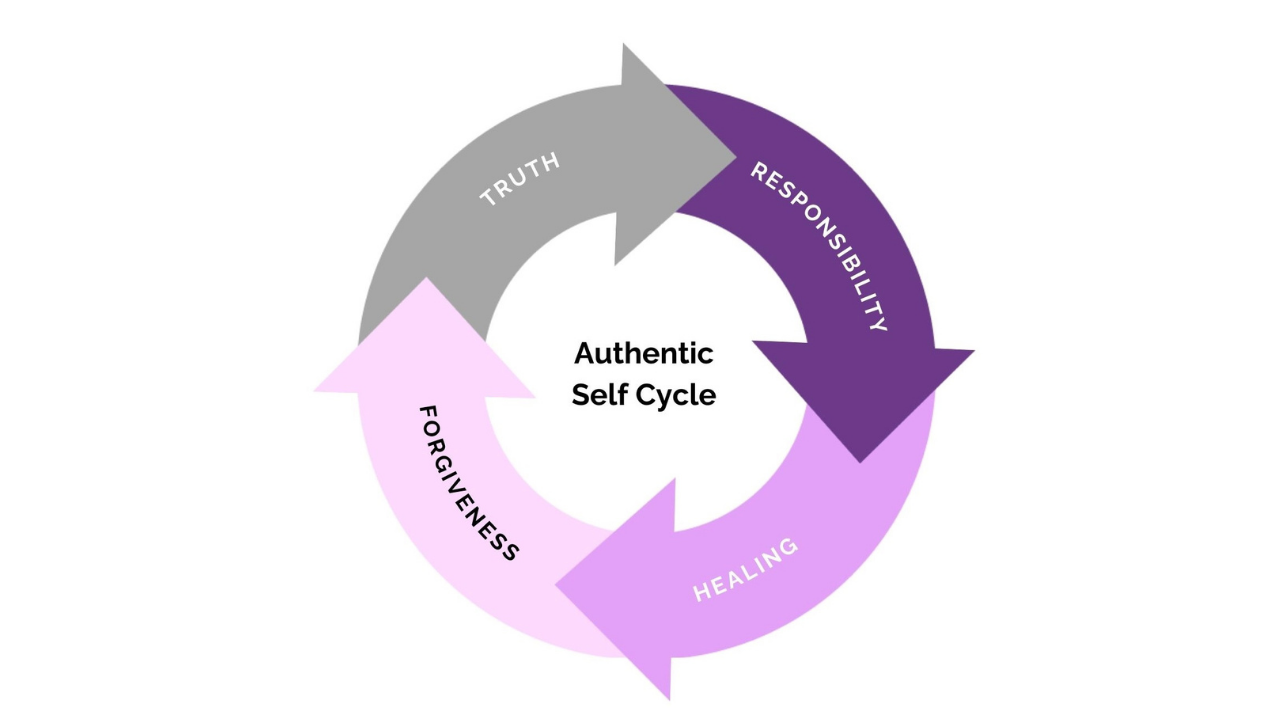
    The Authentic Self Cycle framework for healing childhood trauma through truth and responsibility

    The Authentic Self Cycle™ has four stages:

    Stage 1: Truth

    Name the blueprint. See “this isn’t about today.” Recognize that your current reactions are rooted in childhood survival, not present danger. Your partner’s mild criticism isn’t the same as your parent’s shaming voice. Your boss’s feedback isn’t your parent’s conditional love. But until you name the blueprint, you keep reacting to the past while thinking you’re responding to the present.

    Truth is uncomfortable. It requires you to acknowledge what you survived and what it cost you. It requires mourning the childhood you didn’t get. Many people stay in denial because truth hurts, but the alternative — staying trapped in the Worst Day Cycle™ — hurts more.

    Stage 2: Responsibility

    Own your emotional reactions without blame. This is not the same as self-blame. Responsibility means: “My nervous system is reacting to patterns from my past. I get to feel whatever I feel. And I also get to choose my response.” You’re not responsible for what happened to you. You are responsible for what you do about it now.

    That’s you — finally seeing that you can grieve your childhood AND choose a different future.

    Responsibility is where you stop waiting for your parents to change, your partner to fix you, or your circumstances to finally feel safe. You become the author of your own emotional story.

    Stage 3: Healing

    Rewire the emotional blueprint so conflict becomes uncomfortable but not dangerous. Healing is not about “getting over it.” It’s about creating new neural pathways so your nervous system stops treating the present like the past. This is where the Emotional Authenticity Method™ (EAM) comes in.

    Stage 4: Forgiveness

    Release the inherited emotional blueprint and reclaim your authentic self. Forgiveness isn’t about letting people off the hook or saying what happened was okay. It’s about releasing the hold the wound has on your present and future. It’s the recognition that you’re no longer a child in an unsafe environment. You’re an adult with choices, boundaries, and the capacity to protect yourself.

    That’s you — not becoming someone new, but finally meeting who you always were underneath the survival persona.
    Accepting emotional authenticity and imperfection as the path to healing

    The Emotional Authenticity Method™: Your Healing Practice

    The Emotional Authenticity Method™ (EAM) is a five-step practice for rewiring your emotional blueprint in real time. When you feel triggered, dysregulated, or stuck in a familiar pattern, use this.

    Step 1: Somatic Down-Regulation (with optional titration)

    Your nervous system needs to feel safe before your brain can process anything. This means bringing your body temperature down, slowing your heart rate, and signaling safety to your amygdala. Techniques include: slow breathing (4-count in, 6-count out), cold water on your face, grounding (5-4-3-2-1 sensory awareness), progressive muscle relaxation, or movement. Optional titration means approaching the feeling in small doses rather than going all-in.

    Step 2: What Am I Feeling?

    Most people who grew up with emotional invalidation can’t name feelings with specificity. You say “fine” or “stressed” when you’re actually afraid, ashamed, lonely, or grieving. Use the Feelings Wheel at kennyweiss.net/life-changing-exercise to develop emotional granularity. The more specific you get (“I feel unseen and unvalued” vs. “I’m fine”), the more information you have to work with.

    That’s you — finally realizing you’ve been numb instead of strong.

    Step 3: Where in My Body Do I Feel It?

    Emotions live in the body. Fear lives in the chest. Shame lives in the gut. Grief lives in the throat. Anger lives in the jaw and fists. When you locate the feeling somatically, you’re accessing deeper information about your nervous system. Stay with the sensation without trying to fix it immediately.

    Step 4: What Is My Earliest Memory of This Feeling?

    This is where you connect present to past. When did you first learn that this feeling was dangerous, shameful, or unacceptable? Who told you to be afraid of it? What happened the last time you expressed it? This is not rumination — it’s detective work. You’re building the bridge between your childhood wound and your current pattern.

    Step 5: Who Would I Be If I Never Had This Feeling Again?

    This is the visioning step. Not “I’ll be perfect.” But “I’d be someone who can stay present in conflict.” “Someone who asks for what I need.” “Someone who doesn’t disappear when things get hard.” You’re building a vision of your authentic self — not your survival persona, but the person beneath the protection system.

    Building emotional authenticity through the five-step method

    People Also Ask

    Can childhood trauma be healed?

    Yes. The brain is plastic (neuroplasticity) and the nervous system can be recalibrated. Healing doesn’t mean erasing the past or pretending it didn’t hurt. It means rewiring your nervous system so the past stops controlling your present. This requires consistent practice, usually professional support, and genuine willingness to feel what you’ve been denying. Most people report significant shifts within 6-12 months of committed work.

    Is everyone with childhood trauma repeating it in their relationships?

    Not consciously, no. But yes, unconsciously — until you do the work. The brain’s default setting is repetition (known = safe). Without awareness and active rewiring, you’ll recreate familiar patterns. This is why two people with similar wounds often attract each other and then wonder why they cycle through the same fights.

    What’s the difference between shame and guilt?

    Guilt is about what you did (“I made a mistake”). Shame is about who you are (“I am a mistake”). Guilt can be productive — it motivates change. Shame is paralyzing — it creates worthlessness. Childhood trauma creates pervasive shame. Learning to distinguish shame from guilt is crucial to healing.

    How does the Emotional Authenticity Method™ work in relationships?

    When your partner says something that triggers you, instead of reacting from your survival persona (controlling, withdrawing, numbing), you pause. You run through the EAM steps. You down-regulate. You name what you’re actually feeling (often fear underneath the anger). You find where it lives in your body. You trace it back to your childhood. And then you respond from your authentic self instead of your survival persona. This transforms conflict from reactive cycles into opportunities for intimacy.

    What if my family says I’m being dramatic or selfish for addressing my trauma?

    Family systems are invested in maintaining the status quo. Naming your trauma threatens the family narrative (which is usually “we were fine”). Their defensiveness says more about their own denial than about you. Setting non-negotiables around your healing is not selfish — it’s necessary.

    Can I heal from childhood trauma without professional help?

    Some people can with the right resources, community, and self-awareness. Most people benefit from professional support — not because they’re “broken,” but because trauma lives in the nervous system and a trained professional can help you access and rewire it more effectively. Whether that’s therapy, coaching, somatic work, or a combination depends on your history and needs.

    The Bottom Line: You Don’t Have to Repeat Your Childhood

    Childhood trauma isn’t a life sentence. It’s a pattern — and patterns can be broken.

    The fact that you’re reading this means some part of you recognizes that something is off. That part of you — the one that knows things could be different — is your authentic self trying to break through the survival persona. Listen to it.

    That’s you — standing at the threshold between the Worst Day Cycle™ and the Authentic Self Cycle™, finally ready to choose something different.

    You don’t have to earn love through perfection. You don’t have to disappear to keep the peace. You don’t have to chase people who can’t stay. You don’t have to repeat what happened to you. Those were survival strategies in childhood. They’re sabotage in adulthood.

    Your body remembers what your mind denies, but your body can also remember healing. Your nervous system can learn that you’re safe. Your emotional blueprint can be rewritten. Your authentic self can emerge. It takes time. It takes courage. It takes support. But it’s possible.

    You deserve emotional authenticity. You deserve reciprocal relationships. You deserve to feel at home in your own body and your own life.

    • Mellody BeattieCodependent No More and The Language of Letting Go
    • Gabor MatéWhen the Body Says No and Scattered Minds
    • Bessel van der KolkThe Body Keeps the Score
    • Brené BrownDare to Lead and The Gifts of Imperfection
    • Pete WalkerComplex PTSD: From Surviving to Thriving
    • Sue JohnsonHold Me Tight (for relationship patterns)

    Get Started Today

    Recognizing childhood trauma is the first step. Healing requires action.

    If you’re ready to move from survival to authenticity, we have courses designed specifically for this work:

    • Emotional Blueprint Starter Course — Individual ($79) — Start here to map your emotional blueprint and understand your survival persona.
    • Relationship Starter Course — Couples ($79) — If you’re in a romantic relationship and want to stop repeating cycles.
    • Tier 1: Mapping the Blueprint ($1,379) — Deep dive into the EAM™, your frameworks, and real-time rewiring practices.
    • Why High Achievers Fail at Love ($479) — Specifically for falsely empowered personas who are successful everywhere except intimacy.
    • The Shutdown Avoidant Partner ($479) — If you find yourself attracting emotionally unavailable partners.
    • Why We Can’t Stop Hurting Each Other ($479) — For couples cycling through the same conflict patterns.

    You can also start with a free tool: the Feelings Wheel at kennyweiss.net/life-changing-exercise. Spend time with it this week. Develop emotional granularity. Notice where your survival persona shows up. And remember: That’s you — finally ready to write a different story.
  • What Is Toxic Shame? How Childhood Abandonment Creates the Core Wound

    What Is Toxic Shame? How Childhood Abandonment Creates the Core Wound

    Toxic shame is the internalized belief that you are fundamentally defective, unlovable, and unworthy of authentic connection. Unlike healthy shame—which teaches us that mistakes are human—toxic shame makes you the mistake. It’s not about what you did; it’s about who you believe you are. This pervasive sense of worthlessness originates in childhood through emotional abandonment and develops into a survival persona that sabotages relationships, careers, health, and every area of adult life.

    Table of Contents

    Toxic Shame Defined: The Loss of Your Authentic Self

    When you carry toxic shame, you’ve lost the ability to distinguish between what you did and who you are. A child who makes a mistake hears from a shaming parent: “You’re stupid,” not “That was a poor choice.” The behavior becomes fused with identity.

    As author John Bradshaw wrote, “When we are continuously overexposed without protection, shame becomes toxic. The self becomes an object of its own contempt, an object that can’t be trusted.” This is the essence of toxic shame—your nervous system learned early that you are the problem, not the circumstance.

    emotional blueprint showing toxic shame formation from childhood trauma

    Unlike guilt—which says “I made a mistake”—shame says “I am a mistake.” Guilt is temporary and correctable. Shame is permanent and pervasive. It lives in your body as a chemical cocktail your brain released during your most vulnerable moments, and your nervous system learned to repeat this pattern as a way to stay safe.

    Toxic shame is the fundamental belief—held in your nervous system—that your authentic self is defective, that your emotions are too much, that you need to hide who you really are to be acceptable. It’s the deep conviction that if people truly knew you, they would abandon you.

    How Toxic Shame Forms in Childhood: The Mirroring Mirror Lost

    Children cannot know who they are without mirrors. These mirrors are your primary caregivers. In the first years of life, a caregiver’s job is to reflect back to the child: “I see you. Your emotions matter. You are safe. You belong.”

    When this mirroring fails—through emotional abandonment, enmeshment, perfectionist demands, or neglect—the child internalizes a different message: “I’m too much. I’m not enough. I’m unlovable. I need to hide.”

    The child then creates a survival persona — an identity designed to be acceptable, to earn love, to prevent abandonment. That’s you if you’re a people-pleaser, a high achiever, a caretaker, a controller, or someone who goes numb when conflict arises. Your survival persona isn’t weakness—it was brilliant in childhood. Now it’s sabotaging you.

    survival persona types falsely empowered disempowered adapted wounded child

    The Root: Emotional Abandonment (It’s More Common Than You Think)

    Emotional abandonment doesn’t require absence. Your parent could be physically present but emotionally shut down—unable to attune to your feelings because they never learned how. They might shame you for crying, for being “too sensitive,” for needing anything. They might use you to meet their emotional needs instead of meeting yours.

    As Pia Mellody teaches, emotional abandonment includes:

    • Enmeshment: Parent uses child as emotional support, making child responsible for parent’s feelings. “You’re my rock.” “Without you, I couldn’t survive.” That’s you becoming the surrogate spouse.
    • Perfectionism: Parent demands flawlessness. Mistakes mean rejection. You learn: “I must be perfect to be worthy.”
    • Emotional Unavailability: Parent is shut down, dismissive, or cold. “Stop crying. Toughen up. I don’t have time for this.” The message: your emotions are burdensome.
    • Parentification: Child is forced to grow up too fast, manage household, caretake younger siblings or the parent. Childhood is sacrificed for adult responsibility. “Act your age—you’re 8 but you’re my little helper.”
    • Neglect: Caregiving is inconsistent or absent. Child is left in daycare without secure attachment, or literally parentless. The repeated message: nobody’s coming.

    The result? That’s you— the adult who still doesn’t believe you’re worth protecting. The one who settles in relationships because you don’t expect better. The one who overworks to prove your value. The one who goes numb when intimacy is offered because connection feels dangerous.

    enmeshment enmeshed parent child emotional abandonment toxic shame

    The Worst Day Cycle™: How Shame Becomes a Life Pattern

    Here’s what nobody teaches you: your brain becomes chemically addicted to the emotional states of your childhood. Trauma creates a specific neurochemical pattern—cortisol, adrenaline, dopamine dysregulation, oxytocin misfires. Your hypothalamus released these chemicals during your most painful moments. Your brain learned: this is what safety feels like.

    This is the Worst Day Cycle™—a four-stage loop that explains why you keep repeating the same painful patterns despite consciously wanting something different.

    worst day cycle trauma fear shame denial survival persona

    Stage 1: Trauma (The Blueprint)

    Childhood emotional experience (any moment of shame, abandonment, enmeshment) creates painful meanings: “I’m not safe. I’m unlovable. I’m alone. I’m responsible for others’ emotions.”

    Stage 2: Fear (The Repetition Compulsion)

    Your nervous system learned that repetition = safety. Your brain cannot tell right from wrong—it only knows familiar vs. unfamiliar. So you unconsciously recreate childhood dynamics in adult relationships. That’s you— choosing partners who abandon you like your parents did, or becoming the abandoner before they can leave.

    Stage 3: Shame (The Identity Collapse)

    When the painful pattern repeats, shame hits: “I’m the problem. I’m defective. There’s something fundamentally wrong with me that makes people leave.” This isn’t situational shame about a mistake—this is identity shame. You don’t just feel bad; you feel bad about who you are.

    Stage 4: Denial (The Survival Persona Activation)

    To survive the unbearable feeling of being fundamentally flawed, you unconsciously activate your survival persona. You control, perform, numb, collapse, or disappear. The survival persona says: “If I just become who they need, maybe I won’t be abandoned again.” It’s brilliant protection. It’s also keeping you stuck.

    The Worst Day Cycle™ perpetuates because 70%+ of childhood messaging is negative and shaming. Your brain wired these neural pathways so efficiently that now, as an adult, you activate them automatically—in seconds—when triggered. You’re not choosing this pattern. Your nervous system is.

    Three Survival Persona Types: How Toxic Shame Shapes Your Identity

    Your survival persona is not your personality—it’s a brilliant adaptation to childhood pain. Identifying your type is step one toward reclaiming your authentic self.

    The Falsely Empowered Persona (The Controller)

    That’s you— if you rage, dominate, control, achieve obsessively, or manage everyone around you. Your childhood message was: “Vulnerability means death. Only the strong survive.” So you learned to never be soft, never need, never ask for help. You’re the caretaker, the high achiever, the “I don’t need anybody” person.

    Your shadow: beneath the control is terror. You rage because you feel helpless. You achieve because you believe you’re only worthy if you’re producing. You can’t receive love because it requires vulnerability.

    emotional regulation control shame falsely empowered survival persona

    The Disempowered Persona (The Collapser)

    That’s you— if you people-please, apologize for existing, abandon yourself to keep the peace, or collapse when conflict arises. Your childhood message was: “Your needs don’t matter. Your emotions are too much. Disappear and you’ll be safe.” So you learned to shrink, accommodate, and make yourself small. You’re the “nice” one. You’re the rescuer. You don’t know what you want because your wants were never welcomed.

    Your shadow: beneath the niceness is rage that you’ve never permitted yourself to feel. You resent those you’ve sacrificed for. You feel invisible and exploited. You can’t say no because rejection of your request feels like rejection of you.

    The Adapted Wounded Child (The Oscillator)

    That’s you— if you swing between falsely empowered and disempowered depending on context. You’re the rigid controller at work and the people-pleaser at home. You’re explosive one moment and collapsed the next. You never found a stable survival persona, so you oscillate between both poles—exhausting and confusing.

    Your shadow: you’ve adapted to unpredictability. Your childhood was chaotic. One parent might have been empowered, the other disempowered. You learned to mirror whichever persona would keep you safe in that moment.

    adapted wounded child oscillating survival persona toxic shame

    24 Signs of Toxic Shame (By Life Area)

    Toxic shame doesn’t show up the same way in everyone. Here’s how it manifests across different areas of your adult life:

    In Family Relationships

    • Feeling used, treated with little or no respect by parents or siblings
    • Enmeshment: you’re responsible for parents’ emotional wellbeing
    • Inability to set boundaries without excessive guilt
    • Feeling like an outsider or the “scapegoat” in your family of origin

    In Romantic Relationships

    • Poor relationship stability, repeated patterns of conflict or abandonment
    • Triggered by perceived criticism, disapproval, or rejection
    • Can’t be your true self with your partner; hiding parts of yourself
    • Codependence: over-accommodating, losing yourself in the relationship
    • Worrying constantly about what your partner thinks of you
    • Fear of intimacy; vulnerability feels dangerous

    Sound familiar? The person who gives everything in a relationship and then wonders why they feel invisible — that’s the toxic shame pattern running your love life.

    In Friendships

    • Suspicion and distrust; difficulty believing others genuinely care
    • Feeling like you don’t belong or are different from everyone else
    • Fear of exposure—hiding your true thoughts and feelings to avoid embarrassment
    • Wallflower tendency; not wanting to be center of attention, withdrawing
    • Wanting to have the last word in disagreements (shame-driven need to prove yourself)

    In Work/Achievement

    • Perfectionism: making mistakes feels like personal failure
    • Workaholism: proving your worth through productivity
    • Grandiosity: overcompensation through arrogance or superiority
    • Feeling like an imposter despite accomplishments
    • Fear that you don’t have real impact or that you’re not good enough

    That’s you — the one who built an empire on shame and calls it ambition.

    In Body/Health & Emotional Life

    • Addiction (drugs, alcohol, sex, food, shopping, work)
    • Self-loathing: internal narrative of “I’m stupid, defective, a failure, unlovable, shouldn’t have been born”
    • Anger toward yourself and others
    • Worry, anxiety, and pervasive fear
    • Feeling numb or dissociated from your emotions (can’t feel anything)
    • Regret, rumination about past mistakes
    • Secrecy and isolation; fear of exposure

    That’s you — the person who numbs with food, scrolling, or alcohol because feeling anything fully was never safe.

    If you resonate with multiple signs across life areas, you’re not broken—you’re carrying an emotional blueprint from childhood. Your nervous system learned this language early. The good news: nervous systems can rewire.

    codependence codependency toxic shame emotional boundaries

    From Worst Day Cycle™ to Authentic Self Cycle™: The Path Forward

    The Worst Day Cycle™ is not permanent. It’s a pattern your nervous system learned because it once meant survival. Now it means suffering. The antidote is the Authentic Self Cycle™.

    The Authentic Self Cycle™: Four Stages of Reclamation

    authentic self cycle truth responsibility healing forgiveness recovery framework

    Stage 1: Truth

    Name the blueprint. See the pattern clearly: “This anger I feel toward my partner isn’t about today—it’s about my father’s abandonment. My nervous system believes this is happening again.” Truth isn’t blame. It’s clarity. You’re not blaming your parents for your adult patterns; you’re acknowledging where they originated.

    Stage 2: Responsibility

    Own your nervous system’s reactivity without blame. “I choose to take responsibility for my emotional reactions without making it my partner’s fault or my fault for ‘being broken.’” Responsibility is the bridge between victim consciousness and empowerment. You’re not responsible for your nervous system’s encoding—but you are responsible for rewiring it now.

    Stage 3: Healing

    Rewire the emotional blueprint so that conflict becomes uncomfortable but not dangerous, space isn’t abandonment, intensity isn’t attack. This happens through the Emotional Authenticity Method™ (see below).

    Stage 4: Forgiveness

    Release the inherited emotional blueprint. Forgive your parents not because they deserve it, but because carrying resentment keeps you chemically bound to them. Forgiveness is freedom—you’re choosing to stop letting their emotional wounds run your life.

    That’s you— moving from “my parents ruined me” to “my parents did the best they could with their own unhealed wounds, and now I choose to heal mine.”

    The Emotional Authenticity Method™: Your Healing Path

    You cannot heal toxic shame through thoughts alone. Toxic shame is not a cognitive problem—it’s a biochemical problem. Your emotions are not thoughts; thoughts originate from feelings. This is why willpower fails. This is why positive affirmations don’t work. You’re trying to think your way out of something your body remembers.

    The Emotional Authenticity Method™ is a somatic (body-based) five-step process designed to rewire your emotional blueprint from the nervous system up:

    Step 1: Somatic Down-Regulation (With Optional Titration)

    When shame activates, your nervous system floods with cortisol and adrenaline. You’re in fight-or-flight. You cannot think, cannot access wisdom, cannot connect. First, you regulate your nervous system back to the window of tolerance—the zone where healing is possible.

    Techniques: box breathing, cold water immersion, bilateral stimulation, grounding (5-4-3-2-1 sensory awareness). Titration means working with small doses of the activation so your system doesn’t get re-traumatized during healing work.

    That’s you— learning that you can’t resolve the conflict until your nervous system is calm. That’s maturity. That’s emotional intelligence.

    Step 2: Name the Feeling (Emotional Granularity)

    Most people say “I feel bad” or “I feel angry.” This is vague. The Feelings Wheel teaches emotional granularity. Instead of “angry,” you might identify: “I feel disrespected. I feel powerless. I feel betrayed.”

    Granularity activates your prefrontal cortex and shifts you from pure emotion into awareness. Naming is the beginning of power.

    emotional fitness feelings wheel emotional granularity awareness

    Step 3: Locate It in Your Body (Somatic Memory)

    All emotional trauma is stored physically. You might feel shame as tightness in your chest, a lump in your throat, heaviness in your stomach, numbness in your limbs. These somatic markers are how your body remembers what your mind has tried to forget.

    That’s you — wondering why your chest tightens every time your partner raises their voice, even though you know they’re not your parent.

    Ask yourself: “Where in my body do I feel this shame?” Then place your hand there. Breathe into it. This is not painful catharsing—this is gentle witnessing. You’re telling your nervous system: “I see you. This makes sense. You learned this to protect me.”

    Step 4: Trace to Origin (The Childhood Connection)

    Ask: “What’s my earliest memory of feeling this way?” Suddenly you’re not dealing with your partner’s minor comment; you’re dealing with the moment your mother gave you that look. That moment your father ignored your raised hand. That moment you realized you weren’t safe.

    This is the bridge: “My partner isn’t my parent. My nervous system is responding to my childhood blueprint, not to today.” This clarity is liberating.

    Step 5: Envision the Authentic Self (The Vision Step)

    Ask: “Who would I be if I never had this feeling again? What would I do? What would I say? How would I show up in relationships?”

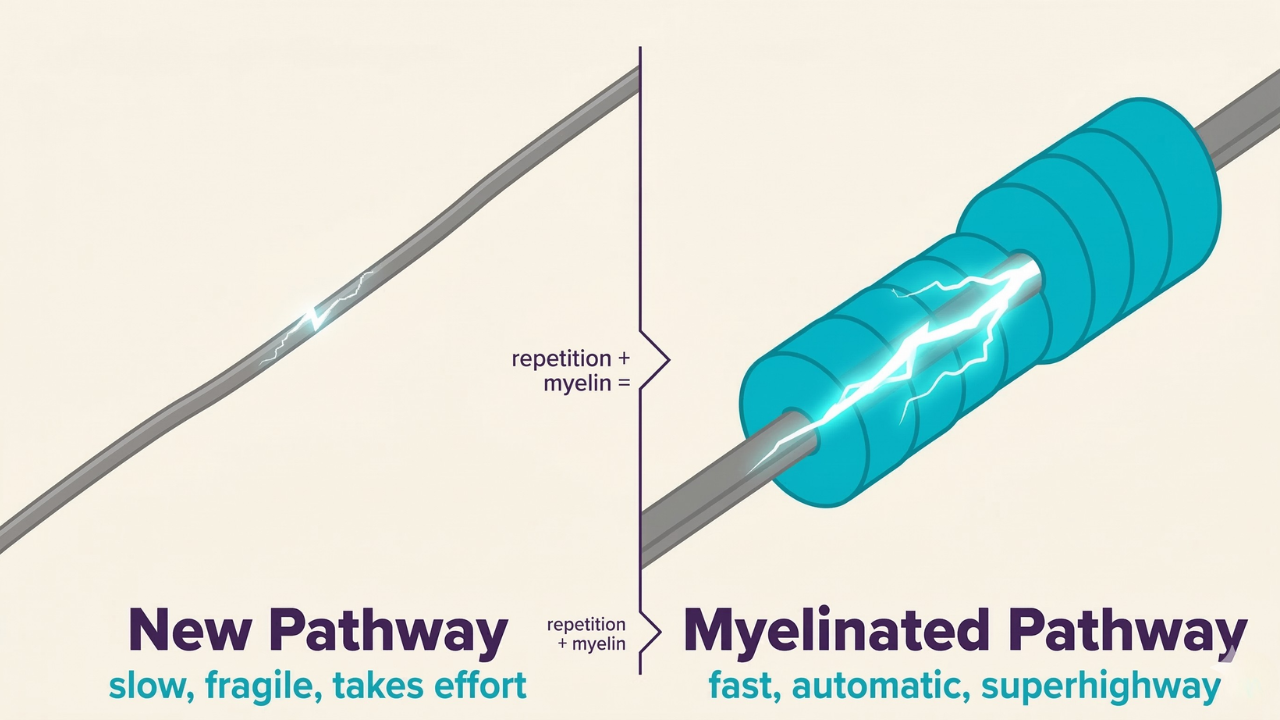
    This isn’t toxic positivity or denial. This is your nervous system learning a new pattern. You’re literally building new neural pathways—myelin sheaths—around a healthier version of yourself.

    You cannot think your way to healing, but you can feel your way there. The Emotional Authenticity Method™ works because it addresses the root: your nervous system’s emotional blueprint.

    myelin neural pathways emotional rewiring brain healing neuroplasticity

    Toxic Shame vs. Healthy Shame: The Crucial Difference

    Not all shame is toxic. Healthy shame is not a weakness; it’s a feature of emotional maturity.

    Healthy Shame

    • Sees mistakes as gifts and best teachers
    • Contains grace, self-forgiveness, and acceptance of humanity
    • Recognizes when help is needed and acknowledges limits
    • Is creative: learns from others’ views rather than canceling those who trigger you
    • Allows you to repair after conflict
    • Is temporary and specific: “I made a poor choice in that moment”

    Toxic Shame

    • Sees mistakes as proof you’re defective
    • Contains harsh self-criticism, perfectionism, and condemnation of your humanity
    • Refuses help; must do everything alone to prove worth
    • Is rigid: anyone who triggers you must be wrong or bad
    • Makes repair impossible because admitting fault feels like annihilation
    • Is pervasive and identity-based: “I am the problem”

    Moving from toxic to healthy shame is the goal. You don’t eliminate shame—you integrate it. Learn more about healthy shame here.

    trauma gut vs authentic gut intuition shame healing

    How Toxic Shame Shows Up in Your Most Important Relationships

    In Romantic Partnership

    Toxic shame makes healthy intimacy nearly impossible. You either become the falsely empowered partner who controls and distances, or the disempowered partner who disappears and abandons yourself.

    You pick partners who confirm your core shame belief: “See? I was right. I’m unlovable.” Then when they treat you poorly, you stay because part of you believes that’s what you deserve. Learn the 7 signs of insecurity in relationships here.

    That’s you— recreating your parents’ dynamic even though you swore you’d never do that.

    In Family Relationships

    If your parents were emotionally unavailable, you might stay enmeshed—still responsible for their emotional wellbeing as an adult. Or you might cut contact entirely, which is sometimes necessary but often driven by shame and anger rather than healthy boundaries.

    That’s you— managing your parent’s emotions while your own go unattended.

    In Work/Achievement

    Toxic shame drives two extremes: burnout through overachievement (proving your worth through productivity), or self-sabotage (unconsciously ensuring you never fully succeed because deep down you believe you don’t deserve it).

    Discover the signs of genuine high self-esteem here. They look nothing like the false confidence of shame-driven achievement.

    trauma chemistry brain nervous system toxic shame emotional wounds

    People Also Ask: FAQ About Toxic Shame

    1. Is toxic shame the same as low self-esteem?

    No. Low self-esteem is about not thinking much of yourself. Toxic shame is about believing you’re defective at your core. Someone with low self-esteem might say, “I’m not good at public speaking.” Someone with toxic shame says, “I’m not good at public speaking because I’m inherently flawed.” The difference is subtle but massive. Toxic shame contaminates every area of life because it’s identity-based.

    2. Can toxic shame be healed?

    Yes. Absolutely. It requires rewiring your nervous system’s emotional blueprint, which takes time and consistent effort, but thousands of people have moved from toxic shame to healthy self-awareness. The Authentic Self Cycle™ and Emotional Authenticity Method™ provide the roadmap.

    3. Is it my parent’s fault that I have toxic shame?

    Your parents did not intentionally create toxic shame in you. They passed down their own unhealed emotional blueprints. That said, the impact of their emotional unavailability is real and has shaped your life. The question isn’t blame—it’s: what are you going to do about it now? Healing requires acknowledging how childhood shaped you while taking responsibility for rewiring your adult patterns.

    4. Why do I keep picking the same toxic people in relationships?

    Because your nervous system recognizes the familiar pain of childhood. Your brain thinks, “This feels like home because it feels like my parents.” You’re unconsciously recreating childhood dynamics to try to get a different outcome. Until you rewire your emotional blueprint, you’ll keep attracting the same type of person.

    5. Can I heal toxic shame on my own?

    You can do some healing work alone through self-awareness and tools like the Emotional Authenticity Method™. However, because toxic shame often involves abandonment trauma, you heal fastest with safe, attuned relationships—whether that’s a therapist, coach, support group, or healing community. You need to experience what safety and attunement feel like from another person. Your nervous system learns through relational connection.

    6. What’s the difference between shame and guilt, and why does it matter?

    Guilt says, “I did something bad.” Shame says, “I am bad.” Guilt is about behavior and is correctable. Shame is about identity and is pervasive. Someone who feels guilt can apologize, make amends, and move forward. Someone in toxic shame cannot apologize without feeling like they’re confirming their unworthiness. This is why shame drives hiding and denial instead of accountability.

    metacognition awareness toxic shame healing emotional patterns

    The Bottom Line: Your Authentic Self Is Still There

    Toxic shame isn’t a character flaw. It’s not a sign that something is permanently broken inside you. It’s evidence that your nervous system learned to protect itself brilliantly in an environment where you felt unsafe.

    Your survival persona—whether you’re a controller, a collapser, or an oscillator—saved your life as a child. It made you acceptable when you felt fundamentally unacceptable. That’s not weakness. That’s adaptation.

    But that survival persona is also sabotaging you now. It’s keeping you isolated in relationships where you can’t be fully known. It’s keeping you from taking risks that could fulfill you. It’s keeping you from your authentic self—the part of you that knows you’re worthy simply because you exist.

    The good news: your authentic self never disappeared. It’s still there, waiting beneath the layers of protection. It’s waiting for you to feel safe enough to emerge.

    That safety comes through understanding your Worst Day Cycle™, identifying your survival persona, and rewiring your emotional blueprint with the Emotional Authenticity Method™. It comes through truth about where shame originated, responsibility for your nervous system, healing of your emotional wounds, and forgiveness of those who couldn’t give you what you needed.

    That’s you— moving from “something’s wrong with me” to “something happened to me, and I choose to heal it.”

    perfectly imperfect authentic self healthy shame acceptance

    To deepen your understanding of toxic shame and recovery, these books and resources are foundational:

    • Pia Mellody — “Facing Codependence” and “The Intimacy Factor” (the framework for understanding emotional abandonment)
    • John Bradshaw — “Healing the Shame That Binds You” (the seminal work on toxic shame)
    • Gabor Maté — “The Myth of Normal” (how childhood trauma becomes adult illness)
    • Melody Beattie — “Codependent No More” (breaking the cycle of self-abandonment)
    • Brené Brown — “Dare to Lead” (shame resilience and vulnerability)
    • Ken Wilber — Understanding shadow work and emotional integration
    • Kenny Weiss — “Your Journey to Success” (the comprehensive guide to the Worst Day Cycle™)

    Free resource: Download the Feelings Wheel exercise to develop emotional granularity.

    Next Steps: Start Your Healing Today

    Understanding toxic shame is the first step. Taking action is the next. Here’s where to start based on your situation:

    If you’re just beginning to explore this:

    Emotional Blueprint Starter Course — Individual ($79) — A foundational 6-week course that teaches you the Worst Day Cycle™, identifies your survival persona type, and introduces the Emotional Authenticity Method™. This is the essential starting point.

    If you’re in a relationship struggling with shame patterns:

    Relationship Starter Course — Couples ($79) — Learn how toxic shame shows up in romantic partnership and how to break the cycle together. This course teaches both partners to move from the Worst Day Cycle™ to the Authentic Self Cycle™.

    If you’re ready for deep, comprehensive healing:

    Tier 1: Mapping the Blueprint ($1,379) — The complete training in the Emotional Authenticity Method™. This is where real rewiring happens. You’ll learn the somatic techniques, practice with real-life scenarios, and begin genuinely healing your emotional blueprint.

    If you’re struggling with specific relationship patterns:

    Why We Can’t Stop Hurting Each Other ($479) — Deep dive into how toxic shame creates relationship sabotage and how to break the pattern.

    The Shutdown Avoidant Partner ($479) — If you’re with someone who withdraws, numbs, or distances when things get real, this course explains why and what to do about it.

    Why High Achievers Fail at Love ($479) — For the driven, accomplished person who excels at work but crashes in relationships. Learn how achievement addiction masks shame.

    If you need personal guidance:

    Private Coaching — Work one-on-one with Kenny in a 60-minute intensive session. Perfect for getting clarity on your specific patterns and creating a personalized healing roadmap.

    The choice is yours. But know this: staying in toxic shame is a choice too. And it will continue to cost you in relationships, achievement, health, and joy.

    Your authentic self is worth reclaiming. Let’s get started.


  • How to Heal From a Narcissistic Parent: Rewire Your Emotional Blueprint

    How to Heal From a Narcissistic Parent: Rewire Your Emotional Blueprint

    A narcissistic parent is an emotionally stuck child—someone who never matured past the self-centered stage of childhood development (ages 3-6) and cannot regulate their own emotions, so they weaponize their children’s emotions to feel okay. They raised you to believe you have no inherent worth, your job was to manage their feelings, and your needs don’t matter. This isn’t parenting—it’s emotional abuse disguised as love. The good news: you can heal from this. It starts with understanding that the person attracted to a narcissist was raised to believe they have no inherent worth, and the narcissist is just a confirmation of what was already learned and has not been healed.

    Table of Contents

    What Is a Narcissistic Parent?

    A narcissistic parent is not someone who occasionally needs attention or gets angry. A narcissistic parent is an emotionally stuck child—an adult who cannot regulate their own emotions and therefore uses their children’s emotional responses to feel okay. They are developmentally frozen at the narcissistic stage (ages 3-6), when all humans are naturally self-centered and incapable of understanding that other people have needs separate from their own.

    That’s you growing up with a parent who literally cannot see you as a separate person. Your feelings, your dreams, your pain—they don’t register as real to them because they’re developmentally incapable of that kind of empathy. What matters is how you make them feel.

    A narcissistic parent:

    • Uses you to regulate their emotions and avoid their own pain
    • Shames you for having emotions that don’t serve their needs
    • Creates false narratives where they’re the victim and you’re the perpetrator
    • Punishes you for having boundaries or opinions that differ from theirs
    • Love-bombs and withdraws affection as control mechanisms
    • Makes you responsible for their emotional state
    • Denies the abuse and gaslight you when you name it
    • Models emotional dysregulation, shame, and denial as normal

    The key distinction: a narcissistic parent doesn’t abuse you because they’re mean—they abuse you because they’re emotionally stuck in a child’s stage of development and cannot see you as a person separate from themselves. They genuinely don’t understand what they’re doing wrong. This doesn’t excuse it. It explains it.

    Reparenting yourself after narcissistic parenting: restoring your worth and emotional stability

    That’s you realizing for the first time that this wasn’t normal parenting—it was emotional abuse.

    How the Worst Day Cycle™ Creates the Narcissistic Parent

    Understanding the Worst Day Cycle™ is critical because it explains how your parent became who they are, and more importantly, how you became who you are. The Worst Day Cycle™ has four stages: Trauma → Fear → Shame → Denial.

    Stage 1: Trauma

    Your parent experienced childhood trauma. Childhood trauma is not a defect, it is an injury that needs care. It could have been emotional neglect, abuse, abandonment, or being parentified (forced to take care of a parent). The specifics don’t matter as much as this: their nervous system learned that the world was not safe, and love meant pain.

    Stage 2: Fear

    That unhealed trauma creates fear. Every time they’re triggered—which could be anything: you crying, you disagreeing with them, you needing something from them—their nervous system goes into fight-or-flight. The brain is trying to keep them safe the only way it knows how, which is to recreate the familiar patterns from childhood. The brain can’t tell right from wrong, only known vs. unknown. Since 70%+ of their childhood messaging was negative and shaming, their brain keeps returning to that blueprint.

    Stage 3: Shame

    Fear drives them deeper into shame—the core belief that they are the problem. “I’m not good enough. I’m broken. No one could love me if they really knew me.” To survive this, they create a survival persona.

    Stage 4: Denial

    Denial is the survival persona created to manage the unbearable shame. Instead of “I’m broken,” they believe “I’m perfect and everyone else is the problem.” They deny their own feelings, deny their behavior’s impact, and deny that anything is wrong. This denial is brilliant for surviving childhood—it keeps them functional. It becomes sabotaging in adulthood because it prevents them from ever seeing, feeling, or healing their wound.

    The Worst Day Cycle: Trauma creating fear, shame, and denial in narcissistic parents

    That’s the cycle that created your parent’s emotional paralysis and your childhood pain.

    Here’s what this means for you: Your parent’s inability to see you, love you, and protect you wasn’t about you. It was about their emotional development being frozen at age 3-6, when narcissism is developmentally normal. They never healed from their own Worst Day Cycle™, so they couldn’t help but repeat it with you.

    The biochemistry matters. When your parent was triggered by your emotions, their hypothalamus generated a chemical cocktail—cortisol, adrenaline, dopamine misfires, oxytocin misfires. Their brain became addicted to these emotional states because it conserved energy by repeating known patterns. They weren’t choosing to be cruel. Their nervous system was choosing to survive the only way it learned.

    But here’s the painful truth: their healing is not your responsibility. You cannot adequately parent a child until you reparent yourself from your own childhood. Your parent never did that reparenting work, which means you grew up in the aftermath of their unhealed trauma.

    The Three Survival Personas Children of Narcissists Develop

    If your parent couldn’t regulate their emotions, you had to become someone who could—or at least someone who tried. You developed a survival persona, a protective identity designed to keep you safe in an unsafe emotional environment. There are three main survival personas that children of narcissists develop:

    Three survival personas: falsely empowered, disempowered, and adapted wounded child from narcissistic parenting

    The Falsely Empowered Survival Persona

    You learned that the way to stay safe was to control situations and people. You became hyper-responsible, a perfectionist, a caretaker. You anticipate needs, manage emotions, solve problems before they explode. You might become the “golden child”—the one who achieves, who gets it right, who never causes problems.

    In adulthood, this looks like: dominating conversations, difficulty asking for help, controlling behavior disguised as “caring,” rage when things don’t go according to plan, workaholism, perfectionism that sabotages your relationships, and an inability to be vulnerable.

    That’s you being told your worth comes from what you do, not who you are.

    The Disempowered Survival Persona

    You learned that the way to stay safe was to disappear. You became small, quiet, invisible. You took on the role of the scapegoat or the lost child. You absorbed blame for things that weren’t your fault. You people-pleased, collapsed under pressure, and prioritized your parent’s emotional state over your own needs.

    In adulthood, this looks like: difficulty saying no, chronic anxiety, depression, self-abandonment, tolerating abuse, difficulty naming your own needs, attracting emotionally unavailable or controlling partners, and a deep belief that you’re not worth protecting.

    That’s you having learned that your needs are a burden to everyone around you.

    The Adapted Wounded Child Survival Persona

    You oscillate between the falsely empowered and disempowered personas depending on the context. One minute you’re controlling and dominating (falsely empowered), the next minute you’re collapsing and people-pleasing (disempowered). You can’t figure out which version of you is real because you never had a stable, emotionally attuned parent to mirror your authentic self back to you.

    In adulthood, this looks like: extreme mood swings, difficulty maintaining stable relationships, self-sabotage after success, intense fear of abandonment followed by pushing people away, impulsive decisions followed by regret, and a pervasive sense that something is fundamentally wrong with you.

    The adapted wounded child survival persona: oscillating between control and collapse after narcissistic parenting

    That’s you never knowing which version of yourself will show up because you never had someone safe enough to teach you who you actually are.

    The survival persona that developed inside you was brilliant. It kept you alive, safe enough to grow, and functional in a dysfunctional environment. But here’s what you need to know: that survival persona is not your authentic self. It’s a protective shell you built over the part of you that was told it had no worth. Your healing journey involves separating from this persona and reclaiming the authentic self underneath.

    How Narcissistic Parenting Shows Up in Every Area of Your Life

    If you were raised by a narcissistic parent, the effects didn’t stay in your childhood. They ripple into every relationship, every work situation, every friendship, and even your relationship with your own body. Here’s what to look for:

    In Your Family Relationships

    You might find yourself still trying to control, manage, or fix your parent. You might swing between having no contact and attempting reconciliation. You might be drawn to siblings who are also struggling because you’re trying to save them the way you couldn’t save your parent. You might avoid family events altogether because you don’t feel safe. You might be hyperaware of family members’ moods and adjust your behavior to keep the peace.

    That’s you still trying to manage an emotional environment that was never yours to manage.

    Citation Unit: Children raised by narcissistic parents develop a heightened ability to detect emotional danger in family systems because their survival literally depended on it. This adaptive skill becomes problematic when transferred to adult relationships where you’re not actually responsible for managing others’ emotions and where boundaries feel abusive to abusive people.

    In Your Romantic Relationships

    You’re either attracted to narcissistic or emotionally unavailable partners because they feel familiar, or you become so focused on “being the good one” that you abandon your own needs. You might struggle with intimacy because vulnerability felt dangerous with your parent. You might be unable to ask for what you need because you learned early that your needs don’t matter. You might create drama and chaos because conflict is familiar and feels like love.

    That’s the wound from your childhood repeating itself in your love life.

    Citation Unit: The person attracted to a narcissist was raised to believe they have no inherent worth. The narcissist is just a confirmation of what was already learned and has not been healed. Romantic partnership patterns are almost always a direct reflection of early attachment wounds with a parent.

    In Your Friendships

    You might attract friends who are highly dependent on you emotionally. You might be the therapist in your friend groups, the one who listens to everyone’s problems while your own needs go unheard. You might struggle to maintain friendships because you feel like a burden. You might have no friends at all because you learned that getting close to people means getting hurt.

    That’s you repeating the caretaking pattern you learned as a child.

    In Your Work Life

    You might be a high achiever who uses work as an escape from feeling. You might have difficulty with authority figures because they remind you of your parent. You might be unable to accept feedback without interpreting it as criticism and shame. You might overcommit and underdeliver because you’re trying to prove your worth through productivity. You might sabotage success because deep down you don’t believe you deserve it.

    That’s your survival persona running the show at work because you never learned how to show up as your authentic self.

    In Your Body and Health

    Your nervous system learned that emotions are dangerous. So you might disconnect from your body entirely, unable to feel or name physical sensations. You might use food, alcohol, sex, or work as a way to numb out. You might have chronic pain, autoimmune issues, or other unexplained physical symptoms because your body is holding onto the stress and trauma your mind won’t process. You might struggle with self-care because you don’t believe your body is worth caring for.

    Citation Unit: Childhood trauma is not a defect, it is an injury that needs care. The emotional wounds from narcissistic parenting create measurable changes in nervous system regulation, stress hormone production, and immune function. Healing requires addressing the body, not just the mind.

    How childhood trauma changes the brain: cortisol, adrenaline, and dopamine dysregulation from narcissistic parenting

    That’s your body keeping score, remembering what your mind tries to deny.

    How to Heal From a Narcissistic Parent Using the Emotional Authenticity Method™

    Healing from a narcissistic parent is not about forgiving them or getting them to understand what they did. The hurt happened in a relationship, so the healing has to happen in a relationship—first with yourself, then with safe others. The Emotional Authenticity Method™ is a 6-step process that rewires your emotional blueprint so you can respond from your authentic self instead of your survival persona.

    Here’s what you need to know first: If we can’t change how we feel, we can’t change how we think or act. Most healing approaches focus on changing your thoughts or behaviors. The problem is that thoughts and behaviors originate from feelings. You can’t think your way out of emotional dysregulation. You have to feel your way through it.

    The 6-step Emotional Authenticity Method for healing narcissistic parenting: down-regulation, feeling, body awareness, origin, vision, feelization

    Step 1: Somatic Down-Regulation

    When you’re triggered, your nervous system is in fight-or-flight. You cannot access the thinking part of your brain to do healing work. First, you need to down-regulate your nervous system.

    The simplest tool: focus on what you can hear for 15-30 seconds. Not what you wish you could hear, but what you actually hear right now—the sound of traffic, the hum of the refrigerator, someone’s voice. This grounds you in the present moment and tells your nervous system that you’re not in the childhood trauma anymore, you’re safe here, now.

    If you’re highly dysregulated, use titration: notice one sound, then one smell, then one taste, then one texture you can touch. This gradually brings you back into your body and the present moment.

    That’s you learning to talk to your nervous system and tell it the truth: the threat is in the past, not now.

    Step 2: What Am I Feeling Right Now?

    Once you’re down-regulated, name the emotion you’re experiencing. Not “I feel bad”—that’s too vague. Use emotional granularity. Are you feeling shame, fear, anger, grief, abandonment, worthlessness? The more specific you can get, the more accurate your emotional data becomes.

    Use the Feelings Wheel at kennyweiss.net/life-changing-exercise if you’re struggling to name what you feel. This tool gives you 100+ emotion names so you can identify the specific feeling underneath your reaction.

    Step 3: Where in My Body Do I Feel It?

    All emotional trauma is stored in the body. Shame lives in your chest and throat. Fear lives in your stomach. Grief lives in your heart. Anger lives in your jaw and fists. When you locate the feeling in your body, you’re bypassing the defensive stories your mind creates and accessing the pure emotional truth.

    Don’t try to change it or fix it. Just notice it. “I notice a tightness in my chest.” “I notice a heaviness in my stomach.” This is data. This is your body communicating with you.

    Step 4: What Is My Earliest Memory of Having This Exact Feeling?

    This is the critical step that connects today’s trigger to yesterday’s wound. When you feel triggered in your adult life, it’s rarely 100% about today. It’s usually because something today activated an old emotional blueprint from childhood. Your job is to trace the feeling back to its origin.

    “I feel shame right now. When was the first time I felt exactly this shame?” Often it’s a specific moment with your parent—a time when you were told you were wrong, bad, broken, or not good enough. Name that moment. Visualize it. Let yourself feel the grief of what that moment took from you.

    That’s you making the Victim Position Paradox visible—seeing how you’ve been unconsciously organizing your adult life around the survival strategies that protected you in childhood.

    Step 5: Who Would I Be If I Never Had This Thought or Feeling Again?

    This is the vision step. You’re not trying to eliminate the feeling—emotions are data, they’re not bad. You’re asking: what would be possible if this wound was healed? If the shame from your childhood didn’t run your decision-making, who would you be? What would you do? How would you move through the world?

    Get specific. “I would set boundaries without guilt.” “I would ask for what I need.” “I would believe I deserve love.” “I would stop managing other people’s emotions.” This vision is what the Authentic Self Cycle™ is moving you toward.

    Step 6: Feelization—The Rewiring Step

    This is where the actual rewiring happens. You’re not going to think your way into a new emotional blueprint. You’re going to feel your way into it. Feelization is the process of sitting in the feeling of your authentic self and making it so strong that it becomes your new emotional chemical addiction.

    Close your eyes. Visualize yourself from that vision you just created. See yourself setting boundaries, asking for what you need, believing you’re worthy of love. Now step into that vision and feel what it feels like in your body. What does it feel like to be that version of you? Where do you feel it? Make the feeling strong. Intensify it. Sit in it for 30-60 seconds.

    Then ask yourself: How would I respond to this situation from this feeling? From the feeling of being worthy, of being safe, of being enough, how would you handle your parent’s call? How would you respond to your partner’s criticism? How would you show up at work?

    Visualize yourself responding from that feeling. Don’t script it. Feel it. This is neuroplasticity in real time—you’re creating a new neural pathway, a new emotional chemical pattern. The brain doesn’t know the difference between a vividly imagined experience and a real one. When you practice feeling and responding from your authentic self repeatedly, you’re literally rewiring your brain.

    Citation Unit: Emotions are biochemical events. The brain creates emotional states through the release of neurotransmitters and hormones (cortisol, dopamine, oxytocin, serotonin). Repeatedly engaging the feeling-state of your authentic self while visualizing different responses creates new neural pathways and new emotional chemical patterns. This is actual brain rewiring, not positive thinking.

    That’s you teaching your body and brain that it’s safe to be yourself.

    How the Authentic Self Cycle™ Restores Your Identity After Narcissistic Parenting

    While the Worst Day Cycle™ explains how you got wounded, the Authentic Self Cycle™ explains how you heal. The Authentic Self Cycle™ has four stages: Truth → Responsibility → Healing → Forgiveness. This is an identity restoration system that helps you reclaim the self that was buried underneath your survival persona.

    The Authentic Self Cycle: Truth, Responsibility, Healing, and Forgiveness for recovery from narcissistic parenting

    Stage 1: Truth

    You have to name what happened. Not minimize it, not excuse it, not try to understand it from your parent’s perspective. You have to say clearly: “I was emotionally abused by my parent. My parent used me to regulate their emotions. My parent told me I had no inherent worth. My parent prioritized their comfort over my safety.”

    This is hard because you might still be in denial about the abuse. You might minimize it (“it wasn’t that bad”) or rationalize it (“they did the best they could”). Denial was a survival mechanism that helped you survive childhood. But it’s sabotaging you in adulthood.

    Truth means seeing the blueprint clearly. Seeing your parent as an emotionally stuck child who hurt you, not as a monster you need to hate and not as a misunderstood person you need to rescue. Just as they are: underdeveloped, wounded, and incapable of the emotional maturity your childhood required.

    That’s you finally allowing yourself to see what happened to you without judgment or justification.

    Stage 2: Responsibility

    Here’s where most people get confused. Responsibility does not mean blame. Your parent is responsible for their behavior. You are responsible for your response to your parent’s behavior, and more importantly, for your healing.

    This means: “My parent treated me this way because they’re emotionally underdeveloped. My partner is reminding me of my parent because my nervous system is conditioned to expect that kind of emotional dysregulation. I’m repeating these patterns because I learned them, not because I’m broken.”

    Responsibility is empowering because it means you’re not a victim of your past—you’re a person who learned survival strategies that now need to be updated. Your parent could not give you what you didn’t have. But you can give yourself what you didn’t receive. You can reparent yourself.

    Citation Unit: You cannot adequately parent a child until you reparent yourself from your own childhood. Reparenting is the process of identifying what you needed from your parent that you didn’t receive (safety, attunement, celebration, protection) and learning to give those things to yourself. This is not selfish—it’s the foundation of all healing.

    That’s you moving from “why did this happen to me” to “what do I do about this now.”

    Stage 3: Healing

    Healing is where you rewire the emotional blueprint. Using the Emotional Authenticity Method™, you’re creating new neural pathways, new emotional chemical patterns, new ways of responding that are grounded in your authentic self instead of your survival persona.

    Healing isn’t linear. You’ll have breakthroughs and regressions. You’ll feel great for a month and then something will trigger you and you’ll be right back where you started. This isn’t failure—this is integration. Every time you notice an old pattern and choose a new response, you’re strengthening the new neural pathway.

    Healing also requires that the hurt happened in a relationship, so the healing has to happen in a relationship. You cannot heal isolation. You need people who see you, attune to you, and make you feel safe. This might be a therapist, a partner, friends, a community. Without relational support, healing stalls.

    That’s you learning to trust yourself and others again, one small moment at a time.

    Stage 4: Forgiveness

    Forgiveness is the final stage, and it’s not what you think it is. Forgiveness doesn’t mean reconciliation. It doesn’t mean you go back and have a relationship with your parent. It doesn’t mean you pretend the abuse didn’t happen.

    Forgiveness means releasing the inherited emotional blueprint. It means you no longer carry your parent’s unhealed trauma in your body. It means you’ve done the work to reparent yourself so thoroughly that your parent’s wounds no longer live inside you. You can see them as a wounded person without carrying their wound.

    That’s freedom. That’s when you’ve finally separated from the Victim Position Paradox and reclaimed your life.

    Citation Unit: The unhealed pain from our childhood becomes the burden our children carry for us. Breaking this intergenerational trauma cycle requires that you do the healing work not just for yourself, but for the children (biological or not) who will learn emotional patterns from you. Healing is a gift forward.

    Frequently Asked Questions

    Should I go no contact with my narcissistic parent?

    This is deeply personal and there’s no one right answer. Some people need complete no contact to heal. Some people need limited contact with strong boundaries. Some people do the healing work and then choose to have a different kind of relationship with their parent.

    The key is this: boundaries feel abusive to abusive people. If you set a boundary with your parent and they respond with anger, guilt-tripping, or punishment, that’s not a sign your boundary is wrong. That’s a sign your boundary is working. You’re finally saying no to the emotional abuse, and they’re reacting to that.

    The decision to have contact or not should be made from your authentic self, not from your survival persona. If you’re staying in contact because you feel guilty or obligated, you’re still in the wound. If you’re going no contact because you’re still angry and wanting them to understand, you’re still in the wound. Make the choice when you’re healed enough that you can see your parent clearly and choose what actually serves your healing and your peace.

    How do I know if I’m actually healing or just going through the motions?

    Real healing shows up in your present-day relationships and choices. You’ll notice that:

    • You can feel triggered and not act on the trigger
    • You can set boundaries without guilt
    • You can ask for what you need without shame
    • You’re attracting different kinds of partners
    • You’re staying in relationships longer because they’re actually healthy
    • You’re less reactive and more responsive
    • You trust yourself more
    • You tolerate less abuse and abandonment

    Healing isn’t about feeling good all the time. It’s about having freedom of choice. When something triggers you, can you pause and choose how to respond? That’s healing.

    Can my narcissistic parent ever change?

    Change requires that a person see the problem, feel the pain, take responsibility, and do the work. Most narcissistic parents never get here because their survival persona is built on denial. Denial keeps them functional, so there’s no incentive to change.

    Your job isn’t to change your parent. Your job is to change yourself so that you’re no longer organized around their emotional state. When you do that work, you’ll naturally create more distance from the people who can’t or won’t do their own healing.

    What if my parent was “just doing the best they could”?

    This is a common defense, and it’s true and not true at the same time. Your parent probably was doing the best they could with the emotional tools they had. And their best was still emotionally abusive to you. Both things are true.

    Understanding that your parent was doing their best doesn’t erase the impact of their behavior on you. You can see your parent as a wounded person and still acknowledge that you were harmed. Compassion for your parent and accountability for the abuse are not mutually exclusive.

    How long does it take to heal from narcissistic parenting?

    Healing is not linear and there’s no finish line. You’re rewiring neural pathways that were formed over years of conditioning. The first breakthrough often comes within weeks of starting consistent healing work. Real transformation typically takes months to years.

    What matters more than the timeline is the consistency. If you do the emotional work regularly—using the Emotional Authenticity Method™, feeling your feelings instead of numbing them, catching yourself in survival persona patterns and choosing differently—you will heal. You will reclaim yourself.

    What’s the difference between healing and just accepting what happened?

    Accepting what happened without healing is resignation. You’re saying “this happened, I guess I just have to live with it.” You’re not actually rewiring anything—you’re just learning to tolerate the pain.

    Healing is active. You’re using the pain as data that points you toward your wound. You’re rewiring your emotional blueprint so that the same triggers don’t create the same reactions. You’re reclaiming agency. You’re no longer a person who happened to have a bad parent—you’re a person who was wounded by a parent and did the work to heal.

    The Bottom Line

    Growing up with a narcissistic parent is not a character flaw on your part. It’s an injury. Your parent was an emotionally stuck child who couldn’t see you as a separate person with your own needs and feelings. This caused you to develop a survival persona, to absorb shame that wasn’t yours, to organize your entire life around managing their emotional state.

    The good news: that survival persona isn’t who you are. Underneath it is an authentic self—a person with inherent worth, legitimate needs, and the capacity to be loved and to love others.

    Healing from a narcissistic parent is possible. It requires that you understand the Worst Day Cycle™ that created your parent’s behavior, that you identify the survival persona you developed, and that you use concrete tools like the Emotional Authenticity Method™ to rewire your emotional blueprint. It requires that you do the work to reparent yourself, that you grieve what you didn’t receive, and that you gradually learn to trust yourself again.

    The unhealed pain from our childhood becomes the burden our children carry for us. When you do this healing work, you’re not just reclaiming yourself. You’re breaking a cycle that might have been repeating for generations. You’re saying: my parent didn’t heal, but I will. The inherited trauma stops with me.

    That’s the freedom that’s waiting on the other side of this work. Not a relationship with your parent where they finally understand. Not revenge or vindication. But a life where you’re no longer organized around their emotional state. Where you can set boundaries without guilt. Where you can ask for what you need. Where you believe, finally, that you’re worth taking care of.

    That’s yours to claim.

    Recommended Reading

    • Mellody, Pia. Facing Codependence — The foundational text on how childhood wounds create codependent patterns. Mellody’s work on shame and worth directly informs all healing models.
    • Maté, Gabor. When the Body Says No — Explores how unprocessed childhood trauma lives in the nervous system and creates chronic illness. Essential for understanding the body-emotion connection.
    • Beattie, Melody. Codependent No More — Practical guide to setting boundaries and stopping the caretaking cycle. Foundational for anyone learning to prioritize their own healing.
    • Brown, Brené. Daring Greatly — Explores shame and vulnerability with compassion. Brown’s work on shame-resilience complements the emotional authenticity approach.
    • van der Kolk, Bessel. The Body Keeps the Score — The definitive text on how trauma is stored in the nervous system and body. Required reading for understanding why emotional work must include somatic regulation.
    • Miller, Alice. The Drama of the Gifted Child — Classic exploration of how high-achieving children of emotionally unavailable parents develop false selves to survive. Illuminates the adapted wounded child persona.

    Start Your Healing Journey Today

    Understanding what happened to you is the first step. Taking action is the next. Here are the courses and tools designed to guide you through the healing process:

    Self-Healing Courses

    • Emotional Blueprint Starter Course — Individual$79. Start here if you’re just beginning to understand your wounds. This foundational course teaches you how to identify your survival persona, recognize your triggers, and begin the reparenting process on your own.
    • Tier 1: Mapping the Blueprint$1,379. The complete system for rewiring your emotional blueprint. This is the intensive training on the Emotional Authenticity Method™, the 6-step process for lasting change. Includes weekly modules, worksheets, and direct support from Kenny.
    • Why We Can’t Stop Hurting Each Other$479. If you find yourself repeating painful patterns in relationships, this course shows you how childhood wounds create adult relationship cycles and how to break them.
    • Why High Achievers Fail at Love$479. If you’re successful at work but struggle in relationships, this course is designed for you. Explores how the survival persona that works in career sabotages intimacy.

    Relationship-Focused Courses

    • Relationship Starter Course — Couples$79. If you’re in a relationship or partnered, this course teaches you and your partner how childhood wounds show up in partnership and how to create safety together.
    • The Shutdown Avoidant Partner$479. If you’re in a relationship with someone who withdraws, this course demystifies avoidant attachment and shows you how to create connection even when your partner is defended.

    Immediate Tools

    Go Deeper

    Your healing matters. Not because your parent will finally understand. Not because you’ll get the apology you deserved. But because you deserve a life where you’re no longer organized around someone else’s emotional state. You deserve to know your worth. You deserve to love and be loved from a place of genuine self-esteem, not false confidence. You deserve to be yourself.

  • How to Stop Self-Doubt: Why Your Inner Critic Is a Childhood Trauma Response

    How to Stop Self-Doubt: Why Your Inner Critic Is a Childhood Trauma Response

    You’re in the middle of a presentation and a voice in your head says: “They’re going to find out you don’t know what you’re talking about.” You pause. Your chest tightens. You stumble over a word — and the voice gets louder: “See? You’re a fraud.”

    That voice isn’t insight. It’s not protecting you. That voice is unhealed shame from childhood running your nervous system on autopilot — and it has been running it for decades.

    Self-doubt isn’t a personality trait. It isn’t humility. It isn’t “just being realistic.” Self-doubt is the emotional residue of a childhood where your authentic self was never affirmed — where mistakes were punished, slowness was shamed, and your worth became tied to performance. The voice that says “you’re not enough” isn’t yours. It’s the internalized voice of a parent, a teacher, a bully, or a mood in the house that told you something was fundamentally wrong with who you are. And your brain got addicted to that message.

    That’s you if you’ve achieved more than most people around you — and still feel like you’re faking it. That’s you if compliments make you uncomfortable because somewhere inside, you don’t believe them. That’s you if the voice gets loudest right before something good is about to happen.

    This isn’t about positive affirmations or “believing in yourself.” This is about what your brain did with pain it couldn’t process — and what happens when you finally trace that pain back to where it started.

    emotional blueprint showing how childhood shame creates self-doubt patterns

    What Is Self-Doubt Really? (It’s Not What You Think)

    Most articles about self-doubt will tell you it’s a “mindset problem.” They’ll give you affirmations, journaling prompts, and power poses. And none of it works — because they’re treating a biochemical wound with a Band-Aid made of words.

    Self-doubt is not a thinking problem. It is a feeling problem that originated in childhood — and you cannot change emotional patterns through thoughts alone, because emotions are biochemical events and thoughts originate from feelings.

    Self-doubt is what happens when a child’s authentic self gets rejected — not necessarily through dramatic abuse, but through the thousand small moments where a child learns: who I really am isn’t safe to show. A tone of voice. A look of disappointment. A parent who only lit up when you performed. A household where mistakes meant punishment and vulnerability meant danger.

    That’s you if you learned early that love was conditional — that you had to earn it by being good, smart, quiet, helpful, or perfect.

    When those moments overwhelm a child’s ability to process them, the brain doesn’t file them away neatly. It stores the pain in the body and creates a chemical pattern — a cocktail of cortisol, adrenaline, and shame — that becomes the child’s emotional baseline. That baseline follows you into adulthood. And every time you’re about to take a risk, speak up, or step into something new, your nervous system fires the same alarm it learned at the dinner table when you were six years old.

    trauma chemistry showing how childhood experiences create self-doubt through cortisol and shame

    Where Self-Doubt Actually Comes From

    Self-doubt doesn’t appear out of nowhere in adulthood. It was installed in childhood — during the moments when your authentic self was met with rejection instead of affirmation.

    Shame expert John Bradshaw described it this way: when a parent cannot affirm a child’s feelings, needs, and desires, they reject that child’s authentic self. Then a survival persona must be created to survive. The child concludes: “Something is wrong with me.” Not “something is wrong with this situation” — but “I am the problem.”

    A shame-based person guards against exposing their inner self to others — but more significantly, they guard against exposing themselves to themselves. This is at the heart of self-doubt: you don’t trust yourself because you were taught that who you really are isn’t trustworthy.

    The child who got shamed for crying learns to doubt their emotions. The child who got punished for mistakes learns to doubt their competence. The child who got ignored learns to doubt their worth. And the child who got praised only for achievement learns to doubt anything about themselves that isn’t productive.

    That’s you if you’ve spent your whole life proving yourself — and the finish line keeps moving. That’s you if you can list everything wrong with you in seconds but freeze when someone asks what you’re proud of.

    Here’s what makes self-doubt so stubborn: the brain conserves energy by repeating known patterns. It can’t tell right from wrong — only known from unknown. Since 70% or more of childhood messaging is negative and shaming, the brain treats self-criticism as “normal” and self-compassion as “dangerous.” Your doubt isn’t protecting you. Your doubt is your brain repeating the only pattern it knows.

    survival persona types created by childhood shame that fuel adult self-doubt

    Shame: The Engine That Powers Every Doubting Thought

    Underneath every self-doubting thought is a single emotion: shame. Not guilt — guilt says “I did something bad.” Shame says “I am bad.” And that distinction changes everything.

    Shame is where you lost your inherent worth. It’s the moment in childhood where you stopped believing you had value simply for existing and started believing you had to earn the right to take up space. The inner critic isn’t a character flaw. It’s shame talking — and it has been talking since childhood.

    The most paradoxical aspect of shame is that it is the core motivator of the super-achiever. People who appear the most confident on the outside are often running the loudest shame soundtrack on the inside — because they use self-loathing to motivate themselves so they don’t have to feel the original wound of no worth.

    This is why success doesn’t cure self-doubt. You can get the promotion, the degree, the relationship, the body — and the voice still says “not enough.” Because the voice was never about your accomplishments. It was about your worth. And your worth was wounded before you ever had a chance to prove anything.

    That’s you if you’ve hit every goal you’ve set and still feel empty. That’s you if the moment you achieve something, the goalposts move and the doubt rushes back in.

    Shame turns a person into a human doing instead of a human being. The perfectionist, the overachiever, the people-pleaser — they’re all running from the same wound. The pursuit of perfection is actually the pursuit of control, an attempt to create an identity that’s acceptable enough to avoid the original pain. But since all of us are perfectly imperfect, perfection can never be achieved — and every failure to reach it reinflicts the exact same abandonment, powerlessness, and low self-worth the person is trying to escape.

    That’s you if you give ten times more weight to the one thing you didn’t get done than to the thousands of things you did. That’s you if a single piece of criticism can undo weeks of confidence.

    perfectly imperfect teaching that self-doubt comes from the impossible pursuit of perfection

    How Self-Doubt Shows Up in Every Area of Life

    Self-doubt doesn’t stay in your head. It infiltrates every area of your life — because the shame blueprint that created it touches everything.

    Family

    You second-guess every decision around your parents. You rehearse conversations before family gatherings. You feel like a child again the moment you walk through their door — because your nervous system is firing the same alarm it learned in that house decades ago. You doubt yourself most around the people who installed the doubt in the first place.

    That’s you if you become a different person around your family — smaller, quieter, less sure of yourself.

    Romantic Relationships

    You can’t accept love without questioning it. “Why are they with me?” “When will they figure out I’m not that great?” You sabotage good relationships because your emotional blueprint says you don’t deserve them. You attract partners who confirm the doubt — critical, unavailable, or controlling — because the brain seeks what’s familiar, not what’s healthy.

    That’s you if you push away the people who treat you well because something about it feels “wrong” — when what actually feels wrong is being valued.

    Friendships

    You overfunction in friendships — always the listener, the planner, the one who holds everyone else together. You don’t share what’s really going on because you’re terrified that if people saw the real you, they’d leave. You perform confidence while drowning in doubt. And when a friend doesn’t text back, the voice says: “They’re done with you.”

    That’s you if you’ve built a reputation for “having it all together” and the loneliest part is that everyone believes it.

    Work and Career

    Imposter syndrome isn’t a syndrome — it’s a shame response. You downplay your achievements. You overprepare for meetings. You don’t apply for the job, pitch the idea, or ask for the raise because the voice says you’ll be exposed. Your childhood blueprint for “mistakes equal punishment” now runs your entire professional identity.

    That’s you if you’re the most qualified person in the room and you still feel like you’re about to get caught.

    Body and Health

    Every chronic pattern of self-doubt is the mind’s attempt to communicate a shame wound the body has been carrying since childhood — and when that wound goes unaddressed, it doesn’t just stay emotional. It becomes physical.

    The cortisol from chronic self-criticism breaks down cells over time. The tight chest, the stomach problems, the tension headaches, the insomnia — your body has been absorbing the impact of shame for years. Self-doubt isn’t just exhausting mentally. It’s destroying you physically.

    That’s you if your body carries the weight of thoughts you’ve never said out loud.

    Worst Day Cycle showing trauma fear shame denial loop that creates self-doubt

    The Worst Day Cycle™: Why Your Brain Keeps Repeating the Pattern

    To understand why self-doubt has been running your life for years — maybe decades — you need to understand the Worst Day Cycle™. This is the cycle that explains why the brain and body keep repeating painful patterns long after the original event is over.

    The Worst Day Cycle™ has four stages: Trauma → Fear → Shame → Denial.

    Trauma is any negative emotional experience that created painful meanings. It doesn’t have to be a dramatic event. It could be the constant pressure to perform, a parent’s disappointment, or the chronic feeling that who you were wasn’t good enough. That experience triggered a massive chemical reaction in the brain and body. The hypothalamus generated chemical cocktails of cortisol, adrenaline, dopamine, and oxytocin misfires — and the brain became addicted to these emotional states.

    Fear drives the repetition. The brain conserves energy by repeating known patterns. It can’t tell right from wrong — only known from unknown. Since 70% or more of childhood messaging is negative and shaming, your brain learned that self-criticism is “safe” and self-trust is “dangerous.” Every time you doubt yourself before a big moment, that’s your brain choosing the known pattern of fear over the unknown possibility of success.

    Shame is where you lost your inherent worth. “I am the problem.” When your authentic self was rejected in childhood — when mistakes were punished, emotions were dismissed, or love was conditional — you didn’t conclude “my parents couldn’t handle this.” You concluded “something is wrong with me.” That shame went underground. And now it runs your inner monologue.

    Denial is the survival persona you created to survive the pain. It was brilliant in childhood — it kept you alive. But in adulthood, it’s the thing telling you “I’m just a realist” or “I just have high standards” or “I’m fine, I just need to work harder.” Denial keeps you from looking at what’s actually underneath the doubt, because looking at it means feeling the original pain.

    That’s you if you’ve justified the self-doubt as “motivation.” That’s you if the idea of being kind to yourself feels dangerous — because self-compassion means dropping the guard your survival persona built to keep shame at bay.

    adapted wounded child survival persona oscillating between self-doubt and overcompensation

    Three Survival Personas That Keep Self-Doubt Alive

    The denial stage of the Worst Day Cycle™ doesn’t look the same for everyone. It shows up as one of three survival personas — patterns that were created in childhood to manage overwhelming pain. Each one keeps self-doubt running in a different way.

    The Falsely Empowered Survival Persona

    This person controls, dominates, and rages. They don’t look like they doubt themselves — they look like they’re bulletproof. But underneath the confidence is a terror of being exposed. They overpower conversations, dismiss feedback, and never admit uncertainty — because if they let the mask slip for one second, the shame underneath would be unbearable. Their self-doubt is so deep that they built an entire identity to make sure nobody — including themselves — ever sees it.

    That’s you if you respond to doubt by getting louder, working harder, or proving people wrong — and the emptiness is still there when the applause stops.

    The Disempowered Survival Persona

    This person collapses and people-pleases. Their self-doubt is visible — they apologize constantly, defer to others, and can’t make a decision without polling five people first. They give themselves away, going against their own morals, values, needs, and wants to keep the peace. Their body is in constant freeze or fawn mode. They doubt every thought, every feeling, every choice — because in childhood, having an opinion was dangerous.

    That’s you if your first instinct in any situation is to ask someone else what you should do — because trusting your own judgment feels impossible.

    The Adapted Wounded Child

    This person oscillates between both — sometimes overcompensating with false confidence, sometimes collapsing into paralysis. They can nail a presentation in one meeting and spiral into self-loathing in the next. The pattern shifts based on which survival strategy feels safest in the moment. Their nervous system is the most dysregulated because it’s constantly switching between fight and freeze — between “I’ll show them” and “who am I kidding.”

    That’s you if your confidence depends entirely on the room you’re in and the people you’re with — and you never know which version of yourself is going to show up.

    Emotional Authenticity Method six steps to heal self-doubt at the root

    The Emotional Authenticity Method™: How to Actually Silence the Inner Critic

    Telling yourself “I’m enough” doesn’t work when your entire emotional system is organized around the belief that you’re not. Positive affirmations bounce off a shame wound like rain off concrete — because you cannot change emotional patterns through thoughts alone. Emotions are biochemical events. Thoughts originate from feelings.

    You cannot heal self-doubt through affirmations, therapy homework, or motivational speeches — because the pattern is biochemical, not cognitive, and it will persist until the original emotional wound is addressed at the body level where it lives.

    The Emotional Authenticity Method™ is a six-step process designed to trace the doubting voice back to its source and rewire the emotional pattern at the root.

    Step 1: Somatic Down-Regulation. The moment self-doubt spikes — before a meeting, after a mistake, during a difficult conversation — focus on what you can hear for 15 to 30 seconds. Not what you’re thinking — what you can actually hear in the room right now. This engages your auditory system and interrupts the shame spiral. If you’re highly dysregulated, use titration — go back and forth between the distressing sensation and the neutral auditory focus until the intensity drops.

    Step 2: What am I feeling right now? Not “I doubt myself” — that’s a thought. Use a feelings wheel and get precise. Anxious? Terrified? Ashamed? Furious? Use emotional granularity — expand your vocabulary beyond “bad” or “stressed.” The more precisely you can name the feeling, the more power you have over it.

    Step 3: Where in my body do I feel it? Chest tightness? Stomach knot? Throat closing? Jaw clenching? All emotional trauma is stored physically in the body — your body has been holding this for you, waiting for you to notice.

    Step 4: What is my earliest memory of having this exact feeling? Most people first remember something recent — a bad review, a rejection, an argument. Write it down. Then ask: what’s my next memory before that? And before that? Keep tracing it back. Eventually you’ll arrive at a moment in childhood where you realize: “That’s where I first learned I wasn’t enough.” Some people don’t remember a specific event — they just remember a feeling in the house. That’s enough.

    Step 5: Who would I be if I never had this thought or feeling again? What would be left over? This is the vision step. It moves you from the Worst Day Cycle™ into the Authentic Self Cycle™. For the first time, you’re imagining an identity that isn’t organized around doubt, shame, and performance.

    Step 6: Feelization. This is the most important step. Sit in the feeling of your Authentic Self and make it strong. Create a new emotional chemical pattern to replace the old blueprint. Ask yourself: How would I respond to this situation from this feeling? What would I say? What would I do? Visualize and FEEL yourself operating from your Authentic Self — making the decision without second-guessing, speaking up without rehearsing, accepting the compliment without deflecting. This isn’t visualization — it’s Feelization. You’re creating a new biochemical addiction to replace the one your trauma installed. This is the emotional blueprint remapping and rewiring step.

    That’s you if you’ve read every self-help book on confidence and nothing stuck. That’s you if you’re ready to stop managing the symptom and start healing the cause.

    Authentic Self Cycle for healing self-doubt and restoring inherent worth

    The Authentic Self Cycle™: Replacing Self-Doubt With Self-Worth

    The Worst Day Cycle™ explains why you’re stuck in doubt. The Authentic Self Cycle™ is how you get unstuck. It’s the healing counterpart — an identity restoration system with four stages: Truth → Responsibility → Healing → Forgiveness.

    Truth: Name the blueprint. See that “this isn’t about today.” Your self-doubt isn’t about the presentation, the relationship, or the decision in front of you. It’s about a childhood where your authentic self was rejected and your worth became conditional. Naming the pattern takes away its invisible power.

    Responsibility: Own your emotional reactions without blame. “My boss isn’t my parent — my nervous system just thinks they are.” The person giving you feedback isn’t attacking your worth. Your childhood blueprint is interpreting everything through the lens of the original wound. Responsibility means you stop waiting for external validation to silence the doubt and start looking inward.

    Healing: Rewire the emotional blueprint so that uncertainty becomes uncomfortable but not dangerous. So that making a mistake doesn’t trigger a shame spiral. So that being seen — truly seen — feels safe instead of terrifying. The brain learns new patterns. The chemistry changes. The inner critic loses its grip.

    Forgiveness: Release the inherited emotional blueprint and reclaim your Authentic Self. This doesn’t mean forgiving the people who installed the doubt. It means releasing the chemical pattern your body has been running on autopilot. Forgiveness creates a new emotional chemical pattern that replaces fear, shame, and denial with presence, worth, and truth.

    That’s you if you’re exhausted from a lifetime of proving yourself to a voice that was never going to be satisfied. That’s you if you’re ready to find out who you are without the doubt.

    metacognition and self-awareness as tools to interrupt the self-doubt cycle

    The Perfectionism Trap: When Self-Doubt Disguises Itself as High Standards

    The most dangerous form of self-doubt is the one that looks like ambition. The perfectionist doesn’t say “I doubt myself.” They say “I just have high standards.” But the truth underneath is devastating.

    The perfectionist’s subconscious belief is: if I can just be perfect enough — with my diet, my career, my parenting, my body — I can create an identity that’s acceptable. All of those exterior pursuits and effort are an attempt to create an interior self-worth. But it never works. Because all of us are human beings, which means we are all perfectly imperfect, which means perfection can never be attained.

    So as the perfectionist pursues it and falls short — which is inevitable — they reinflict the exact same abandonment, powerlessness, loss of control, and low self-worth they were trying to escape. The shame-based voice of their parents becomes their own voice. “Not good enough. Try harder. What’s wrong with you?”

    That’s you if you’ve ever looked at something you accomplished and the first thought wasn’t pride — it was all the ways you could have done it better. That’s you if “good enough” feels like failure.

    Recognizing the perfectionism trap is actually the first step toward healing. Every time you want to be perfect, you are creating your own lack of control. You are making yourself powerless. You are choosing to give up your own identity. You are actually self-rejecting. It is a complete embodiment and acceptance of the truth that you have worth no matter what — even if you fail, even if you do nothing — that breaks the cycle. It is the ultimate forgiveness of your humanness.

    reparenting yourself to build authentic confidence and stop self-doubt

    FAQ: How to Stop Self-Doubt

    Is self-doubt a sign of low self-esteem?

    Self-doubt and low self-esteem are deeply connected, but self-doubt is the symptom and shame is the cause. Low self-esteem isn’t something you developed because you aren’t good enough. It was installed in childhood during moments when your authentic self was rejected — when love was conditional on performance, when emotions were dismissed, or when mistakes were treated as character flaws. The doubt you feel today is the echo of a child who concluded “I am the problem.” Healing self-doubt requires tracing it back to the shame wound that created it, not just building confidence on top of a fractured foundation.

    Why do successful people still struggle with self-doubt?

    Because success doesn’t heal shame. The most paradoxical aspect of shame is that it’s the core motivator of the super-achiever. Successful people often use self-loathing as fuel — chasing achievement so they never have to sit still and feel the original wound of no worth. They become human doings instead of human beings. The accolades, the money, the titles — none of it reaches the part of them that was wounded in childhood. Self-doubt persists because the emotional blueprint that created it was installed before any achievement could have prevented it.

    Can positive affirmations cure self-doubt?

    No. Positive affirmations treat self-doubt as a thinking problem, but it’s a feeling problem. You cannot change emotional patterns through thoughts alone — emotions are biochemical events and thoughts originate from feelings. Telling yourself “I’m worthy” while your nervous system is screaming “I’m not safe” creates internal conflict, not healing. Real change requires a process like the Emotional Authenticity Method™ that addresses the biochemical pattern at the body level where the wound actually lives. A feelings wheel is a better starting point than a mirror affirmation.

    What’s the difference between self-doubt and imposter syndrome?

    Imposter syndrome is self-doubt wearing a professional costume. The feeling that you’ll “be found out” or “don’t belong” in your career is the same shame wound that tells you you’re not enough in relationships, friendships, and family. The clinical language makes it sound like a workplace issue, but it’s actually a childhood trauma response playing out in a professional setting. Your boss isn’t your parent — but your nervous system doesn’t know that. It fires the same alarm it learned decades ago every time authority, evaluation, or performance enters the picture.

    How do I stop doubting myself in relationships?

    Self-doubt in relationships is almost always rooted in a childhood attachment wound. If love was conditional, unpredictable, or unsafe growing up, your brain learned that closeness equals danger. The doubt that says “they’ll leave” or “I’m not enough for them” is your childhood blueprint interpreting your adult relationship through the lens of the original wound. The Authentic Self Cycle™ teaches you to name the blueprint, own your reactions without blaming your partner, rewire the emotional pattern so that intimacy feels safe, and release the inherited belief that you have to earn love.

    Is there a connection between childhood trauma and the inner critic?

    Absolutely. The inner critic is the internalized voice of the shame that was installed in childhood. When a child is repeatedly criticized, dismissed, or conditionally loved, they absorb that messaging as their own voice. The inner critic isn’t you — it’s the survival persona’s mechanism for keeping you in line, making sure you never step outside the boundaries that felt safe in childhood. The critic protected you then by keeping you small enough to survive. But in adulthood, it’s sabotaging you by keeping you small enough to never heal. Healing the inner critic means confronting the survival persona — and that requires the courage to feel what’s underneath it.

    The Bottom Line

    Your self-doubt is not a flaw. It’s not weakness. It’s not a personality trait you’re stuck with. It’s your nervous system running a program that was installed in childhood — a program that says “who you really are isn’t safe to show.”

    That program was brilliant when you were a child. It kept you alive. It helped you navigate a world where your authentic self wasn’t welcome. But you’re not a child anymore. And the doubt that once protected you is now the thing standing between you and the life you were meant to live.

    You can keep managing it — keep achieving, keep performing, keep proving. Or you can do the one thing the doubt doesn’t want you to do: stop, feel what’s underneath, and trace it back to where it started.

    The doubt will quiet when the shame gets heard. Not before.

    That’s you if something in this article landed — and the voice is already trying to talk you out of believing it. That’s the survival persona doing its job. And you just caught it.

    Facing Codependence by Pia Mellody — the original framework for understanding how childhood experiences create adult relational patterns and the loss of authentic self.

    When the Body Says No by Gabor Maté — the connection between suppressed emotions, self-doubt, and physical illness, and why the body always tells the truth.

    The Body Keeps the Score by Bessel van der Kolk — the foundational text on how trauma is stored physically in the body and why traditional talk therapy isn’t enough.

    Healing the Shame That Binds You by John Bradshaw — the definitive work on toxic shame, how it creates the survival persona, and what authentic healing requires.

    The Gifts of Imperfection by Brené Brown — how shame drives us to hide our authentic selves and what it takes to reclaim vulnerability as strength.

    Codependent No More by Melody Beattie — the classic guide to breaking the patterns of people-pleasing and self-abandonment that fuel chronic self-doubt.

    Ready to Heal What’s Underneath the Doubt?

    If this article found you, your doubt has already done the hard part — it got your attention. Now it’s time to do the work that actually changes the pattern.

    Kenny Weiss’s courses at Greatness U give you the tools to trace the doubt back to its source and build a new emotional blueprint:

    Emotional Blueprint Starter Course — Individual ($79) — Identify your survival persona and map the childhood blueprint driving your self-doubt today.

    Relationship Starter Course — Couples ($79) — Understand how two shame blueprints collide in a relationship and learn to create safety together.

    Why We Can’t Stop Hurting Each Other ($479) — A deep dive into the Worst Day Cycle™ and how trauma chemistry keeps us stuck in painful patterns with the people we love.

    Why High Achievers Fail at Love ($479) — For the person whose career works but whose relationships keep falling apart — this is why.

    The Shutdown Avoidant Partner ($479) — Understand the survival persona that runs from intimacy and learn what’s actually driving the withdrawal.

    Tier 1: Mapping the Blueprint ($1,379) — The complete Emotional Authenticity Method™ with guided practice, community support, and direct access to the tools that rewire your emotional blueprint from the ground up.

    Related articles:
    The Signs of Enmeshment and How to Heal
    7 Signs of Insecurity in a Relationship
    Signs of High Self-Esteem (and What’s Actually Underneath)
    Negotiables and Non-Negotiables in Codependence Recovery
    10 Do’s and Don’ts for a Great Relationship

  • People Pleasing Is a Trauma Response: Why You Can’t Stop Giving Yourself Away

    People Pleasing Is a Trauma Response: Why You Can’t Stop Giving Yourself Away

    You say yes when every cell in your body is screaming no. You volunteer for the project you don’t have time for. You apologize for something that wasn’t your fault — again. You rearrange your entire schedule because someone else “really needs” you, and the knot in your stomach gets a little tighter, but you smile through it because that’s what you do. That’s who you are. The helpful one. The reliable one. The one who never lets anyone down.

    Except yourself. You let yourself down every single time.

    People pleasing is not a personality trait. It is a trauma response — a survival persona created in childhood to manage the terror of powerlessness, and it has been running your nervous system on autopilot ever since.

    The fear of powerlessness is the most prevalent and most destructive pattern that comes out of childhood. When you were a child, your survival depended on your caregivers. You couldn’t feed yourself, protect yourself, or leave. If your authentic self was rejected — if your feelings were dismissed, your needs were ignored, or your voice was silenced — you learned one devastating lesson: who I really am isn’t safe to show. And so you created an identity organized around making other people comfortable, because in childhood, that was how you stayed alive.

    That’s you if you’ve spent your whole life taking care of everyone else and can’t remember the last time someone asked what you need. That’s you if the word “no” gets stuck in your throat like it’s a foreign language. That’s you if you’re exhausted, resentful, and you don’t even know how you got here — because you were too busy making sure everyone else was okay.

    This isn’t about learning to “set boundaries” or practicing saying no in a mirror. This is about what your brain did with pain it couldn’t process — and what happens when you finally understand why you can’t stop giving yourself away.

    codependence and people pleasing as a childhood trauma response

    What Is People Pleasing Really? (It’s Not Kindness)

    Most articles about people pleasing will tell you it’s about “having trouble with boundaries.” They’ll give you scripts, assertiveness exercises, and tips on saying no. And none of it works — because they’re treating a biochemical survival pattern with cognitive strategies that can’t reach the wound.

    You cannot change emotional patterns through thoughts alone. Emotions are biochemical events. Thoughts originate from feelings. People pleasing isn’t a boundary problem — it’s a shame problem that started before you ever had the power to draw a boundary.

    People pleasing is what happens when a child learns that their authentic self — their real feelings, real needs, real desires — will be met with rejection, punishment, or abandonment. The child doesn’t conclude “my parent can’t handle my emotions.” The child concludes “something is wrong with me.” And from that moment, the child begins performing. Smiling when they’re hurt. Agreeing when they disagree. Helping when they’re depleted. Because performing kept the attachment intact. And attachment meant survival.

    That’s you if you learned early that love was conditional — that you had to earn it by being good, quiet, helpful, easy, or invisible.

    The brain conserves energy by repeating known patterns. It can’t tell right from wrong — only known from unknown. Since 70% or more of childhood messaging is negative and shaming, the brain treats self-abandonment as “normal” and self-advocacy as “dangerous.” Your people pleasing isn’t generosity. It’s your nervous system replaying the only survival strategy it ever learned.

    emotional blueprint showing how childhood shame creates people pleasing patterns

    Where People Pleasing Actually Comes From

    People pleasing doesn’t appear out of nowhere in adulthood. It was installed in childhood — during the moments when your authentic self was met with rejection instead of affirmation.

    We are the only species on this planet where we must physically and emotionally attach to another human being or we will die. Our survival depends on it. There are tremendous moments in childhood where our sense of self — our authenticity — is challenged. Our parents impart their views on us. “If you don’t stop crying, I’ll give you something to really cry about.” “Children are to be seen and not heard.” Comments like these make it clear we cannot express our authentic selves. And we are powerless to prevent them.

    Trauma and shame are conditions of powerlessness. We lose our inherent power because we are an infant, a young child, a developing child — survival depends on our caregivers. If we don’t adapt in that moment, if we don’t create a survival persona that gives us away and puts us in the position of pleasing, we won’t survive.

    So the child creates a strategy. The child who got shamed for having needs learns to never ask. The child who got punished for saying no learns to always agree. The child who got rewarded for caretaking learns that their only value is in what they do for others. And the child who watched a parent’s mood swing like a wrecking ball learns to scan every room, read every face, and adjust their entire being to keep things calm.

    That’s you if you can feel the emotional temperature of a room before you’ve said a word. That’s you if your radar for other people’s feelings is flawless — but you can’t name your own.

    The hypothalamus generates chemical cocktails of cortisol, adrenaline, dopamine, and oxytocin misfires in response to those childhood moments — and the brain becomes addicted to these emotional states. Self-sacrifice feels “normal.” Being chosen for who you actually are feels terrifying. The fear of powerlessness from childhood becomes the operating system of your adult life, and people pleasing is the software it runs.

    trauma chemistry showing how childhood powerlessness creates people pleasing through cortisol and shame

    Four Signs You’re Trapped in the Fear of Powerlessness

    The fear of powerlessness is the engine underneath people pleasing. It doesn’t always look like what you’d expect. Here are the four signs that you’re living inside it.

    You Focus on What You Can’t Control Instead of What You Can

    You spend all day worrying about what other people think, feel, or might do. You rehearse conversations. You catastrophize. You try to control outcomes that were never yours to control — because as a child, you had no control over your parents’ abandonment, addiction, divorce, moods, or rules. Your nervous system is still operating from that childlike state, stuck reliving the problem instead of focusing on a solution. The powerlessness you feel today is the powerlessness you felt then — you just don’t realize it’s a memory.

    That’s you if you spend more energy managing other people’s feelings than living your own life. That’s you if “what if” runs on a loop in your head from the moment you wake up.

    You Give Yourself Away

    You go against your own morals, values, needs, wants, negotiables, and non-negotiables to keep the peace, avoid conflict, or make someone else happy. You don’t even know you’re doing it most of the time — because you’ve been doing it since childhood. The pattern is so deeply wired that self-betrayal feels like love and self-advocacy feels like selfishness.

    That’s you if you’ve ever said “I’m fine” when you were falling apart inside — because someone else’s comfort mattered more than your truth.

    You Cannot Say No

    Most people can’t say no because they think it’s rude, mean, or selfish. But this belief originated in childhood — because in essence, you could never say no to your parents. You were powerless. A child who says no risks losing the attachment they need to survive. So “no” became coded as dangerous in your nervous system. And now, decades later, the word still gets stuck in your throat.

    That’s you if you’ve agreed to things that made you sick inside — and then hated yourself for not speaking up.

    You Don’t Trust the Process of Life

    You try to control everything because trusting anything — any person, any situation, any outcome — means surrendering the vigilance that kept you alive as a child. People pleasers don’t trust life because trusting life requires trusting yourself, and you were taught that who you are can’t be trusted. So you micromanage, overfunction, and exhaust yourself trying to make sure nothing goes wrong — because if something goes wrong, your childhood blueprint says it will be your fault.

    That’s you if relaxation feels more dangerous than chaos. That’s you if you can’t sit still without the anxiety that something bad is about to happen.

    survival persona types created by childhood powerlessness that fuel adult people pleasing

    How People Pleasing Shows Up in Every Area of Life

    People pleasing doesn’t stay in one relationship. It infiltrates everything — because the shame blueprint that created it touches every area of your life.

    Family

    You revert to the child you were the moment you walk through your parents’ door. You bite your tongue at dinner. You absorb their criticism without responding. You take on their emotions, their problems, their moods — because that was your role. The people pleasing started here, and it’s strongest here, because these are the people who installed the powerlessness in the first place.

    That’s you if you leave family gatherings emotionally drained and wondering why you didn’t say any of the things you rehearsed on the drive over.

    Romantic Relationships

    You lose yourself in relationships. You abandon your morals, values, needs, and wants to keep your partner happy — or to keep them from leaving. You attract partners who take without giving, who need you to perform, who confirm the childhood belief that your value lies only in what you provide. And when they pull away, you chase harder — because your nervous system reads their distance as the abandonment that almost killed you in childhood.

    That’s you if you’ve ever looked up in the middle of a relationship and realized you have no idea who you are anymore. That’s you if you give and give and give — and then resent them for not giving back.

    Friendships

    You’re the listener, the planner, the emotional garbage disposal for everyone else’s pain. You cancel your own plans to show up for theirs. You perform being “fine” so convincingly that nobody ever asks if you’re okay — and the loneliest part is that everyone believes the performance. You don’t share what’s really going on because you’re terrified that if they saw the real you, they’d leave.

    That’s you if your friendships feel more like a job than a connection — and you’re the only one on the clock.

    Work and Career

    You say yes to every project. You stay late while everyone else goes home. You absorb criticism without defending yourself and deflect praise like it’s an accusation. Your childhood blueprint for “my worth comes from what I produce” now runs your entire professional identity. You overfunction so no one can ever say you didn’t do enough — because “not enough” is the shame wound that runs everything.

    That’s you if you’ve burned out multiple times and each time told yourself “I just need to try harder.” That’s you if you can’t accept a compliment from your boss without immediately listing what you should have done better.

    Body and Health

    Every chronic pattern of people pleasing is the mind’s attempt to manage a powerlessness wound the body has been carrying since childhood — and when that wound goes unaddressed, it doesn’t just stay emotional. It becomes physical.

    The cortisol from chronic self-abandonment breaks down cells over time. The tight jaw, the stomach problems, the tension headaches, the insomnia, the autoimmune flares — your body has been absorbing the impact of saying yes when you mean no for years. People pleasing isn’t just exhausting mentally. It’s destroying you physically. Your body is keeping score even when your mind refuses to.

    That’s you if your body has been trying to tell you something for years — and you keep overriding it because someone else needs you more.

    Worst Day Cycle showing trauma fear shame denial loop that creates people pleasing

    The Worst Day Cycle™: Why Your Brain Keeps Giving You Away

    To understand why you can’t stop people pleasing — even when you know it’s destroying you — you need to understand the Worst Day Cycle™. This is the cycle that explains why the brain and body keep repeating painful patterns long after the original event is over.

    The Worst Day Cycle™ has four stages: Trauma → Fear → Shame → Denial.

    Trauma is any negative emotional experience that created painful meanings. It doesn’t have to be dramatic. It could be the constant pressure to perform, a parent’s disappointment when you expressed a need, or the chronic feeling that who you were wasn’t welcome unless you were useful. That experience triggered a massive chemical reaction in the brain and body. The hypothalamus generated chemical cocktails of cortisol, adrenaline, dopamine, and oxytocin misfires — and the brain became addicted to these emotional states.

    Fear drives the repetition. The brain conserves energy by repeating known patterns. It can’t tell right from wrong — only known from unknown. Since 70% or more of childhood messaging is negative and shaming, your brain learned that self-abandonment is “safe” and self-assertion is “dangerous.” Every time you say yes when you mean no, that’s your brain choosing the known pattern of compliance over the terrifying unknown of speaking your truth.

    Shame is where you lost your inherent worth. “I am the problem.” When your authentic self was rejected in childhood — when having needs was punished, saying no was dangerous, or your feelings were dismissed — you didn’t conclude “my parents couldn’t handle this.” You concluded “something is wrong with me.” That shame went underground and became the silent engine that drives every act of self-betrayal.

    Denial is the survival persona you created to survive the pain. For the people pleaser, denial sounds like “I just like helping people” or “I’m just a giving person” or “it’s easier to just go along.” Denial keeps you from looking at what’s actually underneath the pleasing — because looking at it means feeling the original powerlessness, and that feels like it could destroy you.

    That’s you if you’ve justified the people pleasing as “who I am.” That’s you if someone suggesting you’re a people pleaser makes you defensive — because the survival persona can’t afford to be seen through.

    adapted wounded child survival persona oscillating between people pleasing and overcompensation

    Three Survival Personas That Keep People Pleasing Alive

    The denial stage of the Worst Day Cycle™ doesn’t look the same for everyone. It shows up as one of three survival personas — patterns that were created in childhood to manage the overwhelming powerlessness. Each one keeps the pattern running in a different way.

    The Disempowered Survival Persona

    This is the classic people pleaser. They collapse, people-please, and give themselves away. They were given no power in childhood — usually the scapegoat, the black sheep, or the one who was always in trouble. This type of abandonment and powerlessness gets manifested by being a people-pleaser or being frozen and helpless. They learned they could not ask for what they needed. They learned they could not say no. They go against their own morals, values, needs, and wants. The confluence of these two factors means they “give themselves away,” which leaves them feeling powerless, out of control, and thus disempowered.

    That’s you if your first instinct in any situation is to ask someone else what you should do — because trusting your own judgment feels impossible. That’s you if you apologize for existing.

    The Falsely Empowered Survival Persona

    This person doesn’t look like a people pleaser — they look bulletproof. They control, dominate, and rage. But underneath the confidence is the same powerlessness wound, just managed differently. They were given too much power in childhood — usually the golden child, the confidant, or the one made to take care of siblings or the parents themselves. While society celebrates the overworked high achiever, they feel just as powerless and empty as the more frozen and helpless. Their people pleasing is hidden inside performance — they please through achievement, through being indispensable, through making sure no one can ever say they didn’t deliver.

    That’s you if you respond to the fear of powerlessness by becoming the most powerful person in the room — and the emptiness is still there when the applause stops.

    The Adapted Wounded Child

    This person oscillates between both — sometimes collapsing into people pleasing, sometimes overcompensating with false power. They can people-please all day at work and then rage at their partner that night. The pattern shifts based on which survival strategy feels safest in the moment. Their nervous system is the most dysregulated because it’s constantly switching between fawn and fight — between “I’ll do anything to keep the peace” and “I can’t take this anymore.”

    That’s you if your response to powerlessness depends entirely on who you’re with — and you never know which version of yourself is going to show up.

    Emotional Authenticity Method six steps to heal people pleasing at the root

    The Emotional Authenticity Method™: How to Stop People Pleasing at the Root

    Boundary scripts don’t work when your entire emotional system is organized around the belief that asserting yourself will destroy your most important relationships. Saying “no” in a therapist’s office feels doable. Saying it to the person your nervous system has coded as essential to survival — that’s where the real work lives.

    You cannot heal people pleasing through boundary worksheets, assertiveness training, or self-help mantras — because the pattern is biochemical, not cognitive, and it will persist until the original powerlessness wound is addressed at the body level where it lives.

    The Emotional Authenticity Method™ is a six-step process designed to trace the people-pleasing pattern back to its source and rewire the emotional blueprint at the root.

    Step 1: Somatic Down-Regulation. The moment you feel the pull to say yes against your will — before you volunteer, before you apologize, before you rearrange your life for someone else — focus on what you can hear for 15 to 30 seconds. Not what you’re thinking — what you can actually hear in the room right now. This engages your auditory system and interrupts the fawn response. If you’re highly dysregulated, use titration — go back and forth between the distressing sensation and the neutral auditory focus until the intensity drops.

    Step 2: What am I feeling right now? Not “I should help them” — that’s a thought born from the survival persona. Use a feelings wheel and get precise. Anxious? Terrified? Ashamed? Trapped? Resentful? Use emotional granularity — expand your vocabulary beyond “stressed” or “overwhelmed.” The more precisely you can name the feeling, the more power you have over it.

    Step 3: Where in my body do I feel it? Chest tightness? Stomach dropping? Throat closing? Shoulders rising to your ears? All emotional trauma is stored physically in the body — your body has been holding the powerlessness for you, and the tension you feel before saying yes is the stored sensation of a child who couldn’t say no.

    Step 4: What is my earliest memory of having this exact feeling? Not the feeling of wanting to help — the feeling of being unable to refuse. The feeling of having to give yourself away to stay safe. Keep tracing it back. Eventually you’ll arrive at a moment in childhood where you realize: “That’s where I first learned that my needs didn’t matter.” Some people don’t remember a specific event — they just remember a feeling in the house. A mood. A tension. That’s enough.

    Step 5: Who would I be if I never had this thought or feeling again? What would be left over? This is the vision step. It moves you from the Worst Day Cycle™ into the Authentic Self Cycle™. For the first time, you’re imagining an identity that isn’t organized around pleasing, performing, and self-abandonment. Who are you when you’re not managing everyone else’s emotional experience?

    Step 6: Feelization. This is the most important step. Sit in the feeling of your Authentic Self and make it strong. Create a new emotional chemical pattern to replace the old blueprint. Ask yourself: How would I respond to this request from this feeling? What would I say? What would I do? Visualize and FEEL yourself saying no without guilt, choosing yourself without shame, letting someone else be uncomfortable without rushing to fix it. This isn’t visualization — it’s Feelization. You’re creating a new biochemical pattern to replace the one your childhood powerlessness installed. This is the emotional blueprint remapping and rewiring step.

    That’s you if you’ve read every boundaries book and nothing stuck — because the information went to your head, and the wound lives in your body. That’s you if you’re ready to stop managing the symptom and start healing the cause.

    Authentic Self Cycle for healing people pleasing and restoring authentic power

    The Authentic Self Cycle™: Replacing People Pleasing With Authentic Connection

    The Worst Day Cycle™ explains why you’re stuck in people pleasing. The Authentic Self Cycle™ is how you get unstuck. It’s the healing counterpart — an identity restoration system with four stages: Truth → Responsibility → Healing → Forgiveness.

    Truth: Name the blueprint. See that “this isn’t about today.” Your people pleasing isn’t about the favor someone just asked for or the conflict you’re trying to avoid. It’s about a childhood where your authentic self was rejected and your worth became conditional on compliance. Naming the pattern takes away its invisible power.

    Responsibility: Own your emotional reactions without blame. “My friend isn’t my parent — my nervous system just thinks they are.” The person asking for help isn’t taking your power. Your childhood blueprint is interpreting every request through the lens of the original wound. Responsibility means you stop blaming others for “making” you people-please and start looking at why you can’t stop.

    Healing: Rewire the emotional blueprint so that saying no becomes uncomfortable but not dangerous. So that someone else’s disappointment doesn’t trigger a shame spiral. So that being yourself — truly yourself — feels safe instead of terrifying. The brain learns new patterns. The chemistry changes. The survival persona loosens its grip.

    Forgiveness: Release the inherited emotional blueprint and reclaim your Authentic Self. This doesn’t mean forgiving the people who installed the powerlessness. It means releasing the chemical pattern your body has been running on autopilot — the one that says “give yourself away to stay safe.” Forgiveness creates a new emotional chemical pattern that replaces fear, shame, and denial with presence, worth, and truth.

    That’s you if you’re exhausted from a lifetime of earning love that should have been free. That’s you if you’re ready to find out who you are when you stop performing.

    perfectly imperfect teaching that people pleasers can stop pursuing perfection for others

    The Three Questions That Change Everything Before You Say Yes

    While you’re doing the deeper healing work, there’s a practical tool that can interrupt the people-pleasing pattern in real time. Before you ever say yes to anyone for anything, ask yourself these three questions:

    1. Am I going to keep score?
    If you’re going to mentally track what you gave and what you got back, you’re not giving from love. You’re giving from the survival persona’s need to control the outcome.

    2. Am I going to throw it in their face?
    If there’s even a chance you’ll bring this up later in a moment of resentment — “After everything I did for you” — then the yes isn’t a gift. It’s a transaction disguised as generosity.

    3. Will this ever lead to resentment?
    If the answer is yes to any of these three, you need to say no. Otherwise, you’re making yourself powerless. You’re giving your power away and setting up the exact dynamic your childhood blueprint keeps repeating — give, resent, feel used, give again.

    And if you have a hard time saying the word “no,” there’s a phrase that works every time: “That doesn’t work for me.” It’s powerful because they can’t argue with it. “What do you mean it doesn’t work for you?” — “It just doesn’t work for me.” “So what part doesn’t work?” — “It just doesn’t work for me.” You don’t have to explain. You don’t have to justify. You are no longer a child. You don’t have to defend why you don’t want to do something. It is enough that it just doesn’t work for you.

    That’s you if you’ve never had permission to say no without a detailed explanation. That’s you if “that doesn’t work for me” feels revolutionary — and terrifying — at the same time.

    reparenting yourself to build authentic power and stop people pleasing
    emotional regulation as a tool to interrupt the people pleasing fawn response

    FAQ: People Pleasing and Trauma

    Is people pleasing a trauma response?

    Yes. People pleasing is a survival persona created in childhood to manage the fear of powerlessness. When a child’s authentic self — their real feelings, needs, and desires — is met with rejection, punishment, or conditional love, the child creates an identity organized around making others comfortable. This pattern becomes biochemically wired through cortisol, adrenaline, and shame chemistry. It’s not a personality trait or a choice. It’s an automatic nervous system response that was installed before you had the language to name it or the power to resist it.

    Why can’t I stop people pleasing even when I know I’m doing it?

    Because awareness lives in the brain, but people pleasing lives in the body. The pattern is biochemical — your nervous system fires a fear response the moment you consider saying no, and the survival persona overrides your conscious decision within milliseconds. You cannot change emotional patterns through thoughts alone, because emotions are biochemical events and thoughts originate from feelings. Stopping people pleasing requires a process like the Emotional Authenticity Method™ that addresses the powerlessness wound at the body level where it actually lives. A feelings wheel is a better starting point than a willpower exercise.

    What is the connection between people pleasing and codependence?

    People pleasing is one of the primary expressions of the disempowered codependent survival persona. Codependence is a relational pattern born from childhood powerlessness where a person abandons their authentic self to maintain attachment. The people pleaser specifically manages this by over-giving, over-functioning, and going against their own morals, values, needs, and wants to keep the peace. They are the Love-Addict pole of the codependent polarity — chasing connection, self-abandoning, and mistaking intensity for love, all because childhood taught them that “if I assert myself, love disappears.”

    Can people pleasing cause physical health problems?

    Absolutely. Chronic people pleasing keeps the body in a perpetual stress response — elevated cortisol, suppressed immune function, and constant hyperarousal. Over time, this manifests as tension headaches, digestive issues, jaw clenching, insomnia, chronic fatigue, and autoimmune conditions. The body is absorbing the impact of every yes that should have been a no. As Gabor Maté documents extensively, when we suppress our authentic emotional responses to maintain relationships, the body eventually says what the mouth won’t.

    How do I stop being a people pleaser in relationships?

    People pleasing in relationships is rooted in a childhood attachment wound where love was conditional on compliance. The first step isn’t better boundaries — it’s understanding why boundaries feel like they’ll destroy the relationship. The Authentic Self Cycle™ teaches you to name the childhood blueprint running your relationship pattern, own your reactions without blaming your partner, rewire the emotional response so that asserting yourself doesn’t trigger abandonment terror, and release the inherited belief that you have to earn love through self-sacrifice.

    What’s the difference between being kind and being a people pleaser?

    Kindness comes from fullness — you give because you want to, and you feel good afterward. People pleasing comes from emptiness — you give because you’re afraid of what happens if you don’t, and you feel depleted afterward. The test is simple: if you’re keeping score, if you’ll throw it in their face, or if it will lead to resentment, it’s not kindness. It’s the survival persona managing the fear of powerlessness. True kindness has no strings attached. People pleasing is a transaction with a hidden price tag — and the person paying the highest price is always you.

    The Bottom Line

    Your people pleasing is not kindness. It’s not generosity. It’s not “just who you are.” It’s your nervous system running a program that was installed in childhood — a program that says “give yourself away or lose the attachment you need to survive.”

    That program was brilliant when you were a child. It kept you alive. It helped you navigate a world where having needs was dangerous and saying no could cost you everything. But you’re not a child anymore. And the people pleasing that once protected you is now the thing standing between you and the life you were meant to live.

    You can keep performing — keep saying yes, keep sacrificing, keep earning love that should have been free. Or you can do the one thing the survival persona doesn’t want you to do: stop, feel what’s underneath the compliance, and trace it back to the moment you first learned that your authentic self wasn’t safe.

    The people pleasing will quiet when the powerlessness gets heard. Not before.

    That’s you if something in this article landed — and the survival persona is already trying to talk you out of believing it. That’s you if the voice is saying “but I really am just a kind person.” That’s the denial stage doing its job. And you just caught it.

    Facing Codependence by Pia Mellody — the original framework for understanding how childhood experiences create adult relational patterns and the loss of authentic self.

    When the Body Says No by Gabor Maté — the connection between suppressed emotions, people pleasing, and physical illness, and why the body always tells the truth when we won’t.

    The Body Keeps the Score by Bessel van der Kolk — the foundational text on how trauma is stored physically in the body and why cognitive approaches alone can’t heal survival patterns.

    Healing the Shame That Binds You by John Bradshaw — the definitive work on toxic shame, how it creates the survival persona, and what authentic healing requires.

    The Gifts of Imperfection by Brené Brown — how shame drives us to hide our authentic selves behind performance and what it takes to reclaim vulnerability as strength.

    Codependent No More by Melody Beattie — the classic guide to breaking the patterns of people pleasing and self-abandonment that fuel chronic powerlessness.

    Ready to Heal What’s Underneath the People Pleasing?

    If this article found you, your people pleasing has already done the hard part — it got your attention. Now it’s time to do the work that actually changes the pattern.

    Kenny Weiss’s courses at Greatness U give you the tools to trace the people pleasing back to its source and build a new emotional blueprint:

    Emotional Blueprint Starter Course — Individual ($79) — Identify your survival persona and map the childhood blueprint driving your people pleasing today.

    Relationship Starter Course — Couples ($79) — Understand how two powerlessness blueprints collide in a relationship and learn to create safety together instead of performing for each other.

    Why We Can’t Stop Hurting Each Other ($479) — A deep dive into the Worst Day Cycle™ and how trauma chemistry keeps us stuck in painful patterns with the people we love.

    Why High Achievers Fail at Love ($479) — For the falsely empowered people pleaser whose career works but whose relationships keep falling apart — this is why.

    The Shutdown Avoidant Partner ($479) — Understand the survival persona that runs from intimacy and learn what’s actually driving the withdrawal that makes the people pleaser chase harder.

    Tier 1: Mapping the Blueprint ($1,379) — The complete Emotional Authenticity Method™ with guided practice, community support, and direct access to the tools that rewire your emotional blueprint from the ground up.

    Related articles:
    The Signs of Enmeshment and How to Heal
    7 Signs of Insecurity in a Relationship
    Signs of High Self-Esteem (and What’s Actually Underneath)
    Negotiables and Non-Negotiables in Codependence Recovery
    10 Do’s and Don’ts for a Great Relationship

  • Narcissistic Family Dynamics: How Your Family System Created Your Survival Persona

    Narcissistic Family Dynamics: How Your Family System Created Your Survival Persona

    You’re sitting at the holiday dinner table and your mother is telling a story about your childhood — except it’s not how it happened. She’s rewriting it. She’s the hero. You’re the ungrateful one. And everyone at the table is nodding along because they’ve learned the same thing you learned at age five: don’t challenge her version. Don’t bring up the truth. Just smile.

    Your chest tightens. Your jaw clenches. A voice in your head says: “Just let it go.” And you do — because that’s what you’ve always done. That’s what you were trained to do.

    Narcissistic family dynamics are not just about one difficult parent. They are an entire family system organized around protecting one person’s emotional fragility at the expense of every other person’s authentic self — and the wounds created in that system follow you into every relationship, career, and decision you make as an adult.

    If you grew up in a narcissistic family, you didn’t just have a “tough childhood.” You grew up in a system where reality was negotiable, your feelings were inconvenient, and your worth was determined by how well you performed your assigned role. The golden child, the scapegoat, the invisible one — these aren’t personality types. They’re survival personas created by children who had no other option. And those survival personas are still running your life today.

    That’s you if you’ve spent decades questioning your own memory — wondering if it really was “that bad” or if you’re just being dramatic. That’s you if you can manage a crisis at work but fall apart the moment your parent calls. That’s you if the holidays fill you with dread disguised as obligation.

    This isn’t about labeling your parent. This is about understanding the system that shaped you — and finally seeing how it’s still shaping every relationship you have.

    emotional blueprint showing how narcissistic family dynamics create childhood trauma patterns

    What Are Narcissistic Family Dynamics?

    Most people think narcissistic family dynamics means “having a narcissistic parent.” That’s only part of it. A narcissistic family is an entire system — a structure where one person’s emotional needs become the organizing principle for everyone else’s existence. Every family member learns their role. Every interaction is filtered through the question: How do I keep the narcissistic parent comfortable?

    A narcissistic family system doesn’t just wound one child. It creates a blueprint where every member learns to abandon their authentic self in service of one person’s emotional fragility — and that blueprint becomes the template for every relationship that follows.

    What creates a narcissistic parent is childhood developmental trauma. This is not a genetic disorder. Based on all available science and studies, what creates a narcissist is childhood trauma — developmental trauma — almost always at the hands of the primary caregivers. That’s devastating, because if there’s anyone in this world we want complete love and acceptance from, it’s our parents. Your parents didn’t get it. And sadly, they couldn’t give it to you. They weren’t capable of it.

    That’s you if you’ve spent years trying to understand your parent — reading books, watching videos, analyzing their behavior — because some part of you still believes that if you just understand them well enough, you can fix it. That’s you if the phrase “they did their best” makes your stomach turn because you know their “best” left you shattered.

    At the core of a narcissist is deep, deep abandonment and rejection wounds. Narcissism is created in childhood by very erratic, chaotic parenting. They suffered severe abandonment and neglect — and abandonment isn’t just physical. A mother or father who enmeshes with the child, who smothers the child, who makes them the golden child — that is severe abandonment because they’re placing the child on a pedestal instead of treating the child as a child.

    enmeshment in narcissistic family dynamics where boundaries are dissolved

    How Narcissistic Families Actually Operate

    In a narcissistic family, the child exists to meet the selfish needs of the parent. The child is a prop — that’s it. Everything is about the parent. The child’s individuality, their thoughts, feelings, desires, dreams, needs, and wants are completely ignored. All of them are fashioned, controlled, and decided by the parent. They’re molded. It has to be to please the parent.

    The parent uses guilt as currency. If you try to go off on your own, they turn it on you: “You just don’t care about this family.” There’s always a double bind — if you pursue your authentic self, you’re letting the parent down. You’re always placed in that impossible position.

    That’s you if you feel guilty for having your own life. That’s you if pursuing something you want — a career move, a relationship, a boundary — feels like betrayal.

    The second part of this system is that you’re treated like an ornament. As the narcissistic parent pursues their status, their career, their social image, you’re propped up as a decoration. “Look at my child’s grades. Look at my child’s sport. Look at how great they look.” You’re not a person with an inner world — you’re a display piece that exists to elevate the parent’s self-importance.

    And if you weren’t the ornament? Then you were the one standing right there while the parent talked about the golden child — and said nothing about you. Because you weren’t the prop that could lift their self-image.

    That’s you if you were either the child who could do no wrong or the child who could do nothing right — and both positions left you without a self.

    With a narcissistic parent, the child’s authentic self is not just ignored — it is actively replaced with whatever version of the child serves the parent’s emotional needs. The child doesn’t lose their identity gradually. It is taken from them before they ever had a chance to discover it.

    survival persona types created by narcissistic family dynamics in childhood

    The Roles Children Are Forced to Play

    Every narcissistic family assigns roles. These aren’t chosen — they’re imposed. And every child in the system organizes their entire identity around the role they were given.

    The Golden Child

    The golden child is the parent’s extension — the ornament, the trophy, the proof that the parent is exceptional. This child receives conditional love in exchange for performance. They learn that their worth is entirely dependent on what they produce, how they look, and how much admiration they reflect back onto the parent. They appear confident, successful, and favored. Underneath, they’re terrified — because they know the love disappears the moment they stop performing.

    That’s you if you were the “successful” one in your family and you’ve never once felt like it was enough. That’s you if the praise always came with strings.

    The Scapegoat

    The scapegoat carries the family’s dysfunction. Every family system needs a place to put its shame, and the scapegoat is that place. This child gets blamed for everything — the tension, the conflict, the parent’s bad mood. They internalize the message that they are the problem. Many scapegoats either rebel outwardly or collapse inwardly, but both responses are survival strategies for an impossible position: being told you’re the reason the family hurts.

    That’s you if you were labeled the “difficult” one — and decades later, you still carry the belief that everything is your fault.

    The Invisible Child

    The invisible child disappears. They learn that the safest strategy is to need nothing, want nothing, and be nothing. They don’t cause problems. They don’t ask for help. They become so self-sufficient that no one in the family notices they’re drowning — because the family was never set up to notice anyone except the narcissist.

    That’s you if you learned to take care of yourself at an age when you shouldn’t have had to. That’s you if you still struggle to ask for anything — because in your family, having needs was a burden.

    codependence patterns originating from narcissistic family dynamics

    How Narcissistic Family Dynamics Show Up in Every Area of Adult Life

    The roles you were assigned in your narcissistic family didn’t stay in childhood. They followed you into every area of your adult life — because the emotional blueprint created in that family system became the template for how you relate to everyone and everything.

    Family

    You regress the moment you walk into your parents’ house. Decades of adulting disappear and you’re suddenly the child again — performing, people-pleasing, or shrinking. Family gatherings feel like walking through a minefield where one wrong word triggers the narcissistic parent’s rage or silent treatment. You rehearse conversations in advance. You manage everyone’s emotions. You leave exhausted and wonder why you keep going back.

    That’s you if you drive home from every family event feeling drained, confused, and questioning whether your experience was valid.

    Romantic Relationships

    You replicate the family dynamic in your romantic relationships — because the brain seeks what’s familiar, not what’s healthy. If your narcissistic parent required you to manage their emotions, you’ll attract partners who need the same thing. If you were the scapegoat, you’ll gravitate toward people who blame you. If you were the golden child, you’ll choose partners who only value your output. The Worst Day Cycle™ ensures you keep picking partners who confirm the emotional blueprint your family installed.

    That’s you if every relationship follows the same painful pattern — and you keep thinking the problem is that you haven’t found the right person, when the real problem is the blueprint you’re choosing from.

    Friendships

    You either overfunction in friendships — becoming the caretaker, the therapist, the one who holds everyone together — or you keep people at arm’s length because vulnerability was never safe in your family. You attract people who take more than they give, because that’s the relational dynamic you know. And when a friend actually shows up for you, it feels uncomfortable — even suspicious — because in your family, love always had a cost.

    That’s you if you have a reputation for being the “strong” friend and the loneliest part is that nobody asks how you’re doing.

    Work and Career

    The narcissistic family system taught you that your value comes from what you produce. At work, this shows up as overachievement driven by terror — not ambition. You overprepare. You can’t delegate. You take criticism as a personal attack because your childhood blueprint says feedback equals rejection. Or you underperform because the scapegoat in you believes you’ll fail anyway. Authority figures trigger you because your nervous system can’t tell the difference between your boss and your narcissistic parent.

    That’s you if a performance review sends you into a spiral — not because of what was said, but because of what your body remembers.

    Body and Health

    Growing up in a narcissistic family forces the body into a permanent state of hypervigilance — constantly scanning for danger, managing other people’s emotions, suppressing authentic responses — and that chronic stress doesn’t just stay emotional. It becomes autoimmune conditions, chronic pain, digestive issues, and exhaustion that no amount of sleep can fix.

    The cortisol from decades of walking on eggshells destroys cells over time. The tension you carry in your shoulders, the stomach problems, the insomnia, the migraines — your body has been absorbing the impact of your family’s dysfunction for years.

    That’s you if doctors can’t find what’s wrong with you — because what’s wrong isn’t in your bloodwork. It’s in your nervous system.

    Worst Day Cycle showing how narcissistic family trauma creates repeating patterns

    The Worst Day Cycle™: Why Your Family’s Patterns Keep Repeating

    To understand why you keep recreating your family’s dynamics in adult relationships, you need to understand the Worst Day Cycle™. This is the cycle that explains why the brain and body repeat painful patterns long after you’ve left the family home.

    The Worst Day Cycle™ has four stages: Trauma → Fear → Shame → Denial.

    Trauma is any negative emotional experience that created painful meanings. In a narcissistic family, trauma wasn’t necessarily dramatic. It was the daily reality of living in a system where your authentic self was rejected. Every time the narcissistic parent’s mood shifted, every time you were blamed for their unhappiness, every time your reality was overwritten with theirs — your brain experienced a massive chemical reaction. The hypothalamus generated chemical cocktails of cortisol, adrenaline, dopamine, and oxytocin misfires — and the brain became addicted to these emotional states.

    Fear drives the repetition. The brain conserves energy by repeating known patterns. It can’t tell right from wrong — only known from unknown. Since your childhood was organized around managing a narcissistic parent’s emotions, your brain treats hypervigilance as “normal” and relaxation as “dangerous.” Every time you meet someone new — a boss, a partner, a friend — your nervous system scans for the narcissistic dynamic, because that’s the only relational pattern it knows.

    Shame is where you lost your inherent worth. In a narcissistic family, the child doesn’t conclude “my parent can’t handle this.” The child concludes “I am the problem.” That shame went underground. And now it runs every self-doubting thought, every moment of people-pleasing, every time you abandon your own needs to make someone else comfortable.

    Denial is the survival persona you created to survive. It was brilliant in childhood — it kept you alive in an impossible system. But in adulthood, it’s the voice that says “my family wasn’t that bad” or “they did their best” or “I should just be grateful.” Denial keeps you from looking at the truth of what happened — because looking at it means feeling the original pain of having a parent who couldn’t love the real you.

    That’s you if you’ve minimized your childhood for years — telling yourself “other people had it worse” — because accepting the truth of your family feels like it would shatter something fundamental. That’s you if defending your parents is an automatic reflex, even when your body is telling you a different story.

    adapted wounded child oscillating between survival strategies from narcissistic family

    Three Survival Personas Born in Narcissistic Families

    The denial stage of the Worst Day Cycle™ doesn’t look the same for everyone. It shows up as one of three survival personas — patterns that were created in childhood to manage the overwhelming pain of growing up in a narcissistic family system. Each one keeps the family’s blueprint running in a different way.

    The Falsely Empowered Survival Persona

    This person controls, dominates, and rages. They look bulletproof — often becoming high achievers, leaders, or the person everyone else defers to. Underneath, they’re running from the same shame that was installed in their narcissistic family. They overpower conversations, dismiss vulnerability, and never admit uncertainty — because their childhood taught them that being soft gets you destroyed. Some children of narcissistic families actually become narcissistic themselves — not because it’s genetic, but because they learned that the person with power doesn’t get hurt.

    That’s you if you respond to any threat by getting louder, working harder, or dominating the room — because the alternative is feeling as powerless as you did at that dinner table.

    The Disempowered Survival Persona

    This person collapses and people-pleases. They give themselves away — going against their own morals, values, needs, and wants to keep the peace. Their body is in constant freeze or fawn mode. In the narcissistic family, they were the child who learned that having any need at all was dangerous. They absorbed the family’s pain. They became the emotional support for everyone — sometimes for both parents — and they never once learned that their feelings mattered too.

    That’s you if your first instinct in any conflict is to apologize — even when you’ve done nothing wrong — because in your family, keeping the narcissist calm was your only job.

    The Adapted Wounded Child

    This person oscillates between both — sometimes overcompensating with false confidence, sometimes collapsing into paralysis. One moment they’re setting a boundary; the next they’re apologizing for it. Their nervous system is the most dysregulated because it’s constantly switching between fight and freeze, between “I’ll never let anyone treat me like that again” and “maybe I’m the problem.” This pattern is especially common in children of narcissistic families because the family system was so unpredictable — the same parent who praised you could destroy you in the next breath.

    That’s you if you can’t predict which version of yourself will show up — the one who stands their ground or the one who crumbles the moment someone raises their voice.

    Emotional Authenticity Method six steps to heal from narcissistic family dynamics

    The Emotional Authenticity Method™: How to Heal From a Narcissistic Family

    You cannot think your way out of a wound that was created at the emotional and biochemical level. Affirmations don’t work. Journaling about your parent’s behavior doesn’t work. Understanding narcissism intellectually doesn’t heal the child inside you who is still performing for a parent who will never be satisfied. You cannot change emotional patterns through thoughts alone. Emotions are biochemical events. Thoughts originate from feelings.

    The Emotional Authenticity Method™ is a six-step process designed to trace the family wound back to its source and rewire the emotional pattern at the root.

    Step 1: Somatic Down-Regulation. The moment a family trigger fires — a phone call from your parent, a holiday obligation, a sibling conflict — focus on what you can hear for 15 to 30 seconds. Not what you’re thinking or feeling — what you can actually hear in the room right now. This engages your auditory system and interrupts the shame spiral that your narcissistic family installed. If you’re highly dysregulated, use titration — go back and forth between the distressing sensation and the neutral auditory focus until the intensity drops.

    Step 2: What am I feeling right now? Not “I’m triggered” — that’s a thought. Use a feelings wheel and get precise. Are you terrified? Abandoned? Furious? Ashamed? Invisible? Use emotional granularity — expand your vocabulary beyond “upset” or “stressed.” The more precisely you can name the feeling, the more power you reclaim from the family system that taught you to suppress it.

    Step 3: Where in my body do I feel it? Throat closing? Chest tightness? Stomach knot? Jaw clenching? All emotional trauma is stored physically in the body. Your body has been holding the pain of your narcissistic family for decades — waiting for you to finally notice.

    Step 4: What is my earliest memory of having this exact feeling? This is where the family dynamic reveals itself. Most people first remember a recent event — an argument with a sibling, a manipulative text from their parent. Keep tracing it back. Eventually you’ll arrive at a moment in childhood — maybe the first time your reality was overwritten, the first time you realized your feelings didn’t matter, the first time you understood that who you really were wasn’t welcome in this family.

    Step 5: Who would I be if I never had this thought or feeling again? What would be left over? This is the vision step. For the first time, you’re imagining an identity that isn’t organized around your narcissistic family’s blueprint. Who are you without the people-pleasing? Without the hypervigilance? Without the need to prove your worth to someone who was never capable of seeing it?

    Step 6: Feelization. This is the most important step. Sit in the feeling of your Authentic Self and make it strong. Create a new emotional chemical pattern to replace the one your family installed. Ask yourself: How would I respond to my parent from this feeling? What would I say to my sibling? How would I show up at the next family gathering? Visualize and FEEL yourself operating from your Authentic Self — setting the boundary without guilt, speaking the truth without performing, walking away without shame. This isn’t visualization — it’s Feelization. You’re creating a new biochemical pattern to replace the addiction your narcissistic family’s trauma installed. This is the emotional blueprint remapping and rewiring step.

    That’s you if you’ve read every book on narcissism and still freeze when your parent calls. That’s you if understanding the problem was never the issue — it’s that you can’t stop feeling the wound.

    Authentic Self Cycle for healing identity wounds from narcissistic family dynamics

    The Authentic Self Cycle™: Reclaiming the Self Your Family Couldn’t See

    The Worst Day Cycle™ explains why you’re stuck in your family’s patterns. The Authentic Self Cycle™ is how you break free. It’s the healing counterpart — an identity restoration system with four stages: Truth → Responsibility → Healing → Forgiveness.

    Truth: Name the blueprint. See that “this isn’t about today.” Your reaction to your parent’s phone call isn’t about the phone call. It’s about a childhood where your authentic self was systematically replaced with whatever version of you served the narcissistic parent’s needs. Naming the family dynamic — honestly, without minimizing — takes away its invisible power.

    Responsibility: Own your emotional reactions without blame. “My partner isn’t my narcissistic parent — my nervous system just thinks they are.” This is where healing gets uncomfortable. You have to accept that you picked relationships that recreated the family dynamic. Not because you’re broken — but because your brain was trained to seek what’s familiar. Responsibility means you stop pointing the finger exclusively at the narcissist and start looking at the blueprint inside you that keeps drawing you back into the pattern.

    Healing: Rewire the emotional blueprint so that setting a boundary doesn’t trigger a shame spiral. So that someone’s displeasure doesn’t feel life-threatening. So that being your authentic self in a room full of family members feels possible instead of dangerous. The brain learns new patterns. The chemistry changes. The family’s grip on your nervous system begins to loosen.

    Forgiveness: Release the inherited emotional blueprint and reclaim your Authentic Self. This doesn’t mean forgiving the narcissistic parent. It doesn’t mean excusing what happened. It means releasing the chemical pattern your body has been running since childhood — the one that says “I have to perform to have worth” or “my feelings don’t matter” or “I am the problem.” Forgiveness creates a new emotional chemical pattern that replaces fear, shame, and denial with presence, worth, and truth.

    That’s you if you’re ready to stop living your life organized around a family system that was never organized around you.

    trauma gut versus authentic gut in narcissistic family recovery

    The Victim Position Paradox: Why Blame Keeps You Stuck

    Here’s the hardest truth about healing from a narcissistic family: blaming the narcissist keeps you in the cycle.

    The victim position is a societal construct meant to protect victims, but in reality it has created a paradoxical falsely empowered position that nearly guarantees the victim will reexperience their childhood victimization, leaving them disempowered. When you stay in the position of “they destroyed me and it’s all their fault,” you feel powerful — but it’s false power. It’s the same survival persona pattern, just wearing different clothes.

    This doesn’t mean what happened to you wasn’t real. It doesn’t mean the narcissistic parent wasn’t harmful. It means that staying in blame — swimming in trying to figure out what’s inside the abuser’s head, whether they intended to hurt you, what their diagnosis is — is a defense mechanism that allows you to avoid dealing with the pain from childhood. It diverts you and keeps you ruminating on the problem instead of living in the solution.

    Every person who ends up in a relationship with a narcissist — whether that’s a parent, partner, or friend — arrived there through their own unhealed childhood blueprint. Not because they deserve the abuse, but because the brain repeats known patterns. Healing requires accepting both truths simultaneously: what they did was wrong, and your blueprint drew you to them.

    That’s you if you’ve spent years analyzing the narcissist — reading their texts, replaying their words, building a case — and the pain hasn’t lessened. That’s you if understanding their behavior became your full-time job while your own healing sat waiting.

    reparenting yourself after growing up in a narcissistic family system

    FAQ: Narcissistic Family Dynamics

    Are narcissistic family dynamics the same as having a narcissistic parent?

    No. Having a narcissistic parent is one element, but narcissistic family dynamics describes the entire system that forms around that parent. Every family member gets assigned a role — golden child, scapegoat, invisible child — and the whole family organizes around managing the narcissistic parent’s emotional needs. Siblings become competitors or allies based on their assigned roles. The non-narcissistic parent often becomes an enabler. The family develops unspoken rules about what can be said, felt, and remembered. Healing requires seeing the system, not just the individual parent.

    Can you develop narcissistic traits from growing up in a narcissistic family?

    Yes. Narcissism is not genetic — it is learned through childhood developmental trauma. Children who grow up in narcissistic families can develop narcissistic traits because that’s the relational model they internalized. The golden child, in particular, is at risk because they were taught that their worth comes from being superior, special, and performing for admiration. However, developing traits doesn’t mean becoming a full narcissist. The Emotional Authenticity Method™ and the Authentic Self Cycle™ can interrupt the pattern before it becomes a fixed identity.

    Why do I keep attracting narcissistic partners if I grew up with a narcissistic parent?

    Because your brain repeats known patterns. The Worst Day Cycle™ explains this: the emotional blueprint installed in your narcissistic family trained your nervous system to feel “comfortable” in dynamics where you manage someone else’s emotions, suppress your own needs, and earn love through performance. That’s not comfort — it’s familiarity. Your brain can’t tell right from wrong, only known from unknown. Breaking this pattern requires rewiring the blueprint itself, not just recognizing the pattern intellectually.

    Is going no-contact with a narcissistic family the only way to heal?

    No-contact can be a necessary boundary, but it’s not a healing strategy by itself. If you go no-contact without doing the internal work — without tracing the family wound back to its source, without recognizing your survival persona, without rewiring your emotional blueprint — you’ll carry the same patterns into every new relationship. The family’s influence doesn’t live in their phone number. It lives in your nervous system. Some people need distance to do the work safely. But the work itself is internal.

    How do narcissistic family dynamics affect parenting?

    If your narcissistic family blueprint goes unhealed, you will either replicate the same parenting style or overcompensate in the opposite direction — both of which create new wounds for your children. The parent who was controlled by a narcissist often becomes a helicopter parent, overprotecting their child from every discomfort because they never want their child to feel what they felt. But that overprotection is its own form of abandonment — it robs the child of learning to regulate emotions, tolerate disappointment, and develop genuine self-worth. Healing your own blueprint is the single most important thing you can do for your children.

    What is the difference between a narcissistic family and a dysfunctional family?

    All narcissistic families are dysfunctional, but not all dysfunctional families are narcissistic. The distinguishing feature of a narcissistic family is that one person’s emotional needs become the organizing principle for everyone else’s behavior. In a generally dysfunctional family, multiple members may contribute to the dysfunction without a single person dominating the system. In a narcissistic family, the roles are rigid, reality is controlled by the narcissist, and the children’s authentic selves are systematically replaced with survival personas that serve the narcissistic parent’s needs.

    The Bottom Line

    Your narcissistic family didn’t just give you a tough childhood. It gave you a blueprint — one that dictates how you relate to yourself, your partner, your children, your colleagues, and your own body. That blueprint says: your feelings don’t matter, your worth is conditional, and who you really are isn’t safe to show.

    That blueprint was installed by people who were themselves wounded. Your narcissistic parent didn’t choose to be this way — they were created by their own horrific childhood. And understanding that isn’t the same as excusing it. It’s seeing the full picture so you can finally stop the cycle.

    You can keep managing the family — showing up at holidays, performing your role, suppressing your truth. Or you can do the one thing the family system never allowed: stop, feel what’s underneath, and trace it back to the moment when your authentic self was replaced with a survival persona.

    The family won’t change. Your blueprint can.

    That’s you if something in this article made your throat tighten — and the voice is already saying “but they weren’t that bad.” That’s the survival persona protecting the family system. And you just caught it.

    emotional regulation tools for healing from narcissistic family dynamics

    Facing Codependence by Pia Mellody — the original framework for understanding how childhood experiences in dysfunctional families create adult relational patterns and the loss of authentic self.

    When the Body Says No by Gabor Maté — the connection between suppressed emotions in narcissistic family systems and physical illness, and why the body always tells the truth.

    The Body Keeps the Score by Bessel van der Kolk — the foundational text on how family trauma is stored physically in the body and why traditional talk therapy isn’t enough.

    Healing the Shame That Binds You by John Bradshaw — the definitive work on toxic shame, how narcissistic families install it, and what authentic healing requires.

    The Gifts of Imperfection by Brené Brown — how shame from narcissistic families drives us to hide our authentic selves, and what it takes to reclaim vulnerability as strength.

    Codependent No More by Melody Beattie — the classic guide to breaking the codependent patterns that narcissistic families create.

    Ready to Heal the Blueprint Your Family Installed?

    If this article found you, your nervous system already knows it’s time. The family system taught you to suppress that knowing. Today, you’re choosing to listen to it instead.

    Kenny Weiss’s courses at Greatness U give you the tools to trace the family wound back to its source and build a new emotional blueprint:

    Emotional Blueprint Starter Course — Individual ($79) — Identify your survival persona and map the narcissistic family blueprint driving your patterns today.

    Relationship Starter Course — Couples ($79) — Understand how two family blueprints collide in a relationship and learn to create safety together.

    Why We Can’t Stop Hurting Each Other ($479) — A deep dive into the Worst Day Cycle™ and how narcissistic family trauma keeps couples stuck in painful patterns.

    Why High Achievers Fail at Love ($479) — For the golden child whose career works but whose relationships keep falling apart — this is why.

    The Shutdown Avoidant Partner ($479) — Understand the survival persona that runs from intimacy and learn what’s actually driving the withdrawal.

    Tier 1: Mapping the Blueprint ($1,379) — The complete Emotional Authenticity Method™ with guided practice, community support, and direct access to the tools that rewire your emotional blueprint from the ground up.

    Related articles:
    The Signs of Enmeshment and How to Heal
    7 Signs of Insecurity in a Relationship
    Signs of High Self-Esteem (and What’s Actually Underneath)
    Negotiables and Non-Negotiables in Codependence Recovery
    10 Do’s and Don’ts for a Great Relationship

  • Abandonment Anxiety: Why Your Fear of Being Left Is a Childhood Trauma Response

    Abandonment Anxiety: Why Your Fear of Being Left Is a Childhood Trauma Response

    Your partner is ten minutes late and your chest is already tight. You check your phone — nothing. You check again. Your mind starts building the case: “They forgot. They don’t care. They’re pulling away.” By the time they walk in the door, apologizing for traffic, you’re already somewhere else emotionally — you’re six years old, standing at the school pickup line, watching every other car leave except yours.

    That reaction isn’t about tonight. It isn’t about the ten minutes. Abandonment anxiety is the nervous system’s alarm from childhood firing in your adult relationships — and it has been running on autopilot for decades, hijacking your ability to feel safe with the people you love most.

    Abandonment anxiety isn’t a personality flaw or “being too needy.” It’s the emotional residue of a childhood where your attachment to your caregivers was unpredictable, conditional, or interrupted. Every parent, because they are perfectly imperfect, could not consistently be there for you. They just couldn’t. Life is difficult. No parent can be one hundred percent attuned to their child — that’s not possible. But in those moments of disconnection, a child doesn’t think “my parent is overwhelmed.” A child thinks: “I’m the problem. Something is wrong with me.” And the brain gets addicted to that conclusion.

    That’s you if a delayed text message can send you into a spiral. That’s you if you rehearse breakup conversations that haven’t happened. That’s you if the people closest to you keep telling you “I’m not going anywhere” — and you can’t believe them.

    This isn’t about learning to “trust more” or “stop overthinking.” This is about what your brain did with pain it couldn’t process in childhood — and what happens when you finally trace that pain back to where it started.

    emotional blueprint showing how childhood abandonment creates anxiety patterns in adult relationships

    What Is Abandonment Anxiety? (It’s Not What You Think)

    Most articles about abandonment anxiety will tell you it’s an “attachment style” problem. They’ll give you communication tips, reassurance scripts, and advice to “work on your self-esteem.” And none of it reaches the actual wound — because they’re treating a biochemical pattern with cognitive Band-Aids.

    Abandonment anxiety is not a thinking problem. It is a feeling problem that originated in childhood — and you cannot change emotional patterns through thoughts alone, because emotions are biochemical events and thoughts originate from feelings.

    Abandonment anxiety is what happens when a child’s need for secure attachment is met with inconsistency, absence, or emotional unavailability. It doesn’t have to be dramatic — it can be a tone of voice that said “not now,” a parent who was physically present but emotionally checked out, a household where love had conditions attached, or a divorce that split the child’s world in half. In those moments, the child’s hypothalamus generated a massive chemical reaction — cortisol, adrenaline, dopamine misfires — and the brain became addicted to that emotional state.

    That’s you if you learned early that love could disappear without warning. That’s you if you’ve spent your whole life scanning for signs that someone is about to leave — and finding them everywhere, even when they’re not there.

    Here’s what makes abandonment anxiety so persistent: the brain conserves energy by repeating known patterns. It can’t tell right from wrong — only known from unknown. Since 70% or more of childhood messaging is negative and shaming, the brain treats hypervigilance as “safe” and relaxation as “dangerous.” Your anxiety isn’t protecting you. Your anxiety is your brain repeating the only pattern it knows.

    trauma chemistry showing how childhood abandonment creates anxiety through cortisol and shame addiction

    Where Abandonment Anxiety Actually Comes From

    Abandonment anxiety doesn’t appear in adulthood out of nowhere. It was installed in childhood — during the moments when your need for connection was met with absence, inconsistency, or rejection.

    Every child must attach to another human being physically and emotionally to survive as a species. The overwhelming responsibility of being a parent means that each parent will experience perfectly imperfect moments when they aren’t available to substantiate their child. In those moments, the child experiences abandonment. And the only solution available to a child — who has limited power, limited knowledge, and limited emotional capacity — is to blame themselves.

    When a child is abandoned — emotionally or physically — they don’t conclude “my parent couldn’t handle this.” They conclude “I am the problem.” And that conclusion becomes the emotional blueprint that runs every relationship for the rest of their life, until it’s consciously interrupted and rewired.

    Here’s how it works: if I blame myself, that means I might be able to fix it. It gives me hope that my perfectly imperfect parents will not abandon me if I change. As an adult, the thought “if I’m rejected, I can change or fix it and make you like me” may feel like power — but it is false power. It means you gave away your power to the other person. You placed their wants and needs above yours. You decided something is wrong with you. And by pursuing being someone different, you are looking outside of yourself to validate your worth.

    That’s you if you shape-shift in every relationship — becoming whoever the other person needs you to be, losing yourself a little more each time. That’s you if you can’t remember the last time you said what you actually wanted without checking someone else’s reaction first.

    The truth is no one ever rejects us. Ever. It’s not humanly possible. People are acting on what they believe to be in their best interest. When someone leaves, they’re pursuing their own needs and wants — that’s not a rejection of who you are. But your childhood blueprint can’t see that. Your nervous system interprets every departure through the lens of the original wound: “I am being abandoned again because I am not enough.”

    survival persona types created by childhood abandonment that fuel adult anxiety

    Shame: The Engine That Powers Every Anxious Thought

    Underneath every abandonment fear is a single emotion: shame. Not guilt — guilt says “I did something bad.” Shame says “I am bad.” And that distinction changes everything about how you experience relationships.

    Shame is where you lost your inherent worth. It’s the moment in childhood where you stopped believing you had value simply for existing and started believing you had to earn the right to take up space. The anxious voice that says “they’re going to leave” isn’t anxiety talking — it’s shame talking. And it has been talking since childhood.

    Shame strips you of inherent power, inherent value and worth, the ability to ask for your needs and wants, and the ability to choose direction and be the author of your own life. Abandonment anxiety is not a fear of being alone — it is the shame-based belief that you are not enough to keep anyone from leaving, and that belief was installed before you ever had a chance to prove otherwise.

    This is why reassurance doesn’t work. Your partner can tell you “I love you” a thousand times, and the shame underneath whispers: “They just don’t know the real you yet.” You can’t absorb love when the emotional system receiving it believes it’s undeserved. The reassurance bounces off the shame wound like rain off concrete.

    That’s you if you need to hear “I love you” multiple times a day and it still doesn’t land. That’s you if you interpret silence as rejection, space as abandonment, and independence as proof that you’re not needed.

    The most paradoxical aspect of shame is that it is the core motivator of the super-achiever. People who appear the most confident on the outside are often running the loudest abandonment soundtrack on the inside — because they use over-functioning, people-pleasing, and hyper-independence to control the one thing they can’t control: whether someone stays. They become human doings instead of human beings, constantly earning love that was supposed to be free.

    That’s you if you’ve built your entire personality around being indispensable — because if they need you, they can’t leave you. That’s you if the idea of having nothing to offer someone terrifies you more than any breakup ever could.

    perfectly imperfect teaching that abandonment anxiety comes from trying to be enough to prevent loss

    How Abandonment Anxiety Shows Up in Every Area of Life

    Abandonment anxiety doesn’t stay in your relationships. It infiltrates every area of your life — because the shame blueprint that created it touches everything.

    Family

    You revert to childhood the moment you’re around your parents. You monitor their tone, their mood, their body language — scanning for signs that you’ve disappointed them. You overfunction at family gatherings, managing everyone’s emotions, making sure nobody is upset. The original abandonment happened in this system, so your nervous system is on highest alert in this system. You can be a CEO in the boardroom and a terrified child at the dinner table.

    That’s you if holidays feel like emotional minefields — and you spend the drive home dissecting every interaction for proof that you did something wrong.

    Romantic Relationships

    This is where abandonment anxiety is loudest. You track your partner’s energy like a weather system. A shift in tone becomes evidence. A cancelled plan becomes proof. You create tests — sometimes consciously, sometimes not — to see if they’ll stay. You push them away to see if they’ll fight to come back. You cling and then withdraw. Your nervous system is running the same alarm it learned in childhood every time closeness is followed by distance.

    That’s you if you’ve been told you’re “too much” or “too intense” in relationships — and you know they’re right but you can’t stop, because underneath the intensity is a terror that predates this relationship by decades.

    Friendships

    You overfunction in friendships — always available, always the one who reaches out first, always the one holding the group together. When a friend doesn’t text back, the spiral starts. You replay conversations looking for the moment you said the wrong thing. You give more than you have, hoping that if you’re useful enough, indispensable enough, they won’t disappear.

    That’s you if you have a hundred contacts in your phone and still feel profoundly alone — because none of them know the real you, only the version you built to keep them close.

    Work and Career

    Abandonment anxiety at work looks like never saying no, overdelivering on every project, and interpreting constructive feedback as the beginning of being pushed out. You stay late. You volunteer for everything. You obsessively check your standing with your boss. Your childhood blueprint for “if I don’t perform, I lose love” now runs your entire professional identity — and you’re exhausted by it.

    That’s you if losing a job feels like losing your identity — because without the role, who are you? That’s you if every performance review triggers a shame spiral that lasts for days.

    Body and Health

    Every chronic pattern of abandonment anxiety is the mind’s attempt to communicate a shame wound the body has been carrying since childhood — and when that wound goes unaddressed, it doesn’t just stay emotional. It becomes physical.

    The cortisol from chronic hypervigilance breaks down cells over time. The knot in your stomach, the chest tightness, the jaw clenching, the insomnia — your body has been running an emergency broadcast for years. Abandonment anxiety isn’t just emotionally exhausting. It is physically destroying you — because the nervous system cannot sustain a state of perpetual threat without consequences.

    That’s you if your body is always braced for impact — even when nothing is happening. That’s you if the doctor says “stress” but what they mean is: your nervous system hasn’t felt safe since childhood.

    Worst Day Cycle showing trauma fear shame denial loop that creates abandonment anxiety

    The Worst Day Cycle™: Why Your Brain Keeps Repeating the Pattern

    To understand why abandonment anxiety has been running your relationships for years — maybe decades — you need to understand the Worst Day Cycle™. This is the cycle that explains why the brain and body keep repeating painful patterns long after the original event is over.

    The Worst Day Cycle™ has four stages: Trauma → Fear → Shame → Denial.

    Trauma is any negative emotional experience that created painful meanings. For abandonment anxiety, the trauma doesn’t have to be a parent walking out. It could be emotional unavailability, unpredictability, a household where you never knew which version of your parent would come home, or the quiet devastation of being physically present with a caregiver who was emotionally absent. That experience triggered a massive chemical reaction in the brain and body. The hypothalamus generated chemical cocktails of cortisol, adrenaline, dopamine, and oxytocin misfires — and the brain became addicted to these emotional states.

    Fear drives the repetition. The brain conserves energy by repeating known patterns. It can’t tell right from wrong — only known from unknown. Since your childhood wired hypervigilance as “normal,” your brain treats scanning for abandonment as “safe” and relaxation in love as “dangerous.” Every time you panic when your partner doesn’t respond immediately, that’s your brain choosing the known pattern of fear over the unknown experience of secure attachment.

    Shame is where you lost your inherent worth. “I am the problem.” When your need for consistent attachment was unmet in childhood — when a parent left, checked out, or made love conditional — you didn’t conclude “my parents couldn’t handle this.” You concluded “something is wrong with me that makes people leave.” That shame went underground. And now it runs your inner monologue in every relationship.

    Denial is the survival persona you created to survive the pain. It was brilliant in childhood — it kept you alive. But in adulthood, it’s the thing telling you “I just need more reassurance” or “I’m just a sensitive person” or “I need to find someone who won’t trigger me.” Denial keeps you from looking at what’s actually underneath the anxiety, because looking at it means feeling the original pain of being a child who couldn’t make their parent stay.

    That’s you if you’ve blamed every partner for your anxiety instead of tracing it back to the childhood wound that created it. That’s you if the idea of looking at your childhood makes your chest tighten — because the survival persona knows that looking at the truth means the denial can’t hold.

    adapted wounded child survival persona oscillating between anxious clinging and emotional withdrawal

    Three Survival Personas That Keep Abandonment Anxiety Alive

    The denial stage of the Worst Day Cycle™ doesn’t look the same for everyone. It shows up as one of three survival personas — patterns that were created in childhood to manage the overwhelming pain of abandonment. Each one keeps the anxiety running in a different way.

    The Falsely Empowered Survival Persona

    This person controls, dominates, and rages. They don’t look anxious — they look bulletproof. But underneath the armor is a terror of abandonment so deep that they built an entire identity to make sure they never feel it. They leave before they can be left. They push people away before people can pull away. They control every variable in a relationship — because if they’re in control, abandonment can’t happen. Their anxiety is invisible because they converted it into aggression.

    That’s you if you’ve ended relationships the moment they got real — because closeness means vulnerability and vulnerability means someone has the power to leave you.

    The Disempowered Survival Persona

    This person collapses and people-pleases. Their abandonment anxiety is visible — they cling, pursue, apologize constantly, and give themselves away. They go against their own morals, values, needs, and wants to keep the peace and maintain connection. Their body is in constant freeze or fawn mode. They cannot tolerate space, silence, or distance — because in childhood, space meant someone was about to disappear.

    That’s you if you’ve stayed in relationships that were destroying you because leaving felt more terrifying than staying — because at least if they’re here, even if they’re hurting you, you’re not alone.

    The Adapted Wounded Child

    This person oscillates between both — sometimes pushing away in false independence, sometimes collapsing into desperate pursuit. They can be calm and secure in one moment and spiraling in the next. The pattern shifts based on which survival strategy feels safest in the moment. Their nervous system is the most dysregulated because it’s constantly switching between fight and freeze — between “I don’t need anyone” and “please don’t leave me.”

    That’s you if your partner has said “I never know which version of you I’m going to get” — and neither do you, because the survival persona changes based on how threatened the abandonment wound feels in any given moment.

    Emotional Authenticity Method six steps to heal abandonment anxiety at the root

    The Emotional Authenticity Method™: How to Actually Heal the Wound

    Telling yourself “they’re not going to leave” doesn’t work when your entire emotional system is organized around the belief that everyone leaves. Reassurance bounces off a shame wound like rain off concrete — because you cannot change emotional patterns through thoughts alone. Emotions are biochemical events. Thoughts originate from feelings.

    You cannot heal abandonment anxiety through reassurance, communication tools, or attachment theory worksheets — because the pattern is biochemical, not cognitive, and it will persist until the original emotional wound is addressed at the body level where it has been stored since childhood.

    The Emotional Authenticity Method™ is a six-step process designed to trace the anxious response back to its source and rewire the emotional pattern at the root.

    Step 1: Somatic Down-Regulation. The moment abandonment anxiety spikes — when they don’t text back, when they mention needing space, when a friend cancels plans — focus on what you can hear for 15 to 30 seconds. Not what you’re thinking — what you can actually hear in the room right now. This engages your auditory system and interrupts the shame spiral before it takes over. If you’re highly dysregulated, use titration — go back and forth between the distressing sensation and the neutral auditory focus until the intensity drops.

    Step 2: What am I feeling right now? Not “I think they’re pulling away” — that’s a thought, not a feeling. Use a feelings wheel and get precise. Terrified? Panicked? Ashamed? Furious? Use emotional granularity — expand your vocabulary beyond “anxious” or “worried.” The more precisely you can name the feeling, the more power you have over it.

    Step 3: Where in my body do I feel it? Chest tightening? Stomach dropping? Throat closing? Hands shaking? All emotional trauma is stored physically in the body — your body has been holding this abandonment wound for you, waiting for you to notice.

    Step 4: What is my earliest memory of having this exact feeling? Most people first remember something recent — a partner pulling away, a friend not calling back, a boss being distant. Write it down. Then ask: what’s my next memory before that? And before that? Keep tracing it back. Eventually you’ll arrive at a moment in childhood: standing at the school pickup line, waiting in your room for a parent who never came to check on you, watching a suitcase go out the door. Some people don’t remember a specific event — they just remember a feeling in the house. A feeling of not being enough to make someone stay. That’s enough.

    Step 5: Who would I be if I never had this thought or feeling again? What would be left over? This is the vision step. It moves you from the Worst Day Cycle™ into the Authentic Self Cycle™. For the first time, you’re imagining an identity that isn’t organized around preventing abandonment — an identity that can experience space without terror and closeness without desperation.

    Step 6: Feelization. This is the most important step. Sit in the feeling of your Authentic Self and make it strong. Create a new emotional chemical pattern to replace the old blueprint. Ask yourself: How would I respond to this situation from this feeling? What would I say? What would I do? Visualize and FEEL yourself operating from your Authentic Self — receiving a delayed text without spiraling, allowing your partner space without panic, trusting that someone can leave the room and still come back. This isn’t visualization — it’s Feelization. You’re creating a new biochemical addiction to replace the one your trauma installed. This is the emotional blueprint remapping and rewiring step.

    That’s you if you’ve read every book on attachment theory and nothing changed. That’s you if you’re ready to stop managing the symptom and start healing the cause.

    Authentic Self Cycle for healing abandonment anxiety and building secure attachment

    The Authentic Self Cycle™: Replacing Anxiety With Secure Attachment

    The Worst Day Cycle™ explains why you’re stuck in the loop. The Authentic Self Cycle™ is how you get unstuck. It’s the healing counterpart — an identity restoration system with four stages: Truth → Responsibility → Healing → Forgiveness.

    Truth: Name the blueprint. See that “this isn’t about today.” Your abandonment anxiety isn’t about this partner, this friendship, or this situation. It’s about a childhood where your need for consistent, unconditional attachment wasn’t met — and the meaning you made from that absence. Naming the pattern takes away its invisible power.

    Responsibility: Own your emotional reactions without blame. “My partner isn’t my parent — my nervous system just thinks they are.” The person asking for space isn’t abandoning you. Your childhood blueprint is interpreting everything through the lens of the original wound. Responsibility means you stop waiting for someone to prove they won’t leave and start looking at why you need them to.

    Healing: Rewire the emotional blueprint so that space becomes uncomfortable but not dangerous, so that someone going quiet doesn’t trigger a shame spiral, so that closeness doesn’t require constant monitoring to feel safe. The brain learns new patterns. The chemistry changes. The hypervigilance loosens its grip.

    Forgiveness: Release the inherited emotional blueprint and reclaim your Authentic Self. This doesn’t mean forgiving the parents who installed the wound. It means releasing the chemical pattern your body has been running on autopilot. You had no shot because of the way you were raised. You’re not bad, you’re not stupid — you were trained. Forgiveness creates a new emotional chemical pattern that replaces fear, shame, and denial with presence, worth, and trust.

    That’s you if you’re exhausted from a lifetime of trying to keep people close enough to feel safe — and it’s never enough. That’s you if you’re ready to find out what love feels like when it isn’t fueled by fear.

    enmeshment pattern showing how abandonment anxiety creates codependent attachment in relationships

    The Deepest Betrayal: How You Abandon Yourself

    Here is the part nobody talks about. While you’re terrified of other people abandoning you, you are abandoning yourself every single day. Every time you say yes when you mean no. Every time you suppress what you actually feel to keep someone comfortable. Every time you go against your own morals, values, needs, and wants to maintain a connection — you are the one doing the abandoning.

    It’s really hard to set boundaries when you’re so deeply afraid of being abandoned and left alone — afraid you’ll have nobody. But here’s what the pattern reveals every single time: one, it never works. You never get the closeness, attachment, or recognition you’re chasing. And two, something worse happens. You abandon yourself. And that’s what creates the deepest shame.

    Self-abandonment is the deepest betrayal — committed not by the people who leave, but by you against yourself. It’s bad enough that the other person won’t acknowledge you. But when you stop acknowledging yourself — when you betray your own needs to chase connection that never comes — you become your own perpetrator.

    Every people-pleasing move does two harms: others still don’t show up the way you need them to, and you betray yourself in the process. The abandonment you fear from others is already happening — from you, to you, every day.

    That’s you if you’ve given everything to someone and felt emptier than when you started. That’s you if the angriest you’ve ever been was at yourself — for knowing better and doing it anyway. That’s you if the voice that says “something is wrong with me” gets loudest after you abandon yourself for someone who didn’t ask you to.

    Recognizing the self-abandonment pattern is actually the first step toward healing. The real victory isn’t getting the other person to do the right thing. The real victory is: “I don’t pick it up. I don’t abandon me.” When you stop abandoning yourself — when you start choosing your own truth, your own needs, your own worth — the desperate need for external validation begins to quiet. Not because someone finally proved they’d stay, but because you finally proved that you would.

    reparenting yourself to build secure attachment and stop abandonment anxiety
    trauma gut versus authentic gut showing how abandonment anxiety distorts intuition

    FAQ: Abandonment Anxiety and Fear of Rejection

    Is abandonment anxiety the same as anxious attachment?

    Abandonment anxiety and anxious attachment overlap significantly, but anxious attachment is a description of the pattern while abandonment anxiety reveals the cause. Attachment theory maps the behavior — the clinging, the pursuit, the hypervigilance. The Worst Day Cycle™ explains why the behavior exists: childhood trauma created a shame wound that says “I am not enough to keep someone here,” and the brain became addicted to the chemical cocktail of fear that drives the pattern. Healing doesn’t come from learning to “act more secure.” It comes from tracing the anxiety back to the childhood origin and rewiring the emotional blueprint at the body level through a process like the Emotional Authenticity Method™.

    Why does abandonment anxiety get worse in good relationships?

    Because the brain treats unfamiliar experiences as dangerous — and for someone with an abandonment wound, consistent love is unfamiliar. Your nervous system was wired for unpredictability, not safety. When a partner shows up reliably, the brain panics: “This isn’t what I know. Something must be wrong. They must be about to leave.” Good relationships expose the wound instead of confirming it, which makes the survival persona work harder to protect you from the very thing you want. This is why people sabotage loving relationships — the shame underneath says you don’t deserve them.

    Can abandonment anxiety cause physical symptoms?

    Absolutely. Abandonment anxiety is a chronic nervous system activation — your body is running a survival response that was designed for short-term emergencies, not decades of hypervigilance. The cortisol from constant scanning breaks down cells over time. Common physical symptoms include chest tightness, stomach problems, jaw clenching, insomnia, chronic fatigue, headaches, and autoimmune flare-ups. Your body has been absorbing the impact of this fear for years. A feelings wheel can help you connect the physical sensation to the emotional root.

    How do I stop being so clingy in relationships?

    The question itself reveals the shame wound — you’re framing your need for connection as a flaw rather than a wound. Clinginess is the disempowered survival persona’s response to abandonment terror. You’re not “too clingy” — your nervous system is replaying the childhood moment when attachment was threatened. Telling yourself to “stop being clingy” is like telling yourself to stop bleeding. The Authentic Self Cycle™ teaches you to name the pattern, own your reaction without shaming yourself for it, and heal the original wound so that closeness no longer requires desperation to feel safe.

    Is there a connection between childhood abandonment and codependence?

    Codependence is abandonment anxiety wearing a relational costume. When a child’s authentic self is rejected, abandoned, or conditionally accepted, they create a survival persona organized around managing other people’s emotions to prevent loss. That’s codependence — the systematic abandonment of self to maintain connection with others. The caretaking, the people-pleasing, the inability to say no — all of it is the child’s strategy for preventing the one thing that terrified them most: being left alone. Healing codependence requires healing the abandonment wound that created it, not just learning “better boundaries.”

    Will abandonment anxiety ever fully go away?

    The wound may always be part of your story, but it doesn’t have to run your life. Healing doesn’t mean the feeling never comes back — it means the feeling no longer hijacks your nervous system and dictates your behavior. Through the Emotional Authenticity Method™, you rewire the emotional blueprint so that when the anxiety surfaces, you can recognize it as the childhood echo it is, locate it in your body, trace it to its origin, and respond from your Authentic Self instead of your survival persona. The alarm still sounds occasionally — but you learn to hear it without obeying it.

    The Bottom Line

    Your abandonment anxiety is not a flaw. It’s not neediness. It’s not a personality trait you’re stuck with. It’s your nervous system running a program that was installed in childhood — a program that says “if I’m not perfect, if I’m not needed, if I stop performing, they will leave.”

    That program was brilliant when you were a child. It helped you survive a world where attachment was uncertain. But you’re not a child anymore. And the anxiety that once protected you is now the thing standing between you and the love you were meant to experience — including love for yourself.

    You can keep managing it — keep scanning, keep pursuing, keep accommodating. Or you can do the one thing the anxiety doesn’t want you to do: stop, feel what’s underneath, and trace it back to where it started.

    The anxiety will quiet when the abandonment wound gets heard. Not before.

    That’s you if something in this article landed — and the anxiety is already trying to convince you it doesn’t apply to you. That’s the survival persona doing its job. And you just caught it.

    Facing Codependence by Pia Mellody — the original framework for understanding how childhood abandonment creates adult relational patterns, including the loss of authentic self and the development of survival personas.

    When the Body Says No by Gabor Maté — the connection between suppressed emotions, abandonment anxiety, and physical illness, and why the body always tells the truth about what the mind refuses to feel.

    The Body Keeps the Score by Bessel van der Kolk — the foundational text on how trauma is stored physically in the body and why traditional talk therapy isn’t enough to heal abandonment wounds.

    Healing the Shame That Binds You by John Bradshaw — the definitive work on toxic shame, how it creates the survival persona, and what authentic healing from abandonment wounds requires.

    The Gifts of Imperfection by Brené Brown — how shame drives us to hide our authentic selves and what it takes to reclaim vulnerability as strength in the face of abandonment fear.

    Codependent No More by Melody Beattie — the classic guide to breaking the patterns of self-abandonment and people-pleasing that fuel chronic abandonment anxiety.

    Ready to Heal What’s Underneath the Anxiety?

    If this article found you, your abandonment wound has already done the hard part — it got your attention. Now it’s time to do the work that actually changes the pattern.

    Kenny Weiss’s courses at Greatness U give you the tools to trace the anxiety back to its source and build a new emotional blueprint:

    Emotional Blueprint Starter Course — Individual ($79) — Identify your survival persona and map the childhood blueprint driving your abandonment anxiety today.

    Relationship Starter Course — Couples ($79) — Understand how two abandonment wounds collide in a relationship and learn to create safety instead of survival.

    Why We Can’t Stop Hurting Each Other ($479) — A deep dive into the Worst Day Cycle™ and how trauma chemistry keeps two people locked in the pursuit-withdrawal dance of abandonment.

    Why High Achievers Fail at Love ($479) — For the person whose career works but whose relationships keep falling apart — this is why the abandonment wound sabotages your closest connections.

    The Shutdown Avoidant Partner ($479) — Understand the survival persona that runs from intimacy and learn what’s actually driving the withdrawal that triggers your abandonment fear.

    Tier 1: Mapping the Blueprint ($1,379) — The complete Emotional Authenticity Method™ with guided practice, community support, and direct access to the tools that rewire your emotional blueprint from the ground up.

    Related articles:
    The Signs of Enmeshment and How to Heal
    7 Signs of Insecurity in a Relationship
    Signs of High Self-Esteem (and What’s Actually Underneath)
    Negotiables and Non-Negotiables in Codependence Recovery
    10 Do’s and Don’ts for a Great Relationship

  • Chronic Stress Is a Trauma Response: Why You Can’t Stop Stress Until You Heal the Childhood Wound

    Chronic Stress Is a Trauma Response: Why You Can’t Stop Stress Until You Heal the Childhood Wound

    You’re lying in bed at 2 a.m. and your mind won’t stop. Tomorrow’s meeting. The email you forgot to send. The thing your partner said three days ago that you can’t shake. Your jaw is clenched, your shoulders are up by your ears, and your chest feels like someone parked a car on it. You tell yourself to relax — and the tension gets worse.

    You’ve tried the breathing apps. The meditation. The “just think positive” advice. None of it worked — because none of it touched the actual problem.

    Stress is not caused by your job, your bills, or your relationship. Stress is a fear response — and that fear was learned in childhood, stored in your body, and has been running your nervous system on autopilot ever since.

    The reason you can’t stop stress isn’t because you haven’t found the right technique. It’s because what you’re calling “stress” is actually unhealed childhood pain being triggered by present-day situations that remind your nervous system of the original wound. Your brain can’t tell the difference between your boss’s disapproving tone and your father’s disappointment when you were seven. It fires the same alarm, releases the same cortisol flood, and locks your body into the same survival state it learned decades ago.

    That’s you if you’ve tried everything to manage stress and nothing sticks. That’s you if the tension comes back no matter how many vacations you take, lists you make, or deep breaths you force. That’s you if you have a nagging sense that the stress isn’t really about what’s happening right now — it’s about something older, something deeper, something you can’t quite name.

    This isn’t about stress management. This is about understanding what stress actually is, where it actually comes from, and why your body won’t let it go until you trace it back to the source.

    emotional blueprint showing how childhood fear creates chronic stress patterns in adulthood

    What Stress Really Is (and Why Nobody Told You the Truth)

    The medical community treats stress like a mechanical problem — as if your body is a car engine that needs its spark plugs changed. They prescribe pills, breathing exercises, and relaxation techniques. And none of it works for long — because they’re treating the symptom while the cause runs unchecked underneath.

    When we are stressed, we are in fear. Stress is not an external condition — it is an internal emotional response rooted in childhood experiences that have never been addressed, and the unhealed pain from those experiences is being relived in the present moment.

    Think about that. Every time your chest tightens before a meeting, every time your stomach knots when your phone rings, every time your jaw clenches during a conversation with your mother — that isn’t the present moment causing the reaction. It’s your nervous system time-traveling back to childhood and firing the same alarm it learned when you were five, seven, ten years old.

    That’s you if you get “stressed” when your partner comes home in a bad mood — and the feeling is way bigger than the situation warrants. That’s you if a grumpy tone from someone at work can ruin your entire day. That’s you if certain situations make you feel like a helpless child even though you’re a competent adult.

    Here’s what your doctor, your therapist, and every stress-management article on the internet isn’t telling you: you cannot change emotional patterns through thoughts alone. Emotions are biochemical events. Thoughts originate from feelings. The stress you’re trying to think your way out of is a chemical flood that was installed in your body before you had words for it — and no amount of positive thinking will override a nervous system that learned fear as its first language.

    trauma chemistry diagram showing cortisol and stress hormones from childhood fear responses

    Where Your Stress Actually Comes From

    Stress doesn’t appear out of nowhere in adulthood. It was learned in childhood — during the moments when your emotional experience overwhelmed your capacity to process it.

    Trauma is any negative emotional event you experienced as a child that you didn’t have the tools, support, or safety to process. It doesn’t have to be dramatic abuse. It can be a parent who came home from work distant and disinterested. A teacher who shamed you for the wrong answer. A household where mistakes were punished and emotions were inconvenient. A caregiver who was physically present but emotionally checked out — buried in work, screens, or their own life stress. Being the child who had to break up arguments between parents and keep the peace while the adults lost it. Being shamed around your morals, values, grades, body, or choices.

    Every one of those seemingly insignificant moments wasn’t insignificant. Each one taught your body fear — and that fear is what you now call stress.

    When those moments overwhelmed a child’s ability to cope, the brain didn’t file them away neatly. The hypothalamus generated chemical cocktails — cortisol, adrenaline, dopamine misfires, oxytocin disruptions — and the brain became addicted to these emotional states. The nervous system entered fight, flight, freeze, or fawn. And those responses became your automatic emotional programming.

    That’s you if fight looks like anger, irritability, and defensiveness in your daily life. That’s you if flight looks like overthinking, perfectionism, and workaholism. That’s you if freeze looks like shutdown, numbness, and emotional paralysis. That’s you if fawn looks like people-pleasing, caretaking, and giving yourself away.

    Your husband or wife walks in the door grumpy and disinterested. You say hello. They’re nonchalant, distant. Suddenly your chest tightens. You feel “stressed.” But it isn’t about this moment. Most likely, as a child, you had a mother or father come home from work looking exactly the same — and it felt like rejection. That childhood feeling is what’s causing the stress. Your nervous system is not responding to the present. It is responding to the unprocessed trauma stored in the past.

    That’s you if certain people’s moods control your entire emotional state — and you don’t know why. That’s you if you can’t relax in your own home because you’re always scanning for danger that isn’t there.

    emotional regulation showing how childhood stress responses persist into adult chronic stress

    The Brain Chemistry That Keeps You Stuck in Stress

    Here’s the part that changes everything: the brain conserves energy by repeating known patterns. It can’t tell right from wrong — only known from unknown. Since 70% or more of childhood messaging is negative and shaming, the brain treats stress as “normal” and calm as “dangerous.”

    When you were a child and trauma happened, your brain created a chemical blueprint. Cortisol flooded your system. Adrenaline spiked. Your emotional thermostat got set to approximately 105 degrees — flooded, on high alert, unable to think clearly. And because the brain conserves energy by predicting and repeating, it locked that thermostat in place.

    Trauma turns the nervous system into a time machine. Every emotional trigger is the nervous system reliving a moment it never completed — and the stress you feel today is your body trying to finish processing pain that started in childhood.

    This is why stress feels so disproportionate. Your colleague gives you mild feedback and your body reacts like you’ve been attacked. Your partner asks for space and your nervous system screams abandonment. A minor setback at work triggers a shame spiral that lasts for days. The reaction doesn’t match the present because the reaction isn’t about the present. It’s about the original wound — the dinner table where you were six and something was fundamentally wrong and you couldn’t fix it.

    That’s you if your emotional reactions are always too big for the situation. That’s you if you’ve been told you’re “overreacting” — and the painful truth is that the reaction is real, it’s just not about what everyone thinks it’s about.

    The brain doesn’t just repeat the pattern — it seeks it. It looks for the familiar, not the healthy. That’s why you end up in the same kinds of stressful relationships, the same kinds of overwhelming jobs, the same kinds of impossible standards. Your brain is not broken. It’s doing exactly what it was programmed to do in childhood. And it will keep doing it until the original emotional blueprint gets addressed.

    myelin neural pathways showing how stress patterns become hardwired through repetition

    How Chronic Stress Shows Up in Every Area of Life

    Stress doesn’t stay contained. The childhood emotional blueprint that created it touches everything — because the fear underneath it runs every system in your body and every relationship in your life.

    Family

    You walk into your parents’ house and your body changes before anyone says a word. Your shoulders tighten. Your voice gets smaller. You become the child you were in that house — hypervigilant, scanning the room for emotional landmines, adjusting yourself to manage everyone else’s mood. The “stress” you feel around family isn’t about the holiday dinner. It’s your nervous system firing the same alarm it learned in that exact house decades ago.

    That’s you if you spend days dreading family events — and hours recovering from them. That’s you if your body carries tension for days after a phone call with your mother.

    Romantic Relationships

    Your partner’s silence feels like punishment. Their independence feels like rejection. A small disagreement activates a fear so deep it feels like the relationship is ending. You either cling harder or shut down completely — because your childhood blueprint taught you that love is conditional, that closeness is dangerous, and that someone will always leave. The stress in your relationship isn’t about the dishes or the text they didn’t return. It’s about a six-year-old who learned that connection means pain.

    That’s you if you can’t have a disagreement without your body going into full survival mode. That’s you if your partner’s bad day becomes your emotional emergency.

    Friendships

    You overfunction — always the one who plans, listens, holds everyone together. You never share what’s really going on because vulnerability feels like an invitation to be abandoned. The “stress” of friendship isn’t about busy schedules. It’s about the terror that if people saw the real you — the messy, overwhelmed, sometimes falling-apart you — they’d leave.

    That’s you if you’ve built a reputation for being the strong one — and the loneliest part is that everyone believes it.

    Work and Career

    You overprepare for meetings. You rewrite emails five times. You take on more than you can handle because saying no triggers a fear of rejection so primal it overrides your logic. The stress at work isn’t about deadlines. It’s your childhood blueprint for “mistakes equal punishment” running your professional identity. Your boss isn’t your parent — but your nervous system doesn’t know that.

    That’s you if you work twice as hard as everyone else and still feel like you’re about to be exposed. That’s you if a single piece of criticism can unravel weeks of confidence.

    Body and Health

    Every chronic stress pattern is the body’s attempt to communicate an emotional wound that has never been heard — and when that wound goes unaddressed, it doesn’t just stay emotional. It becomes physical.

    The cortisol from chronic fear breaks down cells over time. The tight jaw, the stomach problems, the headaches, the insomnia, the autoimmune flares — your body has been absorbing the impact of unhealed childhood pain for years. The stress isn’t just mental. It’s destroying you physically because the body keeps the score even when the mind tries to forget.

    That’s you if your body carries pain that no doctor can explain. That’s you if the stress lives in your chest, your gut, your back — and relaxation techniques never reach it.

    Worst Day Cycle diagram showing trauma fear shame denial loop driving chronic stress

    The Worst Day Cycle™: Why Your Brain Replays the Same Stress Pattern

    To understand why stress has been running your life — why it keeps coming back no matter what you do — you need to understand the Worst Day Cycle™. This is the cycle that explains why the brain and body repeat painful emotional patterns long after the original event is over.

    The Worst Day Cycle™ has four stages: Trauma → Fear → Shame → Denial.

    Trauma is any negative emotional experience that created painful meanings. It doesn’t have to be a dramatic event. It could be the constant pressure to perform. A parent who was emotionally unavailable. A household where feelings were inconvenient. Whatever the experience, it triggered a massive chemical reaction in the brain and body. The hypothalamus generated chemical cocktails of cortisol, adrenaline, dopamine, and oxytocin misfires — and the brain became addicted to these emotional states.

    Fear drives the repetition. The brain conserves energy by repeating known patterns. It can’t tell right from wrong — only known from unknown. Since the majority of childhood messaging is negative and shaming, your brain learned that stress is “safe” and peace is “dangerous.” Every time you feel that familiar knot of anxiety before a conversation, that’s your brain choosing the known pattern of fear over the unknown possibility of safety.

    Shame is where you lost your inherent worth. When your authentic self was rejected in childhood — when emotions were dismissed, mistakes were punished, or love was conditional — you didn’t conclude “my parents couldn’t handle this.” You concluded “I am the problem.” That shame went underground. And now it powers the stress response from beneath every anxious thought.

    Denial is the survival persona you created to survive the pain. It was brilliant in childhood — it kept you alive. But in adulthood, it’s the voice telling you “I’m just a high-strung person” or “I work better under pressure” or “Everyone is stressed, it’s normal.” Denial keeps you from looking at what’s actually underneath the stress, because looking at it means feeling the original pain.

    That’s you if you’ve normalized your stress as “just who I am.” That’s you if the idea of being calm — genuinely calm, not performing calm — feels foreign and unsafe. That’s you if you’ve confused being stressed with being responsible.

    three survival persona types that keep people trapped in chronic stress cycles

    Three Survival Personas That Keep You Trapped in Stress

    The denial stage of the Worst Day Cycle™ doesn’t look the same for everyone. It shows up as one of three survival personas — patterns created in childhood to manage overwhelming pain. Each one keeps stress running in a different way.

    The Falsely Empowered Survival Persona

    This person controls, dominates, and rages. They don’t look stressed — they look bulletproof. They power through deadlines, crush goals, and never admit they’re overwhelmed. But underneath the productivity is a terror of being exposed. They stay in their head, dismiss emotions as “silly,” and bury themselves in work because sitting still means feeling the shame underneath. Their stress is so deep that they built an entire identity — the overachiever, the workaholic, the one who “thrives under pressure” — to make sure nobody, including themselves, ever sees it.

    That’s you if you respond to stress by working harder, getting louder, or proving people wrong — and the exhaustion is still there when the applause stops.

    The Disempowered Survival Persona

    This person collapses and people-pleases. Their stress is visible — they apologize constantly, defer to others, and can’t make a decision without asking five people first. They give themselves away, going against their own morals, values, needs, and wants to keep the peace. Their body lives in constant freeze or fawn. They absorb everyone else’s emotions because in childhood, having boundaries was dangerous.

    That’s you if your first response to stress is to ask someone else what you should do — because trusting yourself feels impossible. That’s you if other people’s moods become your responsibility.

    The Adapted Wounded Child

    This person oscillates between both — sometimes overcompensating with false control, sometimes collapsing into paralysis. They can lead a meeting at nine and spiral into shutdown by noon. Their nervous system is the most dysregulated because it’s constantly switching between fight and freeze — between “I’ll power through this” and “I can’t handle anything.” They never know which version of themselves is going to show up, and that unpredictability creates its own layer of stress.

    That’s you if your stress response depends entirely on the room you’re in and the people you’re with. That’s you if you feel like you’re always one bad moment away from falling apart.

    adapted wounded child survival persona oscillating between stress responses
    Emotional Authenticity Method six steps to heal the root cause of chronic stress

    The Emotional Authenticity Method™: How to Actually Stop the Stress Cycle

    Breathing exercises don’t work on stress because they’re treating a chemical flood with a mechanical fix. Meditation doesn’t reach it because you’re trying to quiet a mind that’s running a body-level alarm. Affirmations bounce off it because you cannot override biochemistry with words.

    You cannot heal chronic stress through relaxation techniques, coping skills, or stress management — because the pattern is biochemical, not situational, and it will persist until the original emotional wound is addressed at the body level where it lives.

    The Emotional Authenticity Method™ is a six-step process designed to trace the stress response back to its childhood source and rewire the emotional pattern at the root.

    Step 1: Somatic Down-Regulation. The moment stress spikes — before a meeting, during a conflict, in the middle of the night — stop everything and focus on what you can hear for 15 to 30 seconds. Not what you’re thinking — what you can actually hear through your ears right now. This activates your anterior prefrontal cortex and engages metacognition — the space between thought and feeling, the highest form of intellect. It brings your prefrontal cortex back online so you can investigate your emotional landscape from your Authentic Self rather than your survival persona. If you’re highly dysregulated, use titration — alternate between 30 seconds of listening and 30 seconds of bringing the trigger back up, three to five times, until your emotional thermostat drops from 105 back toward 98.6.

    Step 2: What am I feeling right now? Not “I’m stressed” — that’s a label, not a feeling. Use a feelings wheel and get precise. Terrified? Ashamed? Furious? Overwhelmed? Rejected? Powerless? Use emotional granularity — expand your vocabulary beyond “stressed” and “anxious.” The more precisely you can name the feeling, the more power you have over it.

    Step 3: Where in my body do I feel it? Chest tightness? Stomach knot? Throat closing? Jaw clenching? Shoulders locked? All emotional trauma is stored physically in the body — your body has been holding this for you, waiting for you to notice.

    Step 4: What is my earliest memory of having this exact feeling? Most people first remember something recent — a bad day at work, an argument, a deadline. Write it down. Then ask: what’s my next memory before that? And before that? Keep tracing it back. Eventually you’ll arrive at a moment in childhood: “That’s where I first learned this feeling.” Some people don’t remember a specific event — they just remember a feeling in the house. That’s enough.

    Step 5: Who would I be if I never had this thought or feeling again? What would be left over? This is the vision step. It moves you from the Worst Day Cycle™ into the Authentic Self Cycle™. For the first time, you’re imagining an identity that isn’t organized around stress, fear, and survival.

    Step 6: Feelization. This is the most important step. Sit in the feeling of your Authentic Self and make it strong. Create a new emotional chemical pattern to replace the old blueprint. Ask yourself: How would I respond to this situation from this feeling? What would I say? What would I do? Visualize and FEEL yourself operating from calm, from worth, from presence — making the decision without the cortisol spike, having the conversation without the chest tightness, sitting in stillness without the terror. This isn’t visualization — it’s Feelization. You’re creating a new biochemical pattern to replace the one your trauma installed. This is the emotional blueprint remapping and rewiring step.

    That’s you if you’ve tried every stress management technique and nothing lasted. That’s you if you’re ready to stop managing the symptom and start healing what’s actually causing it.

    Authentic Self Cycle replacing chronic stress with emotional freedom and healing

    The Authentic Self Cycle™: Replacing Stress With Emotional Freedom

    The Worst Day Cycle™ explains why you’re stuck in stress. The Authentic Self Cycle™ is how you get unstuck. It’s the healing counterpart — an identity restoration system with four stages: Truth → Responsibility → Healing → Forgiveness.

    Truth: Name the blueprint. See that “this isn’t about today.” Your stress isn’t about the deadline, the relationship, or the decision in front of you. It’s about a childhood where overwhelming emotions were never processed and your nervous system learned that the world is dangerous. Naming the pattern takes away its invisible power.

    Responsibility: Own your emotional reactions without blame. “My boss isn’t my parent — my nervous system just thinks they are.” The person who raised their voice in the meeting isn’t attacking your worth. Your childhood blueprint is interpreting everything through the lens of the original wound. Responsibility means you stop waiting for external circumstances to change and start addressing the internal pattern that creates the stress regardless of circumstances.

    Healing: Rewire the emotional blueprint so that challenges become uncomfortable but not dangerous. So that uncertainty doesn’t trigger a cortisol flood. So that stillness — actual stillness — feels safe instead of terrifying. The brain learns new patterns. The chemistry changes. The automatic stress response loses its grip.

    Forgiveness: Release the inherited emotional blueprint and reclaim your Authentic Self. This doesn’t mean forgiving the people who installed the fear. It means releasing the chemical pattern your body has been running on autopilot. Forgiveness creates a new emotional chemical pattern that replaces fear, shame, and denial with presence, worth, and truth.

    That’s you if you’re exhausted from a lifetime of being “stressed” and managing something that was never yours to carry. That’s you if you’re ready to find out what life feels like without the constant alarm.

    metacognition creating space between thought and feeling to interrupt stress cycles

    Why Stress Management Always Fails

    The entire stress management industry is built on a lie: that stress is caused by external circumstances and can be fixed with techniques. Take a bath. Go for a walk. Practice gratitude. Breathe in for four, hold for seven, out for eight.

    None of it addresses the fact that stress is an emotional condition rooted in childhood fear that has never been healed. You can’t breathe your way out of a nervous system that’s been running a survival program for thirty years. You can’t journal your way out of a chemical blueprint that was installed before you could write.

    Coping skills fail because coping is, by definition, managing a problem instead of solving it. Every coping skill is a Band-Aid on a wound that needs surgery. The moment you stop coping — the moment the vacation ends, the meditation timer goes off, the glass of wine wears off — the stress comes roaring back. Because the source never changed.

    That’s you if you’ve built an elaborate stress-management routine that requires constant maintenance just to function. That’s you if you secretly know that all the techniques are just keeping the lid on something you’ve never been willing to open.

    The medical community hasn’t told you the truth because medical schools provide almost no training on trauma or emotions. They’re trained to treat the body like a machine. That works for a broken arm. But when it comes to stress — which is fear, which is an emotional condition — prescribing medication is like a car being out of gas and the mechanic changing the spark plugs. The prescription you actually need isn’t a pill. It’s emotional authenticity.

    emotional fitness as the real solution to chronic stress instead of stress management
    reparenting yourself to build a new emotional foundation free from chronic stress

    FAQ: Chronic Stress and Childhood Trauma

    Is chronic stress a sign of unhealed childhood trauma?

    Yes. Chronic stress that persists regardless of external circumstances is almost always rooted in unhealed childhood emotional experiences. When a child’s authentic self is rejected, dismissed, or conditionally loved, the brain creates a chemical blueprint organized around fear. That blueprint becomes the default setting for the nervous system — so the adult experiences persistent “stress” even when the present circumstances don’t warrant it. The stress isn’t about today. It’s about an emotional wound that started in childhood and has never been processed at the body level where it lives.

    Why do relaxation techniques and coping skills only work temporarily?

    Because they address the symptom, not the cause. Relaxation techniques work on the surface level of the nervous system — they temporarily lower cortisol and create a sense of calm. But the underlying emotional blueprint hasn’t changed. The moment the technique stops, the default programming kicks back in and the stress returns. Coping is by definition managing a problem rather than solving it. Real change requires tracing the stress response back to its childhood origin and rewiring the biochemical pattern through a process like the Emotional Authenticity Method™.

    Can stress be inherited from parents?

    Absolutely. Stress patterns are passed from generation to generation through emotional blueprints. A parent who never healed their own childhood trauma will unconsciously pass that fear, shame, and denial to their children — not through genetics, but through the emotional environment they create. A terrible thing happens when fear meets fear: when a parent’s unhealed fear collides with a child’s developing emotional system, the result is generational trauma transfer. The parent’s survival persona becomes the child’s emotional blueprint, and the Worst Day Cycle™ repeats across generations.

    What is the difference between stress and anxiety?

    In conventional terms, stress is considered a response to external pressures and anxiety is considered a more persistent internal state. But at the root level, both are the same thing: fear learned in childhood running the nervous system on autopilot. Whether you call it stress, anxiety, panic, or overwhelm — the source is a childhood emotional blueprint that taught your body that the world is dangerous. The labels change but the wound underneath is identical. Healing one heals the other because they share the same origin.

    Why do high achievers experience more stress, not less?

    Because achievement is often shame in disguise. The most paradoxical aspect of shame is that it is the core motivator of the super-achiever. High achievers use self-loathing as fuel — chasing success so they never have to sit still and feel the original wound of no worth. They become human doings instead of human beings. The more they achieve, the higher the stakes, and the louder the inner voice that says “it’s still not enough.” Success doesn’t cure stress because the stress was never about what they have or haven’t accomplished. It’s about a childhood wound that said “who you are isn’t enough” — and no amount of achievement can heal that.

    How long does it take to rewire a stress response from childhood?

    The honest answer is that it varies — because the depth and duration of the childhood wounding varies. But the process isn’t about “fixing” something broken. It’s about creating a new emotional chemical pattern to replace the old one. Each time you practice the Emotional Authenticity Method™ — each time you trace a stress response back to its origin, feel what’s underneath it, and practice Feelization from your Authentic Self — you are literally building new neural pathways. The brain learns new patterns at any age. The key is that healing happens at the feeling level, not the thinking level. A feelings wheel is a better starting tool than any stress-management app.

    The Bottom Line

    Your stress is not a character flaw. It’s not a sign that you can’t handle life. It’s not something you need to manage better, cope with harder, or medicate away. Your stress is your nervous system running a program that was installed in childhood — a program that says “the world is dangerous and I am not safe.”

    That program was brilliant when you were a child. It kept you alive. It helped you navigate a world where overwhelming emotions had nowhere to go. But you’re not a child anymore. And the stress that once protected you is now the thing standing between you and the life you were designed to live.

    You can keep managing it — keep breathing, keep coping, keep white-knuckling your way through another day. Or you can do the one thing the stress doesn’t want you to do: stop, feel what’s underneath, and trace it back to where it started.

    The stress will quiet when the fear gets heard. Not before.

    That’s you if something in this article landed — and the old programming is already trying to talk you out of believing it. That’s the survival persona doing its job. And you just caught it.

    When the Body Says No by Gabor Maté — the groundbreaking work on how suppressed emotions and chronic stress create physical illness, and why the body always tells the truth the mind tries to hide.

    The Body Keeps the Score by Bessel van der Kolk — the foundational text on how trauma is stored physically in the body and why traditional approaches to stress fail to reach the actual wound.

    Facing Codependence by Pia Mellody — the original framework for understanding how childhood experiences create the adult patterns of people-pleasing, overfunction, and self-abandonment that drive chronic stress.

    Healing the Shame That Binds You by John Bradshaw — the definitive work on toxic shame, how it creates the survival persona, and what it actually takes to heal the wound underneath the stress.

    The Gifts of Imperfection by Brené Brown — how shame drives us to hide behind perfectionism and performance, and what it takes to reclaim vulnerability as the path to genuine peace.

    Codependent No More by Melody Beattie — the classic guide to breaking the patterns of over-responsibility and self-abandonment that keep the body locked in a chronic stress state.

    Ready to Heal What’s Underneath the Stress?

    If this article found you, your stress has already done the hard part — it got your attention. Now it’s time to do the work that actually changes the pattern.

    Kenny Weiss’s courses at Greatness U give you the tools to trace the stress back to its childhood source and build a new emotional blueprint:

    Emotional Blueprint Starter Course — Individual ($79) — Identify your survival persona and map the childhood blueprint that’s driving your stress today.

    Relationship Starter Course — Couples ($79) — Understand how two fear blueprints collide in a relationship and learn to create safety together.

    Why We Can’t Stop Hurting Each Other ($479) — A deep dive into the Worst Day Cycle™ and how trauma chemistry keeps us stuck in painful patterns with the people we love.

    Why High Achievers Fail at Love ($479) — For the person whose career “works” but whose body and relationships are paying the price of chronic stress.

    The Shutdown Avoidant Partner ($479) — Understand the survival persona that shuts down under stress and learn what’s actually driving the withdrawal.

    Tier 1: Mapping the Blueprint ($1,379) — The complete Emotional Authenticity Method™ with guided practice, community support, and direct access to the tools that rewire your emotional blueprint from the ground up.

    Related articles:
    The Signs of Enmeshment and How to Heal
    7 Signs of Insecurity in a Relationship
    Signs of High Self-Esteem (and What’s Actually Underneath)
    Negotiables and Non-Negotiables in Codependence Recovery
    10 Do’s and Don’ts for a Great Relationship

  • Why You’re Attracted to Bad Men: The Childhood Trauma Pattern Behind Toxic Relationships

    Why You’re Attracted to Bad Men: The Childhood Trauma Pattern Behind Toxic Relationships

    Why are you attracted to bad men? If you keep falling for emotionally unavailable, manipulative, or toxic partners — and you can see red flags in everyone else’s relationships but not your own — it’s not a character flaw. It’s a childhood trauma pattern running on autopilot inside your nervous system. Being attracted to bad men is a sign that your emotional blueprint was set in childhood, and your brain is chemically addicted to recreating the pain it never healed.

    The reason you keep choosing toxic partners is not because something is wrong with you. It’s because your brain learned what “love” feels like from the people who raised you — and if that included chaos, neglect, manipulation, or emotional unavailability, your nervous system now reads those signals as familiar, safe, and even attractive. You’re not broken. You’re running a program that was installed before you had any say in the matter.

    That’s you — wondering why you always end up with the same kind of man, no matter how many times you promise yourself “never again.”

    Table of Contents

    What Does It Really Mean to Be “Attracted to Bad Men”?

    Being attracted to bad men means your nervous system has been programmed — through childhood experiences — to interpret chaos, emotional unavailability, and intensity as love. It is not a conscious choice. It is an emotional blueprint that was set before you could speak, walk, or understand what was happening to you. Your brain learned to associate pain with connection, and now it recreates that pattern in every romantic relationship you enter.

    Emotional blueprint childhood trauma pattern attraction to bad men

    That’s you — sitting across from a man who ticks every red flag box, and instead of running, your stomach flutters. You call it chemistry. It’s actually your childhood.

    The only reason you’re attracted to somebody is whatever it is in them reminds you of your childhood trauma. That’s all attraction is. Your brain and body become addicted to the trauma you experienced, and so you relive it until you heal it. That doesn’t mean your partner is bad as a person — but you picked them for the express reason of recreating the emotional experience you never resolved from childhood.

    That’s you — choosing the emotionally unavailable man because one or both of your parents were emotionally unavailable. Until you heal that wound, you’ll keep being attracted to men who are emotionally unavailable.

    This is not about blame. This is about understanding. And once you understand what’s driving the attraction, you can finally stop the cycle.

    Why Your Childhood Trauma Blueprint Controls Your Attraction

    Everyone has been through childhood trauma. The types and severity vary, but everyone has experienced it. Trauma is any negative emotional experience that created painful meanings — it doesn’t have to be a catastrophic event. It can be a parent who dismissed your feelings, a caregiver who made you responsible for their emotional wellbeing, or a household where conflict was constant and unpredictable.

    Trauma chemistry and childhood emotional blueprint driving toxic attraction

    That’s you — thinking your childhood was “fine” because nothing dramatic happened, while your nervous system is still running the same painful patterns every day.

    What happens in childhood trauma is this: because we don’t teach how to parent, and because even the best parents are perfectly imperfect, children receive a devastating message. Instead of hearing “that behavior was wrong,” the child hears “you as a person are wrong and bad.” This creates a shame core — the deep belief that “I am defective.”

    We also learn about relationships from our primary relationships as children — watching our parents, observing how they interact with each other and with us. Nobody ends up with a narcissistic or toxic partner unless they’ve experienced chaos, manipulation, shame, and disregard in their childhood.

    That’s the truth nobody tells you — your “type” isn’t a preference. It’s a wound.

    How the Worst Day Cycle™ Keeps You Choosing Toxic Partners

    The Worst Day Cycle™ is a four-stage pattern that explains exactly why you keep ending up with bad men. It runs on autopilot inside your nervous system, and until you understand it, you cannot escape it.

    Worst Day Cycle four stages trauma fear shame denial toxic attraction

    Stage 1 — Trauma: Childhood trauma is any negative emotional experience that created painful meanings. It causes a massive chemical reaction in the brain and body. The hypothalamus generates chemical cocktails — cortisol, adrenaline, dopamine, and oxytocin misfires — and the brain becomes addicted to these emotional states. The brain conserves energy by repeating known patterns. It cannot tell right from wrong, only known from unknown. Since over 70% of childhood messaging is negative and shaming, adults repeat these painful patterns in relationships, career, hobbies, health — everything.

    That’s you — drawn to the man who runs hot and cold because that unpredictable emotional rollercoaster feels like home.

    Stage 2 — Fear: Fear drives repetition. The brain thinks repetition equals safety. Even though the pattern hurts, it feels familiar — and to your nervous system, familiar means survivable. The unknown — a kind, emotionally available man — actually feels dangerous because your brain has no reference point for it.

    That’s you — feeling bored or “no spark” with the nice guy, and mistaking the absence of anxiety for the absence of attraction.

    Stage 3 — Shame: This is where you lost your inherent worth. Shame is the core wound that says “I am the problem.” When your parents treated your mistakes as evidence of your defectiveness instead of normal learning, shame was installed as your operating system. Now every relationship confirms what shame already told you — you’re not enough.

    Survival persona types shame-driven attraction to toxic men

    That’s you — staying with a man who treats you poorly because somewhere deep inside, you believe you don’t deserve better.

    Stage 4 — Denial: Denial is the survival persona you created to survive the pain. It was brilliant in childhood — it kept you alive. But in adulthood, it sabotages every relationship. Denial keeps you romanticizing the good moments and minimizing the bad ones. It keeps you saying “he’ll change” when every piece of evidence says he won’t.

    That’s you — making excuses for his behavior, telling your friends “you don’t know him like I do,” while your body knows the truth.

    I could put you in a room with a thousand people — all of them kind, available, exactly what you say you want. And I’d put one person in there who is just like your childhood. Like radar, you’d walk out with that one and say, “There’s just something about him.” That something is your Worst Day Cycle™. That’s the fear piece. Your brain and body have become emotionally, chemically addicted to reliving the trauma you haven’t healed.

    The Three Survival Persona Types That Drive Toxic Attraction

    The denial stage of the Worst Day Cycle™ creates what’s called a survival persona — a protective identity your brain built in childhood to shield you from the full impact of your pain. There are three types, and each one drives attraction to bad men in a different way.

    The Falsely Empowered Survival Persona: This is the person who controls, dominates, and rages. If this is your pattern, you may be attracted to bad men because you unconsciously seek someone you can “fix” or “save.” You believe your strength can change them. It can’t — because your strength is actually a defense against the helplessness you felt as a child.

    That’s you — the woman everyone calls “strong” who keeps ending up with men who need rescuing.

    The Disempowered Survival Persona: This is the person who collapses, people-pleases, and gives everything away to avoid abandonment. If this is your pattern, you’re attracted to bad men because intensity feels like love, and their controlling behavior feels like being wanted. You confuse someone needing you with someone loving you.

    That’s you — losing yourself completely in relationships, becoming whoever he needs you to be, until there’s nothing left of you.

    The Adapted Wounded Child: This survival persona oscillates between both — sometimes controlling, sometimes collapsing. The unpredictability mirrors the chaos of childhood, and relationships become an exhausting cycle of highs and lows that feel normal because chaos is all you’ve ever known.

    Adapted wounded child survival persona oscillating between empowered and disempowered

    That’s you — one day you’re the strong one holding everything together, the next you’re falling apart wondering why you can’t just leave.

    Signs Your Trauma Blueprint Is Running Your Relationships

    The pattern of being attracted to bad men doesn’t just show up in romance. Your emotional blueprint runs through every area of your life. Here’s how to spot it.

    In Family Relationships

    You take on the caretaker role — managing everyone’s emotions, keeping the peace, being the one who holds it all together. You learned in childhood that love meant being useful, so you perform love instead of receiving it. Your family relationships exhaust you because you’re still playing the same role you were assigned as a child.

    That’s you — the one everyone calls when there’s a crisis, but nobody asks how you’re doing.

    In Romantic Relationships

    You’re drawn to intensity, unavailability, and the promise of potential. You fall for who he could be instead of who he is. You ignore red flags because the chemistry is overwhelming — and you don’t realize that “chemistry” is actually your trauma response recognizing something familiar.

    That’s you — believing that if you just love him enough, he’ll finally become the man you know he can be.

    In Friendships

    You attract friendships that mirror the same dynamic — one-sided giving, emotional unavailability, or friends who only show up when they need something. You tolerate behavior in friendships that you’d tell anyone else to walk away from.

    At Work

    You overperform, under-ask, and accept less than you deserve. You may work for bosses who are demanding and emotionally volatile — and instead of setting boundaries, you try harder. Your career becomes another stage where your childhood drama replays itself.

    That’s you — working 60-hour weeks for a boss who never says “good job” because it feels exactly like trying to earn your parent’s approval.

    In Your Body and Health

    Chronic stress, anxiety, insomnia, digestive issues, and autoimmune conditions. Your body has been storing the trauma your mind was told to ignore. The same nervous system that keeps you attracted to toxic men also keeps your body in a constant state of fight-or-flight.

    Why You Can See Red Flags in Others But Not Yourself

    Here’s the cruel paradox: you can see exactly when a man is terrible for your friend, your sister, your coworker. But when it comes to your own relationships, you’re blind. This isn’t stupidity. It’s neuroscience.

    When you’re on the outside of someone else’s relationship, you have no emotional investment. Your trauma blueprint isn’t activated. You can see clearly because your nervous system isn’t involved.

    But the second you have skin in the game — the second your heart is involved — your childhood wiring takes over. The conflicting messages you received as a child flood back in. A parent who told you that you were wonderful while making you responsible for their emotional wellbeing. A parent who showed affection when they needed something from you. These mixed signals taught your brain that love is confusing, unpredictable, and comes with conditions.

    That’s you — knowing exactly what you should do, and watching yourself do the opposite, because your body won’t let your brain drive.

    Emotional authenticity healing from attraction to toxic relationships

    So when someone starts showing you clear affection, you don’t take it at face value — because as a child, affection always came with a hidden cost. You need a man to go above and beyond just to prove he won’t abandon you. This puts impossible stress on healthy partners and pushes them away, while the toxic ones thrive in this dynamic because manipulation is their native language.

    The Chemical Addiction to Pain: Why Attraction Feels Like Love

    This is the part most people never learn: attraction to bad men is a chemical addiction. When you went through childhood trauma, it created a chemical signature in your body — specific combinations of cortisol, adrenaline, dopamine, and oxytocin that your brain now associates with love, connection, and home.

    Neural pathways myelin chemical addiction trauma pattern attraction

    When you meet a kind, stable, emotionally available man, your body doesn’t produce those chemicals. So you feel nothing — no butterflies, no excitement, no “spark.” And you walk away thinking there’s no connection.

    When you meet a chaotic, unavailable, or manipulative man, your body floods with those familiar chemicals. Your heart races. Your stomach flips. You feel alive. And your brain says, “This is love.”

    That’s you — confusing the stress response of your nervous system with the feeling of falling in love.

    It’s not love. It’s recognition. Your nervous system is recognizing the emotional pattern it was trained on in childhood. The “spark” you feel with bad men is actually your trauma response firing. Until you create a new chemical pattern through healing, you will continue to be drawn to what hurts you and repelled by what could heal you.

    When trauma creates a chemical addiction inside you, you repeat the pattern until you heal and change the emotional chemical addiction. That’s what real recovery looks like — not white-knuckling your way into choosing a “nice guy,” but actually rewiring the chemical signature that drives your attraction in the first place.

    How to Break the Pattern: The Emotional Authenticity Method™

    You cannot change emotional patterns through thoughts alone. Emotions are biochemical events. Thoughts originate from feelings — not the other way around. This is why positive affirmations, willpower, and “just choosing better” don’t work. You need a method that rewires the emotional blueprint itself.

    The Emotional Authenticity Method™ is a six-step process designed to do exactly that.

    Emotional regulation somatic down-regulation for breaking toxic attraction patterns

    Step 1: Somatic Down-Regulation. Focus on what you can hear for 15–30 seconds. If you’re highly dysregulated, use titration — small doses of awareness rather than flooding yourself with sensation. This step brings your nervous system out of fight-or-flight so your rational brain can come back online.

    Step 2: What am I feeling right now? Use emotional granularity — expand your vocabulary beyond “bad” or “anxious.” Are you feeling abandoned? Invisible? Terrified? Worthless? The more precisely you can name the feeling, the less power it has over you. Use the Feelings Wheel to build your emotional vocabulary.

    Step 3: Where in my body do I feel it? All emotional trauma is stored physically. Tightness in your chest. A pit in your stomach. Tension in your jaw. Your body has been keeping score even when your mind was told to move on.

    That’s you — realizing that the “butterflies” you feel with bad men are actually stored terror in your gut.

    Step 4: What is my earliest memory of having this exact feeling? Trace it to the childhood origin. When you feel that familiar pull toward a toxic man, ask yourself: when was the first time I felt this exact sensation? You’ll find a childhood memory — a parent who was unpredictable, a moment when love felt conditional, a time when being needed was the only way to feel worthy.

    Step 5: Who would I be if I never had this thought or feeling again? What would be left over? This is the vision step. It connects you to the Authentic Self Cycle™ and shows you the person you are beneath the trauma programming. The woman who doesn’t need chaos to feel alive. The woman who can sit in peace and feel worthy.

    Step 6: Feelization. Sit in the feeling of the Authentic Self and make it strong. Create a new emotional chemical addiction to replace the old blueprint. Ask yourself: how would I respond to this situation from this feeling? What would I say? What would I do? Visualize and FEEL yourself operating from your Authentic Self. This is the emotional blueprint remapping and rewiring step — the step where you actually create the new chemical signature that will change who you’re attracted to.

    Healing Through the Authentic Self Cycle™

    The Authentic Self Cycle™ is the healing counterpart to the Worst Day Cycle™. It is an identity restoration system with four stages that replace the trauma pattern driving your attraction to bad men.

    Authentic Self Cycle four stages healing from toxic relationship attraction

    Stage 1 — Truth: Name the blueprint. See that “this isn’t about today.” When that man triggers your longing, your anxiety, your desperate need to be chosen — that’s not about him. It’s about the child inside you who learned that love requires suffering.

    Stage 2 — Responsibility: Own your emotional reactions without blame. “My partner isn’t my parent. My nervous system just thinks he is.” This is not about blaming yourself for choosing bad men. It’s about understanding that your emotional reactions belong to you, and you have the power to change them.

    Stage 3 — Healing: Rewire the emotional blueprint so that conflict becomes uncomfortable but not dangerous, space isn’t abandonment, and intensity isn’t love. This is where the Emotional Authenticity Method™ does its deepest work — creating new neural pathways and new chemical patterns that change what your body reads as “safe” and “attractive.”

    Stage 4 — Forgiveness: Release the inherited emotional blueprint and reclaim your authentic self. This creates a new emotional chemical pattern that replaces fear, shame, and denial. Forgiveness isn’t about excusing what was done to you. It’s about releasing its hold on your nervous system so you can finally choose from freedom instead of fear.

    That’s you — for the first time in your life, feeling drawn to a man who is kind, stable, and emotionally present — and recognizing that feeling as love instead of boredom.

    The Bottom Line

    You are not attracted to bad men because you’re stupid, weak, or broken. You are attracted to bad men because your childhood wired you to be. Your brain became chemically addicted to the emotional patterns of your earliest relationships, and it has been faithfully recreating those patterns in every partner you’ve chosen since.

    The good news is that the same brain that learned these patterns can unlearn them. The same nervous system that drives you toward chaos can be rewired toward peace. The same heart that keeps choosing pain can learn to recognize and receive love.

    But you cannot think your way there. You cannot willpower your way there. You have to feel your way there — through the Emotional Authenticity Method™, through the Authentic Self Cycle™, through the courageous work of facing the childhood pain you were told to forget.

    You deserve a love that doesn’t hurt. And the path to it runs directly through the wound you’ve been avoiding your entire life.

    That’s you — finally ready to stop choosing the pain you know and start building the love you deserve.

    Frequently Asked Questions

    Why am I always attracted to emotionally unavailable men?

    You’re attracted to emotionally unavailable men because one or both of your parents were emotionally unavailable. Your brain learned in childhood that love means chasing someone who can’t fully show up for you. Until you heal that original wound through the Emotional Authenticity Method™, your nervous system will continue selecting partners who replicate that pattern.

    Can I change who I’m attracted to?

    Yes, but not through willpower or “choosing better.” Attraction is driven by your emotional blueprint — a chemical pattern set in childhood. To change who you’re attracted to, you must rewire that blueprint using somatic and emotional healing work like the Emotional Authenticity Method™ and the Authentic Self Cycle™. When your chemistry changes, your attraction changes.

    Is being attracted to bad men a trauma response?

    Absolutely. Being attracted to bad men is one of the most common trauma responses. Your nervous system became chemically addicted to the emotional patterns of your childhood, and it recreates those patterns in adult relationships. The “spark” you feel with toxic men is actually your trauma recognition system firing — not love.

    Why do I stay with men who treat me badly?

    You stay because your survival persona — built in childhood to protect you from pain — convinces you that this is what you deserve, that he’ll change, or that leaving would be worse than staying. The Worst Day Cycle™ of trauma, fear, shame, and denial keeps you locked in a pattern that feels impossible to break without understanding its origins.

    How do I break the cycle of toxic relationships?

    Breaking the cycle requires becoming an expert in your own childhood trauma. Use the Emotional Authenticity Method™ to trace your attraction patterns back to their childhood origins, rewire your emotional blueprint through Feelization, and build the Authentic Self Cycle™ as your new operating system. This is not about finding a better man — it’s about becoming the healed version of yourself who naturally attracts healthy love.

    What is the Worst Day Cycle™ and how does it affect my relationships?

    The Worst Day Cycle™ is a four-stage pattern — Trauma, Fear, Shame, Denial — that explains why you repeat painful relationship patterns. Childhood trauma creates fear-based chemical addictions in your brain. Shame makes you believe you’re defective. Denial creates a survival persona that keeps you from seeing the truth. Together, these stages keep you attracted to bad men and repelled by healthy ones until you do the healing work to break free.

    If you want to go deeper into understanding why you’re attracted to bad men and how to heal, these books are essential reading. Facing Codependence and Facing Love Addiction by Pia Mellody — foundational texts on how childhood trauma creates adult relationship dysfunction. When the Body Keeps the Score by Bessel van der Kolk — the definitive work on how trauma is stored in the body. In the Realm of Hungry Ghosts by Gabor Maté — understanding addiction as a trauma response. Codependent No More by Melody Beattie — the classic on releasing codependent patterns. The Gifts of Imperfection by Brené Brown — learning to embrace your perfectly imperfect self. Your Journey to Success by Kenny Weiss — the complete guide to the Worst Day Cycle™ and how to break free.

    Start Your Healing Journey Today

    If you’re ready to stop being attracted to bad men and start building relationships from your Authentic Self, Kenny Weiss offers courses designed to help you do exactly that. Emotional Blueprint Starter Course — Individual ($79) — understand your emotional blueprint and begin rewiring it. Relationship Starter Course — Couples ($79) — heal your relationship together. Why We Can’t Stop Hurting Each Other ($479) — deep dive into the trauma patterns that destroy relationships. Why High Achievers Fail at Love ($479) — for driven people who can’t figure out why success doesn’t translate to love. The Shutdown Avoidant Partner ($479) — understand and heal the avoidant pattern. Tier 1: Mapping the Blueprint ($1,379) — the complete transformation program.

    Explore the Feelings Wheel to start building emotional granularity today.

    Related articles: Enmeshment: Signs, Meaning, and How to Heal | 7 Signs of Relationship Insecurity | 7 Signs of High Self-Esteem | How to Determine Your Negotiables and Non-Negotiables | 10 Do’s and Don’ts For a Great Relationship

  • How to Stop Numbing Your Emotions: Why You Shut Down and How to Feel Again

    How to Stop Numbing Your Emotions: Why You Shut Down and How to Feel Again

    How to stop numbing your emotions starts with understanding a truth that changes everything: you are not choosing to be numb. Emotional numbness is not laziness, weakness, or a character flaw. It is a trauma response — a survival strategy your nervous system installed in childhood to protect you from feelings that were too big, too dangerous, or too punishing to experience safely. If you go blank during conflict, if you cannot cry even when you want to, if you feel like a robot moving through life while everyone else seems to actually feel things — your nervous system learned decades ago that feeling equals danger. And it has been protecting you from that danger ever since.

    The problem is that the protection that saved you as a child is now destroying your adult life. You cannot connect in relationships because connection requires vulnerability, and vulnerability requires feeling. You cannot set boundaries because boundaries require knowing what you need, and knowing what you need requires accessing emotions your system deleted years ago. You cannot heal because healing is a feeling process, not a thinking process — and your entire survival strategy is built on replacing feeling with thinking.

    That’s you if you’ve tried therapy, journaling, meditation, and positive thinking — and none of it has worked because all of those approaches ask you to access emotions your nervous system has been trained to suppress since before you could walk.

    The path out of emotional numbness does not begin with trying harder to feel. It begins with understanding why your nervous system shut feeling down in the first place, how the Worst Day Cycle™ keeps you trapped in that shutdown, and how the Emotional Authenticity Method™ literally rewires your nervous system so that feeling becomes safe again.

    Table of Contents

    How to stop numbing emotions through emotional regulation and nervous system healing

    What Is Emotional Numbness? Why You Shut Down Instead of Feeling

    Emotional numbness is not the absence of emotion. It is the absence of permission to feel it. Underneath the blankness, the flatness, the “I don’t know what I feel” — every emotion is still there. Your nervous system has not deleted your feelings. It has locked them behind a door that was sealed in childhood because the feelings behind that door were too overwhelming, too punished, or too dangerous to express.

    Emotional numbness is not emotional incompetence. It is trauma-induced self-protection. The nervous system suppresses emotion as an act of love for the self — protecting the child from feelings that would have destroyed them.

    That’s you if you go blank during conflict. That’s you if you feel like you’re watching your own life from behind glass. That’s you if your partner accuses you of not caring — and the truth is you care so deeply that your nervous system shut feeling down entirely to survive it.

    Emotional blueprint showing how childhood created emotional numbness and shutdown patterns

    Adults who are emotionally numb say things like: “I don’t know what I feel.” “I go blank.” “I shut down during conflict.” “I feel like a robot.” “I can’t connect to myself.” “I can’t access my needs.” These are not signs of weakness. They are signs of a nervous system that learned in childhood: feeling is not safe, my emotions cause problems, expression leads to shame, staying small keeps me protected, if I speak I will be punished or abandoned.

    That’s you if you’ve been called “cold” or “distant” by people who love you — and you know they’re right, but you genuinely don’t know how to be different. Your emotional shutdown was installed before you had any say in the matter.

    The Childhood Blueprint: Where Emotional Numbness Begins

    Your emotional blueprint — the nervous system’s learned pattern for what feelings are safe and which ones are forbidden — was set in childhood. If your childhood contained a parent who punished your tears, mocked your sensitivity, withdrew when you expressed needs, or became volatile when you showed fear — your brain made a calculation that has been running your life ever since: emotions create danger, suppress them to survive.

    Trauma overwhelms the emotional system, causing the child to disconnect from their internal world. The child learns that emotions are too big, create danger, overwhelm caregivers, provoke shame, result in disconnection, lead to punishment, and destabilize the environment. To survive, the child suppresses emotions they cannot afford to feel.

    Trauma chemistry showing how childhood emotional suppression creates adult numbness patterns

    That’s you if you grew up hearing “stop crying,” “don’t be so sensitive,” “you’re overreacting,” or “there’s nothing to be upset about.” Every one of those messages taught your nervous system that feeling is wrong — and your system obeyed.

    The child who was never allowed to feel doesn’t grow into an adult who can feel. They grow into an adult who intellectualizes everything, who lives in their head, who can analyze their pain but cannot touch it. Suppression was the child’s salvation. Visibility becomes the adult’s liberation.

    The result is a constellation of symptoms that most therapists treat individually but that all share a single root: emotional numbness, shutdown, alexithymia — the clinical term for difficulty identifying emotions — disconnection from body sensations, difficulty crying, difficulty expressing needs, intellectualizing feelings, avoiding emotional intimacy, and collapsing when overwhelmed.

    That’s you if you can explain your childhood trauma in perfect clinical language but feel absolutely nothing when you talk about it. That’s the survival persona in action — turning feeling into thinking so the pain never reaches you.

    The Worst Day Cycle™: How Emotional Numbness Becomes a Chemical Addiction

    The Worst Day Cycle™ explains why numbness doesn’t just visit you — it lives in you. It is a four-stage neurological loop: Trauma → Fear → Shame → Denial. This cycle repeats endlessly until you interrupt it.

    The Worst Day Cycle showing how trauma fear shame and denial create emotional numbness

    Stage 1: Trauma. Childhood trauma is any negative emotional experience that created painful meanings. A parent who rolled their eyes when you cried. A father who said “stop crying or I’ll give you something to cry about.” A mother who needed you to be happy so she wouldn’t fall apart. Any of these creates a massive chemical reaction in the nervous system. The hypothalamus generates chemical cocktails — cortisol, adrenaline, dopamine misfires, oxytocin disruptions — and the brain becomes addicted to these emotional states.

    Stage 2: Fear. Fear drives repetition. The brain conserves energy by repeating known patterns. It cannot tell right from wrong — only known versus unknown. Since approximately 70% of childhood messaging is negative and shaming, the brain defaults to emotional suppression because that is what it learned to do. That’s you if feeling nothing feels safer than feeling something — because the last time you felt something fully, you were punished for it.

    Stage 3: Shame. This is where you lost your inherent worth. Where you decided “I am the problem.” The child who was told not to cry concluded not just “crying is bad” but “I am bad for wanting to cry.” Shame says your emotions themselves are defective — that there is something fundamentally wrong with the way you experience the world.

    Stage 4: Denial. To survive unbearable shame, your psyche creates a survival persona — a false identity that says “I’m fine,” “I don’t need anyone,” “emotions are weakness,” “I’m just not an emotional person.” This is the numbness. Three survival persona types emerge: falsely empowered (controls, dominates, rages), disempowered (collapses, people-pleases), adapted wounded child (oscillates between both).

    Sound familiar? That’s the Worst Day Cycle™ running your emotional life without your permission — keeping you numb so you never have to face the shame underneath.

    The Three Survival Personas and Emotional Shutdown

    Emotional numbness doesn’t look the same in everyone. It creates three distinct survival personas — adaptive identities built in childhood to protect you from the pain of feeling.

    Three survival persona types showing how emotional numbness manifests differently

    The Falsely Empowered Persona. This survival persona hides numbness behind control, intellect, achievement, and emotional dominance. You became the person who “doesn’t do emotions.” You replaced vulnerability with productivity. You intellectualize every feeling. You analyze pain instead of experiencing it. You are the one everyone calls “strong” — and you are exhausted from the performance.

    That’s you if you’ve been promoted for the very pattern that’s destroying you — your survival persona’s emotional detachment is your company’s greatest asset and your nervous system’s greatest prison.

    The Disempowered Persona. This survival persona hides numbness behind collapse, people-pleasing, and disappearance. You feel nothing because you learned that feeling meant being consumed by someone else’s emotional needs. Your numbness is not coldness — it is exhaustion from a lifetime of carrying emotions that were never yours to carry.

    That’s you if you absorb everyone else’s feelings but can’t locate your own. You feel everything for other people and nothing for yourself — because your childhood taught you that your feelings don’t matter.

    The Adapted Wounded Child. This survival persona oscillates between both — sometimes controlling and numb, sometimes collapsing and overwhelmed, never grounded in authentic feeling. You shift depending on who is in the room, reading emotions like a survival manual.

    Adapted wounded child survival persona oscillating between emotional shutdown and emotional flooding

    That’s you if you swing between feeling nothing and feeling everything — between weeks of numbness and sudden floods of emotion that seem to come from nowhere. Your nervous system is cycling between two survival strategies, neither of which allows authentic feeling.

    Why Thinking Cannot Fix a Feeling Problem

    Here is the truth that most therapy, most self-help, and most personal development gets wrong: every thought you have and every action you ever take starts with an emotion, a feeling. You feel before you think. Your thoughts are a byproduct of what you are feeling. Therefore, thought-based programs will have limited effectiveness because they are not addressing the core source of what is creating the negative patterns.

    Metacognition and why thinking cannot resolve emotional numbness caused by childhood trauma

    This is how the brain is designed. Every bit of information you take in — whether you see it, smell it, touch it, taste it, hear it — comes through the thalamus, the emotional center of the brain. It gets cataloged based on previous emotional experiences, and only then does it reach thought. That is why positive thinking does not work for people carrying childhood trauma — the emotional blueprint generates the feeling before the thought even forms, and no amount of affirmation can override a chemical reaction that happens in milliseconds.

    That’s you if you’ve read every self-help book, done every meditation app, repeated every affirmation — and you still feel numb. Because you’ve been trying to think your way out of a feeling problem. And that is neurologically impossible.

    This is a feeling process, not a thinking process. Pain is a feeling experience, not a thinking experience. You cannot change emotional patterns through thoughts alone — emotions are biochemical events, and thoughts originate from feelings. To heal emotional numbness, you must work at the level where the numbness was installed: the body, the nervous system, the emotional blueprint.

    That’s you if you understand your trauma intellectually but still react — or fail to react — the same way in relationships. That’s the gap between knowing and feeling. The Emotional Authenticity Method™ closes that gap.

    How Emotional Numbness Shows Up Across Your Life

    Emotional numbness does not confine itself to one area. Because the emotional blueprint runs beneath every decision, every relationship, every moment of self-talk — the shutdown infiltrates everything.

    Family Relationships

    You sit through family gatherings feeling detached, like you are watching a movie of your own life. You cannot connect with your parents in any authentic way. You avoid emotional conversations. You perform the role of “the strong one” or “the easy one” because you learned early that your feelings created problems for the family system. Learn more about these patterns at the signs of enmeshment.

    That’s you if your family calls you “the calm one” — and you know the truth is that you are not calm. You are disconnected.

    Romantic Relationships

    Your partner says “I feel like I’m talking to a wall.” You want to connect but you literally cannot access the feelings they are asking for. Intimacy feels threatening because intimacy requires vulnerability, and vulnerability means opening the door your survival persona sealed shut in childhood. You choose partners who are either emotionally explosive (providing the feelings you cannot generate) or emotionally unavailable (matching your own shutdown). Explore deeper patterns in signs of relationship insecurity.

    That’s you if you love someone and cannot say it. Not because you don’t mean it — because the words feel physically stuck in your throat, blocked by a lifetime of emotional suppression.

    Friendships

    Your friendships are surface-level. You can talk about work, sports, shows — but the moment someone asks “how are you really doing?” you deflect. You have acquaintances but few genuine connections because genuine connection requires letting someone see you, and you have spent your life making sure nobody does.

    That’s you if people think they know you but actually know your survival persona. The real you — the one with feelings, needs, fears, and desires — has never been safe enough to show up.

    Work and Achievement

    You are highly productive because emotional numbness makes you efficient. You do not get derailed by feelings because you do not have access to them. But underneath the productivity is emptiness. The achievements mean nothing. The promotions mean nothing. Build genuine self-esteem that does not depend on output.

    That’s you if you’ve achieved everything on your checklist and still feel hollow — because achievement cannot fill a hole that only feeling can fill.

    Body and Health

    Your body has been storing the emotions your mind refused to feel. Chronic tension, digestive issues, headaches, fatigue, insomnia, autoimmune conditions — your body is keeping the score. When we suppress emotions, we do not eliminate them. We drive them underground into the body, where they manifest as physical symptoms.

    That’s you if your doctor says there is nothing wrong with you — but your body disagrees. The numbness you feel emotionally, your body feels as pain.

    Emotional fitness and recognizing how emotional numbness affects body and health

    The Emotional Authenticity Method™: 6 Steps to Stop Numbing and Start Feeling Again

    The Emotional Authenticity Method™ is a six-step process that rewires your nervous system’s relationship with feeling. This is not talk therapy. This is not positive thinking. This is somatic, chemical, neurological rewiring — working at the level where the numbness was installed.

    Six steps of the Emotional Authenticity Method for healing emotional numbness

    Step 1: Somatic Down-Regulation. When you notice the numbness descending — when you feel yourself going blank, shutting down, checking out — pause. Focus on what you can hear for 15–30 seconds. Wind. Traffic. Your own breath. If you are highly dysregulated, use titration: cold water on your face, step outside, hold ice. You cannot access feeling from a flooded or frozen state. This step brings your nervous system back into the window where feeling becomes possible.

    Step 2: What am I feeling right now? Not “I feel nothing.” Use the Feelings Wheel to expand your emotional vocabulary beyond “fine” and “nothing.” Research shows that 70% of the population cannot name what they feel because they were taught to suppress their authentic emotional experience. Are you numb? Or are you terrified? Are you blank? Or are you so overwhelmed with sadness that your system shut it down? Emotional granularity activates your thinking brain and begins to crack the numbness.

    Step 3: Where in my body do I feel it? All emotional trauma is stored physically. Even numbness has a body signature — heaviness in the chest, tension in the jaw, a hollow feeling in the stomach, tingling in the fingers. Locate the sensation. This grounds you in your body, which is exactly where the numbness was designed to keep you from going.

    That’s you if you’ve been living in your head for so long that the idea of feeling something in your body sounds foreign. That’s exactly why this step matters — your body has been holding what your mind refused to carry.

    Step 4: What is my earliest memory of having this exact feeling? The numbness you feel today echoes something much older. When was the first time you shut down? When was the first time you were told not to feel? When was the first time feeling created danger? This is where you connect present-day numbness to the childhood blueprint that installed it.

    Step 5: Who would I be if I never had this numbness again? Not “I’d be happy.” Specific: “I’d be someone who cries at movies. Someone who tells their partner ‘I love you’ without rehearsing it first. Someone who can sit with sadness without needing to fix it or flee from it.” This plants the seed of your authentic self — the version of you that existed before the numbness was installed.

    Step 6: Feelization — The New Chemical Addiction. Sit in the feeling of who you would be — the authentic self. Make it strong. Feel the openness, the softness, the vulnerability, the aliveness in your body. Create a new emotional chemical addiction to replace the old numbness blueprint. Ask yourself: “How would I respond to this situation from this feeling? What would I say? What would I do?” Visualize and FEEL yourself operating from your Authentic Self. This is the emotional blueprint remapping and rewiring step. The more you practice Feelization, the more you become blended with feeling — and the weaker the old numbness pattern becomes.

    That’s you if you’ve never been taught that you can literally rewire your nervous system by changing what you practice feeling — that numbness is a chemical addiction, not a permanent identity.

    The Authentic Self Cycle™: From Shutdown to Authentic Connection

    The Authentic Self Cycle™ is the healing counterpart to the Worst Day Cycle™ — a four-stage identity restoration system: Truth → Responsibility → Healing → Forgiveness. This is how you reclaim the emotional life that was stolen from you in childhood.

    The Authentic Self Cycle showing truth responsibility healing and forgiveness for reconnecting with emotions

    Stage 1: Truth. Name the blueprint. “My numbness is not a personality trait. It is a survival strategy I developed in childhood because feeling was dangerous. I was never allowed to cry. I was never allowed to express anger. I was never allowed to have needs. My nervous system did the only thing it could — it shut feeling down to keep me safe.” That’s you if you’re finally seeing the pattern — the same numbness showing up in every relationship, every conflict, every mirror.

    Stage 2: Responsibility. Own your emotional patterns without blame. “My partner is not my parent — my nervous system just thinks they are. When they ask me to be vulnerable, my system fires the childhood alarm. That alarm is mine to heal.” This is not about fault. It is about authorship — becoming the author of your emotional life instead of a character in a script written before you could speak.

    Stage 3: Healing. Rewire the emotional blueprint so that feeling becomes safe. This is where the Emotional Authenticity Method™ does its deepest work — creating a NEW emotional chemical pattern that replaces the old numbness. Feeling becomes uncomfortable but not dangerous. Tears become allowed. Anger becomes information instead of threat. Need becomes human instead of shameful. Creates a new emotional chemical addiction rooted in authenticity rather than suppression.

    Stage 4: Forgiveness. Release the inherited emotional blueprint and reclaim your authentic self. Forgive yourself for the numbness. Forgive your parents — not because what happened was acceptable, but because they were doing the best they could with the tools they were given. When you can think about your childhood without rage or collapse — and feel genuine compassion for the child who had to disappear to survive — you have broken the cycle.

    That’s you if you’re ready to stop being invisible and start being whole. Your authentic self — the one who was there before the numbness, the one who felt everything before the world taught you not to — is still in there. Waiting.

    Reparenting yourself to reconnect with emotions and heal childhood emotional suppression

    Frequently Asked Questions

    Why can’t I feel my emotions even when I want to?

    Your nervous system learned in childhood that feeling is dangerous, and it is still running that program. Emotional numbness is not a choice — it is a neurological pattern installed before your logical brain was fully developed. The feelings are still there. Your system has simply locked the door to protect you from them. The Emotional Authenticity Method™ teaches you to open that door safely, at the pace your nervous system can handle.

    Is emotional numbness the same as depression?

    They can look similar, but they are not the same. Depression often involves sadness, hopelessness, and loss of interest. Emotional numbness involves the absence of all feeling — including sadness. Many people who are emotionally numb would welcome sadness because at least sadness is something. Numbness is the flat, blank nothing that happens when your survival persona has suppressed every emotion equally. Both can be rooted in childhood trauma and the Worst Day Cycle™.

    Can you become emotionally numb from a single traumatic event?

    A single overwhelming event can trigger shutdown, but most chronic emotional numbness develops from repeated exposure to environments where feeling was unsafe. It is the accumulation — like quarters dropping into a bucket — that eventually breaks the rope and floods the system. The child who was told “stop crying” once might adapt. The child who was told “stop crying” every day for years builds a nervous system that eliminates crying altogether.

    How long does it take to stop feeling numb?

    Most people report moments of breakthrough feeling within weeks of consistent practice with the Emotional Authenticity Method™, with significant shifts within 6–12 months. The feeling comes back in waves — not all at once. It is becoming more intense because you are awakening to what it is like to actually feel. You were never allowed to feel. And so you are learning what it is like — and learning that you can survive it.

    Will I be overwhelmed if I start feeling again?

    This is the most common fear — that opening the emotional floodgates will drown you. The Emotional Authenticity Method™ addresses this directly through Step 1 (somatic down-regulation) and titration. You do not rip the door open. You crack it. You feel a little, you regulate, you feel a little more. Over time, your nervous system learns that feeling is survivable — that waves of emotion can move through you without destroying you.

    Is emotional numbness genetic or learned?

    Emotional numbness is learned, not inherited. You are not born numb. You are born with a full range of emotions. Watch any infant — they feel everything, fully, without suppression. Numbness is installed through repeated experiences where feeling was punished, ignored, or unsafe. Because it is learned, it can be unlearned. Your emotional blueprint can be rewritten.

    The Bottom Line

    You are not broken. You are not cold. You are not incapable of feeling. You are running a survival program that was installed in childhood to protect you from emotions that were too big, too punished, or too dangerous to experience safely. That program saved your life. And now it is time to update it.

    The numbness you carry is not permanent. It is not who you are. It is what your nervous system learned to do when feeling meant danger. Underneath the blankness, underneath the shutdown, underneath the “I don’t know what I feel” — your full emotional life is waiting. Every feeling you were never allowed to have is still there, preserved, ready to be accessed the moment your nervous system learns that feeling is safe again.

    That’s you if you’re finally ready to feel — not because someone told you to, not because a therapist assigned it, but because you are tired of watching your life through glass and you want to actually be in it.

    The Worst Day Cycle™ keeps you numb by repeating trauma, fear, shame, and denial. The Authentic Self Cycle™ breaks it by moving through truth, responsibility, healing, and forgiveness. And the Emotional Authenticity Method™ gives you the six steps to literally rewire your nervous system so that feeling becomes your new baseline — not something you perform, but something you live.

    Your authentic self — the one beneath the numbness, beneath the performance, beneath the survival strategies — already knows how to feel. Your only job is to make it safe enough for them to come forward.

    Perfectly imperfect self-acceptance and reconnecting with authentic emotions

    Recommended Reading

    • Facing Codependence by Pia Mellody — The foundational text on how childhood trauma strips away emotional access and creates survival personas that suppress authentic feeling.
    • The Body Keeps the Score by Bessel van der Kolk — Essential reading on how emotional suppression and numbness live in your nervous system and why healing requires more than talk therapy.
    • When the Body Says No by Gabor Maté — How chronic emotional suppression manifests as physical illness, autoimmune conditions, and chronic pain.
    • Codependent No More by Melody Beattie — The classic guide to reclaiming your emotional life and stopping the cycle of self-abandonment.
    • The Gifts of Imperfection by Brené Brown — A guide to wholehearted living that directly counters the shame keeping you disconnected from your authentic emotions.

    Ready to Stop Numbing and Start Feeling?

    Start with the Feelings Wheel exercise to begin rebuilding your emotional vocabulary today. Then explore the signs of enmeshment to understand how your emotional boundaries collapsed. Learn your negotiables and non-negotiables to rebuild the foundation. And discover the do’s and don’ts for great relationships to build connections from wholeness.