If you’ve ever said, “I keep attracting narcissists because I’m too empathetic,” I need you to stay with me. Because what I’m about to show you is the one thing in the narcissism recovery space that most people won’t tell you — and I don’t think it’s because they’re hiding it. I think most just don’t see it. But once you see it, you can’t unsee it. And that’s when real healing begins.
Covert narcissism and the empath identity are two sides of the exact same wound. Both are survival personas built on unhealed childhood shame. Both are codependent adaptations operating from opposite ends of the same power spectrum — the narcissist from the falsely empowered side, and the so-called empath from the disempowered side. Both are running the exact same shame pattern. Both are trying to be the parent they never had. And both are mirrors of each other, reflecting the same unprocessed pain from childhood.
This isn’t about blame. This is about truth. And truth is the first step of the Authentic Self Cycle™ — because as long as you believe you’re the innocent victim and the narcissist is the only predator, you will keep attracting the same person in a different body. No amount of narcissism content on the internet will stop that cycle. What stops it is what I’m going to show you right now.
Where the Mirror Gets Built: Your Childhood
Every child needs two things to survive: attachment with another human being and the freedom to pursue their authentic self. They also need attunement — emotional connection unfiltered by the caregiver’s own unhealed pain.
The problem is that perfectly imperfect parents — through criticism, emotional neglect, volatility, conditional love, fear, exhaustion, stress, overwork, divorce — couldn’t always be attuned. In those moments, you discovered as a child that it was unsafe to be authentic. And so you dropped your authentic self to keep attachment with them.
That’s you if you learned early that having needs made you a burden.
This was not a choice. It was a brilliant survival strategy. But in those countless moments through childhood, shame was born. And that’s where the split happens — where one child becomes the narcissist and another becomes the empath.
“Well, why is my brother a narcissist and I’m not?” Because every child in the family system responds to their parents’ perfectly imperfect caregiving differently. Some go the falsely empowered route — controlling, dominant, always right, walled off. At its extreme, this becomes narcissism. Other children go in the completely opposite direction. They go disempowered — the pleaser, the fixer, the one who absorbs everybody’s feelings, the one who earns love by being selfless.
That’s you if you made yourself invisible so your parents wouldn’t have to work so hard at parenting you.
That’s the path I chose. As my dad said to me before he died, “Kenny, of all the kids, you were the easiest.” What he didn’t realize was that I had made a brilliant life decision: I’ll make damn sure you never have to parent me. I’ll make it easy on you. I consumed it all. I had no emotional boundaries. And if you’re a so-called empath, you did it too.
Both sides are survival personas. Both are built on the exact same shame wound. Both are codependent adaptations to less-than-perfect parenting and childhood emotional trauma. Neither adaptation is the actual authentic self.
The Codependence Spectrum Nobody Talks About
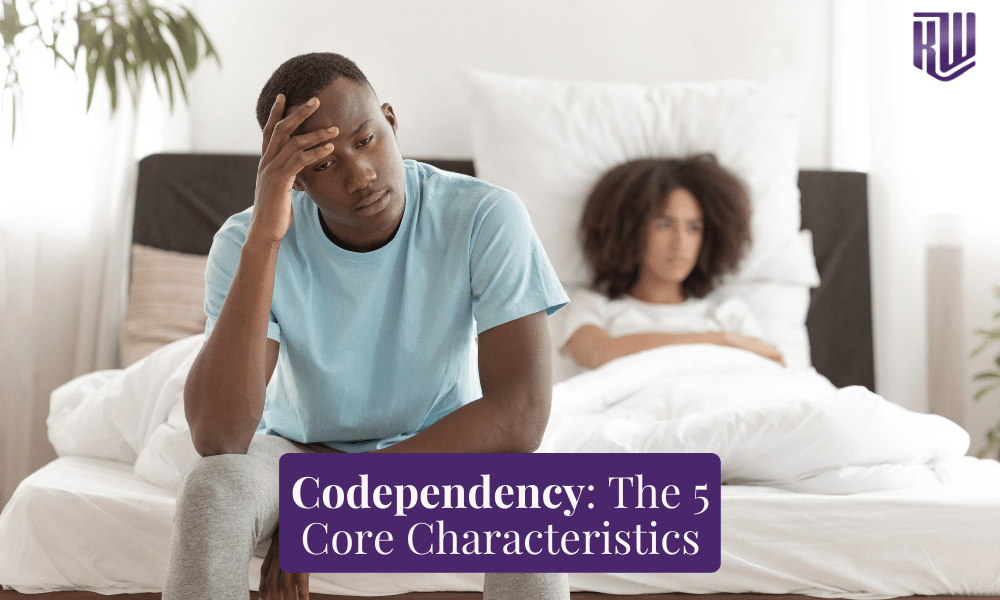
Here’s what most people don’t know about codependence: it’s a spectrum. And most narcissism teachers don’t even know about the falsely empowered codependent — and that’s a key piece you need to understand this dynamic.
On one end, you have the disempowered codependent — the love addict, the chaser, the empath. On the other end, you have the falsely empowered codependent — the love avoidant, the one who controls through emotional distance. And beyond that, at the extreme end, you have the narcissist.
I’ve watched this massive rise in “everybody’s a narcissist” content. And I’m watching it thinking — they’re not a narcissist. That’s a falsely empowered codependent. If you don’t know the difference, you could be with somebody you could actually have a relationship with, but because you’re miscategorizing them, you’ve missed your shot.
That’s you if you’ve labeled every difficult partner a narcissist without considering they might be a falsely empowered codependent who could actually heal.
The true narcissist manipulates through dominance, control, rage, and superiority. They look very similar to the falsely empowered codependent. But there’s a critical difference: the falsely empowered codependent can still touch their pain. They may not admit to it, but they can feel it. The narcissist almost never feels it.
That’s you if you’ve been so consumed by narcissism content that everyone who hurts you becomes a narcissist — and you never consider that the dynamic might be more nuanced than that.
The Empath’s Hidden Weapon: Moral Superiority
Here’s what the other teachers won’t tell you. And I’ll make it about me so it feels less shaming.
When you’re a disempowered codependent — a so-called empath — you manipulate through niceness, through selflessness, through emotional absorption, and through moral superiority.
That last one is going to hit hard. What does the empath generally say? “The narcissist comes after me because I’m so kind. I’m so loving. I’m so emotionally giving. I’m so emotionally connected and caring.”
Do you hear what’s happening? I said all those things. And this is the truth I had to face: I just elevated myself above the narcissist. I just made myself better than them. I just declared that I’m superior.
Sure sounds like a narcissist right now.
That’s you if you’ve ever described yourself as “too loving” or “too giving” and used that to explain why narcissists target you.
I call this narcissistic-like behavior — because the disempowered person actually wants to heal. They want to get better. They don’t want to be hurtful. They just don’t know they’re caught in a Worst Day Cycle™ shame-based survival persona running an old emotional blueprint. But from the victim position, they’re making themselves better than — which is a covert, falsely empowered, narcissistic-like adaptation. So they don’t have to feel their shame. They get to be “better than” instead of feeling and dealing with the original wound.
The empath’s moral superiority and the narcissist’s overt superiority are the exact same dynamic — just expressed from opposite ends of the power spectrum.
That’s you if you’ve spent more time analyzing the narcissist’s behavior than looking at your own patterns.
On one side, the true narcissist hides behind dominance, power, ego, and being right. On the other side, the empath hides just as much behind niceness and emotional absorption — but still thinks they’re better than. Both have been through unspeakable pain and are filled with unspeakable shame. Terribly low self-esteem and terribly high shame. I still fight both all day, every day. That’s what’s called being human and limited.
The Empath Myth: You Weren’t Born This Way
I want to show you what helped me blow the identity off this whole empath myth. The clinical psychologist Dr. Elaine Aron — the actual creator of the entire empath and highly sensitive person genre — by her own estimates, 20 to 30 percent of the population identifies as an empath. And they think it’s a condition you’re born with.
I encourage you to watch her documentary, Sensitive: The Untold Story. In the first five minutes, she exposes — without realizing it — her detachment from her authentic self, the adaptation of a survival persona, and the absorption of her parents’ Worst Day Cycle™ emotional blueprint.
In her own words, she describes how her parents repeatedly forced her into situations that were harmful to her. She describes learning to swim while being told a million times, “Don’t go near the water. Don’t drown.” Her parents were so filled with their own fear and shame — if something happens to you, we’ll be bad parents — that they couldn’t be attuned. They couldn’t connect with their child without their own emotional pain flooding the interaction.
She absorbed all their fear. All their shame. It went right into her. And then she was expected to learn to swim like other kids.
That’s you if your parents’ anxiety became your hypervigilance — and you called it sensitivity instead of recognizing the survival response.
She wasn’t born sensitive. Her sensitivity came from the messaging from her parents — not before it. Her parents’ repeated fear-laced, disempowering, shame-based demands created her sensitivity. She was conditioned. She experienced the exact same attachment-authenticity trauma bind that creates the Worst Day Cycle™ in all of us.
Nobody’s special. Nobody gets out of childhood without a wound.
But instead of facing that trauma and working through it, she did what was brilliant as a child: she created a denial-based survival persona that turned her pain into an identity. And if she creates the survival persona of “empath,” she gets her power back.
That’s you if you’ve turned your childhood wound into an identity that feels empowering — because the alternative is feeling the powerlessness underneath.
Do you see? Whether falsely empowered, disempowered, or narcissist — it’s all a power game. It’s all about regaining the power that shame stripped from us. Even the disempowered creates a survival persona that gives them false power — but it’s covert. Hidden behind “I’m always victimized.”
Why Narcissism Recovery Content Keeps You Stuck
Here’s the part that’s going to challenge everything you’ve consumed online.
If you truly believe your sensitivity is genetic, you’re never going to look at the childhood trauma that actually caused it. And you’re going to stay stuck in that Worst Day Cycle™ — trauma, fear, shame, and denial — forever.
The narcissism recovery space, at its worst, creates and monopolizes on making people professional victims. It validates the survival persona instead of helping you see through it. It tells you the narcissist is the entire problem — and never asks you to look at why you keep choosing them.
That’s you if you’ve watched hundreds of hours of narcissism content and still keep ending up in the same dynamic.
This isn’t about the teachers being malicious. It’s about a missing piece. Without understanding the Worst Day Cycle™, the codependence spectrum, and the survival persona, the best anyone can offer is validation of your pain — not a path out of it.
That’s you if validation feels good in the moment but nothing actually changes in your relationships.
The Worst Day Cycle™: Why Both Sides Stay Trapped
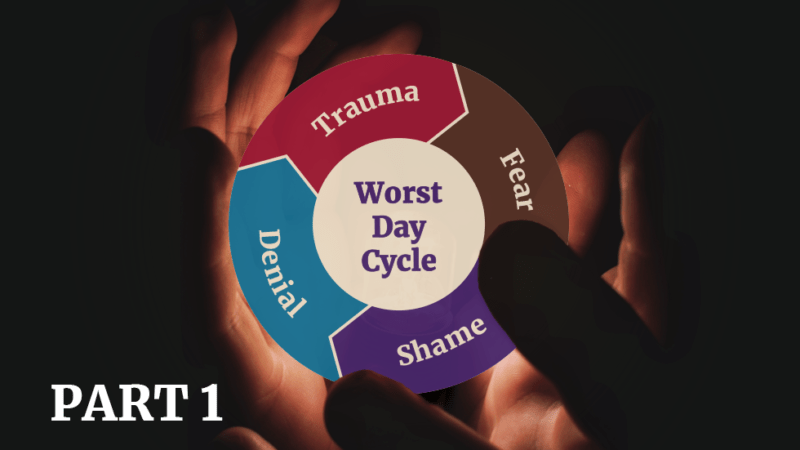
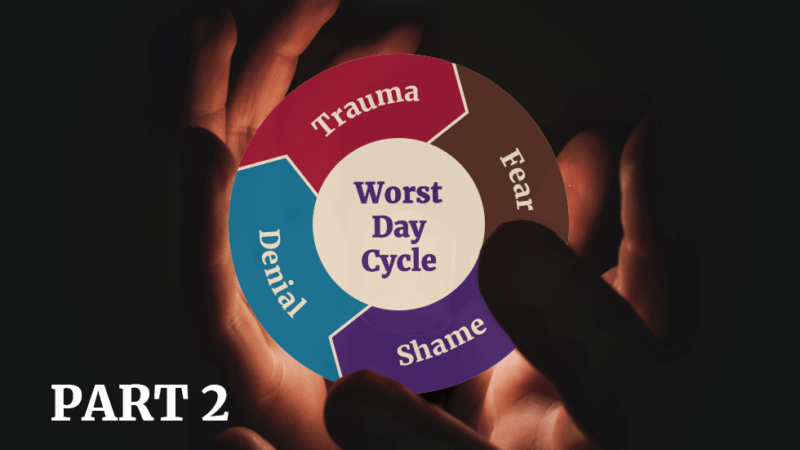
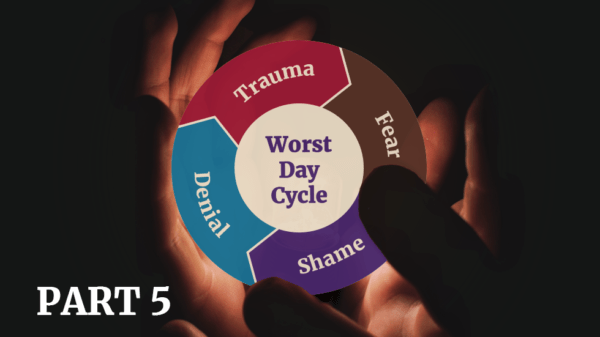
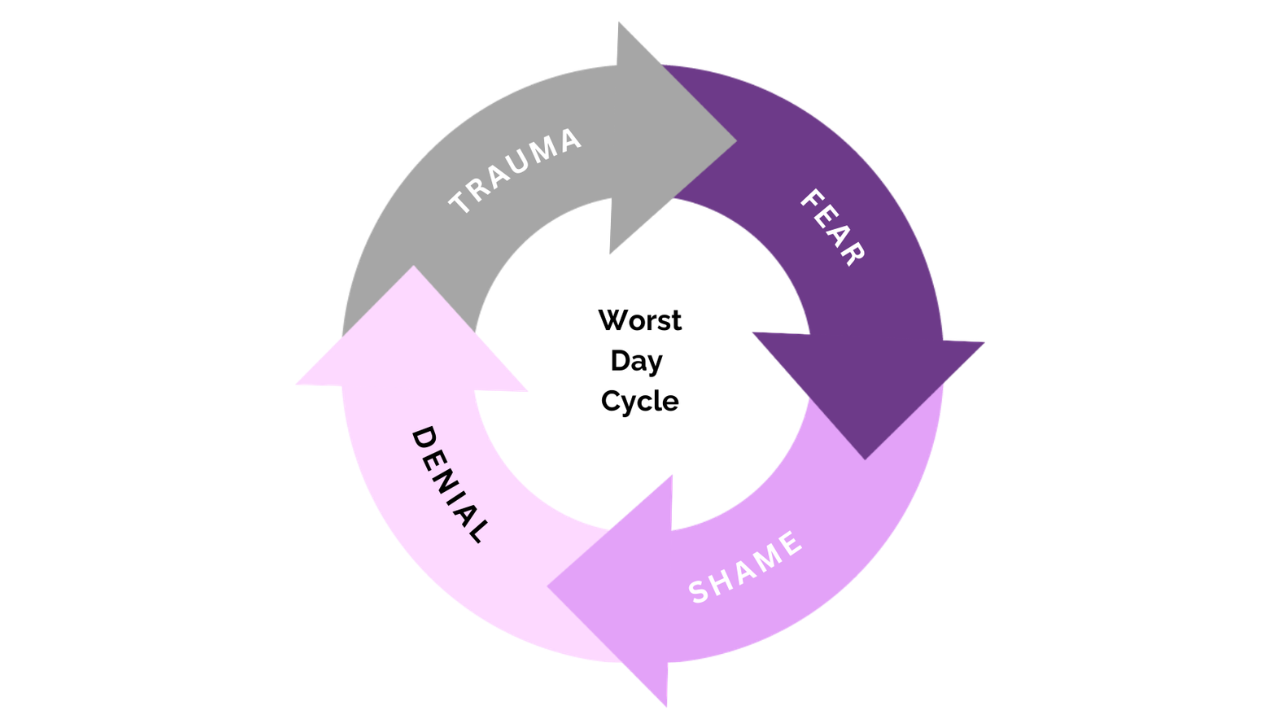
The Worst Day Cycle™ is the four-stage loop that keeps both the empath and the narcissist locked in their patterns: Trauma → Fear → Shame → Denial.
Childhood trauma — any negative emotional experience that created painful meanings — causes a massive chemical reaction in the brain and body. The hypothalamus generates chemical cocktails of cortisol, adrenaline, dopamine, and oxytocin misfires. The brain becomes addicted to these emotional states. It conserves energy by repeating known patterns — it can’t tell right from wrong, only known versus unknown.
Since 70% or more of childhood messaging is negative and shaming, adults repeat these painful patterns in relationships, career, friendships, health — everything. Fear drives the repetition because the brain thinks repetition equals safety. Shame is where you lost your inherent worth — “I am the problem.” And denial is the survival persona created to survive the pain.
The empath’s Worst Day Cycle™ looks like this: The childhood trauma of absorbing your parents’ unhealed shame creates fear of abandonment. That fear drives the shame belief that you must earn love through selflessness. And denial turns all of that into the “empath identity” — a survival persona that protects you from feeling the powerlessness underneath.
The narcissist’s Worst Day Cycle™ looks like this: The childhood trauma of having their authentic self crushed creates fear of vulnerability. That fear drives the shame belief that they are fundamentally defective. And denial turns all of that into the falsely empowered persona — controlling, dominant, never wrong — because admitting pain would destroy them.
That’s you if you can see the narcissist’s denial but can’t see your own — because yours is wrapped in niceness.
Both are desperate for the same thing: to be the parent they never had. Both want to be seen. Both want to be saved. The disempowered codependent can touch the pain — they can feel it even if they don’t admit it. The narcissist almost never feels it. But the desperation is identical.
The Authentic Self Cycle™: The Way Out
If you’re on the disempowered side and you want the solution, the way out begins with my Authentic Self Cycle™. It consists of four stages that directly combat the Worst Day Cycle™: Truth → Responsibility → Healing → Forgiveness.
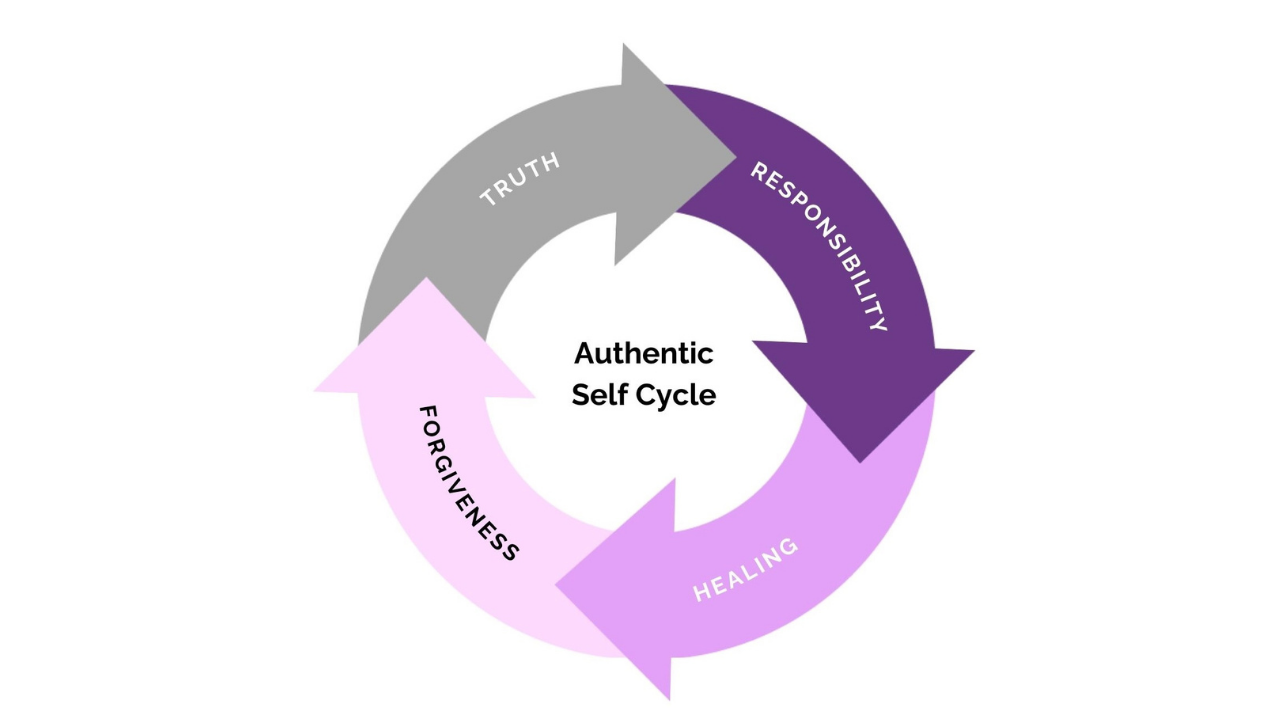
Truth means admitting that your empath identity is a survival persona built on childhood shame. Not a genetic gift. Not a superpower. A brilliant adaptation that kept you alive as a child — and is now keeping you stuck as an adult.
Responsibility means recognizing that you are not to blame for your childhood or for absorbing the empath identity. And now that you have new information, you are responsible for healing it. Responsibility is not blame. Blame looks backward. Responsibility looks forward.
Healing means putting a plan in place to go back to the origin — the moment you developed that Worst Day Cycle™ survival persona emotional blueprint — and learning the skills and tools to rewrite the emotional definitions and meanings that were placed into you. This is where you consume all of your caregivers’ shame, all the boundary violations, all the moments your parents’ fear became your survival persona identity.
Forgiveness happens automatically when you do the first three steps. From that place, you can see clearly that your caregivers weren’t out to get you. Almost all parents, teachers, and preachers just want the best for us. They were doing the best they could with their own unhealed pain. And you can forgive yourself — because you never knew you were unconsciously running an emotional blueprint that kept you attracted to people who mirror your wound.
That’s you if you’ve been waiting for the narcissist to change instead of looking at the blueprint that keeps drawing you to them.
The Emotional Authenticity Method™: Finding Your Original Wound
Now I want to share the process I developed after I saw all of this in myself. I call it the Emotional Authenticity Method™, and it will show you where your empath survival persona was born — and who you actually are without it.
Step 1: Somatic Down-Regulation. Focus on what you can hear for 15 to 30 seconds. You’re downregulating your emotional nervous system from the original trauma. You’re getting in touch with metacognition — the space between intellect and emotion. This is the highest form of intelligence, and this is where your authentic self lives, free of the pain.
Step 2: What am I actually feeling right now? Not simple feelings — the more depth and precision you can get, the better. Is it shame? Exposure? Fear? If you’re still reading this, it’s probably hitting hard. Get precise about it. Use the Feelings Wheel to expand your emotional vocabulary beyond “bad” or “anxious.”
Step 3: Where in my body do I feel it? We store the original wound in our bodies. The emotional blueprint runs physically. This is where you reconnect somatically with the wound that’s been driving your empath survival persona.
Step 4: What’s my earliest memory of having this exact same emotional and physical feeling? This is where you see the truth: you weren’t born an empath. You experienced a childhood moment — many moments — that created this. I promise you, this feeling is older than this blog post. You may not remember a specific event. You don’t have to. Just like my client earlier this week who said, “I was three. I don’t know what happened. I just know that ever since I was three years old, I felt invisible.” That’s the day your Worst Day Cycle™ survival persona emotional blueprint was built.
That’s you if you’ve always known something happened but could never quite name it — because you were too young to have the words.
Step 5: Who would I be if I never had this thought or feeling ever again? If it was wiped off the earth — this sense of being invisible, of absorbing everyone’s pain, of needing to earn love — what would be left over?
Do you see it? Light. Free. Confident. Safe. Empowered. You could have boundaries with people. You could say no. All the things you can’t do from the empath survival persona — you’re right there.
Step 6: Feelization. Sit in that feeling of the Authentic Self and make it strong. Create a new emotional chemical pattern to replace the old blueprint. Ask yourself: How would I respond to this situation from this feeling? What would I say? What would I do? Visualize and FEEL yourself operating from your Authentic Self. This is the emotional blueprint remapping and rewiring step — where you create a new addiction to replace the old one.
That’s you if you just felt something shift while reading those steps — even just a flicker of who you’d be without the weight of everyone else’s pain.
Real Life Signs You’re in the Empath-Narcissist Mirror
In Family
You’re the one everyone calls when there’s a crisis. You absorb your parents’ anxiety, your siblings’ drama, your children’s emotions — and you call it “being the strong one.” You overexplain every feeling so nobody gets upset. You apologize for things you didn’t actually do wrong. You feel guilty if you rest, if you say no, if you even think of asking for help.
That’s you if holidays leave you more drained than a full work week — because you’re carrying everyone else’s emotional weight.
In Romantic Relationships
You keep choosing partners who mirror your wound — dominant, emotionally unavailable, controlling — and you think it’s because you’re “too loving.” You confuse other people’s feelings with your own. You lose yourself in the relationship. You date through your survival persona, attracting people who love the mask, not you. And because of denial, neither of you is even aware you’re wearing one.
That’s you if every relationship starts with “this one is different” and ends with “why does this keep happening to me?”
In Friendships
You’re the listener, the fixer, the one who cancels plans to help a friend in crisis. You attract friends who take more than they give — and you tell yourself that’s just who you are. You can’t say no without a wave of guilt that feels physically suffocating.
That’s you if your friendships feel more like rescue missions than mutual connections.
At Work
You over-function, take on everyone’s responsibilities, and burn out — then resent the people who let you. You can’t set professional boundaries because saying no feels like abandonment. You’re the “easy one” at work, just like you were the easy child. Your boss’s stress becomes your stress. Your colleague’s deadline becomes your emergency.
That’s you if you’ve been the highest performer and the most exhausted person on your team — simultaneously.
In Your Body
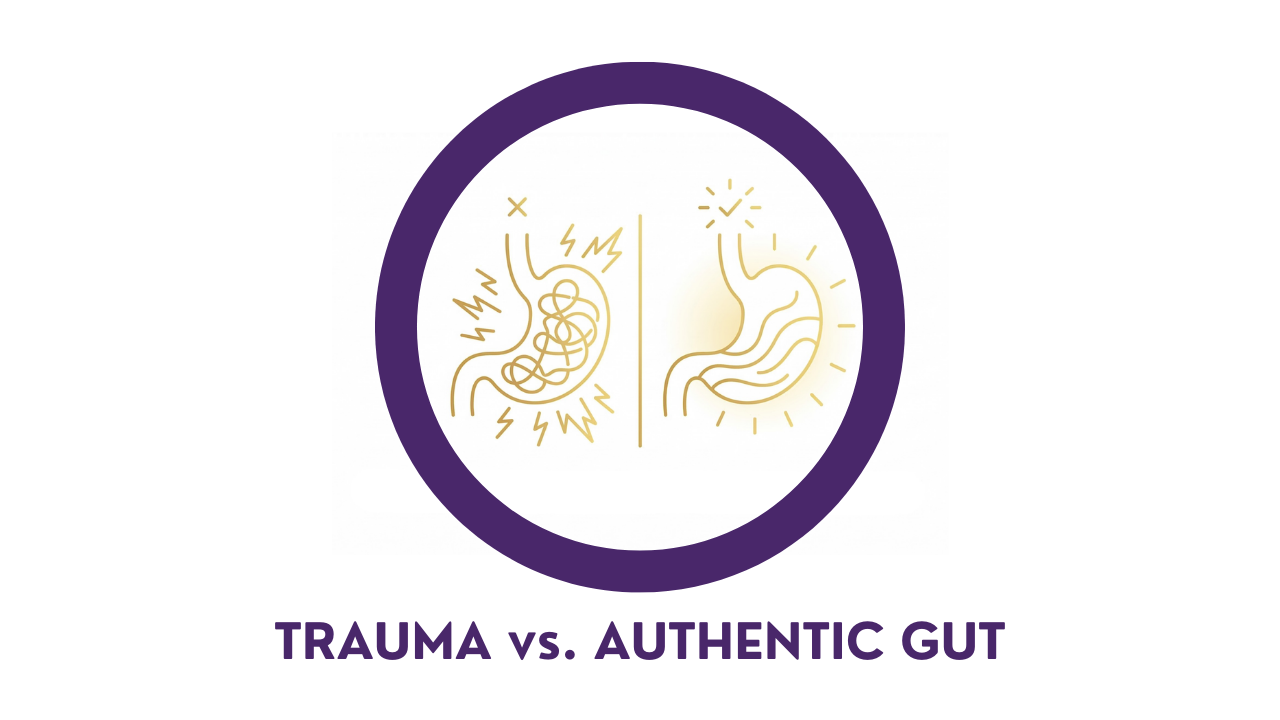
You carry the tension in your chest, your stomach, your jaw. You absorb other people’s emotions physically — walking into a room and “feeling” the energy isn’t a superpower, it’s a lack of emotional boundaries. Your nervous system is perpetually activated because it’s still running the childhood program that says: stay alert, absorb everything, don’t miss a signal or you won’t survive.
That’s you if your body keeps score of everyone else’s pain but you’ve never checked in on your own.
Your Next Small Step
The day I recognized what my empath identity really was — and stopped calling it what it wasn’t — was the day I actually started to heal. I had to admit that the nice, empathetic, caretaking version of me who could feel what everybody was feeling was actually a lack of boundaries, a codependent survival persona, and a way I was setting myself up to always be the victim.
I was walking on a golf course at sunset. It hit me. I literally buckled. And then immediately I felt light. “Oh my God. I can be free of this.”
Your next step is this: stop and ask yourself the five-word question from Step 4 of the Emotional Authenticity Method™: What’s my earliest memory? Trace the feeling you have right now — the one this article triggered — back to its origin. You don’t need to remember a specific event. You just need to know: this feeling is older than today.
That’s where your healing begins.
Frequently Asked Questions
Are empaths and narcissists really the same thing?
Not exactly the same — but they are two sides of the exact same wound. Both are survival personas built on unhealed childhood shame, operating from opposite ends of the codependence spectrum. The narcissist hides behind falsely empowered dominance. The empath hides behind disempowered niceness and moral superiority. Both are trying to regain the power that shame stripped from them.
If being an empath isn’t real, why do I feel other people’s emotions so intensely?
You feel other people’s emotions because you have no emotional boundaries — and that’s a direct result of childhood trauma, not genetics. As a child, your caregivers’ shame pierced your boundaries and you consumed all of their pain. You were never taught where you end and someone else begins. The Emotional Authenticity Method™ teaches you to trace this back to its origin and rebuild those boundaries from the inside out.
What’s the difference between a narcissist and a falsely empowered codependent?
The falsely empowered codependent can still touch their pain. They may not admit to it, but they can feel it — and with new information, they’re capable of healing. The true narcissist is so disconnected from the underlying shame that they almost never feel it. Many people are mislabeling falsely empowered codependents as narcissists, which means they’re writing off someone who could actually do the work.
How do I stop attracting narcissists into my life?
You stop attracting narcissists by healing the shame wound that makes you a match for them. As long as you’re operating from a disempowered survival persona, you’ll keep attracting people who mirror your childhood dynamic. The Authentic Self Cycle™ — truth, responsibility, healing, forgiveness — addresses the root cause. It’s not about learning to spot red flags. It’s about changing the emotional blueprint that draws you to them.
Can the Emotional Authenticity Method™ help with narcissistic abuse recovery?
Yes. The Emotional Authenticity Method™ is a 6-step process designed to take you back to the origin of your survival persona — the moment in childhood when your emotional blueprint was written. By tracing your current patterns back to their source, you can rewrite the blueprint that keeps you in the empath-narcissist cycle. Step 6, Feelization, specifically rewires the emotional chemical pattern so you stop repeating the same dynamic.
Is it my fault that I keep ending up with narcissists?
No. You are not to blame and you are not broken. From the moment you were born, you’ve been doing the best you could with the information you had. But now you know more — which means you can equip yourself with the skills and tools to do more. You were programmed by your childhood emotional blueprint. Programs can be rewritten. That’s what the Emotional Authenticity Method™ and the Authentic Self Cycle™ are designed to do.
The Bottom Line
I know this has been hard to hear. It was hard for me to face in myself. I had to admit that every piece of my empath identity — the niceness, the caretaking, the ability to feel what everyone around me was feeling — was actually shame running a survival persona that kept me a victim.
But the day I saw it was the day I was set free.
You are not to blame. You are not broken. There is nothing wrong with you. You haven’t done anything wrong. You were programmed by perfectly imperfect caregivers who were doing the best they could with their own unhealed pain. That’s all it is — a program. And programs can be rewritten.
I hope you can see the way out now. I hope you can see that you can be free of this.
Recommended Reading
If you want to go deeper into the science and psychology behind these patterns, these books changed my understanding and will change yours:
- Facing Codependence by Pia Mellody — The definitive work on how childhood trauma creates codependent patterns, including the falsely empowered and disempowered dynamics discussed in this article.
- When the Body Says No by Gabor Maté — How suppressed emotions and the inability to say no — the empath pattern — manifests as physical illness and chronic stress.
- Codependent No More by Melody Beattie — The classic that helps you recognize and break free from the caretaking, people-pleasing patterns that keep you in the disempowered position.
- The Gifts of Imperfection by Brené Brown — Understanding how shame drives the survival personas and how vulnerability — not emotional absorption — is the path to authentic connection.
Ready to Break Free from the Empath-Narcissist Mirror?
Start with my free Feelings Wheel exercise — it’s the tool I use in Step 2 of the Emotional Authenticity Method™ to build emotional granularity and reconnect with what you’re actually feeling (instead of absorbing what everyone else is feeling).
If you’re ready to go deeper, explore the courses at The Greatness U:
- Emotional Blueprint Starter Course — Individual ($79) — Your personal roadmap for understanding your survival persona and emotional blueprint
- Relationship Starter Course — Couples ($79) — For understanding the codependence dynamic between you and your partner
- Why We Can’t Stop Hurting Each Other ($479) — Deep dive into why the empath-narcissist pattern keeps repeating
- Why High Achievers Fail at Love ($479) — For the falsely empowered codependents who succeed at everything except relationships
- The Shutdown Avoidant Partner ($479) — Understanding the falsely empowered side of the mirror
- Tier 1: Mapping the Blueprint ($1,379) — The comprehensive program for rewriting your emotional blueprint
And if you want to keep learning right now, watch these next: