Category: Abandonment

  • Trauma Bonding: The 7-Stage Emotional Cycle That Keeps You Trapped

    Trauma Bonding: The 7-Stage Emotional Cycle That Keeps You Trapped

    What Is Trauma Bonding and Why Can’t You Just Leave?

    It’s 2 a.m. and your phone lights up. A text. An apology. A promise. After three weeks of silence, they’re reaching out. Your heart races. Relief floods through your body. You know you said you were done. You know every logical argument for leaving. You know what your friends think. But right now, in this moment, the only thing that matters is that they came back.

    By morning, you’re planning how to make it work. By next week, they’ve withdrawn again. By the end of the month, you’re begging them to talk to you. And when they finally do — when they finally apologize, when they finally show up the way you needed them to — you feel like you can breathe again. Like you’ve been rescued. Like this is proof that love is still possible.

    That’s you.

    This isn’t weakness. This isn’t stupidity. This isn’t you settling for less because you don’t know your worth. You’re trapped in something far more neurobiological, far more powerful, and far more treatable: a trauma bond.

    A trauma bond is not the same as love. It’s not an unhealthy attachment. It is a survival attachment — a nervous system state where your brain has learned to mistake danger for love, fear for connection, and chaos for chemistry. It forms when your childhood blueprint fused love with unpredictability, conditional affection, shame, and the desperate need to perform to earn safety. So when an adult partner recreates that exact pattern — the intensity, the withdrawal, the intermittent crumbs of affection — your body doesn’t see danger. It sees home.
    Trauma Chemistry emotional cycle by Kenny Weiss

    The reason you can’t leave — despite everything you know, despite every promise to yourself, despite the pain — is that your nervous system has become addicted to the emotional rollercoaster. Not addicted to them. Not addicted to love. Addicted to the cycle itself: the crash and rescue, the fear and relief, the shame and redemption. Each time they come back, your brain floods with dopamine, oxytocin, and cortisol all at once. Your body experiences this as survival. As love. As proof that you matter.

    The person who can’t leave is not broken. They are reliving their blueprint.

    The trauma-bonding cycle is a 7-stage internal emotional journey that hijacks your fear system, activates your childhood shame identity, and uses intermittent reward to keep you trapped. Each stage rewires your nervous system to feel safer in the chaos than in stability. Each stage deepens the bond. Each stage makes leaving feel like emotional death.

    Table of Contents

    Trauma bonding is one of the least understood attachment patterns in psychology — and the most painful to experience. You feel the physical ache of wanting someone who hurts you. You experience genuine love mixed with genuine fear. You alternate between feeling seen and feeling worthless. And every single day, your nervous system is working against your conscious mind, keeping you locked in the cycle.

    The truth nobody tells you: You’re not addicted to them — you’re addicted to the emotional rollercoaster. And your nervous system has been trained since childhood to chase exactly this kind of chaos.

    But here’s what matters right now: The moment you understand the blueprint, the chemistry changes. Not overnight. But the fog starts to lift. You begin to see the pattern. You begin to feel your body’s reaction rather than just obey it. And that shift — that moment of recognition — is where freedom begins.

    What Are the 7 Stages of the Trauma-Bond Emotional Cycle?

    The trauma-bond cycle is not random. It’s not a puzzle with no solution. It is a predictable, repeating neurobiological sequence that your nervous system enters the moment the relationship begins. Understanding each stage is the first step to breaking free from it. Because you cannot heal what you don’t see.

    Stage 1: The Intensity Hook

    This is how it starts. This feels different. This feels powerful. This must be love.

    Chemistry spikes. Attention floods in. Your nervous system lights up like you’ve never felt before. You feel chosen. Special. Seen. The fantasy forms instantly. Text messages are constant. They know exactly what to say. They seem to understand you in ways nobody else ever has. The pace is fast. Too fast, but you don’t notice because the dopamine is flooding through your system.

    You think: “Finally. This is it. This is what I’ve been waiting for.”

    That’s you.

    But this is not love. This is blueprint activation. Intensity is the bait. Your nervous system recognizes this exact flavor of attention — the obsessive focus, the promises, the “I’ve never felt this way before” — because it matches the way your parent or caregiver sometimes made you feel special. It’s intoxicating because it’s familiar. It’s familiar because it touched a wound you’ve carried your entire life: the wound of conditional love.

    Stage 2: The Fear Activation

    Then inconsistency appears. A text goes unanswered for hours. They’re distant in a conversation. They mention an ex. Something shifts.

    Fear floods your body. Abandonment panic activates. Hypervigilance increases. You begin scanning their every move, every tone change, every moment of distance. Your thoughts race. Did I do something wrong? Are they pulling away? What if they leave? What if I lose this?

    Your nervous system is now in full survival mode. And here’s the trap: You need them to soothe the fear they created. The same person who triggered the abandonment anxiety is the only person who can make it stop. This is the addiction mechanism. This is how the bond deepens.

    That’s you — frantically checking your phone, replaying conversations, wondering what you did wrong, feeling the panic rise in your chest, desperate for them to come back and make it stop.

    Stage 3: The Shame Collapse

    Now comes the internal collapse. I must have caused this. I’m the problem.

    The child self carries shame. You internally collapse into the childhood narrative: “I messed up.” “I said something wrong.” “I pushed too hard.” “I’m too much.” “I’m not enough.” “I need to earn this back.” This is the shame identity from childhood. It reopens the wound your parent or caregiver created when love felt conditional, unpredictable, tied to your performance.

    You start modifying yourself. You become smaller. You apologize for things you didn’t do. You take responsibility for their emotions. You contort yourself to fit the shape they need you to be. Because at the deepest level, you believe: If I can just be perfect enough, if I can just understand them deeply enough, if I can just love them correctly, they won’t leave me.

    This is not partnership. This is reenactment.
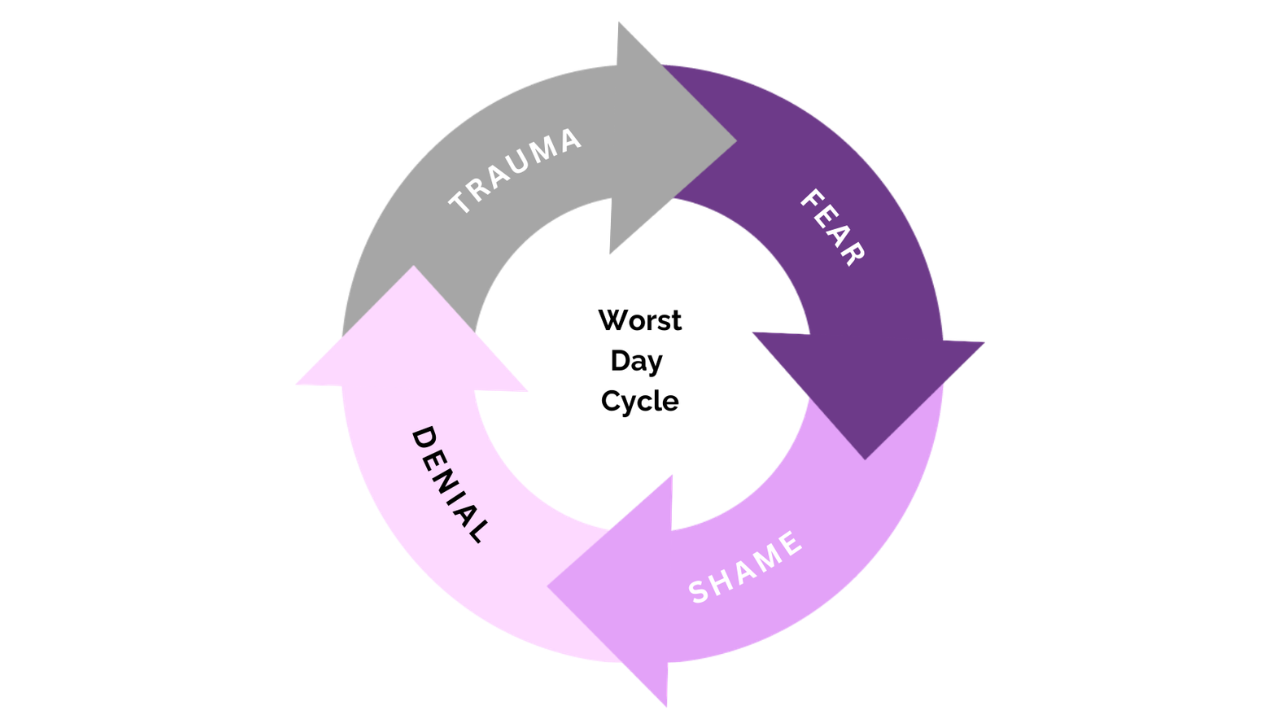
    Worst Day Cycle by Kenny Weiss

    Stage 4: The Intermittent Reward

    Then something shifts. A text. A moment of affection. A crumb of validation. Temporary closeness. They apologize. They say they were stressed. They promise it won’t happen again.

    Your brain releases dopamine. Oxytocin floods through your system. Relief washes over you. You survived. They came back. Your nervous system decides: This is love. This is proof that we can make it work. This is survival.

    That’s you — temporarily at peace, convinced that this time it’s different, that the good moments prove the relationship is worth fighting for.

    This is the most addictive stage. It is identical to gambling reinforcement. A slot-machine effect. Imagine pulling a slot machine handle 100 times with no payout. You stop. But if every 8th or 15th pull gives you a jackpot — you will pull that handle until your fingers bleed. This is your nervous system. The intermittent reward is neurologically more addictive than consistent reward. Your brain becomes wired to chase the crumb.

    Stage 5: The Hope Spike

    Hope becomes intoxicating. Maybe things will go back to how they were at the beginning. Maybe this time the good phase will last. Maybe you’ve finally figured out how to keep them happy. Maybe the fantasy is actually possible.

    Hope becomes emotional anesthesia. It’s the reason you stay. It’s the justification for the harm. You tell yourself: “If I can just hold on a little longer, if I can just be patient, if I can just love them enough, we’ll get back to the beginning.”

    But this is not hope. This is a survival hallucination. Your body is chasing the first high — the intensity hook — and it believes that if you suffer long enough, if you perform perfectly enough, you’ll get back there.

    That’s you — staying in a situation that hurts because hope has become your drug of choice.

    Stage 6: The Rejection/Withdrawal Loop

    Hope crashes. They pull away again. They’re pulling away again. I need to fix it.

    Panic. Dread. Helplessness. Shame. Urgency. Longing. Your nervous system is in full abandonment alarm state. You go into pursuit mode. You text. You call. You show up. You apologize again. You offer solutions. You perform emotional labor. You self-abandon to keep them present.

    This loop reenacts the childhood moment when love disappeared. When you learned that if you weren’t perfect enough, if you didn’t manage the parent’s emotions correctly, if you didn’t read their mood and adjust accordingly, they would withdraw their presence. And their presence was your survival.

    So now you’re willing to do anything — sacrifice anything, become anyone — to prevent that original abandonment from happening again.

    Stage 7: The Reattachment Stage

    When they return, apologize, give affection: relief floods through you. Euphoria. Safety. Reconnection. Emotional completion. You made it through. You survived. Love won.

    That’s you — finally able to breathe again, convinced that this proves the bond is real, that the cycle was worth it, that you made the right choice to stay.

    But here’s what’s actually happening: This is not connection. This is trauma relief mistaken for connection. Your nervous system has been in sympathetic activation (fight-or-flight) for weeks. When the partner returns and gives affection, you shift back into parasympathetic activation (rest-and-digest). The contrast feels like profound love. But it’s just the absence of fear.

    The system reattaches stronger. The bond deepens. The cycle restarts. And each time it cycles, the addictive neural pathways get stronger, the shame belief gets deeper, and the cycle becomes harder to break.

    This is not an unhealthy attachment. This is a survival attachment. And survival attachments are exponentially harder to break than unhealthy attachments because they’re not rooted in bad choice — they’re rooted in nervous system hijacking.

    How Does Your Childhood Blueprint Create Trauma Bonds?
    Emotional Blueprint — the childhood programming that defines what love, safety, and belonging mean for the trauma-bonded adult — by Kenny Weiss

    The trauma-bonding cycle doesn’t start with your partner. It starts in your childhood.

    The trauma bond forms when childhood love was inconsistent, confusing, conditional, unpredictable, mixed with fear or shame, tied to performance. Your parent or caregiver sometimes made you feel special, chosen, deeply seen. But that safety was not guaranteed. It disappeared when you made a mistake. It shifted when they had a bad day. It was withdrawn when you needed it most.

    So your nervous system learned something crucial to survival: Love includes longing. Love includes anxiety. Love includes tension. Love includes instability. Love includes waiting for connection. Love includes fear of abandonment. Love includes performance. Love means being hypervigilant to someone else’s emotional state.

    Your child brain didn’t have words for this. But your body encoded it. Your nervous system created a theta brain wave state — that’s the frequency where deep belief formation happens — and it recorded the pattern: Love is uncertain. Love must be earned. Love can disappear. Love includes fear.

    When you enter adulthood and encounter a partner who recreates this exact pattern — the intensity, the withdrawal, the inconsistency, the conditional affection — your body doesn’t sound an alarm. It recognizes home. It says: This is love. This is what love feels like. This is safe because it’s familiar.

    That’s you — unconsciously drawn to the exact person and pattern your nervous system learned to call love.

    Your blueprint also created your survival persona — the protective structure you built to navigate a world where love was dangerous.
    Three Survival Persona Types by Kenny Weiss

    There are three survival persona types:

    The Falsely Empowered Persona — This is the person who controls, dominates, rages, intimidates to avoid vulnerability. They learned that showing need meant abandonment, so they became the one who never needs, never depends, never asks. They became the pursuer, the one who pulls, the one who demands. In a trauma bond, this person might be the one creating the inconsistency — the hot and cold, the withdrawal, the punishment — because intimacy triggers their core wound.

    The Disempowered Persona — This is the person who collapses, people-pleases, loses themselves to avoid abandonment. They learned that their needs were too much, so they disappeared into someone else’s needs. They became the one who chases, the one who pursues, the one who performs. In a trauma bond, this is the person chasing the intermittent reward, apologizing for things they didn’t do, modifying themselves to keep the partner present.

    The Adapted Wounded Child — This is the person who oscillates between falsely empowered and disempowered. They can be demanding and controlling, then suddenly collapse into shame and people-pleasing. They’re the chameleon. They adapt moment-to-moment based on what they sense the other person needs. In a trauma bond, this person is doing both — they’re sometimes withdrawn and sometimes pursuing, sometimes raging and sometimes begging.

    That’s you — in one of these three personas, or oscillating between all three, depending on what you learned survival meant in your childhood home.

    Here’s what matters: The trauma bond is not a character flaw. It’s not a sign of weakness. It is a direct replication of your childhood blueprint playing out in real time with adult stakes. You are not destined to repeat trauma bonds — you are reliving the blueprint until you heal it.

    Why Does Trauma Bonding Destroy Your Adult Relationships?

    Trauma bonding doesn’t just keep you trapped with one person. It rewires your entire relationship capacity. It teaches your nervous system what to crave. And it can destroy your ability to recognize, attract, or stay with healthy partners.

    Here’s why: Your nervous system mistakes danger for love.

    When you meet someone who is genuinely kind, consistent, reliable, emotionally available — someone who offers stability without chaos — your nervous system often doesn’t recognize it as love. Because it doesn’t match the blueprint. It doesn’t have the intensity. It doesn’t have the fear component. It doesn’t have the intermittent reward. It doesn’t activate your wounds.

    So healthy partners feel boring at first because they don’t match the chaos your body learned to chase.

    That’s you — wondering why the good person doesn’t excite you the way the chaotic person does, interpreting the lack of drama as a lack of chemistry, unconsciously sabotaging the healthy relationship to create the familiar chaos.

    This is the pursuer-distancer dynamic. And it’s deadly in relationships.
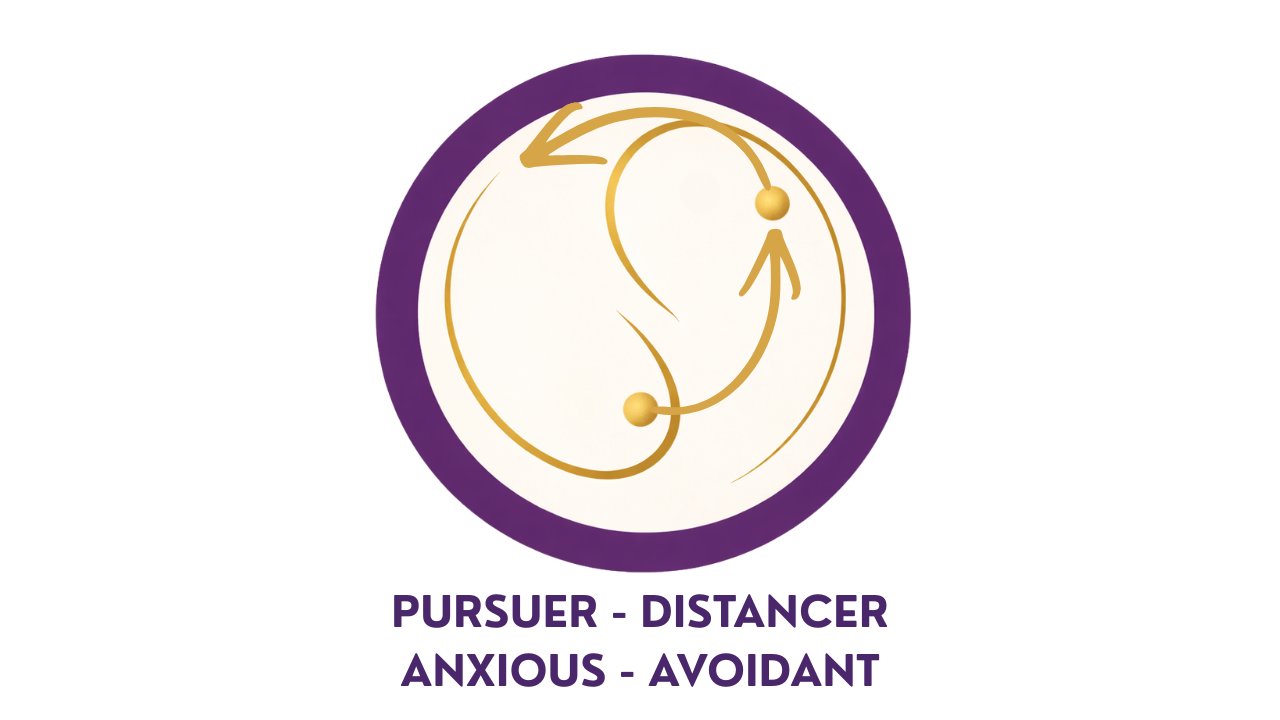
    Pursuer Distancer Pattern by Kenny Weiss

    The person in the disempowered persona becomes the pursuer. They chase. They text. They pursue connection. They blame themselves for distance. They do emotional labor. And the more they pursue, the more their partner withdraws. Because pursuit triggers the falsely empowered partner’s need for control and space.

    The more the partner withdraws, the more the pursuer escalates. They see the withdrawal as abandonment. Their survival is at stake. So they pursue harder. They become more desperate. They lose more of themselves.

    The partner sees the pursuit as suffocation. They feel trapped. Their autonomy is threatened. So they create more distance. They punish the pursuit. They withhold affection to maintain control.

    Neither person is wrong. Both are operating from their blueprint. Both are trying to survive. And the cycle accelerates until one person completely loses themselves or one person leaves.

    Trauma bonds also destroy your body wisdom. Your gut is lying to you. The nervous system signals you’re interpreting as intuition are actually fear responses. They’re not telling you this person is your soulmate. They’re telling you this person matches your blueprint. These are two completely different things.
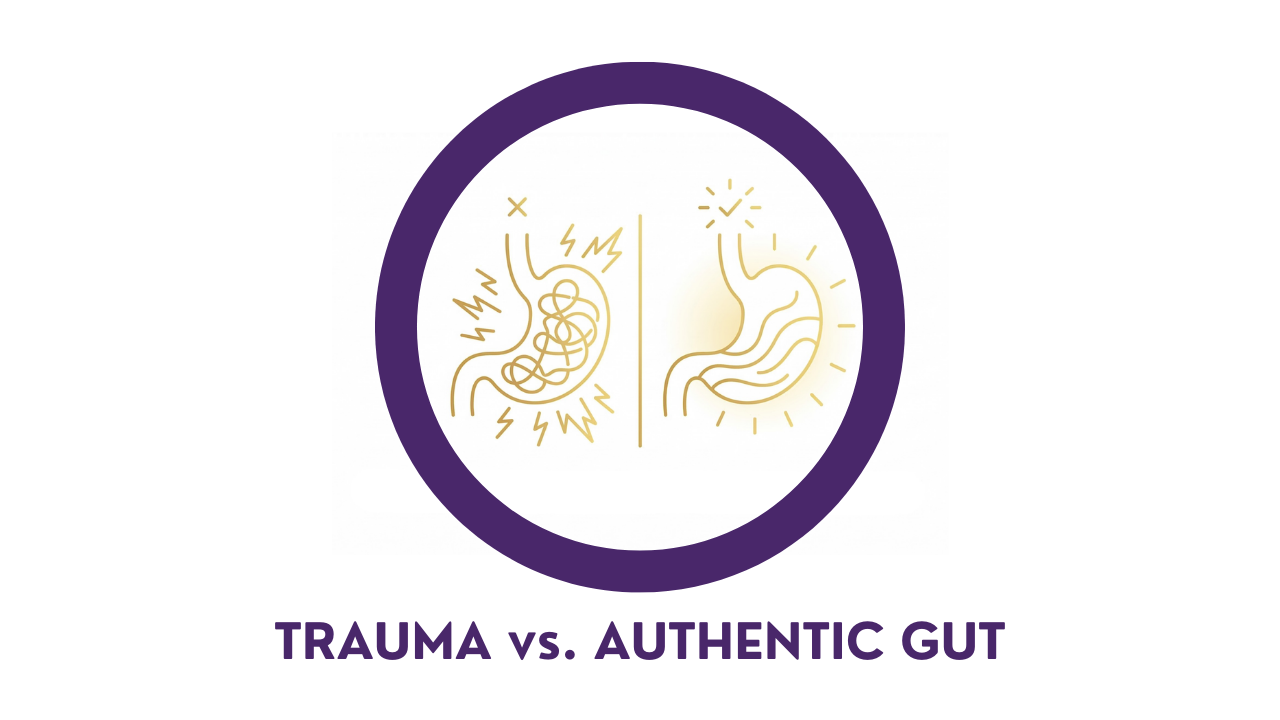
    Trauma Gut vs Authentic Gut by Kenny Weiss

    Your trauma gut pulls you toward people who are familiar — which usually means they’re recreating your original wound. Your authentic gut pulls you toward people who are genuinely healthy, trustworthy, and aligned with your values — which usually means they feel unfamiliar, boring, or “not right.”

    That’s you — caught between two nervous systems, listening to the trauma gut because it feels louder, stronger, more alive, and then wondering why every relationship ends in the same pain.

    Why Has Everything You’ve Tried Failed to Break the Bond?

    You’ve read the books. You’ve been to therapy. You’ve done the boundary work. You’ve journaled. You’ve meditated. You’ve said “I deserve better” a thousand times. You’ve made a firm decision to leave. And yet… you still reach out. You still check their Instagram. You still pick up the phone. You still convince yourself that this time will be different.

    And you feel like you’re failing.

    You’re not failing. The advice you’ve been given is failing you.

    Most relationship advice is designed for unhealthy attachments — the kind where a person is in a relationship with someone who doesn’t match their values, someone they’ve outgrown, someone they chose from a place of low self-esteem. That advice says: Create boundaries. Increase your self-esteem. Remove yourself from the situation. Do the work on yourself.

    And that advice is logical. It makes sense cognitively. But it doesn’t account for the fact that you’re not in an unhealthy attachment. You’re in a survival attachment. And survival attachments live in your nervous system, not in your conscious mind.

    That’s you — doing all the “right” things cognitively while your nervous system is screaming for the familiar pattern, for the intermittent reward, for the fear-and-relief cycle that has become your definition of love.

    Boundary scripts fail because they assume you can think your way out of a nervous system hijacking. You can’t. Saying “no” to someone who activates your abandonment wound requires that your nervous system feel safe. But your nervous system is designed to pursue this person to prevent abandonment. Every boundary you set triggers the fear you’re trying to prevent.

    Leaving fails because it assumes you’re choosing to stay. You’re not. Your nervous system has classified leaving as abandonment — which is death in the language of survival. So your body will sabotage your conscious decision to leave because leaving feels more dangerous than staying.

    Therapy fails if it’s not specifically addressing the nervous system hijacking and the childhood blueprint. Generic talk therapy won’t rewire the neural pathways that have been reinforced ten thousand times. You need to address the body, the nervous system, the shame identity, the belief that love equals fear.

    Self-esteem work fails because the problem isn’t your self-esteem. You can feel worthy and still stay in a trauma bond. Worthiness doesn’t rewire your nervous system. Worthiness doesn’t change what your body has learned to call love.

    Books about narcissistic abuse fail because they’re describing something done TO you — as if you’re a passive victim of someone else’s tactics. And while trauma bonding can occur with narcissistic people, the real issue is not what they’re doing. It’s what your nervous system is doing. It’s how your system is interpreting and responding to their behavior. It’s the blueprint that made you attractive to them in the first place and made their behavior feel like home.

    The reason you can’t leave is not because you’re weak. You don’t stay because you’re weak. You stay because the cycle hijacks your nervous system, your fear, your shame identity, your earliest emotional memories, your need for relief. You stay because leaving triggers an existential panic that feels like death. You stay because your body has been wired since childhood to chase this exact pattern.

    But here’s the critical part: That means the solution is not willpower. It’s not motivation. It’s not “just leaving.” The solution is rewiring the nervous system itself. The solution is healing the childhood wound that created the blueprint. The solution is creating a new emotional chemical addiction — one rooted in your authentic self instead of your survival persona.

    How the Emotional Authenticity Method™ Breaks the Trauma Bond

    The way out of the trauma bond is not leaving. Leaving is just a physical action. The way out is healing. And healing happens through a specific methodology designed to rewire your nervous system from the inside out.
    Emotional Authenticity Method™ — the six-step process that rewires trauma bonding patterns at the nervous system level — by Kenny Weiss

    That methodology is the Emotional Authenticity Method™ (EAM).

    The EAM is a six-step process that teaches your nervous system to recognize the difference between trauma gut and authentic gut, between survival attachment and healthy connection, between performing and being. It rewires the shame identity. It dissolves the fear of abandonment by showing your system that you can survive alone. It creates a new emotional chemical addiction rooted in your authentic self.

    Here’s how it works:

    Step 1: Somatic Down-Regulation

    Before you can think, you must calm your nervous system. When you’re activated by a text, a silence, a fear that they’re leaving, your nervous system is in sympathetic dominance (fight-or-flight). Your prefrontal cortex — the thinking brain — goes offline. You can’t logic your way out. You can’t boundary your way out. You must down-regulate first.

    Somatic down-regulation means bringing your awareness into your five senses for 15-30 seconds. What can you hear right now? Not think about. Hear. The ambient sound. The texture of the chair on your skin. The temperature of the air. The taste in your mouth. By anchoring into present sensory experience, you signal safety to your nervous system. You’re not in the danger that your mind is spinning about. You’re here. You’re safe. You’re alive.

    That’s you — pausing before you text back, before you pursue, before you collapse into shame, and bringing your system back to the present moment.

    Step 2: What Am I Feeling Right Now?

    Once your nervous system is regulated, you can access your thinking brain. Now ask: What am I actually feeling? Not thinking. Feeling. Is it fear? Shame? Longing? Panic? Rejection? Grief? Don’t judge it. Just name it.

    This sounds simple. It’s not. Most people who grew up in traumatic or enmeshed families learned to dissociate from their feeling state. They learned to override their emotions with thinking or performing or people-pleasing. So this step is about reconnecting to the emotional world you learned to abandon.

    Step 3: Where in My Body Do I Feel This?

    Emotions live in the body. The abandonment panic might live as tightness in your chest. The shame might live as heaviness in your shoulders. The longing might live as an ache in your throat. Move your awareness into the sensation. Where is the feeling physically located? Is it sharp or dull? Is it moving or static? Is it warm or cold?

    By creating specificity around the somatic experience, you’re teaching your nervous system that this is information, not danger. You’re becoming a witness to your own internal state rather than being consumed by it.

    Step 4: What Is My Earliest Memory of Having This Exact Feeling?

    Here’s where the blueprint healing happens. That tightness in your chest when they don’t text you back — when was the first time you felt this? Was it when your parent withdrew after you made a mistake? Was it when a sibling was favored over you? Was it when you sensed a parent’s unhappiness and believed you caused it?

    This feeling you’re experiencing right now is not about your current partner. It’s the original wound being triggered. Your current partner is just the activator. The real ache is ancient.

    That’s you — suddenly recognizing that the intensity of your reaction is disproportionate to the current situation because you’re not reacting to the present. You’re reacting to the past.

    This is crucial. Because the moment you recognize that this is an old wound, your nervous system begins to shift. The current threat becomes less urgent. The attention moves to the original hurt. And that original hurt is something you can actually heal — because it’s not about your partner. It’s about you and your childhood.

    Step 5: Who Would I Be If I Never Had This Feeling Again?

    This is the visioning step. You’re creating a new possibility. Not denying the feeling. Not suppressing it. But imagining: What if your nervous system didn’t go into panic at the sign of distance? What if you could be in a relationship and feel secure even when there are gaps in contact? What if your worth wasn’t tied to someone else’s consistency?

    Who would you be? How would you move differently? How would you speak differently? How would you make decisions differently? What would be possible?

    Most people skip this step because it feels too big, too abstract, too impossible. But this step is where you’re programming a new neural pathway. You’re creating a vision of your authentic self — the self that exists independent of the trauma bond, independent of the other person, independent of the cycle.

    Step 6: Feelization — Sit in the Authentic Self Feeling and Create a New Chemical Addiction

    Now comes the rewiring. Sit in that vision. Feel it in your body. What does it feel like to be secure? To be grounded? To know your worth is internal? To trust yourself? To not need rescue?

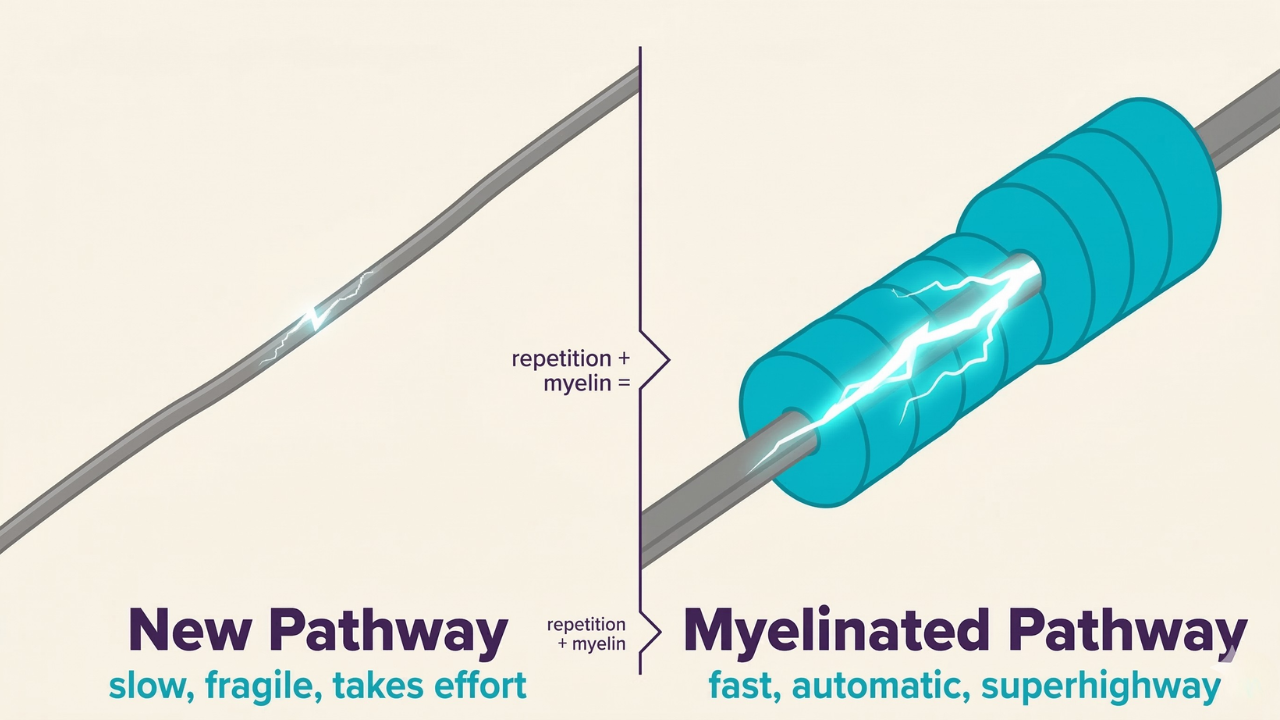
    This is not positive thinking. This is not affirmations. This is a nervous system experience. You’re creating a somatic state — a full-body felt sense of your authentic self. And you’re holding that state for as long as you can. Because every second you sit in that feeling, you’re creating a neural pathway. You’re building a new emotional chemical experience. You’re training your nervous system that there’s another way to feel. And that feeling is accessible to you.

    That’s you — slowly rewiring the addiction from “fear and relief” to “grounded and present,” from “performing and being seen” to “being yourself and being okay with that.”

    This is where the Emotional Authenticity Method™ connects to the larger healing frameworks. The Worst Day Cycle™ is the problem — the cycle that keeps you trapped. The Authentic Self Cycle™ is the vision of what’s possible when the WDC is healed.

    In the Authentic Self Cycle™, you move from Truth → Responsibility → Healing → Forgiveness. You see the truth about what happened. You take responsibility for your choices (not the blame, not the guilt — the responsibility). You do the work to heal the wound. And you forgive — not them necessarily, but yourself for staying so long, yourself for not knowing better, yourself for surviving the only way you knew how.
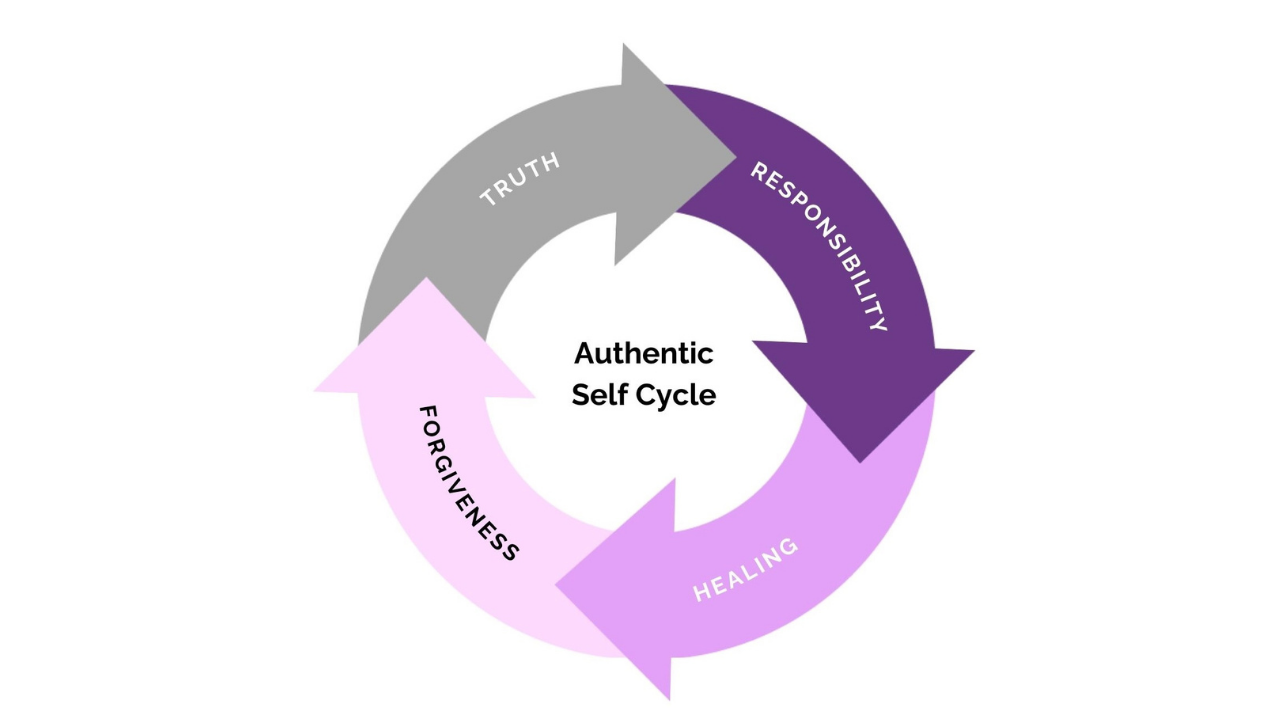
    Authentic Self Cycle™ — truth, responsibility, healing, and forgiveness — the path out of trauma bonding and into secure love — by Kenny Weiss

    The EAM is the methodology that gets you there. Step by step. Feeling by feeling. Rewiring your nervous system one encounter at a time.

    What Does Breaking a Trauma Bond Look Like in Real Life?

    Healing isn’t linear. It’s not: week 1 you’re trapped, week 8 you’re free. Breaking a trauma bond is a slow, spiraling process where you gradually develop capacity to feel your authentic self, gradually recognize the cycle faster, gradually respond differently, gradually stop needing the intermittent reward.

    But here’s what shifts:

    In Family Bonds

    Before: You call your parent hoping for approval. They’re cold. You collapse into shame, believing you did something wrong. You call back, overexplaining yourself, trying to fix the distance. You wait for them to reach out. When they finally do, you feel like you can breathe again. You tell yourself it wasn’t that bad. You go back for more.

    After: You call your parent. They’re cold. You notice the familiar shame rising. You pause. You do a somatic check. You recognize: This is my old wound, not my current reality. You listen to them without needing to fix them or yourself. You feel their distance without interpreting it as rejection of you. You can have contact with them without needing them to approve of you. You can love them without being trapped by them.

    In Romantic Bonds

    Before: Your partner is distant. Your nervous system goes into full panic. You text. You pursue. You feel the abandonment dread. You collapse into self-blame. You do everything you can to get them back. When they finally respond with affection, you feel like you’ve been rescued. The relief is so intense that you believe it’s love. You stay.

    After: Your partner is distant. You notice the impulse to panic. You notice the familiar chase instinct. But you pause. You’re not automatically acting on the nervous system signal. You ask yourself: Is this person actually unavailable, or is my trauma activation interpreting normal space as abandonment? You can sit with distance without having to fix it. You can maintain your own emotional state without needing them to regulate it for you. You can recognize whether this is a pattern that needs to be addressed or whether this is your nervous system lying to you.

    In Friendships

    Before: You have a friend who comes and goes, who gives you intense attention then disappears for weeks. You idealize them when they’re present. You feel rejected when they’re absent. You do emotional labor to maintain the friendship. You modify yourself to fit what you think they need. You can’t imagine life without them even though they consistently hurt you.

    After: You have a friend who comes and goes. You recognize the pattern. You notice that you’re the pursuer in this dynamic. You observe your own shame around their distance. You gradually redirect your emotional investment to people who are consistently present. You can appreciate them without needing them. You can release them without anger. You understand that this wasn’t about them being wrong — it was about your nervous system being trained to chase unavailable people.

    In Work/Professional Bonds

    Before: You have a boss or colleague who gives you intense praise then becomes critical and cold. You work twice as hard to earn back their approval. You feel anxious when you’re not getting direct feedback. You modify your work style to match what you think they want. You interpret their distance as performance feedback even when they don’t say anything. You stay in the job far longer than is healthy.

    After: You have a boss or colleague who gives you intense praise then becomes critical. You notice your nervous system’s hunger for their approval. You recognize that you’re trying to manage their emotions through your performance. You establish clarity about what the job requires versus what your trauma is projecting onto it. You can receive feedback without collapsing into shame. You can leave if the environment isn’t healthy, not because you’re angry at them, but because you recognize the dynamic isn’t serving you.

    In Your Body

    Before: Your body holds chronic tension, especially when you haven’t heard from them. You feel physically ill during conflict. You experience somatic pain that your doctor can’t diagnose. You use food, alcohol, sex, or other behaviors to manage the nervous system dysregulation. You feel disconnected from your body, like it’s betraying you by staying attracted to someone who hurts you.

    After: You begin to feel your body as information. The tension isn’t dysfunction — it’s your nervous system telling you something. You can feel the fear response rising and recognize it as a nervous system pattern, not truth. You gradually release the chronic tension as you stop needing to be hypervigilant to the other person. You experience relief, not as “they came back,” but as “I did the work and my nervous system finally feels safe.” Your body becomes an ally instead of a traitor.
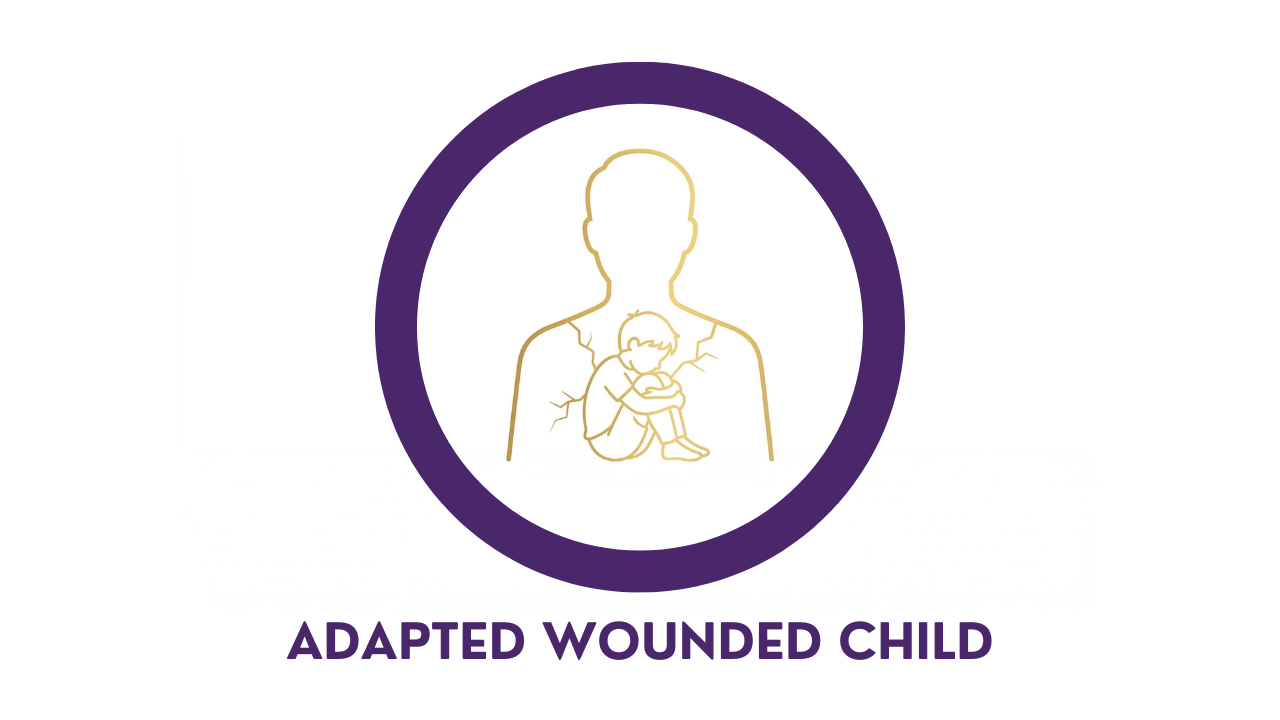
    Adapted Wounded Child Survival Persona by Kenny Weiss

    Breaking the trauma bond is not about willpower. It’s not about leaving. It’s about your nervous system gradually learning that you can be safe, worthy, and connected without the cycle. It’s about your body slowly releasing the blueprint that said love equals fear. It’s about becoming someone who can hold boundaries not out of anger, but out of self-respect. Someone who can feel their own emotional state without needing someone else to soothe it. Someone who can choose to stay or choose to leave from a place of authenticity, not desperation.

    That’s you — slowly becoming the person your wounded child self never got to be. Grounded. Present. Unafraid.

    Your Next Small Step

    Healing from a trauma bond is not a light switch. You don’t read an article and suddenly be free. But you do take a next step. A small one. A human one.

    This week, I want you to practice Step 1 of the Emotional Authenticity Method™: Somatic Down-Regulation. The next time you feel the urge to reach out to this person — to text, to call, to check their social media — pause. For 15-30 seconds, bring your awareness into your five senses. What can you hear? What can you feel on your skin? What can you taste? What can you see right in front of you?

    Just notice. Don’t judge yourself for the urge. Don’t white-knuckle your way through it. Just pause and regulate. Because every moment you can create a gap between the nervous system signal and your response is a moment you’re rewiring. Every time you interrupt the automatic chase, you’re building new neural pathways.

    That’s it. One step. This week.

    If This Article Hit Home, the Books Go Deeper

    If this article hit home, the book goes deeper.

    Everything I write about on this site — the Worst Day Cycle™, your childhood emotional blueprint, why you keep repeating the same patterns no matter how hard you try — it all started with my first book, Your Journey To Success: How to Accept the Answers You Discover Along the Way.

    This is the book readers call “the first time I found a roadmap I could actually understand and that seemed attainable.” It is the book that walks you through WHY your life hasn’t changed despite all the work you’ve done — and shows you, step by step, exactly how to break free. No fluff. No motivational hype. Just the truth about what was done to you, why it stuck, and what to do about it.

    If you’ve read this far, you already know something needs to change. This book is where that change starts.

    Get Your Journey To Success on Amazon → https://amzn.to/3nfVphr


    Ready to stop understanding the problem and start rewiring it?

    The article you just read scratches the surface. My new book, Your Journey To Being Yourself: How to Overcome the Worst Day Cycle & Reclaim Your Authentic Self with Emotional Authenticity, gives you the complete system — the Worst Day Cycle™, the Authentic Self Cycle™, and the full Emotional Authenticity Method™ — all in one place, with the neuroscience behind every step.

    This is the book readers call “a genius piece of art in mastering emotion and the art of healing.” It speaks directly to the person who feels stuck, overwhelmed, and confused by the same repeating patterns — the same arguments, the same relationship breakdowns, the same shame — and is done accepting surface-level answers. Every chapter combines powerful stories, clear steps, and practical tools that show you how to rewire your emotional patterns from the inside out.

    You are not broken. You were programmed. And this book shows you exactly how to rewrite the program.

    Get Your Journey To Being Yourself on Amazon → https://amzn.to/4snRhZp

    Frequently Asked Questions About Trauma Bonding

    Is Trauma Bonding the Same as Unhealthy Attachment?

    No. Unhealthy attachment is when you’re in a relationship that doesn’t serve you, but you can logically see why you should leave. Trauma bonding is when leaving feels like abandonment, when your nervous system interprets distance as threat, when you’re not choosing to stay — your body is forcing you to stay. Trauma bonding hijacks your survival systems. That’s why willpower and logic alone can’t break it.

    Does Trauma Bonding Only Happen with Narcissistic People?

    No. Trauma bonding can happen with anyone, but it requires that the person match your childhood blueprint — which means they have to offer intermittent affection, unpredictability, or conditional love. A narcissist can create a trauma bond, but so can an anxiously attached person, an avoidantly attached person, or someone with untreated mental health struggles. What matters is not their diagnosis — it’s the pattern the relationship creates in your nervous system.

    How Long Does It Take to Break a Trauma Bond?

    It depends on the depth of the original wound and how long the relationship lasted. A two-year trauma bond might take six months to a year to heal. A ten-year trauma bond might take two to three years. But “healing” doesn’t mean you suddenly stop being tempted. It means you gradually develop the nervous system capacity to not act on the temptation. It means the bond loses its electrical charge. It means you can think about them without panic. It means you’re choosing yourself more often than you’re choosing the cycle.

    Can You Break a Trauma Bond While Still in the Relationship?

    Yes, but it’s exponentially harder. Because your nervous system is in daily activation. Every interaction is re-traumatizing, re-wiring, re-strengthening the bond. However, some people do the healing work while still in the relationship, develop capacity to see the pattern, recognize they can’t fix their partner, and then make a clearer choice to leave — not from desperation, but from clarity. That choice tends to stick because it’s rooted in wisdom, not panic.

    Why Do I Feel Physically Addicted to This Person?

    Because you are. Your nervous system has developed a literal chemical addiction to the cycle. The fear releases cortisol and adrenaline. The reunion releases dopamine and oxytocin. Your brain has learned that this person — and specifically this pattern — creates the neurochemical state it craves. Your body doesn’t distinguish between “addiction to a substance” and “addiction to a person and a nervous system pattern.” It’s all the same to your neurobiology.

    Is There Something Wrong with Me That I Keep Repeating This Pattern?

    No. You’re not broken. You’re not defective. You were programmed. Your nervous system learned — in childhood, through thousands of repetitions — that love includes fear, that safety includes anxiety, that connection includes abandonment panic. You picked the person who best matched that programming because your body was looking for something familiar, something that felt like home, something that felt like love. That’s not weakness. That’s your nervous system doing what it learned to do. The good news: You can reprogram it. But the first step is compassion — for yourself, for the person who created the original wound, for the person who recreated it in adulthood.

    What if the Person I’m Trauma Bonded With Comes Back Asking for Another Chance?

    This is the critical test. Your nervous system will be screaming yes. The relief of them reaching out will flood through your body. The hope will activate. All the chemical rewards will trigger. This is when the Emotional Authenticity Method™ matters most. You’ll need to do a somatic down-regulation. You’ll need to ask yourself what you’re actually feeling, where it’s located in your body, when you first felt it. You’ll need to remember that the relief you’re feeling is not proof that they’ve changed — it’s proof that your nervous system is addicted to the pattern. Then you’ll need to decide from a place of authenticity, not from a place of desperation. And that decision — made from clarity rather than panic — is the one that will stick.

    Can I Ever Have a Healthy Relationship After a Trauma Bond?

    Yes. Absolutely yes. But first, you have to heal the original blueprint. Because if you don’t, you’ll attract the same person in a different body. You’ll recreate the same dynamic. You’ll be drawn to the same flavor of chaos. Healing the blueprint doesn’t mean you’ll never be attracted to an unavailable person again — it means you’ll notice the pattern earlier, you’ll recognize it as your wound being triggered, and you’ll make a different choice. You’ll have capacity to stay in a healthy relationship even when it feels boring because you’re not chasing the dopamine hit of the cycle. And that capacity — that’s freedom.

    The Bottom Line

    Trauma bonding is not a character flaw. It’s not a sign that you’re weak, stupid, or broken. It is a nervous system pattern rooted in childhood, activated by an adult partner who matches your blueprint, and maintained by a predictable seven-stage cycle that hijacks your fear system, your shame identity, and your need for relief.

    The reason you can’t leave is not because you love them. It’s because your nervous system mistakes danger for love. It’s because your body learned in childhood that love includes fear, anxiety, shame, and intermittent reward — and now it’s chasing that pattern in an adult relationship.

    The reason everything you’ve tried has failed is because you’ve been trying to think your way out of something that lives in your nervous system. You can’t logic yourself out of a trauma bond. You can’t boundary yourself out of it. You can’t leave your way out of it. You have to rewire it. You have to heal the original blueprint. You have to teach your nervous system that you can be safe, worthy, and connected without the cycle.

    And that rewiring is possible. The Emotional Authenticity Method™ shows you how. The Worst Day Cycle™ shows you what you’re escaping. The Authentic Self Cycle™ shows you what’s possible on the other side. Your childhood blueprint — once you see it — becomes the map to your freedom.

    The moment you understand the blueprint, the chemistry changes.

    Not overnight. But it changes. You’ll notice the pattern before you act on it. You’ll pause before you text. You’ll recognize when your nervous system is lying to you. You’ll feel your authentic self underneath the survival persona. And gradually, one nervous system regulation at a time, one pause at a time, one small choice at a time, you’ll break free.

    You are not destined to repeat trauma bonds. You are reliving the blueprint until you heal it. And healing is always possible.

    Adult Children of Emotionally Immature Parents by Lindsay C. Gibson — A clear, compassionate exploration of how childhood emotional neglect or enmeshment creates the blueprint for trauma bonding in adulthood. Gibson offers practical tools for recognizing patterns and healing the wound.

    What Happened to You? by Bruce D. Perry and Oprah Winfrey — This book reframes trauma and attachment through the neuroscience of how our brains are shaped by childhood experience. It’s essential reading for understanding why your nervous system does what it does.

    Attached: The New Science of Adult Attachment and How It Can Help You Find — and Keep — Love by Amir Levine and Rachel Heller — A detailed exploration of attachment patterns, including how anxious, avoidant, and secure attachment styles show up in relationships. Understanding your attachment style is crucial to recognizing your trauma bond patterns.

    The Body Keeps the Score by Bessel van der Kolk — A comprehensive resource on how trauma lives in the nervous system and body. Van der Kolk explains why traditional talk therapy often fails for trauma and what actually works — which includes somatic practices like those in the Emotional Authenticity Method™.

    Continue the Work

    If you’re ready to do the deeper work of healing your childhood emotional blueprint and breaking free from trauma bonds once and for all, the courses below are designed to guide you step by step through the Emotional Authenticity Method™, the Worst Day Cycle™, and the Authentic Self Cycle™.

    Emotional Blueprint Starter Course — Individual ($79) — A foundational course that walks you through your childhood emotional blueprint, the survival personas you developed, and the first steps of the Emotional Authenticity Method™. Perfect if you’re just beginning to understand why you keep repeating the same patterns.

    Enroll at: kennyweiss.net/individual-starter-course

    Relationship Starter Course — Couples ($79) — Designed for couples who want to understand their dynamic, break the pursuer-distancer pattern, and create a healthier emotional connection. Works best after both partners have done individual healing work.

    Enroll at: kennyweiss.net/relationship-starter-course

    Why We Can’t Stop Hurting Each Other ($479) — A comprehensive deep-dive into the attachment patterns that keep couples trapped in the same arguments, the same breakdowns, the same pain. This course walks you through the neuroscience of why you hurt each other and exactly how to rewire it.

    Enroll at: kennyweiss.net/why-we-cant-stop-hurting-each-other

    Why High Achievers Fail at Love ($479) — For the person who has everything together at work but everything falling apart in relationships. This course explores why success and connection often feel mutually exclusive, and shows you how to rewire the false belief that achievement requires emotional abandonment.

    Enroll at: kennyweiss.net/why-high-achievers-fail-love

    The Shutdown Avoidant Partner ($479) — If you’re dealing with someone who withdraws, shuts down, or goes cold during conflict, this course is for you. It explains the neuroscience of avoidant attachment, the survival reasons behind the shutdown, and how to create safety without chasing.

    Enroll at: kennyweiss.net/shutdown-avoidant-partner

    Tier 1: Mapping the Blueprint ($1,379) — The most comprehensive course available. Over 40+ hours of video, workbook materials, and guided exercises, this tier walks you through every layer of your childhood emotional blueprint, all three survival personas, the Emotional Authenticity Method™ in full depth, and the framework for complete nervous system rewiring.

    Enroll at: kennyweiss.net/mapping-the-blueprint-tier-1


    The Feelings Wheel Exercise — Free

    One of the most powerful tools for rebuilding emotional literacy is the Feelings Wheel. Most people who grew up in traumatic families learned to numb, dissociate, or override their emotions. The Feelings Wheel teaches you to identify and name the specific feeling you’re experiencing — which is the first step of the Emotional Authenticity Method™.

    Access the free Feelings Wheel and guided exercise at: kennyweiss.net/life-changing-exercise

    Start there. Start with naming one feeling. Start with creating one moment of somatic down-regulation. Start with one small pause before you react. Because every small moment you choose authenticity over survival is a moment you’re rewiring your nervous system. Every moment you recognize the pattern is a moment you’re becoming free.

    You’ve got this.

  • Enmeshment: The Invisible Prison of Your Childhood

    Enmeshment: The Invisible Prison of Your Childhood

    What Is Enmeshment and Why Does Society Celebrate It?

    You answer the phone and your stomach drops before they even speak. You already know what’s coming — the guilt, the obligation, the invisible leash that pulls you back into the role you’ve been playing since you were six years old. You’re the one who manages everyone’s emotions. You’re the one who keeps the peace, who checks in, who fixes, who sacrifices your plans, your energy, your identity so that someone else can feel okay.

    And you’re exhausted by it. You’re resentful. You’re confused, because from the outside, everyone says you have a “close” family. A “tight-knit” family. A family that “really loves each other.”

    But something has always felt wrong. Something has always felt like too much. Like you could never breathe. Like you were never actually allowed to be you.

    That’s you… feeling responsible for your parent’s happiness before you even understood what happiness was.

    Enmeshment is a parenting style mischaracterized as love. It is a family dynamic where the boundaries between parent and child are dissolved, and the child becomes the parent’s emotional caretaker — their confidant, their therapist, their surrogate spouse, their reason for living. It contains elements of psychological and emotional incest, perpetrated through the behaviors, communication style, and actions of the parents, who are completely unconscious that they are doing it. Enmeshment creates two types of codependence: the disempowered (people-pleaser, frozen, helpless) and the falsely empowered (super-achiever, hyper-controlling). Both are survival persona formations built to maintain attachment to caregivers. Your childhood did not teach you how to love — it taught you how to disappear.

    Enmeshment — the invisible childhood abuse pattern where parents use children as emotional caretakers, disguised as a loving tight-knit family — by Kenny Weiss

    Enmeshment is childhood abuse disguised as a loving, tight-knit family. The parent unconsciously uses the child for intimacy, companionship, advice, and emotional release — reversing the parent-child relationship and programming the child into a codependent caretaker. This invisible prison creates the survival personas, shame patterns, and relationship blueprints that drive the Worst Day Cycle™ in every adult bond. The Emotional Authenticity Method™ heals enmeshment by rewiring the emotional blueprint at the nervous system level — not with tips, but by restoring the identity that was colonized in childhood.

    Enmeshment is a parenting style that society mischaracterizes as loving, loyal, and protective. The “close family.” The “tight-knit family.” The parent who says “my kids are my world” and means it with a ferocity that feels like devotion but functions like a cage.

    In an enmeshed family, the parent is using the child for intimacy, companionship, romantic attachment, advice, problem-solving, ego fulfillment, or emotional release. The parent is completely unconscious that they are doing this. They are also completely unconscious that they have severe unmet emotional and psychological needs within themselves — needs that come from their own unresolved childhood trauma. Society and the media have not educated us on what healthy parenting looks like. They have actually educated us to promote enmeshment.

    That’s you… watching your parent post another essay on Facebook about how “blessed” they are to have you, while you feel the weight of being their entire emotional world.

    I call these the Facebook parents. You see it when the child is going through fourth grade, eighth grade, tenth grade graduation — mom or dad lamenting that they’re growing up. They’re losing this romantic attachment. It’s too close. They are too involved with their child. That’s too much love. It’s smother love. It’s enmeshment. It’s not healthy. These parents have very few friends and very little support — that’s part of why they’re so over-involved with their child.

    I saw this a couple of years ago on Facebook: a woman had taken her daughter off to college and she spent the first week with her daughter. Her Facebook posts were pages long — talking about all the new friends, the frat parties, moving in. This mother couldn’t let go. Her life revolved around her daughter. She was consumed with every aspect of her daughter’s life — her friends, everything. She was governing all of it. She couldn’t let go. That is severe enmeshment, severely toxic, severely abusive, and that’s emotional incest.

    That’s you… the one who moved across the country and still feels the guilt of that phone call: “I just miss you so much. I’ll be fine here. All alone.”

    If you find that this describes yourself or your family, don’t beat yourself up. This is very common. Most of the things you’re going to hear about enmeshment — it’s not about blaming people. They just didn’t know. They weren’t aware that what they thought was proper parenting is actually very destructive. They also weren’t aware that they had so many unmet needs within themselves. This doesn’t make them bad people. It makes them people who were never taught the truth about what love actually requires.

    Codependence — the two-type survival system created by enmeshment: disempowered people-pleaser and falsely empowered controller — by Kenny Weiss

    What Are the Warning Signs of an Enmeshed Parent?

    I have identified 18 warning signs that your parent is enmeshed with you. Here are the ones that show up most often in the adults I work with — and the ones that create the most damage in adult relationships.

    Their Life Revolves Around You — Even Into Adulthood

    This is the parent whose identity is fused with yours. “My kids are my world.” They feel lost, lonely, sad, even hopeless when their children are not around. They have very few friends and very little outside support. Their child is their primary emotional attachment — not their spouse, not their friendships, not their own inner life. The child carries the full weight of being someone’s reason for existing.

    They Demand to Know Everything

    Parents who know too much about their children’s personal relationships, activities, and problems — and they demand to be included. This is the mother at her daughter’s college, posting about every party, every friend, governing everything. She couldn’t let go because letting go would mean confronting her own emptiness.

    That’s you… hiding your real life from your parent because you know if they find out, they’ll insert themselves into every corner of it.

    They Share Too Much Personal Information

    Telling your child about your marital problems. Lamenting about the divorce. Using your child as your emotional support and confidant. This is completely inappropriate. It is not their job. That is way too detailed information for their development. They can’t handle it emotionally. It puts them in a position to have to choose a side. It’s very abusive to dump that kind of information on a child.

    I will never forget this moment. I was six years old. We were walking into Safeway. My mom and I were holding hands, and I can still feel my feet hitting the asphalt as we’re just leaving the parking lot about to get on the sidewalk and walk in the door. My mom, holding my hand, says, “You know Kenny, I take you for granted.” I had no idea what that meant. I just knew I felt this tremendous weight of responsibility. What later became — I became both my parents’ emotional confidants. They came to me for everything. That was the first memory I have of my mom enmeshing with me and creating an emotional incest situation.

    That’s you… six years old, carrying an adult’s emotional world on your shoulders and not understanding why your chest feels so heavy.

    Their Self-Worth Depends on Your Success

    These are the classic screaming parents at the Little League games. They go ballistic — “What are you doing? You’re so stupid! Come on, make a play!” — or they fight with the coaches, fight with the fans, fight with other parents. This is classic enmeshment. They are over-involved and not allowing their child to live a life. They think it’s protection. It’s not. It’s emotional incest and enmeshment. This is also the college admissions scandal. All of those wealthy people whose entire self-worth was tied up in whether their child got into Harvard or USC. They did that for themselves, not for their child. That situation is so abusive, and the media really didn’t get into how horrifically abusive all of those parents were to their children.

    They Discourage Your Independence

    A parent who subtly or directly criticizes a child’s independence or plays the martyr: “You sure you want to do that? You might get hurt.” Or: “Why do you want to live there? It’s so far away from me and your dad.” Or the guilt play: “Go ahead, go out with your friends. I’ll be right here. I’ll be fine sitting here all alone.” That’s all enmeshment. Do you hear it? That’s the parent requesting, demanding that the child take care of them. That’s incestuous. It is not a child’s job. Children don’t owe us anything. We made the choice to have children. The enmeshed parent thinks that even in old age, the child owes them something. The child never made the choice to be born. So many parents have kids like props, little dolls they’re going to mold into what they want. That’s not our job as parents. Our job is to create an emotional environment for them to become what they want, not what we want.

    That’s you… canceling your own plans again because the guilt of saying “no” to your parent is physically unbearable.

    They React with Rage When You Set Boundaries

    A parent who reacts with anger if an adult child tries to set boundaries or limits of any kind. They just freak out. If anyone listening to this is going to hear it and go into massive anger and denial — that’s the sign right there. Setting boundaries takes away their food supply, their emotional supply, and they freak out at any suggestion of that.

    They Made You a Surrogate Spouse

    An opposite-sex parent who criticizes your partner or is in competition with them for the child’s love. They basically made you a surrogate spouse. This happened to me — my mother made me a surrogate spouse. The surrogate spouse dynamic has many facets. One of them is to criticize and always put down the man or the woman: “Oh, they’re an awful person, how’d you marry them?” They’ve lost their love relationship with you, they had romanticized you, and so they’re going to do anything to keep you from feeling closeness to this person.

    They Spoil to Control

    When a parent spoils or takes care of a child financially to maintain enmeshment. I had a client — probably the worst case of child abuse I’ve ever seen. This woman came into my office in her late 20s, never really had a job, didn’t know how to care for herself. Mom was an alcoholic who gave her credit cards and paid for everything destructive — no questions asked. But if she did one simple thing that was self-loving, like take a yoga class, mom would threaten to cut her off. Using finances to keep her close, to sit on the phone and drink together. In a few short years, the progress this woman has made is beyond comprehension. To cut that level of enmeshment from a parent — it’s truly courageous work.

    Survival Persona — the adaptive identity children create in enmeshed families to maintain attachment to caregivers — by Kenny Weiss

    How Does Enmeshment Become Emotional Incest?

    Enmeshment and emotional incest are not two separate problems. Every enmeshed family has elements of emotional incest, because the core dynamic is the parent using the child for emotional needs that should be met by adult relationships, therapy, or self-work.

    In a healthy parent-child relationship, the umbilical cord feeds the child — it sends nutrients, safety, and emotional nourishment from the parent to the child. But in an enmeshed childhood, the cord flips direction. One or both parents suck the emotional life out of the child to feed themselves. The child becomes the emotional provider, the surrogate spouse, the confidant, the therapist, the best friend — all before the child has any capacity to carry those roles.

    That’s you… the eight-year-old who could read the room before you could read a book.

    This happens most often in single-parent households and in households where the partners aren’t getting along. The parents will then enmesh with the child. The mother or father shares intimate details of the divorce, their sadness, their struggles with dating — information no child should ever carry. The child may be the golden child — outsized attention that is actually a prison of expectation. The parentified child — cooking, cleaning, babysitting at four or six years old. Or the emotional shock absorber — listening to mom cry about dad, mediating between parents, carrying family secrets.

    That’s you… the child who learned that your pain was less important than your parent’s comfort.

    In every case, the child’s own emotional needs are subordinated. They feel special and powerful — but hidden underneath is a devastating truth: if I have this much power and responsibility, who is taking care of me? Nobody. The child is being horrifically abandoned while being told they are special. That double bind creates the love avoidant adult.

    Emotional Absorption — when enmeshment destroys internal boundaries and the child absorbs the parent's emotional state — by Kenny Weiss

    John Bradshaw calls this dynamic the “thinly sadistic nice person” — the parent whose giving and kindness and niceness is thinly sadistic. Because underneath, there’s this unspoken requirement. And if you don’t meet that requirement, it’s like being slashed by a thousand paper cuts. Because now the parent is upset: they’ve been giving, giving, giving. Now they’re depleted because all they do is give and you still won’t change and give them what they want. So they were never giving. But now they’re placing the responsibility on the child. And that’s why the child is anxious. It’s like — I can’t even process my own emotions. Now I have to deal with your covert manipulations. Leave me alone. It’s too much. That’s the enmeshment. It’s a covert, manipulative dynamic: I’m going to give to you in the hopes that you recognize me and how loving and kind I am, and you pat me on the back — which makes the child emotionally responsible for validating the parent.

    That’s you… the one who was told you’re “so loved” but always felt like you were being consumed.

    As Dr. Patricia Love documents in The Emotional Incest Syndrome, every parent does a level of this enmeshment to their child. Nobody is immune from it. It’s a scale — some are more severe — but it’s prevalent in every relationship as a parent and in adult love relationships. It’s part of the recovery process to gain this knowledge so we can develop new tools and skills to nurture ourselves and those closest to us the way we actually want to — not the way we were taught.

    How Does Enmeshment Program Your Emotional Blueprint?

    Enmeshment doesn’t just affect your emotions — it colonizes your identity. The parent colonizes the child’s emotional world, preferences, beliefs, moral framework, spiritual framework, conflict style, sense of self, and relational blueprint. So the adult struggles with knowing what they want, expressing preferences, holding boundaries, forming independent thought, making autonomous decisions. Enmeshed adults often say: “I don’t know what I want.” “What do you think I should do?” “What if they get upset?” “I can’t disappoint them.” “I feel guilty choosing myself.”

    That’s you… standing in a restaurant unable to order because choosing for yourself feels dangerous.

    This identity colonization is why you can read twenty books on boundaries and still not set one. Your brain doesn’t have a boundary problem — it has an identity problem. The boundaries never formed because the environment never permitted separation.

    Emotional Blueprint — the childhood programming that defines what love, safety, and belonging mean for the enmeshed adult — by Kenny Weiss

    Here is the mechanism: in the first seven years of life, the child is in a theta brain wave state — essentially a sponge absorbing everything without conscious filtering. During those years, the child had no emotional boundaries. They became whatever their parents’ emotional condition was. The parents transgressed the child’s boundaries so completely that the child never developed internal containment. By the time consciousness came online around age seven, the trauma had already been normalized. The child had already created adaptations, belief systems, and survival responses.

    The enmeshed child either goes disempowered — collapsing, people-pleasing, losing themselves to avoid abandonment — or falsely empowered — controlling, dominating, raging, intimidating to avoid vulnerability. Or they become the adapted wounded child, who oscillates between falsely empowered and disempowered depending on the situation. All three are survival personas. They are not who you are. They are who you became to stay safe.

    That’s you… being the rock for everyone in public and falling apart alone in your car.

    The brain does not process the world through right and wrong, good and bad, healthy and unhealthy. The brain processes the world through one single filter: known versus unknown. If the brain has already experienced something — even if it was devastating — it categorizes that experience as survivable and therefore safe to repeat. Anything the brain has never experienced — even if it would be genuinely healthy, loving, and stabilizing — registers as unknown, and unknown triggers a fear response that shuts the system down. This is why you keep recreating enmeshment in your adult relationships. Your brain is addicted to the chemistry of it.

    This is the Worst Day Cycle™ — Trauma → Fear → Shame → Denial — repeating on a loop. The enmeshment was the original trauma. The fear is the terror of abandonment if you stop performing your role. The shame is the belief that your needs make you selfish. The denial is “We’re just a really close family.”

    Worst Day Cycle™ — the four-stage trauma loop of trauma, fear, shame, and denial that enmeshment programs into every adult relationship — by Kenny Weiss

    Why Does Enmeshment Destroy Your Adult Relationships?

    Enmeshment programs your nervous system with an emotional blueprint that says: love equals losing yourself. Safety equals performing. Belonging equals making someone else feel okay at the expense of your own needs. And that blueprint doesn’t stay in your family — it follows you into every relationship you enter for the rest of your life.

    What most people call love is actually a codependent dynamic called love addiction and love avoidance — and it is running in virtually every relationship on the planet. The love addict’s conscious fear is abandonment. Their subconscious fear is intimacy. The love avoidant’s conscious fear is intimacy. Their subconscious fear is abandonment. Pia Mellody’s research on this is foundational — her three books are so groundbreaking that no adult should ever go on a date without reading them first.

    The enmeshed child who was the emotional caretaker becomes the love addict — the pursuer. They chase connection because their childhood taught them they must earn love through caretaking, through performing, through making themselves indispensable. They will do anything to avoid abandonment, because abandonment meant emotional death as a child.

    That’s you… texting them again even though you know you shouldn’t, because the silence feels like you’re six years old and nobody’s coming.

    The enmeshed child who was engulfed — the one whose parent sucked the emotional life out of them — becomes the love avoidant. They pull away from intimacy because their childhood taught them that closeness means being consumed. Connection means losing yourself. Love means someone taking from you until there’s nothing left. You see it on dating profiles: “don’t suffocate me.” They are literally advertising their childhood wound.

    That’s you… pulling away from the person who loves you most because their warmth triggers the same terror you felt when your parent needed too much.

    Each partner’s survival strategy triggers the other’s deepest wound. When the pursuer seeks closeness, the distancer’s body experiences threat, not love. When the distancer withdraws, the pursuer’s body experiences abandonment, not space. Neither is responding to the present moment. Both are replaying the Worst Day Cycle™.

    Pursuer-Distancer dynamic — how enmeshment creates the anxious-avoidant dance in adult romantic relationships — by Kenny Weiss

    How Enmeshment Shows Up by Life Area

    Family

    You dread holidays. You feel like a completely different person around your parents. You revert to your childhood role the moment you walk through their door. You leave family gatherings emotionally drained for days. You cannot have an honest conversation with your parent without guilt, rage, or shutdown.

    Romantic Relationships

    You choose partners who need to be rescued or who cannot be reached. You confuse intensity with love. You lose yourself completely in relationships. You either suffocate your partner with need or build walls they can never breach. You cannot tolerate healthy, stable love — because it doesn’t match your blueprint.

    That’s you… wondering why the stable, kind partner feels wrong while the unavailable one feels like home.

    Friendships

    You are the therapist friend. Everyone dumps their problems on you and you absorb all of it. You cannot say no. You over-give until you resent them. You don’t know how to receive without guilt. You choose friends who mirror your family dynamic.

    Work and Career

    You are the reliable one. The one who takes on everyone’s workload. The one who cannot delegate, cannot ask for help, cannot tolerate being anything less than indispensable. You confuse your value with your productivity. Burnout is not a risk — it’s your baseline.

    That’s you… answering work emails at midnight because if you stop producing, you stop existing.

    Body and Health

    Your body carries the enmeshment. Chronic tension in your shoulders from carrying everyone’s emotional weight. Stomach problems from swallowing your own needs. Exhaustion that sleep doesn’t fix. Autoimmune flare-ups that spike when family contact increases. Your body is keeping the score of every time you abandoned yourself to take care of someone else.

    Why Has Everything You’ve Tried Failed to Fix This?

    You’ve read the books. You’ve been to therapy. You’ve watched the TED talks. You’ve journaled, meditated, tried to “just set boundaries.” And nothing has changed the core pattern. You still feel the pull. You still lose yourself. You still can’t say no without the guilt swallowing you whole.

    Here’s why: every tool you’ve been given works at the level of behavior and cognition. But enmeshment lives in your nervous system, your emotional blueprint, your body. It was installed before you had conscious awareness — in the first seven years of life while your brain was in theta state, absorbing everything without filtering. Telling an enmeshed person to “just set boundaries” is like telling someone with a broken leg to “just walk.” The structure isn’t there.

    That’s you… knowing exactly what you should do and being physically unable to do it.

    Traditional therapy often stays at the surface — talking about the pattern without touching the blueprint underneath. Communication skills teach you what to say but don’t address why your throat closes when you try to say it. Mindset work tells you to “choose yourself” but doesn’t explain why choosing yourself triggers the same panic response as childhood abandonment. Boundary scripts give you the words but not the internal architecture to hold them.

    Jerry Wise covers Bowen family systems theory but stays in intellectual framework territory. Patrick Teahan does roleplays. Neither of them connects enmeshment to the full chain: enmeshment → survival persona formation → love addict/avoidant blueprint → adult relationship destruction → Worst Day Cycle™. Without seeing the full chain, you’re treating symptoms, not the disease.

    That’s you… collecting coping strategies like badges while the fire underneath keeps burning.

    The tools aren’t bad. They’re just not deep enough. They treat the behavior without touching the emotional chemical addiction that’s driving it. Your brain has been running the enmeshment program for decades. Logic cannot override a chemical addiction. Willpower cannot override a nervous system that has been programmed since birth.

    The Emotional Authenticity Shift: How to Heal Enmeshment at the Root

    Healing enmeshment requires working at the level where enmeshment was installed — the emotional blueprint. Not the cognitive level. Not the behavioral level. The level of your nervous system, your body, and the survival adaptations your brain created before you could speak.

    Emotional Authenticity Method™ — the six-step process that rewires enmeshment patterns at the nervous system level — by Kenny Weiss

    The Emotional Authenticity Method™ is the process that does this. Here is how it applies specifically to enmeshment:

    Step 1: Somatic Down-Regulation

    When you feel the enmeshment activation — the guilt, the pull to caretake, the loss of yourself — pause. Focus on what you can hear for 15 to 30 seconds. This interrupts the automatic nervous system hijack that fires the moment your parent calls or your partner needs something. If you are highly dysregulated, use titration — smaller doses of awareness.

    Step 2: What Am I Feeling Right Now?

    Use emotional granularity — go beyond “bad” or “anxious.” Name the specific emotion: guilt, obligation, terror of abandonment, rage at being consumed, grief for the childhood you never had. The enmeshed person has spent their entire life tracking other people’s emotions. This step asks you to track your own — possibly for the first time.

    That’s you… realizing you’ve never actually asked yourself how YOU feel, only how everyone else feels.

    Step 3: Where in My Body Do I Feel It?

    The enmeshment response lives in the body — tightness in the chest, heaviness in the shoulders, knot in the stomach, collapse in the spine. When you locate the physical sensation, you break the cognitive loop and connect with the somatic reality of what enmeshment did to you.

    Step 4: What Is My Earliest Memory of Having This Exact Feeling?

    This takes you back to the original enmeshment moment — the first time you learned that your needs did not matter, that your job was to take care of someone else. Maybe it was walking into Safeway at six years old. Maybe it was watching your mother cry about your father. When you find this memory, you find the root.

    Step 5: Who Would I Be If I Never Had This Thought or Feeling Again?

    This reveals your Authentic Self — the person who existed before enmeshment overwrote your identity. Before you were programmed to be the caretaker, the responsible one, the emotional shock absorber. What would be left over if you removed the guilt, the obligation, the compulsive need to manage everyone’s feelings? That is who you actually are.

    Step 6: Feelization

    Sit in the feeling of the Authentic Self and make it strong. Create a new emotional chemical addiction to replace the old enmeshment blueprint. Ask: How would I respond to this situation from this feeling? What would I say? What would I do? Visualize and feel yourself operating from your Authentic Self — setting the boundary, making the choice, choosing yourself without guilt. This is the emotional blueprint remapping step. This is how you build the internal boundary structure that enmeshment never allowed you to develop.

    That’s you… feeling what it’s like to choose yourself for the first time and realizing the world doesn’t end.

    This is the shift from the Worst Day Cycle™ — Trauma → Fear → Shame → Denial — into the Authentic Self Cycle™ — Truth → Responsibility → Healing → Forgiveness. You tell the truth about what enmeshment did to you. You take responsibility for your healing (not for what was done to you). You heal the blueprint. And you forgive — not because what happened was okay, but because carrying it is destroying you.

    Authentic Self Cycle™ — truth, responsibility, healing, and forgiveness — the path out of enmeshment and into emotional adulthood — by Kenny Weiss

    What Does Healing from Enmeshment Look Like in Real Life?

    Healing from enmeshment is not a single breakthrough moment. It is a daily practice of choosing yourself when every cell in your body screams that choosing yourself is selfish, dangerous, and unforgivable.

    Before and After: The Shift in Action

    Before: Your parent calls and you drop everything. You rearrange your entire day, cancel your own plans, absorb their mood, and spend the next three hours managing their emotional state. You hang up feeling hollow, resentful, and somehow guilty for feeling resentful.

    After: Your parent calls and you feel the pull. You notice the tightness in your chest. You let it ring once more while you regulate. You answer and listen without absorbing. You say, “I hear you, and I love you. I need to go in fifteen minutes.” You hang up feeling shaky but whole. You chose yourself, and the world did not end.

    That’s you… learning that boundaries are not walls. They are the structure that makes love possible.

    Before: Your partner says “I need space” and your body goes into full panic — heart racing, catastrophic thinking, the desperate urge to pursue, to fix, to earn their return.

    After: Your partner says “I need space” and your body activates, but you recognize it — that’s the six-year-old who was abandoned when they stopped performing. You breathe. You feel. You stay in your body. You say, “I understand. I’m here when you’re ready.” And you mean it, because your worth no longer depends on their proximity.

    That’s you… staying in your own lane for the first time in your life and discovering that you still exist when nobody needs you.

    Reparenting — the process of giving yourself the emotional safety and boundaries your enmeshed childhood never allowed — by Kenny Weiss

    I have seen this transformation hundreds of times. I experienced it myself — I was severely enmeshed with my mother. She made me a surrogate spouse. I had every condition the so-called empath claims — sucking in other people’s emotional energy, being overwhelmed in rooms full of people, my entire affect shifting the moment a negative person walked in. I discovered it was not a gift. It was a sign of severe childhood abuse — particularly my mother’s enmeshment — that left me completely boundaryless. Through the codependence work, through Emotional Authenticity, I now have internal boundaries. I can be present to someone’s pain without absorbing it. Not perfectly. Not all the time. But the awareness is there, and the process works.

    You are not broken. You are not codependent because you care too much. You are codependent because you learned it is unsafe to stay inside yourself. You were never allowed separation. You were programmed to abandon yourself before you could tie your shoes. And that programming can be rewritten.

    Your Next Small Step

    Here is one thing you can do today. Not a big performance. Not a dramatic confrontation with your parent. Just this:

    The next time you feel the pull to caretake, to manage someone else’s emotional state, to sacrifice your own need to keep the peace — pause. Put your hand on your chest. And ask: “Is this mine?”

    That question — “Is this mine?” — is the beginning of the internal boundary that enmeshment never allowed you to build. You don’t have to do anything with the answer yet. You just have to ask the question. That alone is revolutionary for someone who was never allowed to have their own emotional world.

    If you want to go deeper, try the Feelings Wheel exercise — it builds emotional granularity, which is the foundation of knowing where you end and someone else begins.

    That’s you… choosing one small act of self-awareness instead of the giant leap that your survival persona insists is the only option.

    If This Article Hit Home, the Books Go Deeper

    Your Journey To Success

    If this article hit home, the book goes deeper.

    Everything I write about on this site — the Worst Day Cycle™, your childhood emotional blueprint, why you keep repeating the same patterns no matter how hard you try — it all started with my first book, Your Journey To Success: How to Accept the Answers You Discover Along the Way.

    This is the book readers call “the first time I found a roadmap I could actually understand and that seemed attainable.” It is the book that walks you through WHY your life hasn’t changed despite all the work you’ve done — and shows you, step by step, exactly how to break free. No fluff. No motivational hype. Just the truth about what was done to you, why it stuck, and what to do about it.

    If you’ve read this far, you already know something needs to change. This book is where that change starts.

    Get Your Journey To Success on Amazon →

    Your Journey To Being Yourself

    Ready to stop understanding the problem and start rewiring it?

    The article you just read scratches the surface. My new book, Your Journey To Being Yourself: How to Overcome the Worst Day Cycle & Reclaim Your Authentic Self with Emotional Authenticity, gives you the complete system — the Worst Day Cycle™, the Authentic Self Cycle™, and the full Emotional Authenticity Method™ — all in one place, with the neuroscience behind every step.

    This is the book readers call “a genius piece of art in mastering emotion and the art of healing.” It speaks directly to the person who feels stuck, overwhelmed, and confused by the same repeating patterns — the same arguments, the same relationship breakdowns, the same shame — and is done accepting surface-level answers. Every chapter combines powerful stories, clear steps, and practical tools that show you how to rewire your emotional patterns from the inside out.

    You are not broken. You were programmed. And this book shows you exactly how to rewrite the program.

    Get Your Journey To Being Yourself on Amazon →

    Frequently Asked Questions About Enmeshment

    What is enmeshment in a family?

    Enmeshment is a parenting style mischaracterized as a loving, loyal, tight-knit family. In reality, it involves elements of psychological and emotional incest where the parent uses the child for intimacy, companionship, advice, problem-solving, ego fulfillment, or emotional release. The parent is completely unconscious they are doing this. They have unmet emotional needs from their own childhood and are using the child to fill them. Enmeshment creates two types of codependence: the disempowered (people-pleaser, frozen, helpless) and the falsely empowered (super-achiever, hyper-controlling). Both are survival persona formations built to maintain attachment to caregivers.

    What is the difference between enmeshment and emotional incest?

    Enmeshment is the broader pattern where boundaries between parent and child are dissolved. Emotional incest is what happens inside that pattern — the parent treats the child as a surrogate spouse, confidant, or emotional partner. The child becomes the parent’s primary emotional support, carrying adult burdens like listening to marital problems, mediating between parents, or managing the parent’s moods. Every enmeshed family has elements of emotional incest, because the core dynamic is the parent using the child for emotional needs that should be met by adult relationships, therapy, or self-work.

    How does enmeshment affect adult relationships?

    Enmeshment programs your nervous system with an emotional blueprint that says love equals losing yourself. As an adult, this creates two predictable patterns: the love addict (pursuer) who chases connection because their childhood taught them they must earn love through caretaking, and the love avoidant (distancer) who pulls away from intimacy because their childhood taught them that closeness means being consumed. Both patterns are the Worst Day Cycle™ replaying in adult relationships — trauma, fear, shame, and denial on repeat. The enmeshed adult cannot tell where they end and their partner begins.

    What are the signs of an enmeshed parent?

    The most common signs include: a parent whose life revolves around their children even into adulthood, parents who demand to know every detail of their child’s personal relationships, sharing too much personal information with children especially about marital problems or divorce, living vicariously through a child’s accomplishments, discouraging independence through guilt, expecting children to follow parental rules and values into adulthood, reacting with anger when adult children set boundaries, spoiling children financially to maintain control, and making the child a surrogate spouse.

    Can you heal from enmeshment trauma?

    Yes — enmeshment is not a permanent condition. It is a learned pattern that can be unlearned. Healing requires working at the emotional blueprint level, not just the cognitive level. The Emotional Authenticity Method™ addresses enmeshment by asking: What am I feeling right now? Where in my body do I feel it? What is my earliest memory of having this exact feeling? Who would I be if I never had this feeling again? This process interrupts the automatic enmeshment response and builds the internal boundary structure that was never allowed to develop in childhood. Recovery moves through the Authentic Self Cycle™ — truth, responsibility, healing, and forgiveness.

    Is parentification the same as enmeshment?

    Parentification is one expression of enmeshment — it is the specific dynamic where the child takes on the role of parent, either instrumentally (cooking, cleaning, raising siblings) or emotionally (becoming the parent’s confidant, therapist, or emotional regulator). Not all enmeshment involves parentification, but all parentification involves enmeshment. A parentified child learns that their value comes from what they provide, not who they are. As adults, they become the responsible one in every relationship — the one who holds everything together while silently drowning.

    Why do I feel guilty setting boundaries with my parents?

    The guilt you feel when setting boundaries with your parents is not evidence that you are doing something wrong — it is evidence that enmeshment programmed your nervous system to equate your needs with betrayal. In an enmeshed family, choosing yourself was the one thing that was never allowed. Your brain learned that independence equals abandonment, that having your own preferences means you are selfish, and that saying no means you are unloving. That guilt is your childhood emotional blueprint activating — it is the Worst Day Cycle™ firing.

    What is the difference between a close family and an enmeshed family?

    In a close family, each member has their own identity, their own emotional life, and the freedom to make independent choices without guilt or punishment. Closeness includes a healthy boundary — like a tennis net that allows connection while maintaining separation. In an enmeshed family, there is no net. There is no separation between the parent’s emotional world and the child’s. The parent’s moods dictate the child’s emotional state. The child’s independence is experienced as a threat. The key difference: closeness allows you to be yourself. Enmeshment requires you to abandon yourself.

    The Bottom Line

    You didn’t choose this. You didn’t choose to be the responsible one, the emotional shock absorber, the child who grew up too fast because someone needed you to. You didn’t choose to carry your parent’s emotional world before you could carry your own backpack. And you didn’t choose the blueprint that enmeshment burned into your nervous system — the one that says love means disappearing, boundaries mean betrayal, and your worth is measured by what you provide.

    But you are here now. Reading this. And the fact that you made it to the end of this article tells me something about you: you are tired of the cycle. You are tired of losing yourself in everyone else’s emotional weather. You are tired of being the one who holds it all together while nobody holds you.

    That’s you… finally seeing the prison for the first time, and realizing you’re not broken for wanting out.

    What enmeshment took from you — your identity, your preferences, your right to exist as a separate person — the Authentic Self Cycle™ can restore. Not overnight. Not with a single boundary conversation. But through the daily, courageous practice of telling the truth about what was done to you, taking responsibility for your own healing, doing the emotional blueprint work that actually reaches the root, and forgiving — not because any of it was okay, but because you deserve to stop carrying it.

    You are not broken. You were programmed. And every program can be rewritten.

    If this article resonated with you, these books will deepen your understanding of enmeshment, codependence, and the path to emotional adulthood:

    Pia Mellody — Facing Codependence — The foundational text on how childhood abuse and neglect create codependent patterns in adulthood. Essential reading for anyone who grew up in an enmeshed family.

    Pia Mellody — The Intimacy Factor — Shows how childhood relational trauma creates the love addict/love avoidant dynamic that runs in virtually every adult relationship.

    Pete Walker — Complex PTSD: From Surviving to Thriving — The most practical guide for adults who grew up with chronic childhood trauma and now live with emotional flashbacks, toxic shame, and relational dysfunction.

    Bessel van der Kolk — The Body Keeps the Score — The landmark book on how trauma lives in the body and why cognitive approaches alone cannot heal somatic wounds.

    Continue the Work

    If you’re ready to go deeper than reading, these courses walk you through the frameworks discussed in this article — step by step, at your own pace.

    Emotional Blueprint Starter Course — Individual ($79) — Begin mapping your childhood emotional blueprint, identify your survival persona, and start practicing the Emotional Authenticity Method™.

    Relationship Starter Course — Couples ($79) — If enmeshment is showing up in your relationship, this course helps both partners understand the dynamic and begin the work together.

    Why We Can’t Stop Hurting Each Other ($479) — Understand why the same arguments keep happening and why both partners feel like the victim.

    Why High Achievers Fail at Love ($479) — If you’re the falsely empowered survivor who crushes it at work but can’t sustain intimacy, this course is for you.

    The Shutdown Avoidant Partner ($479) — If your partner shuts down, withdraws, and can’t be reached — or if that’s you — this course explains why and what to do about it.

    Tier 1: Mapping the Blueprint ($1,379) — The comprehensive deep-dive into mapping and rewiring your entire emotional blueprint.

  • What Is Toxic Shame? How Childhood Abandonment Creates the Core Wound

    What Is Toxic Shame? How Childhood Abandonment Creates the Core Wound

    Toxic shame is the internalized belief that you are fundamentally defective, unlovable, and unworthy of authentic connection. Unlike healthy shame—which teaches us that mistakes are human—toxic shame makes you the mistake. It’s not about what you did; it’s about who you believe you are. This pervasive sense of worthlessness originates in childhood through emotional abandonment and develops into a survival persona that sabotages relationships, careers, health, and every area of adult life.

    Table of Contents

    Toxic Shame Defined: The Loss of Your Authentic Self

    When you carry toxic shame, you’ve lost the ability to distinguish between what you did and who you are. A child who makes a mistake hears from a shaming parent: “You’re stupid,” not “That was a poor choice.” The behavior becomes fused with identity.

    As author John Bradshaw wrote, “When we are continuously overexposed without protection, shame becomes toxic. The self becomes an object of its own contempt, an object that can’t be trusted.” This is the essence of toxic shame—your nervous system learned early that you are the problem, not the circumstance.

    emotional blueprint showing toxic shame formation from childhood trauma

    Unlike guilt—which says “I made a mistake”—shame says “I am a mistake.” Guilt is temporary and correctable. Shame is permanent and pervasive. It lives in your body as a chemical cocktail your brain released during your most vulnerable moments, and your nervous system learned to repeat this pattern as a way to stay safe.

    Toxic shame is the fundamental belief—held in your nervous system—that your authentic self is defective, that your emotions are too much, that you need to hide who you really are to be acceptable. It’s the deep conviction that if people truly knew you, they would abandon you.

    How Toxic Shame Forms in Childhood: The Mirroring Mirror Lost

    Children cannot know who they are without mirrors. These mirrors are your primary caregivers. In the first years of life, a caregiver’s job is to reflect back to the child: “I see you. Your emotions matter. You are safe. You belong.”

    When this mirroring fails—through emotional abandonment, enmeshment, perfectionist demands, or neglect—the child internalizes a different message: “I’m too much. I’m not enough. I’m unlovable. I need to hide.”

    The child then creates a survival persona — an identity designed to be acceptable, to earn love, to prevent abandonment. That’s you if you’re a people-pleaser, a high achiever, a caretaker, a controller, or someone who goes numb when conflict arises. Your survival persona isn’t weakness—it was brilliant in childhood. Now it’s sabotaging you.

    survival persona types falsely empowered disempowered adapted wounded child

    The Root: Emotional Abandonment (It’s More Common Than You Think)

    Emotional abandonment doesn’t require absence. Your parent could be physically present but emotionally shut down—unable to attune to your feelings because they never learned how. They might shame you for crying, for being “too sensitive,” for needing anything. They might use you to meet their emotional needs instead of meeting yours.

    As Pia Mellody teaches, emotional abandonment includes:

    • Enmeshment: Parent uses child as emotional support, making child responsible for parent’s feelings. “You’re my rock.” “Without you, I couldn’t survive.” That’s you becoming the surrogate spouse.
    • Perfectionism: Parent demands flawlessness. Mistakes mean rejection. You learn: “I must be perfect to be worthy.”
    • Emotional Unavailability: Parent is shut down, dismissive, or cold. “Stop crying. Toughen up. I don’t have time for this.” The message: your emotions are burdensome.
    • Parentification: Child is forced to grow up too fast, manage household, caretake younger siblings or the parent. Childhood is sacrificed for adult responsibility. “Act your age—you’re 8 but you’re my little helper.”
    • Neglect: Caregiving is inconsistent or absent. Child is left in daycare without secure attachment, or literally parentless. The repeated message: nobody’s coming.

    The result? That’s you— the adult who still doesn’t believe you’re worth protecting. The one who settles in relationships because you don’t expect better. The one who overworks to prove your value. The one who goes numb when intimacy is offered because connection feels dangerous.

    enmeshment enmeshed parent child emotional abandonment toxic shame

    The Worst Day Cycle™: How Shame Becomes a Life Pattern

    Here’s what nobody teaches you: your brain becomes chemically addicted to the emotional states of your childhood. Trauma creates a specific neurochemical pattern—cortisol, adrenaline, dopamine dysregulation, oxytocin misfires. Your hypothalamus released these chemicals during your most painful moments. Your brain learned: this is what safety feels like.

    This is the Worst Day Cycle™—a four-stage loop that explains why you keep repeating the same painful patterns despite consciously wanting something different.

    worst day cycle trauma fear shame denial survival persona

    Stage 1: Trauma (The Blueprint)

    Childhood emotional experience (any moment of shame, abandonment, enmeshment) creates painful meanings: “I’m not safe. I’m unlovable. I’m alone. I’m responsible for others’ emotions.”

    Stage 2: Fear (The Repetition Compulsion)

    Your nervous system learned that repetition = safety. Your brain cannot tell right from wrong—it only knows familiar vs. unfamiliar. So you unconsciously recreate childhood dynamics in adult relationships. That’s you— choosing partners who abandon you like your parents did, or becoming the abandoner before they can leave.

    Stage 3: Shame (The Identity Collapse)

    When the painful pattern repeats, shame hits: “I’m the problem. I’m defective. There’s something fundamentally wrong with me that makes people leave.” This isn’t situational shame about a mistake—this is identity shame. You don’t just feel bad; you feel bad about who you are.

    Stage 4: Denial (The Survival Persona Activation)

    To survive the unbearable feeling of being fundamentally flawed, you unconsciously activate your survival persona. You control, perform, numb, collapse, or disappear. The survival persona says: “If I just become who they need, maybe I won’t be abandoned again.” It’s brilliant protection. It’s also keeping you stuck.

    The Worst Day Cycle™ perpetuates because 70%+ of childhood messaging is negative and shaming. Your brain wired these neural pathways so efficiently that now, as an adult, you activate them automatically—in seconds—when triggered. You’re not choosing this pattern. Your nervous system is.

    Three Survival Persona Types: How Toxic Shame Shapes Your Identity

    Your survival persona is not your personality—it’s a brilliant adaptation to childhood pain. Identifying your type is step one toward reclaiming your authentic self.

    The Falsely Empowered Persona (The Controller)

    That’s you— if you rage, dominate, control, achieve obsessively, or manage everyone around you. Your childhood message was: “Vulnerability means death. Only the strong survive.” So you learned to never be soft, never need, never ask for help. You’re the caretaker, the high achiever, the “I don’t need anybody” person.

    Your shadow: beneath the control is terror. You rage because you feel helpless. You achieve because you believe you’re only worthy if you’re producing. You can’t receive love because it requires vulnerability.

    emotional regulation control shame falsely empowered survival persona

    The Disempowered Persona (The Collapser)

    That’s you— if you people-please, apologize for existing, abandon yourself to keep the peace, or collapse when conflict arises. Your childhood message was: “Your needs don’t matter. Your emotions are too much. Disappear and you’ll be safe.” So you learned to shrink, accommodate, and make yourself small. You’re the “nice” one. You’re the rescuer. You don’t know what you want because your wants were never welcomed.

    Your shadow: beneath the niceness is rage that you’ve never permitted yourself to feel. You resent those you’ve sacrificed for. You feel invisible and exploited. You can’t say no because rejection of your request feels like rejection of you.

    The Adapted Wounded Child (The Oscillator)

    That’s you— if you swing between falsely empowered and disempowered depending on context. You’re the rigid controller at work and the people-pleaser at home. You’re explosive one moment and collapsed the next. You never found a stable survival persona, so you oscillate between both poles—exhausting and confusing.

    Your shadow: you’ve adapted to unpredictability. Your childhood was chaotic. One parent might have been empowered, the other disempowered. You learned to mirror whichever persona would keep you safe in that moment.

    adapted wounded child oscillating survival persona toxic shame

    24 Signs of Toxic Shame (By Life Area)

    Toxic shame doesn’t show up the same way in everyone. Here’s how it manifests across different areas of your adult life:

    In Family Relationships

    • Feeling used, treated with little or no respect by parents or siblings
    • Enmeshment: you’re responsible for parents’ emotional wellbeing
    • Inability to set boundaries without excessive guilt
    • Feeling like an outsider or the “scapegoat” in your family of origin

    In Romantic Relationships

    • Poor relationship stability, repeated patterns of conflict or abandonment
    • Triggered by perceived criticism, disapproval, or rejection
    • Can’t be your true self with your partner; hiding parts of yourself
    • Codependence: over-accommodating, losing yourself in the relationship
    • Worrying constantly about what your partner thinks of you
    • Fear of intimacy; vulnerability feels dangerous

    Sound familiar? The person who gives everything in a relationship and then wonders why they feel invisible — that’s the toxic shame pattern running your love life.

    In Friendships

    • Suspicion and distrust; difficulty believing others genuinely care
    • Feeling like you don’t belong or are different from everyone else
    • Fear of exposure—hiding your true thoughts and feelings to avoid embarrassment
    • Wallflower tendency; not wanting to be center of attention, withdrawing
    • Wanting to have the last word in disagreements (shame-driven need to prove yourself)

    In Work/Achievement

    • Perfectionism: making mistakes feels like personal failure
    • Workaholism: proving your worth through productivity
    • Grandiosity: overcompensation through arrogance or superiority
    • Feeling like an imposter despite accomplishments
    • Fear that you don’t have real impact or that you’re not good enough

    That’s you — the one who built an empire on shame and calls it ambition.

    In Body/Health & Emotional Life

    • Addiction (drugs, alcohol, sex, food, shopping, work)
    • Self-loathing: internal narrative of “I’m stupid, defective, a failure, unlovable, shouldn’t have been born”
    • Anger toward yourself and others
    • Worry, anxiety, and pervasive fear
    • Feeling numb or dissociated from your emotions (can’t feel anything)
    • Regret, rumination about past mistakes
    • Secrecy and isolation; fear of exposure

    That’s you — the person who numbs with food, scrolling, or alcohol because feeling anything fully was never safe.

    If you resonate with multiple signs across life areas, you’re not broken—you’re carrying an emotional blueprint from childhood. Your nervous system learned this language early. The good news: nervous systems can rewire.

    codependence codependency toxic shame emotional boundaries

    From Worst Day Cycle™ to Authentic Self Cycle™: The Path Forward

    The Worst Day Cycle™ is not permanent. It’s a pattern your nervous system learned because it once meant survival. Now it means suffering. The antidote is the Authentic Self Cycle™.

    The Authentic Self Cycle™: Four Stages of Reclamation

    authentic self cycle truth responsibility healing forgiveness recovery framework

    Stage 1: Truth

    Name the blueprint. See the pattern clearly: “This anger I feel toward my partner isn’t about today—it’s about my father’s abandonment. My nervous system believes this is happening again.” Truth isn’t blame. It’s clarity. You’re not blaming your parents for your adult patterns; you’re acknowledging where they originated.

    Stage 2: Responsibility

    Own your nervous system’s reactivity without blame. “I choose to take responsibility for my emotional reactions without making it my partner’s fault or my fault for ‘being broken.’” Responsibility is the bridge between victim consciousness and empowerment. You’re not responsible for your nervous system’s encoding—but you are responsible for rewiring it now.

    Stage 3: Healing

    Rewire the emotional blueprint so that conflict becomes uncomfortable but not dangerous, space isn’t abandonment, intensity isn’t attack. This happens through the Emotional Authenticity Method™ (see below).

    Stage 4: Forgiveness

    Release the inherited emotional blueprint. Forgive your parents not because they deserve it, but because carrying resentment keeps you chemically bound to them. Forgiveness is freedom—you’re choosing to stop letting their emotional wounds run your life.

    That’s you— moving from “my parents ruined me” to “my parents did the best they could with their own unhealed wounds, and now I choose to heal mine.”

    The Emotional Authenticity Method™: Your Healing Path

    You cannot heal toxic shame through thoughts alone. Toxic shame is not a cognitive problem—it’s a biochemical problem. Your emotions are not thoughts; thoughts originate from feelings. This is why willpower fails. This is why positive affirmations don’t work. You’re trying to think your way out of something your body remembers.

    The Emotional Authenticity Method™ is a somatic (body-based) five-step process designed to rewire your emotional blueprint from the nervous system up:

    Step 1: Somatic Down-Regulation (With Optional Titration)

    When shame activates, your nervous system floods with cortisol and adrenaline. You’re in fight-or-flight. You cannot think, cannot access wisdom, cannot connect. First, you regulate your nervous system back to the window of tolerance—the zone where healing is possible.

    Techniques: box breathing, cold water immersion, bilateral stimulation, grounding (5-4-3-2-1 sensory awareness). Titration means working with small doses of the activation so your system doesn’t get re-traumatized during healing work.

    That’s you— learning that you can’t resolve the conflict until your nervous system is calm. That’s maturity. That’s emotional intelligence.

    Step 2: Name the Feeling (Emotional Granularity)

    Most people say “I feel bad” or “I feel angry.” This is vague. The Feelings Wheel teaches emotional granularity. Instead of “angry,” you might identify: “I feel disrespected. I feel powerless. I feel betrayed.”

    Granularity activates your prefrontal cortex and shifts you from pure emotion into awareness. Naming is the beginning of power.

    emotional fitness feelings wheel emotional granularity awareness

    Step 3: Locate It in Your Body (Somatic Memory)

    All emotional trauma is stored physically. You might feel shame as tightness in your chest, a lump in your throat, heaviness in your stomach, numbness in your limbs. These somatic markers are how your body remembers what your mind has tried to forget.

    That’s you — wondering why your chest tightens every time your partner raises their voice, even though you know they’re not your parent.

    Ask yourself: “Where in my body do I feel this shame?” Then place your hand there. Breathe into it. This is not painful catharsing—this is gentle witnessing. You’re telling your nervous system: “I see you. This makes sense. You learned this to protect me.”

    Step 4: Trace to Origin (The Childhood Connection)

    Ask: “What’s my earliest memory of feeling this way?” Suddenly you’re not dealing with your partner’s minor comment; you’re dealing with the moment your mother gave you that look. That moment your father ignored your raised hand. That moment you realized you weren’t safe.

    This is the bridge: “My partner isn’t my parent. My nervous system is responding to my childhood blueprint, not to today.” This clarity is liberating.

    Step 5: Envision the Authentic Self (The Vision Step)

    Ask: “Who would I be if I never had this feeling again? What would I do? What would I say? How would I show up in relationships?”

    This isn’t toxic positivity or denial. This is your nervous system learning a new pattern. You’re literally building new neural pathways—myelin sheaths—around a healthier version of yourself.

    You cannot think your way to healing, but you can feel your way there. The Emotional Authenticity Method™ works because it addresses the root: your nervous system’s emotional blueprint.

    myelin neural pathways emotional rewiring brain healing neuroplasticity

    Toxic Shame vs. Healthy Shame: The Crucial Difference

    Not all shame is toxic. Healthy shame is not a weakness; it’s a feature of emotional maturity.

    Healthy Shame

    • Sees mistakes as gifts and best teachers
    • Contains grace, self-forgiveness, and acceptance of humanity
    • Recognizes when help is needed and acknowledges limits
    • Is creative: learns from others’ views rather than canceling those who trigger you
    • Allows you to repair after conflict
    • Is temporary and specific: “I made a poor choice in that moment”

    Toxic Shame

    • Sees mistakes as proof you’re defective
    • Contains harsh self-criticism, perfectionism, and condemnation of your humanity
    • Refuses help; must do everything alone to prove worth
    • Is rigid: anyone who triggers you must be wrong or bad
    • Makes repair impossible because admitting fault feels like annihilation
    • Is pervasive and identity-based: “I am the problem”

    Moving from toxic to healthy shame is the goal. You don’t eliminate shame—you integrate it. Learn more about healthy shame here.

    trauma gut vs authentic gut intuition shame healing

    How Toxic Shame Shows Up in Your Most Important Relationships

    In Romantic Partnership

    Toxic shame makes healthy intimacy nearly impossible. You either become the falsely empowered partner who controls and distances, or the disempowered partner who disappears and abandons yourself.

    You pick partners who confirm your core shame belief: “See? I was right. I’m unlovable.” Then when they treat you poorly, you stay because part of you believes that’s what you deserve. Learn the 7 signs of insecurity in relationships here.

    That’s you— recreating your parents’ dynamic even though you swore you’d never do that.

    In Family Relationships

    If your parents were emotionally unavailable, you might stay enmeshed—still responsible for their emotional wellbeing as an adult. Or you might cut contact entirely, which is sometimes necessary but often driven by shame and anger rather than healthy boundaries.

    That’s you— managing your parent’s emotions while your own go unattended.

    In Work/Achievement

    Toxic shame drives two extremes: burnout through overachievement (proving your worth through productivity), or self-sabotage (unconsciously ensuring you never fully succeed because deep down you believe you don’t deserve it).

    Discover the signs of genuine high self-esteem here. They look nothing like the false confidence of shame-driven achievement.

    trauma chemistry brain nervous system toxic shame emotional wounds

    People Also Ask: FAQ About Toxic Shame

    1. Is toxic shame the same as low self-esteem?

    No. Low self-esteem is about not thinking much of yourself. Toxic shame is about believing you’re defective at your core. Someone with low self-esteem might say, “I’m not good at public speaking.” Someone with toxic shame says, “I’m not good at public speaking because I’m inherently flawed.” The difference is subtle but massive. Toxic shame contaminates every area of life because it’s identity-based.

    2. Can toxic shame be healed?

    Yes. Absolutely. It requires rewiring your nervous system’s emotional blueprint, which takes time and consistent effort, but thousands of people have moved from toxic shame to healthy self-awareness. The Authentic Self Cycle™ and Emotional Authenticity Method™ provide the roadmap.

    3. Is it my parent’s fault that I have toxic shame?

    Your parents did not intentionally create toxic shame in you. They passed down their own unhealed emotional blueprints. That said, the impact of their emotional unavailability is real and has shaped your life. The question isn’t blame—it’s: what are you going to do about it now? Healing requires acknowledging how childhood shaped you while taking responsibility for rewiring your adult patterns.

    4. Why do I keep picking the same toxic people in relationships?

    Because your nervous system recognizes the familiar pain of childhood. Your brain thinks, “This feels like home because it feels like my parents.” You’re unconsciously recreating childhood dynamics to try to get a different outcome. Until you rewire your emotional blueprint, you’ll keep attracting the same type of person.

    5. Can I heal toxic shame on my own?

    You can do some healing work alone through self-awareness and tools like the Emotional Authenticity Method™. However, because toxic shame often involves abandonment trauma, you heal fastest with safe, attuned relationships—whether that’s a therapist, coach, support group, or healing community. You need to experience what safety and attunement feel like from another person. Your nervous system learns through relational connection.

    6. What’s the difference between shame and guilt, and why does it matter?

    Guilt says, “I did something bad.” Shame says, “I am bad.” Guilt is about behavior and is correctable. Shame is about identity and is pervasive. Someone who feels guilt can apologize, make amends, and move forward. Someone in toxic shame cannot apologize without feeling like they’re confirming their unworthiness. This is why shame drives hiding and denial instead of accountability.

    metacognition awareness toxic shame healing emotional patterns

    The Bottom Line: Your Authentic Self Is Still There

    Toxic shame isn’t a character flaw. It’s not a sign that something is permanently broken inside you. It’s evidence that your nervous system learned to protect itself brilliantly in an environment where you felt unsafe.

    Your survival persona—whether you’re a controller, a collapser, or an oscillator—saved your life as a child. It made you acceptable when you felt fundamentally unacceptable. That’s not weakness. That’s adaptation.

    But that survival persona is also sabotaging you now. It’s keeping you isolated in relationships where you can’t be fully known. It’s keeping you from taking risks that could fulfill you. It’s keeping you from your authentic self—the part of you that knows you’re worthy simply because you exist.

    The good news: your authentic self never disappeared. It’s still there, waiting beneath the layers of protection. It’s waiting for you to feel safe enough to emerge.

    That safety comes through understanding your Worst Day Cycle™, identifying your survival persona, and rewiring your emotional blueprint with the Emotional Authenticity Method™. It comes through truth about where shame originated, responsibility for your nervous system, healing of your emotional wounds, and forgiveness of those who couldn’t give you what you needed.

    That’s you— moving from “something’s wrong with me” to “something happened to me, and I choose to heal it.”

    perfectly imperfect authentic self healthy shame acceptance

    To deepen your understanding of toxic shame and recovery, these books and resources are foundational:

    • Pia Mellody — “Facing Codependence” and “The Intimacy Factor” (the framework for understanding emotional abandonment)
    • John Bradshaw — “Healing the Shame That Binds You” (the seminal work on toxic shame)
    • Gabor Maté — “The Myth of Normal” (how childhood trauma becomes adult illness)
    • Melody Beattie — “Codependent No More” (breaking the cycle of self-abandonment)
    • Brené Brown — “Dare to Lead” (shame resilience and vulnerability)
    • Ken Wilber — Understanding shadow work and emotional integration
    • Kenny Weiss — “Your Journey to Success” (the comprehensive guide to the Worst Day Cycle™)

    Free resource: Download the Feelings Wheel exercise to develop emotional granularity.

    Next Steps: Start Your Healing Today

    Understanding toxic shame is the first step. Taking action is the next. Here’s where to start based on your situation:

    If you’re just beginning to explore this:

    Emotional Blueprint Starter Course — Individual ($79) — A foundational 6-week course that teaches you the Worst Day Cycle™, identifies your survival persona type, and introduces the Emotional Authenticity Method™. This is the essential starting point.

    If you’re in a relationship struggling with shame patterns:

    Relationship Starter Course — Couples ($79) — Learn how toxic shame shows up in romantic partnership and how to break the cycle together. This course teaches both partners to move from the Worst Day Cycle™ to the Authentic Self Cycle™.

    If you’re ready for deep, comprehensive healing:

    Tier 1: Mapping the Blueprint ($1,379) — The complete training in the Emotional Authenticity Method™. This is where real rewiring happens. You’ll learn the somatic techniques, practice with real-life scenarios, and begin genuinely healing your emotional blueprint.

    If you’re struggling with specific relationship patterns:

    Why We Can’t Stop Hurting Each Other ($479) — Deep dive into how toxic shame creates relationship sabotage and how to break the pattern.

    The Shutdown Avoidant Partner ($479) — If you’re with someone who withdraws, numbs, or distances when things get real, this course explains why and what to do about it.

    Why High Achievers Fail at Love ($479) — For the driven, accomplished person who excels at work but crashes in relationships. Learn how achievement addiction masks shame.

    If you need personal guidance:

    Private Coaching — Work one-on-one with Kenny in a 60-minute intensive session. Perfect for getting clarity on your specific patterns and creating a personalized healing roadmap.

    The choice is yours. But know this: staying in toxic shame is a choice too. And it will continue to cost you in relationships, achievement, health, and joy.

    Your authentic self is worth reclaiming. Let’s get started.


  • Abandonment Anxiety: Why Your Fear of Being Left Is a Childhood Trauma Response

    Abandonment Anxiety: Why Your Fear of Being Left Is a Childhood Trauma Response

    Your partner is ten minutes late and your chest is already tight. You check your phone — nothing. You check again. Your mind starts building the case: “They forgot. They don’t care. They’re pulling away.” By the time they walk in the door, apologizing for traffic, you’re already somewhere else emotionally — you’re six years old, standing at the school pickup line, watching every other car leave except yours.

    That reaction isn’t about tonight. It isn’t about the ten minutes. Abandonment anxiety is the nervous system’s alarm from childhood firing in your adult relationships — and it has been running on autopilot for decades, hijacking your ability to feel safe with the people you love most.

    Abandonment anxiety isn’t a personality flaw or “being too needy.” It’s the emotional residue of a childhood where your attachment to your caregivers was unpredictable, conditional, or interrupted. Every parent, because they are perfectly imperfect, could not consistently be there for you. They just couldn’t. Life is difficult. No parent can be one hundred percent attuned to their child — that’s not possible. But in those moments of disconnection, a child doesn’t think “my parent is overwhelmed.” A child thinks: “I’m the problem. Something is wrong with me.” And the brain gets addicted to that conclusion.

    That’s you if a delayed text message can send you into a spiral. That’s you if you rehearse breakup conversations that haven’t happened. That’s you if the people closest to you keep telling you “I’m not going anywhere” — and you can’t believe them.

    This isn’t about learning to “trust more” or “stop overthinking.” This is about what your brain did with pain it couldn’t process in childhood — and what happens when you finally trace that pain back to where it started.

    emotional blueprint showing how childhood abandonment creates anxiety patterns in adult relationships

    What Is Abandonment Anxiety? (It’s Not What You Think)

    Most articles about abandonment anxiety will tell you it’s an “attachment style” problem. They’ll give you communication tips, reassurance scripts, and advice to “work on your self-esteem.” And none of it reaches the actual wound — because they’re treating a biochemical pattern with cognitive Band-Aids.

    Abandonment anxiety is not a thinking problem. It is a feeling problem that originated in childhood — and you cannot change emotional patterns through thoughts alone, because emotions are biochemical events and thoughts originate from feelings.

    Abandonment anxiety is what happens when a child’s need for secure attachment is met with inconsistency, absence, or emotional unavailability. It doesn’t have to be dramatic — it can be a tone of voice that said “not now,” a parent who was physically present but emotionally checked out, a household where love had conditions attached, or a divorce that split the child’s world in half. In those moments, the child’s hypothalamus generated a massive chemical reaction — cortisol, adrenaline, dopamine misfires — and the brain became addicted to that emotional state.

    That’s you if you learned early that love could disappear without warning. That’s you if you’ve spent your whole life scanning for signs that someone is about to leave — and finding them everywhere, even when they’re not there.

    Here’s what makes abandonment anxiety so persistent: the brain conserves energy by repeating known patterns. It can’t tell right from wrong — only known from unknown. Since 70% or more of childhood messaging is negative and shaming, the brain treats hypervigilance as “safe” and relaxation as “dangerous.” Your anxiety isn’t protecting you. Your anxiety is your brain repeating the only pattern it knows.

    trauma chemistry showing how childhood abandonment creates anxiety through cortisol and shame addiction

    Where Abandonment Anxiety Actually Comes From

    Abandonment anxiety doesn’t appear in adulthood out of nowhere. It was installed in childhood — during the moments when your need for connection was met with absence, inconsistency, or rejection.

    Every child must attach to another human being physically and emotionally to survive as a species. The overwhelming responsibility of being a parent means that each parent will experience perfectly imperfect moments when they aren’t available to substantiate their child. In those moments, the child experiences abandonment. And the only solution available to a child — who has limited power, limited knowledge, and limited emotional capacity — is to blame themselves.

    When a child is abandoned — emotionally or physically — they don’t conclude “my parent couldn’t handle this.” They conclude “I am the problem.” And that conclusion becomes the emotional blueprint that runs every relationship for the rest of their life, until it’s consciously interrupted and rewired.

    Here’s how it works: if I blame myself, that means I might be able to fix it. It gives me hope that my perfectly imperfect parents will not abandon me if I change. As an adult, the thought “if I’m rejected, I can change or fix it and make you like me” may feel like power — but it is false power. It means you gave away your power to the other person. You placed their wants and needs above yours. You decided something is wrong with you. And by pursuing being someone different, you are looking outside of yourself to validate your worth.

    That’s you if you shape-shift in every relationship — becoming whoever the other person needs you to be, losing yourself a little more each time. That’s you if you can’t remember the last time you said what you actually wanted without checking someone else’s reaction first.

    The truth is no one ever rejects us. Ever. It’s not humanly possible. People are acting on what they believe to be in their best interest. When someone leaves, they’re pursuing their own needs and wants — that’s not a rejection of who you are. But your childhood blueprint can’t see that. Your nervous system interprets every departure through the lens of the original wound: “I am being abandoned again because I am not enough.”

    survival persona types created by childhood abandonment that fuel adult anxiety

    Shame: The Engine That Powers Every Anxious Thought

    Underneath every abandonment fear is a single emotion: shame. Not guilt — guilt says “I did something bad.” Shame says “I am bad.” And that distinction changes everything about how you experience relationships.

    Shame is where you lost your inherent worth. It’s the moment in childhood where you stopped believing you had value simply for existing and started believing you had to earn the right to take up space. The anxious voice that says “they’re going to leave” isn’t anxiety talking — it’s shame talking. And it has been talking since childhood.

    Shame strips you of inherent power, inherent value and worth, the ability to ask for your needs and wants, and the ability to choose direction and be the author of your own life. Abandonment anxiety is not a fear of being alone — it is the shame-based belief that you are not enough to keep anyone from leaving, and that belief was installed before you ever had a chance to prove otherwise.

    This is why reassurance doesn’t work. Your partner can tell you “I love you” a thousand times, and the shame underneath whispers: “They just don’t know the real you yet.” You can’t absorb love when the emotional system receiving it believes it’s undeserved. The reassurance bounces off the shame wound like rain off concrete.

    That’s you if you need to hear “I love you” multiple times a day and it still doesn’t land. That’s you if you interpret silence as rejection, space as abandonment, and independence as proof that you’re not needed.

    The most paradoxical aspect of shame is that it is the core motivator of the super-achiever. People who appear the most confident on the outside are often running the loudest abandonment soundtrack on the inside — because they use over-functioning, people-pleasing, and hyper-independence to control the one thing they can’t control: whether someone stays. They become human doings instead of human beings, constantly earning love that was supposed to be free.

    That’s you if you’ve built your entire personality around being indispensable — because if they need you, they can’t leave you. That’s you if the idea of having nothing to offer someone terrifies you more than any breakup ever could.

    perfectly imperfect teaching that abandonment anxiety comes from trying to be enough to prevent loss

    How Abandonment Anxiety Shows Up in Every Area of Life

    Abandonment anxiety doesn’t stay in your relationships. It infiltrates every area of your life — because the shame blueprint that created it touches everything.

    Family

    You revert to childhood the moment you’re around your parents. You monitor their tone, their mood, their body language — scanning for signs that you’ve disappointed them. You overfunction at family gatherings, managing everyone’s emotions, making sure nobody is upset. The original abandonment happened in this system, so your nervous system is on highest alert in this system. You can be a CEO in the boardroom and a terrified child at the dinner table.

    That’s you if holidays feel like emotional minefields — and you spend the drive home dissecting every interaction for proof that you did something wrong.

    Romantic Relationships

    This is where abandonment anxiety is loudest. You track your partner’s energy like a weather system. A shift in tone becomes evidence. A cancelled plan becomes proof. You create tests — sometimes consciously, sometimes not — to see if they’ll stay. You push them away to see if they’ll fight to come back. You cling and then withdraw. Your nervous system is running the same alarm it learned in childhood every time closeness is followed by distance.

    That’s you if you’ve been told you’re “too much” or “too intense” in relationships — and you know they’re right but you can’t stop, because underneath the intensity is a terror that predates this relationship by decades.

    Friendships

    You overfunction in friendships — always available, always the one who reaches out first, always the one holding the group together. When a friend doesn’t text back, the spiral starts. You replay conversations looking for the moment you said the wrong thing. You give more than you have, hoping that if you’re useful enough, indispensable enough, they won’t disappear.

    That’s you if you have a hundred contacts in your phone and still feel profoundly alone — because none of them know the real you, only the version you built to keep them close.

    Work and Career

    Abandonment anxiety at work looks like never saying no, overdelivering on every project, and interpreting constructive feedback as the beginning of being pushed out. You stay late. You volunteer for everything. You obsessively check your standing with your boss. Your childhood blueprint for “if I don’t perform, I lose love” now runs your entire professional identity — and you’re exhausted by it.

    That’s you if losing a job feels like losing your identity — because without the role, who are you? That’s you if every performance review triggers a shame spiral that lasts for days.

    Body and Health

    Every chronic pattern of abandonment anxiety is the mind’s attempt to communicate a shame wound the body has been carrying since childhood — and when that wound goes unaddressed, it doesn’t just stay emotional. It becomes physical.

    The cortisol from chronic hypervigilance breaks down cells over time. The knot in your stomach, the chest tightness, the jaw clenching, the insomnia — your body has been running an emergency broadcast for years. Abandonment anxiety isn’t just emotionally exhausting. It is physically destroying you — because the nervous system cannot sustain a state of perpetual threat without consequences.

    That’s you if your body is always braced for impact — even when nothing is happening. That’s you if the doctor says “stress” but what they mean is: your nervous system hasn’t felt safe since childhood.

    Worst Day Cycle showing trauma fear shame denial loop that creates abandonment anxiety

    The Worst Day Cycle™: Why Your Brain Keeps Repeating the Pattern

    To understand why abandonment anxiety has been running your relationships for years — maybe decades — you need to understand the Worst Day Cycle™. This is the cycle that explains why the brain and body keep repeating painful patterns long after the original event is over.

    The Worst Day Cycle™ has four stages: Trauma → Fear → Shame → Denial.

    Trauma is any negative emotional experience that created painful meanings. For abandonment anxiety, the trauma doesn’t have to be a parent walking out. It could be emotional unavailability, unpredictability, a household where you never knew which version of your parent would come home, or the quiet devastation of being physically present with a caregiver who was emotionally absent. That experience triggered a massive chemical reaction in the brain and body. The hypothalamus generated chemical cocktails of cortisol, adrenaline, dopamine, and oxytocin misfires — and the brain became addicted to these emotional states.

    Fear drives the repetition. The brain conserves energy by repeating known patterns. It can’t tell right from wrong — only known from unknown. Since your childhood wired hypervigilance as “normal,” your brain treats scanning for abandonment as “safe” and relaxation in love as “dangerous.” Every time you panic when your partner doesn’t respond immediately, that’s your brain choosing the known pattern of fear over the unknown experience of secure attachment.

    Shame is where you lost your inherent worth. “I am the problem.” When your need for consistent attachment was unmet in childhood — when a parent left, checked out, or made love conditional — you didn’t conclude “my parents couldn’t handle this.” You concluded “something is wrong with me that makes people leave.” That shame went underground. And now it runs your inner monologue in every relationship.

    Denial is the survival persona you created to survive the pain. It was brilliant in childhood — it kept you alive. But in adulthood, it’s the thing telling you “I just need more reassurance” or “I’m just a sensitive person” or “I need to find someone who won’t trigger me.” Denial keeps you from looking at what’s actually underneath the anxiety, because looking at it means feeling the original pain of being a child who couldn’t make their parent stay.

    That’s you if you’ve blamed every partner for your anxiety instead of tracing it back to the childhood wound that created it. That’s you if the idea of looking at your childhood makes your chest tighten — because the survival persona knows that looking at the truth means the denial can’t hold.

    adapted wounded child survival persona oscillating between anxious clinging and emotional withdrawal

    Three Survival Personas That Keep Abandonment Anxiety Alive

    The denial stage of the Worst Day Cycle™ doesn’t look the same for everyone. It shows up as one of three survival personas — patterns that were created in childhood to manage the overwhelming pain of abandonment. Each one keeps the anxiety running in a different way.

    The Falsely Empowered Survival Persona

    This person controls, dominates, and rages. They don’t look anxious — they look bulletproof. But underneath the armor is a terror of abandonment so deep that they built an entire identity to make sure they never feel it. They leave before they can be left. They push people away before people can pull away. They control every variable in a relationship — because if they’re in control, abandonment can’t happen. Their anxiety is invisible because they converted it into aggression.

    That’s you if you’ve ended relationships the moment they got real — because closeness means vulnerability and vulnerability means someone has the power to leave you.

    The Disempowered Survival Persona

    This person collapses and people-pleases. Their abandonment anxiety is visible — they cling, pursue, apologize constantly, and give themselves away. They go against their own morals, values, needs, and wants to keep the peace and maintain connection. Their body is in constant freeze or fawn mode. They cannot tolerate space, silence, or distance — because in childhood, space meant someone was about to disappear.

    That’s you if you’ve stayed in relationships that were destroying you because leaving felt more terrifying than staying — because at least if they’re here, even if they’re hurting you, you’re not alone.

    The Adapted Wounded Child

    This person oscillates between both — sometimes pushing away in false independence, sometimes collapsing into desperate pursuit. They can be calm and secure in one moment and spiraling in the next. The pattern shifts based on which survival strategy feels safest in the moment. Their nervous system is the most dysregulated because it’s constantly switching between fight and freeze — between “I don’t need anyone” and “please don’t leave me.”

    That’s you if your partner has said “I never know which version of you I’m going to get” — and neither do you, because the survival persona changes based on how threatened the abandonment wound feels in any given moment.

    Emotional Authenticity Method six steps to heal abandonment anxiety at the root

    The Emotional Authenticity Method™: How to Actually Heal the Wound

    Telling yourself “they’re not going to leave” doesn’t work when your entire emotional system is organized around the belief that everyone leaves. Reassurance bounces off a shame wound like rain off concrete — because you cannot change emotional patterns through thoughts alone. Emotions are biochemical events. Thoughts originate from feelings.

    You cannot heal abandonment anxiety through reassurance, communication tools, or attachment theory worksheets — because the pattern is biochemical, not cognitive, and it will persist until the original emotional wound is addressed at the body level where it has been stored since childhood.

    The Emotional Authenticity Method™ is a six-step process designed to trace the anxious response back to its source and rewire the emotional pattern at the root.

    Step 1: Somatic Down-Regulation. The moment abandonment anxiety spikes — when they don’t text back, when they mention needing space, when a friend cancels plans — focus on what you can hear for 15 to 30 seconds. Not what you’re thinking — what you can actually hear in the room right now. This engages your auditory system and interrupts the shame spiral before it takes over. If you’re highly dysregulated, use titration — go back and forth between the distressing sensation and the neutral auditory focus until the intensity drops.

    Step 2: What am I feeling right now? Not “I think they’re pulling away” — that’s a thought, not a feeling. Use a feelings wheel and get precise. Terrified? Panicked? Ashamed? Furious? Use emotional granularity — expand your vocabulary beyond “anxious” or “worried.” The more precisely you can name the feeling, the more power you have over it.

    Step 3: Where in my body do I feel it? Chest tightening? Stomach dropping? Throat closing? Hands shaking? All emotional trauma is stored physically in the body — your body has been holding this abandonment wound for you, waiting for you to notice.

    Step 4: What is my earliest memory of having this exact feeling? Most people first remember something recent — a partner pulling away, a friend not calling back, a boss being distant. Write it down. Then ask: what’s my next memory before that? And before that? Keep tracing it back. Eventually you’ll arrive at a moment in childhood: standing at the school pickup line, waiting in your room for a parent who never came to check on you, watching a suitcase go out the door. Some people don’t remember a specific event — they just remember a feeling in the house. A feeling of not being enough to make someone stay. That’s enough.

    Step 5: Who would I be if I never had this thought or feeling again? What would be left over? This is the vision step. It moves you from the Worst Day Cycle™ into the Authentic Self Cycle™. For the first time, you’re imagining an identity that isn’t organized around preventing abandonment — an identity that can experience space without terror and closeness without desperation.

    Step 6: Feelization. This is the most important step. Sit in the feeling of your Authentic Self and make it strong. Create a new emotional chemical pattern to replace the old blueprint. Ask yourself: How would I respond to this situation from this feeling? What would I say? What would I do? Visualize and FEEL yourself operating from your Authentic Self — receiving a delayed text without spiraling, allowing your partner space without panic, trusting that someone can leave the room and still come back. This isn’t visualization — it’s Feelization. You’re creating a new biochemical addiction to replace the one your trauma installed. This is the emotional blueprint remapping and rewiring step.

    That’s you if you’ve read every book on attachment theory and nothing changed. That’s you if you’re ready to stop managing the symptom and start healing the cause.

    Authentic Self Cycle for healing abandonment anxiety and building secure attachment

    The Authentic Self Cycle™: Replacing Anxiety With Secure Attachment

    The Worst Day Cycle™ explains why you’re stuck in the loop. The Authentic Self Cycle™ is how you get unstuck. It’s the healing counterpart — an identity restoration system with four stages: Truth → Responsibility → Healing → Forgiveness.

    Truth: Name the blueprint. See that “this isn’t about today.” Your abandonment anxiety isn’t about this partner, this friendship, or this situation. It’s about a childhood where your need for consistent, unconditional attachment wasn’t met — and the meaning you made from that absence. Naming the pattern takes away its invisible power.

    Responsibility: Own your emotional reactions without blame. “My partner isn’t my parent — my nervous system just thinks they are.” The person asking for space isn’t abandoning you. Your childhood blueprint is interpreting everything through the lens of the original wound. Responsibility means you stop waiting for someone to prove they won’t leave and start looking at why you need them to.

    Healing: Rewire the emotional blueprint so that space becomes uncomfortable but not dangerous, so that someone going quiet doesn’t trigger a shame spiral, so that closeness doesn’t require constant monitoring to feel safe. The brain learns new patterns. The chemistry changes. The hypervigilance loosens its grip.

    Forgiveness: Release the inherited emotional blueprint and reclaim your Authentic Self. This doesn’t mean forgiving the parents who installed the wound. It means releasing the chemical pattern your body has been running on autopilot. You had no shot because of the way you were raised. You’re not bad, you’re not stupid — you were trained. Forgiveness creates a new emotional chemical pattern that replaces fear, shame, and denial with presence, worth, and trust.

    That’s you if you’re exhausted from a lifetime of trying to keep people close enough to feel safe — and it’s never enough. That’s you if you’re ready to find out what love feels like when it isn’t fueled by fear.

    enmeshment pattern showing how abandonment anxiety creates codependent attachment in relationships

    The Deepest Betrayal: How You Abandon Yourself

    Here is the part nobody talks about. While you’re terrified of other people abandoning you, you are abandoning yourself every single day. Every time you say yes when you mean no. Every time you suppress what you actually feel to keep someone comfortable. Every time you go against your own morals, values, needs, and wants to maintain a connection — you are the one doing the abandoning.

    It’s really hard to set boundaries when you’re so deeply afraid of being abandoned and left alone — afraid you’ll have nobody. But here’s what the pattern reveals every single time: one, it never works. You never get the closeness, attachment, or recognition you’re chasing. And two, something worse happens. You abandon yourself. And that’s what creates the deepest shame.

    Self-abandonment is the deepest betrayal — committed not by the people who leave, but by you against yourself. It’s bad enough that the other person won’t acknowledge you. But when you stop acknowledging yourself — when you betray your own needs to chase connection that never comes — you become your own perpetrator.

    Every people-pleasing move does two harms: others still don’t show up the way you need them to, and you betray yourself in the process. The abandonment you fear from others is already happening — from you, to you, every day.

    That’s you if you’ve given everything to someone and felt emptier than when you started. That’s you if the angriest you’ve ever been was at yourself — for knowing better and doing it anyway. That’s you if the voice that says “something is wrong with me” gets loudest after you abandon yourself for someone who didn’t ask you to.

    Recognizing the self-abandonment pattern is actually the first step toward healing. The real victory isn’t getting the other person to do the right thing. The real victory is: “I don’t pick it up. I don’t abandon me.” When you stop abandoning yourself — when you start choosing your own truth, your own needs, your own worth — the desperate need for external validation begins to quiet. Not because someone finally proved they’d stay, but because you finally proved that you would.

    reparenting yourself to build secure attachment and stop abandonment anxiety
    trauma gut versus authentic gut showing how abandonment anxiety distorts intuition

    FAQ: Abandonment Anxiety and Fear of Rejection

    Is abandonment anxiety the same as anxious attachment?

    Abandonment anxiety and anxious attachment overlap significantly, but anxious attachment is a description of the pattern while abandonment anxiety reveals the cause. Attachment theory maps the behavior — the clinging, the pursuit, the hypervigilance. The Worst Day Cycle™ explains why the behavior exists: childhood trauma created a shame wound that says “I am not enough to keep someone here,” and the brain became addicted to the chemical cocktail of fear that drives the pattern. Healing doesn’t come from learning to “act more secure.” It comes from tracing the anxiety back to the childhood origin and rewiring the emotional blueprint at the body level through a process like the Emotional Authenticity Method™.

    Why does abandonment anxiety get worse in good relationships?

    Because the brain treats unfamiliar experiences as dangerous — and for someone with an abandonment wound, consistent love is unfamiliar. Your nervous system was wired for unpredictability, not safety. When a partner shows up reliably, the brain panics: “This isn’t what I know. Something must be wrong. They must be about to leave.” Good relationships expose the wound instead of confirming it, which makes the survival persona work harder to protect you from the very thing you want. This is why people sabotage loving relationships — the shame underneath says you don’t deserve them.

    Can abandonment anxiety cause physical symptoms?

    Absolutely. Abandonment anxiety is a chronic nervous system activation — your body is running a survival response that was designed for short-term emergencies, not decades of hypervigilance. The cortisol from constant scanning breaks down cells over time. Common physical symptoms include chest tightness, stomach problems, jaw clenching, insomnia, chronic fatigue, headaches, and autoimmune flare-ups. Your body has been absorbing the impact of this fear for years. A feelings wheel can help you connect the physical sensation to the emotional root.

    How do I stop being so clingy in relationships?

    The question itself reveals the shame wound — you’re framing your need for connection as a flaw rather than a wound. Clinginess is the disempowered survival persona’s response to abandonment terror. You’re not “too clingy” — your nervous system is replaying the childhood moment when attachment was threatened. Telling yourself to “stop being clingy” is like telling yourself to stop bleeding. The Authentic Self Cycle™ teaches you to name the pattern, own your reaction without shaming yourself for it, and heal the original wound so that closeness no longer requires desperation to feel safe.

    Is there a connection between childhood abandonment and codependence?

    Codependence is abandonment anxiety wearing a relational costume. When a child’s authentic self is rejected, abandoned, or conditionally accepted, they create a survival persona organized around managing other people’s emotions to prevent loss. That’s codependence — the systematic abandonment of self to maintain connection with others. The caretaking, the people-pleasing, the inability to say no — all of it is the child’s strategy for preventing the one thing that terrified them most: being left alone. Healing codependence requires healing the abandonment wound that created it, not just learning “better boundaries.”

    Will abandonment anxiety ever fully go away?

    The wound may always be part of your story, but it doesn’t have to run your life. Healing doesn’t mean the feeling never comes back — it means the feeling no longer hijacks your nervous system and dictates your behavior. Through the Emotional Authenticity Method™, you rewire the emotional blueprint so that when the anxiety surfaces, you can recognize it as the childhood echo it is, locate it in your body, trace it to its origin, and respond from your Authentic Self instead of your survival persona. The alarm still sounds occasionally — but you learn to hear it without obeying it.

    The Bottom Line

    Your abandonment anxiety is not a flaw. It’s not neediness. It’s not a personality trait you’re stuck with. It’s your nervous system running a program that was installed in childhood — a program that says “if I’m not perfect, if I’m not needed, if I stop performing, they will leave.”

    That program was brilliant when you were a child. It helped you survive a world where attachment was uncertain. But you’re not a child anymore. And the anxiety that once protected you is now the thing standing between you and the love you were meant to experience — including love for yourself.

    You can keep managing it — keep scanning, keep pursuing, keep accommodating. Or you can do the one thing the anxiety doesn’t want you to do: stop, feel what’s underneath, and trace it back to where it started.

    The anxiety will quiet when the abandonment wound gets heard. Not before.

    That’s you if something in this article landed — and the anxiety is already trying to convince you it doesn’t apply to you. That’s the survival persona doing its job. And you just caught it.

    Facing Codependence by Pia Mellody — the original framework for understanding how childhood abandonment creates adult relational patterns, including the loss of authentic self and the development of survival personas.

    When the Body Says No by Gabor Maté — the connection between suppressed emotions, abandonment anxiety, and physical illness, and why the body always tells the truth about what the mind refuses to feel.

    The Body Keeps the Score by Bessel van der Kolk — the foundational text on how trauma is stored physically in the body and why traditional talk therapy isn’t enough to heal abandonment wounds.

    Healing the Shame That Binds You by John Bradshaw — the definitive work on toxic shame, how it creates the survival persona, and what authentic healing from abandonment wounds requires.

    The Gifts of Imperfection by Brené Brown — how shame drives us to hide our authentic selves and what it takes to reclaim vulnerability as strength in the face of abandonment fear.

    Codependent No More by Melody Beattie — the classic guide to breaking the patterns of self-abandonment and people-pleasing that fuel chronic abandonment anxiety.

    Ready to Heal What’s Underneath the Anxiety?

    If this article found you, your abandonment wound has already done the hard part — it got your attention. Now it’s time to do the work that actually changes the pattern.

    Kenny Weiss’s courses at Greatness U give you the tools to trace the anxiety back to its source and build a new emotional blueprint:

    Emotional Blueprint Starter Course — Individual ($79) — Identify your survival persona and map the childhood blueprint driving your abandonment anxiety today.

    Relationship Starter Course — Couples ($79) — Understand how two abandonment wounds collide in a relationship and learn to create safety instead of survival.

    Why We Can’t Stop Hurting Each Other ($479) — A deep dive into the Worst Day Cycle™ and how trauma chemistry keeps two people locked in the pursuit-withdrawal dance of abandonment.

    Why High Achievers Fail at Love ($479) — For the person whose career works but whose relationships keep falling apart — this is why the abandonment wound sabotages your closest connections.

    The Shutdown Avoidant Partner ($479) — Understand the survival persona that runs from intimacy and learn what’s actually driving the withdrawal that triggers your abandonment fear.

    Tier 1: Mapping the Blueprint ($1,379) — The complete Emotional Authenticity Method™ with guided practice, community support, and direct access to the tools that rewire your emotional blueprint from the ground up.

    Related articles:
    The Signs of Enmeshment and How to Heal
    7 Signs of Insecurity in a Relationship
    Signs of High Self-Esteem (and What’s Actually Underneath)
    Negotiables and Non-Negotiables in Codependence Recovery
    10 Do’s and Don’ts for a Great Relationship