Self-love is the integration of self-esteem and confidence — where self-esteem is the unconditional belief in your inherent worth regardless of achievement, and confidence is the belief in your capacity to grow, create, and show up authentically. Most people chase self-love through affirmations, achievements, and external validation. They build impressive careers, collect compliments, and curate a life that looks confident from the outside. But underneath all of it — a quiet emptiness. A void that no amount of success can fill. That’s because real self-love doesn’t come from what you do. It comes from who you are when you stop doing.
That’s you — the one who can crush a presentation at work but can’t sit alone in a quiet room without feeling like something is fundamentally wrong with you.
If you’ve tried affirmations, positive thinking, and personal development programs and nothing sticks — it’s not because you’re broken. It’s because you’ve been trying to think your way out of a feeling problem. Self-love isn’t built through thoughts. It’s restored through healing the emotional blueprint that stole your sense of worth in childhood.
What Is Self-Love and Why Can’t You Find It?
Self-love is the unconditional acceptance of your whole self — your strengths, your wounds, your imperfections, and your inherent worth. It’s not a feeling you manufacture. It’s the natural state that exists when you stop abandoning yourself and start telling the truth about who you are.
That’s you — the person who has read every self-help book, done every course, and still feels like something is missing at your core.
Most people confuse self-love with self-improvement. They think: if I just get thinner, richer, more successful, more disciplined — then I’ll finally love myself. But that’s not self-love. That’s conditional acceptance. And conditional acceptance is exactly what wounded you in childhood.
Here’s what actually happened: as a child, you learned that love was conditional. It depended on your behavior, your performance, your ability to make others comfortable. So your brain built a system — achieve more, need less, perform better — to earn the love that should have been given freely. And that system became your identity.
That’s you — still running the same program your nervous system installed at age five, wondering why decades of achievement haven’t made you feel worthy.
Self-love is not something you build through achievement — it is the natural state that emerges when you heal the childhood emotional blueprint that taught you your worth was conditional on performance, approval, or self-suppression.
What Is the Difference Between Self-Esteem and Confidence?
Self-love requires two things: self-esteem and confidence. Most people have one without the other — and that gap is where the void lives.
Self-esteem is the belief that no matter what — whether you have a great career, money, the trophy partner, impressive kids, or any other marker of success — you instinctively and inherently have worth. Just the fact that you were born makes you worthy. You don’t have to do or be or accomplish anything for this to be true. Whether at your worst or your best, your worth doesn’t change. Your behavior changes. Your worth is constant.
That’s you — the one who can list your accomplishments in five seconds but can’t accept a compliment without deflecting it, because deep down you don’t believe you deserve it.
Confidence is the belief in your capacity to achieve what you want in the areas of life you can control. When you put your mind to something and stick with it, you know you’ll get there. Confidence is about capability. Self-esteem is about worth.
When you put self-esteem and confidence together, you get self-love. Most high achievers have built enormous confidence — they can perform, produce, and deliver at extraordinary levels. But their self-esteem is shattered. They feel worthy only when they’re achieving. The moment they stop producing, the void creeps in.
That’s the gap — confidence without self-esteem is performance masquerading as self-love. You look confident on the outside while your nervous system screams “I’m not enough” on the inside.
The bottom line on self-esteem is this: at the core of it is a sense that “I’m worthy.” It’s not about what you achieved or accomplished or what others think about you. It’s an overwhelming sense of warmth in your heart that you are worthy — regardless of what’s going on externally. That’s self-esteem. It’s nothing more complicated than that.
How the Worst Day Cycle™ Destroyed Your Self-Love
You weren’t born with low self-esteem. It was installed. And the Worst Day Cycle™ explains exactly how it happened — and why it keeps running on autopilot decades later.
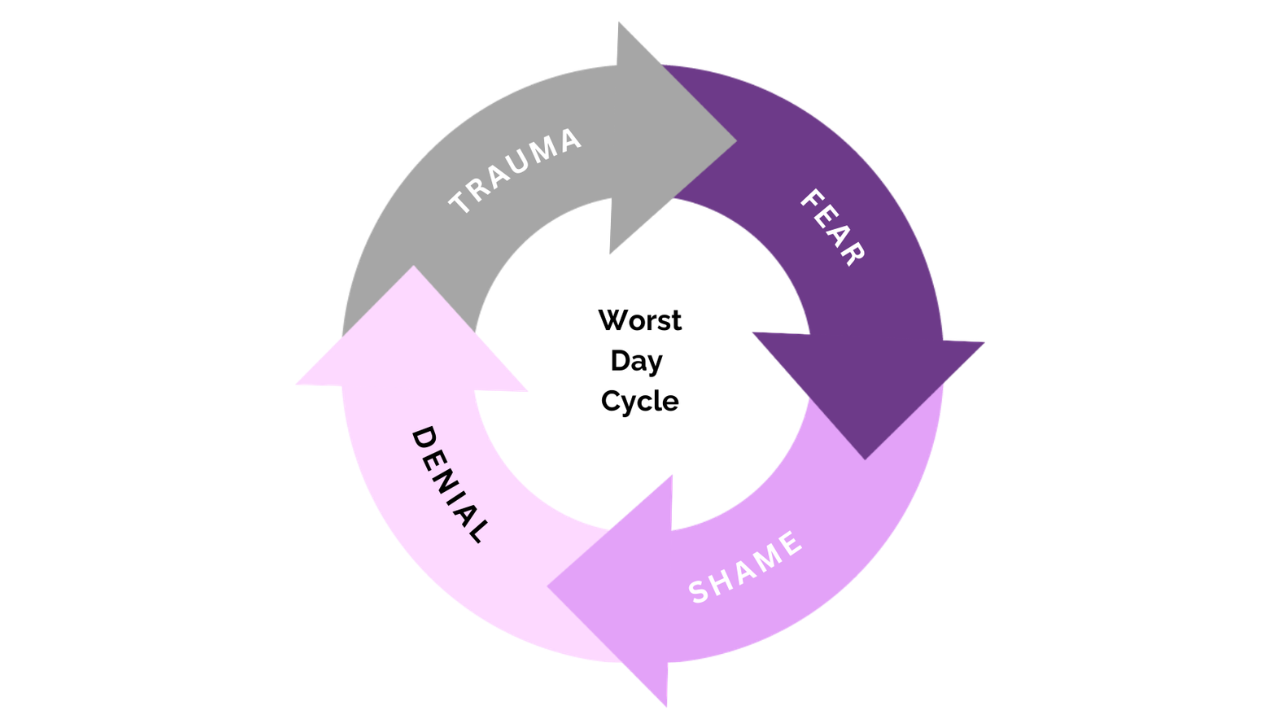
The Worst Day Cycle™ has four stages: Trauma → Fear → Shame → Denial.
Trauma: Any negative emotional experience in childhood that created painful meanings. It doesn’t have to be dramatic — a parent who was emotionally unavailable, a household where feelings were treated as weakness, a caregiver whose love depended on your performance. These experiences create a massive chemical reaction in the brain and body. The hypothalamus generates chemical cocktails — cortisol, adrenaline, dopamine, oxytocin misfires — and the brain becomes addicted to these emotional states.
That’s you — feeling most alive when you’re under pressure, because your nervous system was calibrated for chaos in childhood and mistook stress for safety.
Fear: Fear drives repetition. The brain conserves energy by repeating known patterns — it can’t tell right from wrong, only known from unknown. Since 70%+ of childhood messaging is negative and shaming, adults repeat these painful patterns in relationships, career, hobbies, health — everything. You keep choosing situations that confirm the belief “I’m not enough” because that belief feels familiar, and familiar feels safe to the brain.
Shame: This is where you lost your inherent worth. “I am the problem.” Not “I made a mistake” — but “I AM the mistake.” This is the core wound underneath every struggle with self-love. When a child makes a simple mistake and the parent’s response communicates that the child is bad — not just the behavior — the child absorbs that message into their identity. Shame says: “I did something wrong, so I am wrong.” The Authentic Self says: “I did something wrong, and I’m still worthy. I’ll own it and repair.”
That’s the shame talking — the voice that says you have to earn your worth through performance, because somewhere in childhood you learned that just being you wasn’t enough.
Denial: Denial is the survival persona you created to survive the pain. It was brilliant in childhood — absolutely necessary. But in adulthood, it sabotages everything. It keeps you performing instead of feeling. Achieving instead of healing. Running from the void instead of understanding what created it.
The Worst Day Cycle™ explains why self-love feels impossible — your brain created a neurochemical loop in childhood that equates your worth with your output, and it repeats that loop thousands of times per day without your conscious awareness, making the absence of self-love feel like reality instead of a trauma response.
How Your Survival Persona Fakes Confidence to Hide Low Self-Worth
Your survival persona is the identity you created in childhood to navigate an emotionally unsafe environment. It’s not who you are — it’s who you had to become. And it’s the greatest obstacle to self-love because it replaces your authentic self with a performance.
There are three survival persona types:
The Falsely Empowered: This persona controls, dominates, and rages. They look powerful on the outside — successful, commanding, unshakeable. But their power comes from fear, not self-love. They achieve to avoid feeling worthless. They control others to avoid feeling out of control inside. Their “confidence” is a fortress built on shame.
That’s you — the person everyone calls “so confident” while you’re terrified that if you stop achieving for one day, people will see who you really are underneath.
The Disempowered: This persona collapses, people-pleases, and disappears. They make themselves small to be safe. They abandon their needs, their voice, their boundaries — all to maintain connection. They don’t struggle with confidence in the traditional sense — they struggle with existing. They believe their worth depends entirely on being needed by others.
That’s you — the one who bends over backward for everyone and then wonders why you feel invisible, unloved, and empty.
The Adapted Wounded Child: This persona oscillates between both — dominating one moment, collapsing the next. They swing between “I don’t need anyone” and “please don’t leave me.” They never land in their authentic self because they have no stable foundation of self-worth to stand on.
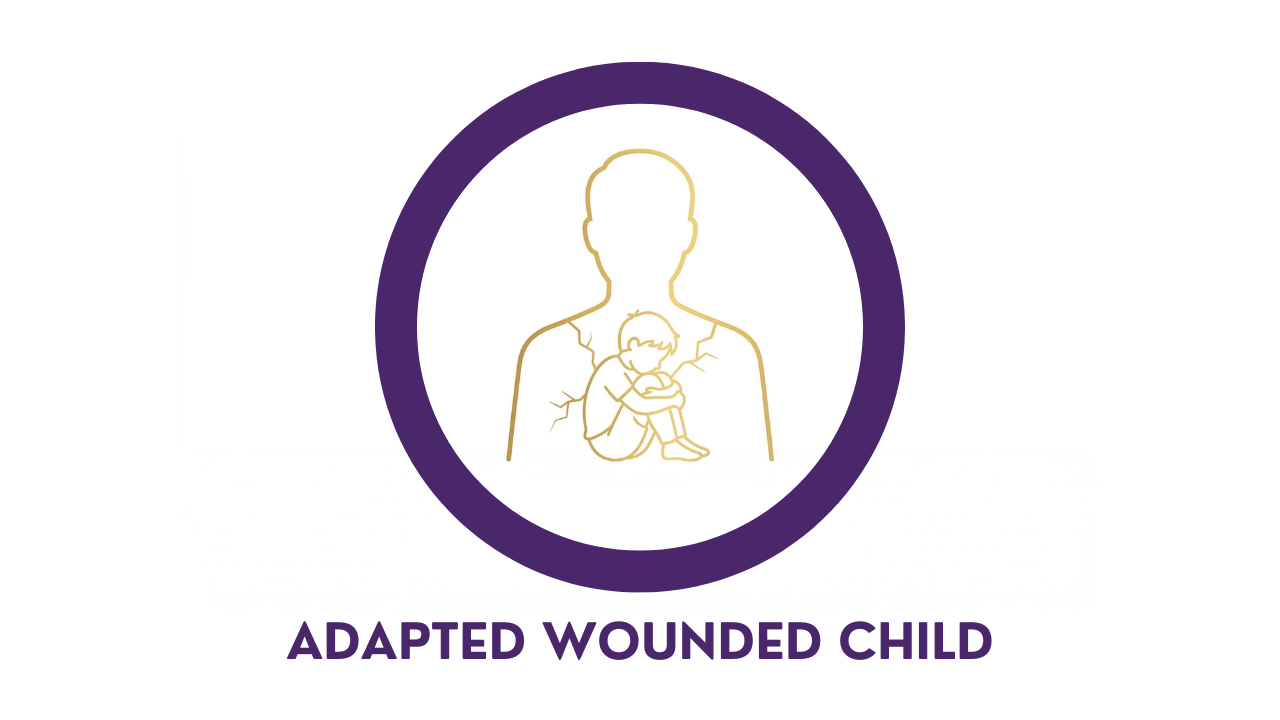
That’s you — the one who swings between arrogance and collapse and can’t figure out which version of yourself is real.
Your survival persona is the most sophisticated barrier to self-love because it replaces your authentic identity with a performance — and after decades, you can’t tell the difference between who you really are and who you had to become to survive.
How Low Self-Love Shows Up in Every Area of Your Life
Family: You’re still playing the role your family assigned you as a child — the peacekeeper, the achiever, the invisible one, the problem solver. You manage everyone’s emotions at family gatherings. You swallow your feelings to avoid conflict. You feel responsible for your parents’ happiness even as an adult. And when you try to set a boundary, the guilt is so overwhelming that you cave — because deep down, you believe your worth in this family depends on your compliance.
That’s you — still auditioning for love from people who never learned how to give it unconditionally.
Romantic Relationships: You choose partners who confirm your deepest fear: that you’re not enough. You tolerate behavior that crosses your boundaries because being alone feels more terrifying than being mistreated. You confuse intensity with intimacy, and you abandon yourself to keep the relationship “safe.” Or you avoid intimacy entirely — keeping partners at arm’s length because letting someone see the real you feels too dangerous.
Sound familiar? The person who gives everything in a relationship and then feels resentful when their partner doesn’t read their mind?
Friendships: You’re the friend everyone calls in a crisis but no one checks on. You listen for hours but never share your own struggles. You cancel your own plans when someone else needs you. You feel lonely even when surrounded by people — because no one actually knows you. They know your survival persona.
Work: You overdeliver. You say yes to every project. You check email at midnight. You measure your worth in productivity. You’ve been promoted for your self-abandonment — praised for the very pattern that’s destroying your self-love. Rest feels like laziness. Taking credit feels like arrogance. And no matter how much you accomplish, the void says: “That wasn’t enough. Do more.”
That’s you — getting promoted for the very survival persona pattern that prevents you from ever feeling genuinely worthy.
Body and Health: You ignore your body’s signals. You push through exhaustion, pain, hunger, and stress because your body has always been a vehicle for performance, not a source of wisdom. You numb with food, alcohol, scrolling, or exercise — anything to avoid sitting still with the feelings your body is trying to show you. Chronic pain, digestive issues, insomnia, and autoimmune conditions are often the body’s last resort when emotional signals have been ignored for decades.
Why Affirmations and Positive Thinking Can’t Build Self-Love
Here’s the hard truth most self-help misses: your nervous system doesn’t care what you think. It cares what it feels.
You can stand in front of the mirror every morning and say “I am worthy. I am enough. I love myself.” But if your nervous system learned in childhood that you’re not worthy, not enough, and not lovable — the affirmations just create a split. Your mind believes one thing while your body believes another. That split creates more anxiety, not less.
That’s you — saying the affirmation with your mouth while your stomach tightens and your chest says “liar.”
Positive thinking is window dressing on a house with a cracked foundation. You can paint the walls, rearrange the furniture, hang inspiring quotes — but if the foundation was damaged in childhood, the house will keep shifting. Affirmations address symptoms. Self-love requires addressing the root cause — the childhood emotional blueprint that taught you your worth was conditional.
You cannot think your way to self-love because self-worth was not destroyed through thinking — it was destroyed through feeling. Shame is a biochemical event stored in your nervous system, not a thought stored in your mind. Only a somatic process that addresses the body can restore what was taken from you in childhood.
How the Emotional Authenticity Method™ Restores Self-Love
The Emotional Authenticity Method™ is the daily practice that actually restores self-love at the nervous system level. It works because it targets the body — where shame lives — not just the mind.
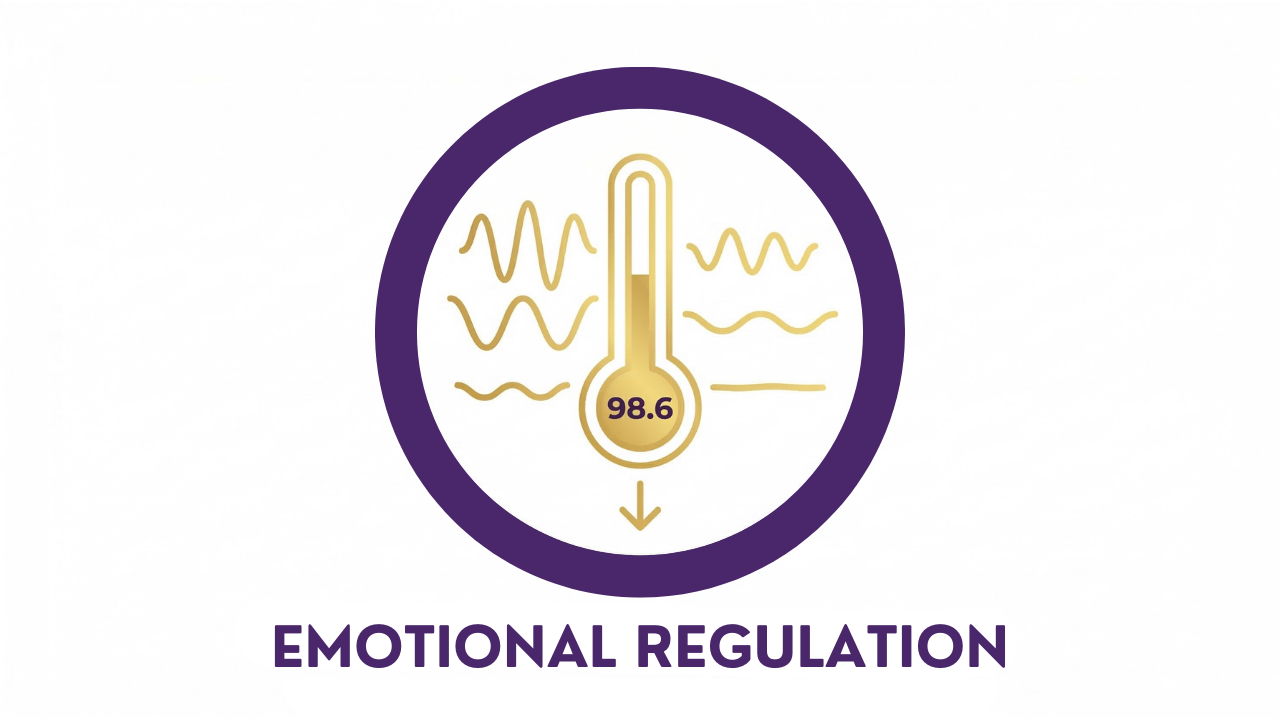
Step 1: Somatic Down-Regulation. Focus on what you can hear for 15-30 seconds. Before you can process anything, you have to get your nervous system out of survival mode. If you’re highly dysregulated, use titration — go slowly, don’t force yourself to feel everything at once.
That’s you — learning that you don’t have to power through healing the way you power through everything else.
Step 2: What am I feeling right now? Most people who struggle with self-love have no idea what they’re actually feeling. They’ve been disconnected from their emotions for so long that “fine” is their default answer. Using the Feelings Wheel, develop emotional granularity — the ability to name specific emotions instead of lumping everything into “stressed” or “fine.”
Step 3: Where in my body do I feel it? All emotional trauma is stored physically. Your chest tightens. Your stomach drops. Your jaw clenches. Locating the feeling in your body is how you move from intellectual understanding to somatic processing.
Step 4: What is my earliest memory of having this exact feeling? This is where the rewiring happens. You trace today’s reaction back to its childhood origin. You realize: this isn’t about today. My partner isn’t my parent. My boss isn’t my father. My nervous system just thinks they are.
That’s the moment everything shifts — when you see that your lack of self-love belongs to a five-year-old who was told their worth depended on being perfect, not to the adult you are today.
Step 5: Who would I be if I never had this thought or feeling again? What would be left over? This is the vision step. It connects you to the Authentic Self Cycle™ and gives your nervous system a new destination — not more achievement, but actual identity restoration.
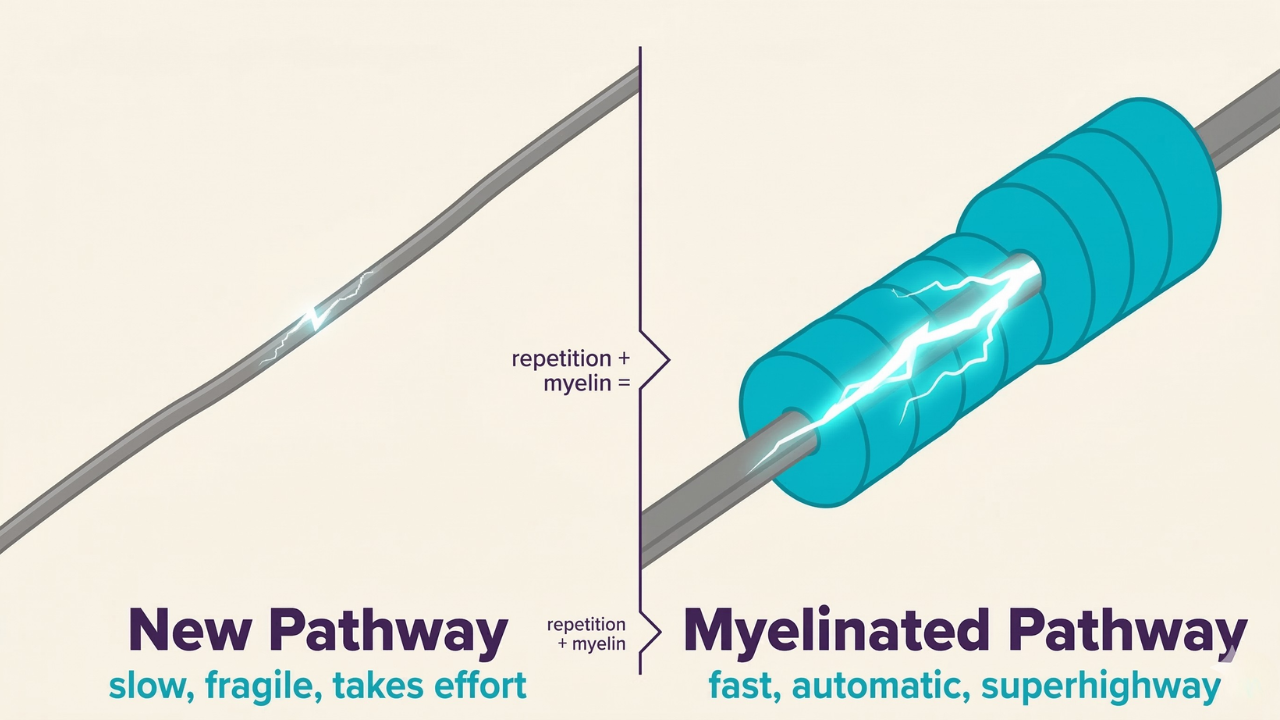
Step 6: Feelization — Sit in the feeling of the Authentic Self and make it strong. Create a new emotional chemical addiction to replace the old blueprint. Ask: how would I respond to this situation from this feeling? What would I say? What would I do? Visualize and FEEL yourself operating from your Authentic Self. This is the emotional blueprint remapping and rewiring step — you’re literally building new neural pathways that replace shame with worth.
That’s where self-love is actually born — not in a thought, but in a felt experience of your own worth that your nervous system can taste, remember, and repeat.
The Emotional Authenticity Method™ restores self-love because emotions are biochemical events — you cannot change your sense of worth through thoughts alone. Thoughts originate from feelings, not the other way around. When you change the feeling, the thoughts about yourself change automatically.
How the Authentic Self Cycle™ Rebuilds Your Worth From the Inside
The Authentic Self Cycle™ is the healing counterpart to the Worst Day Cycle™. Where the Worst Day Cycle™ traps you in Trauma → Fear → Shame → Denial, the Authentic Self Cycle™ restores your identity through Truth → Responsibility → Healing → Forgiveness.
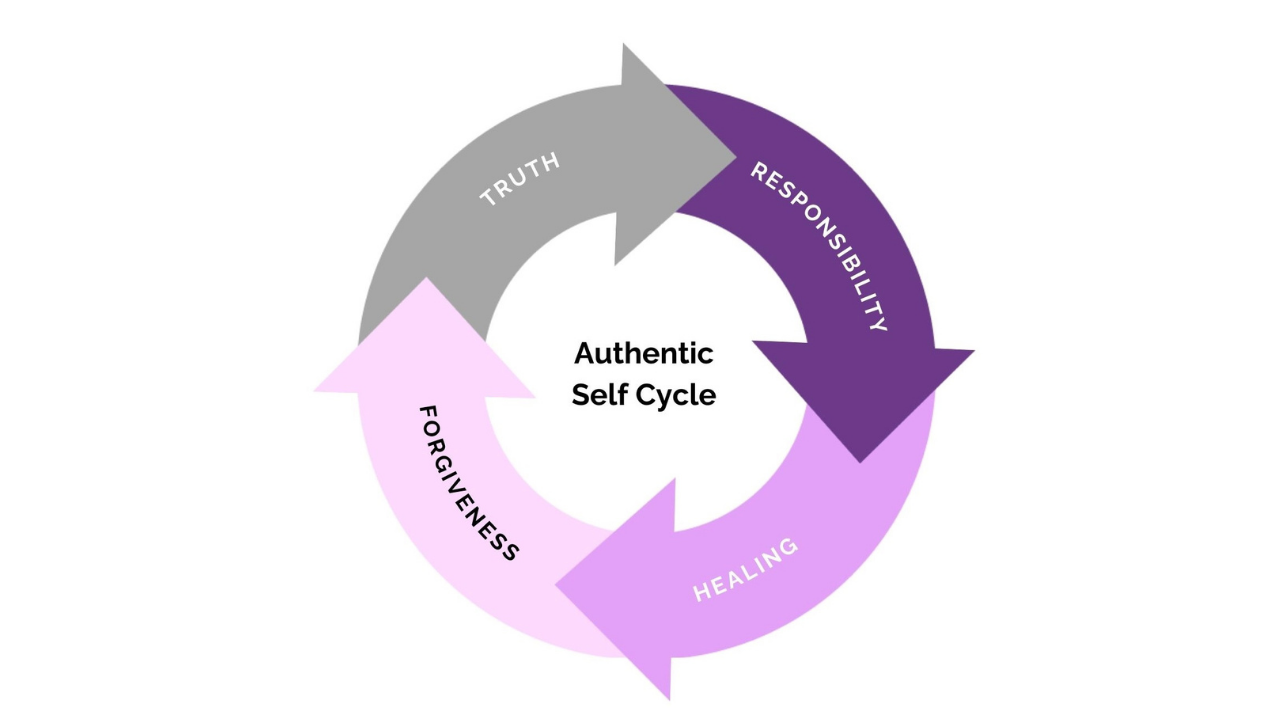
Truth: Name the blueprint. See that “this isn’t about today.” When you receive a compliment and your chest tightens, truth says: “This discomfort is from childhood. I was taught that accepting praise was arrogant — my nervous system just replays that rule automatically.”
That’s the first step toward self-love — seeing the pattern instead of being trapped inside it.
Responsibility: Own your emotional reactions without blame. “My partner isn’t my parent — my nervous system just thinks they are.” This isn’t about fault. It’s about taking back your power from a childhood that stole your sense of worth.
Healing: Rewire the emotional blueprint so your worth isn’t conditional on performance. This is where the Emotional Authenticity Method™ does its daily work — second by second, like the ticks of a clock. The second hand moves in tiny, almost insignificant ticks. But those ticks move the minute hand. The minutes move the hours. Healing self-love works the same way.
Forgiveness: Release the inherited emotional blueprint and reclaim your authentic self. This creates a NEW emotional chemical pattern that replaces fear, shame, and denial with safety, worth, and connection. A key ingredient of the Authentic Self is that it recognizes at all times — whether living its perfection or its imperfection — it has inherent value and worth.
That’s you — not becoming someone new, but finally meeting who you always were underneath the survival persona. The person whose worth was never actually lost — just buried under decades of shame.
The Authentic Self Cycle™ is an identity restoration system — it doesn’t teach you to perform self-love through affirmations and positive thinking, it replaces the neurochemical pattern that destroyed your self-worth with a new blueprint built on truth, responsibility, and emotional authenticity.
Frequently Asked Questions About Self-Love and Confidence
What is the difference between self-love and self-care?
Self-care addresses symptoms — bubble baths, vacations, affirmations. Self-love addresses the root cause — the childhood emotional blueprint that taught you your worth was conditional. You can practice self-care while still deeply lacking self-love. True self-love means rewiring your nervous system’s relationship to your own inherent worth using practices like the Emotional Authenticity Method™.
Why do I struggle with self-love even though I’m successful?
Success builds confidence but not self-esteem. Self-love requires both. High achievers often have extraordinary confidence in their ability to perform but shattered self-esteem underneath. The Worst Day Cycle™ explains how childhood trauma creates a neurochemical addiction to the achievement-validation loop — making success feel urgent but never satisfying. Your worth isn’t determined by anything external.
Can you build self-love without addressing childhood trauma?
Surface-level self-love practices like affirmations and journaling can provide temporary relief. But lasting self-love requires addressing the childhood emotional blueprint that installed the belief “I’m not enough.” The survival persona — whether falsely empowered, disempowered, or adapted wounded child — will continue to override any positive self-talk until the underlying shame is processed somatically through the body, not just the mind.
How long does it take to develop genuine self-love?
Self-love isn’t a destination you reach — it’s a daily practice of choosing yourself. Noticeable shifts can happen within weeks of consistent work with the Emotional Authenticity Method™. The key is repetition, not intensity. Small moments of self-loyalty — checking in with your feelings, honoring a boundary, sitting with discomfort instead of numbing — create cumulative neurological change. The Authentic Self Cycle™ provides the framework for long-term identity restoration.
Is low self-love the same as low self-esteem?
Low self-esteem is one component of low self-love. Self-love is the integration of self-esteem (unconditional belief in your inherent worth) and confidence (belief in your capacity to grow and create). You can have high confidence and low self-esteem — which looks like success on the outside and emptiness on the inside. True self-love requires healing both, starting with the self-esteem that was damaged in childhood.
What is the fastest way to start building self-love today?
Start with the Emotional Authenticity Method™: pause, ask “what am I feeling right now?”, locate that feeling in your body, and trace it to your earliest memory of that same feeling. This single practice — done consistently — begins rewiring the emotional blueprint that stole your self-worth. Download the Feelings Wheel to build emotional granularity, and practice one micro-boundary per day — saying no to something small to teach your nervous system that your needs matter.
The Bottom Line
You don’t need more confidence. You don’t need more achievements. You don’t need another affirmation or another self-help book that tells you to believe in yourself harder.
You need to stop running from the part of yourself that was told it wasn’t enough.
Whether at your worst or your best, you always have inherent worth and value. That’s not something you earn. It’s something you were born with. Childhood taught you that worth equals being a certain way. It doesn’t. Your behavior changes. Your worth doesn’t. Shame says: “I did something wrong, so I am bad.” Your Authentic Self says: “I did something wrong, and I’m still worthy — I’ll own it and repair.”
Every time you check in with your feelings instead of ignoring them, you choose self-love. Every time you honor a boundary instead of abandoning yourself, you choose self-love. Every time you sit with the void instead of filling it with achievement, you choose self-love.
That’s you — not the person who performed their way to confidence. The person who finally stopped performing and discovered that underneath all the doing, there was always someone worth loving. And that someone is you.
There is nothing you’ve done to lose your worth. It is a birthright that you were born into this world with inherent worth — and the only time you lose it is when you give it away to others. Don’t let them take that worth from you.
Recommended Reading
These books complement the frameworks in this article and can deepen your understanding of self-love, shame, and emotional healing:
Facing Codependence by Pia Mellody — the foundational text on how childhood trauma creates the shame patterns that destroy self-love and self-esteem.
The Body Keeps the Score by Bessel van der Kolk — the science of how trauma lives in the body, not just the mind, explaining why affirmations alone can’t build self-love.
When the Body Says No by Gabor Maté — how chronic self-abandonment and suppressed emotions manifest as physical illness.
Codependent No More by Melody Beattie — a practical guide to recognizing codependent patterns and rebuilding self-worth.
The Gifts of Imperfection by Brené Brown — how shame drives performance-based identity and why vulnerability is the path back to self-love.
Take the Next Step
If you’re ready to stop performing confidence and start building genuine self-love, Kenny Weiss offers courses designed for people who are done chasing worth through achievement and ready to heal:
Emotional Blueprint Starter Course — Individual ($79) — Your personal roadmap to understanding the Worst Day Cycle™ and beginning the journey to your authentic self.
Relationship Starter Course — Couples ($79) — For couples ready to break the cycle of reactivity and build interdependence rooted in self-love.
Why We Can’t Stop Hurting Each Other ($479) — Deep-dive into the Worst Day Cycle™ and how childhood trauma creates relationship pain.
Why High Achievers Fail at Love ($479) — Built specifically for high achievers who have mastered confidence but can’t figure out self-love.
The Shutdown Avoidant Partner ($479) — Understanding avoidant attachment through the lens of trauma chemistry and survival personas.
Tier 1: Mapping the Blueprint ($1,379) — The comprehensive program for learning and practicing the Emotional Authenticity Method™.
Download the Feelings Wheel — the free tool used in Step 2 of the Emotional Authenticity Method™ to build emotional granularity.
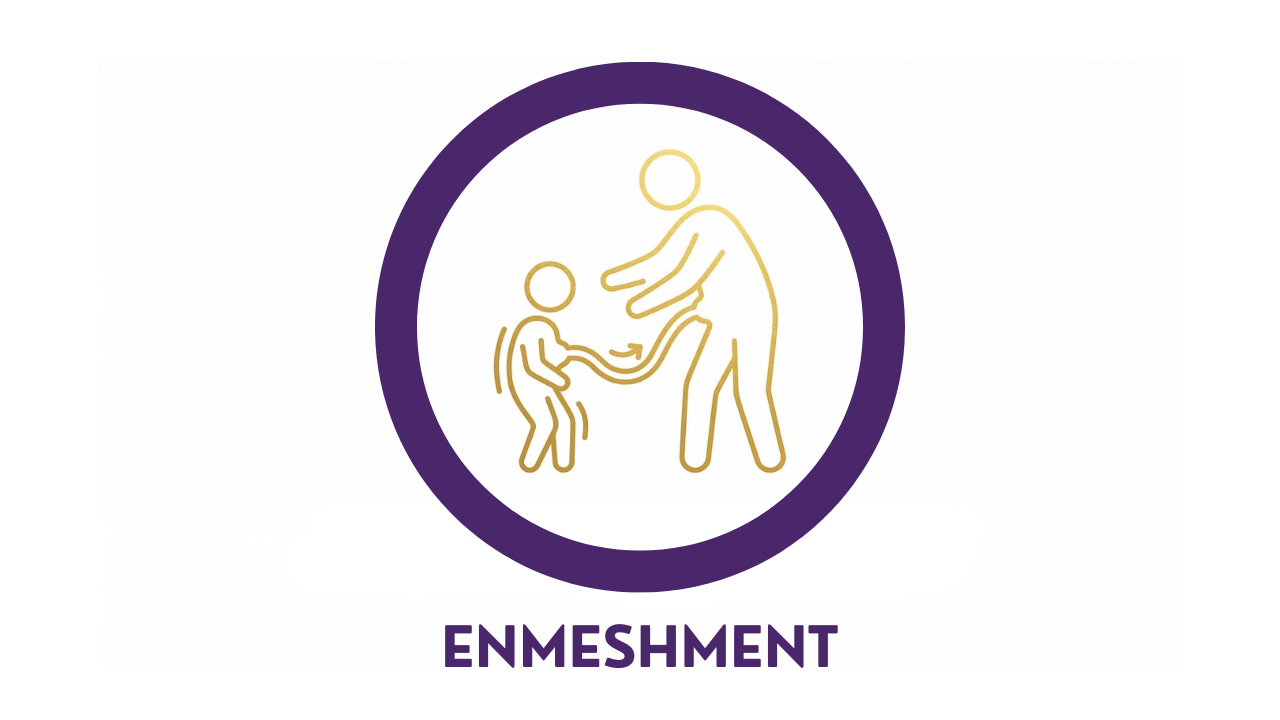
Explore more: The Signs of Enmeshment | 7 Signs of Relationship Insecurity | 7 Signs of High Self-Esteem | How to Determine Your Negotiables and Non-Negotiables | 10 Do’s and Don’ts for a Great Relationship