You’re sitting at a family dinner and your mother starts telling the table about your relationship problems — details you shared with her in private. Your stomach drops. You want to say something, but you can’t. You never could. Because somewhere deep inside, you learned that her feelings matter more than yours. That keeping her happy is your job.
And it’s been that way for as long as you can remember.
Maybe it was the way she called you her “best friend” when you were eight. Maybe it was how your father told you everything about his failing marriage — burdens no child should carry. Maybe it was the guilt trips when you tried to move out, go to college, or simply live your own life.
That’s you — and you’re not broken. You were trained.
dynamic where emotional boundaries between parent and child are erased. The parent uses the child to meet their own unmet emotional needs — for companionship, validation, intimacy, or emotional regulation — without realizing they’re doing it. The child grows up believing their worth depends on managing other people’s emotions. This isn’t love. It’s emotional survival. And it follows you into every relationship you’ll ever have — until you learn what it is and how to heal from it.
What Does Enmeshment Actually Mean?
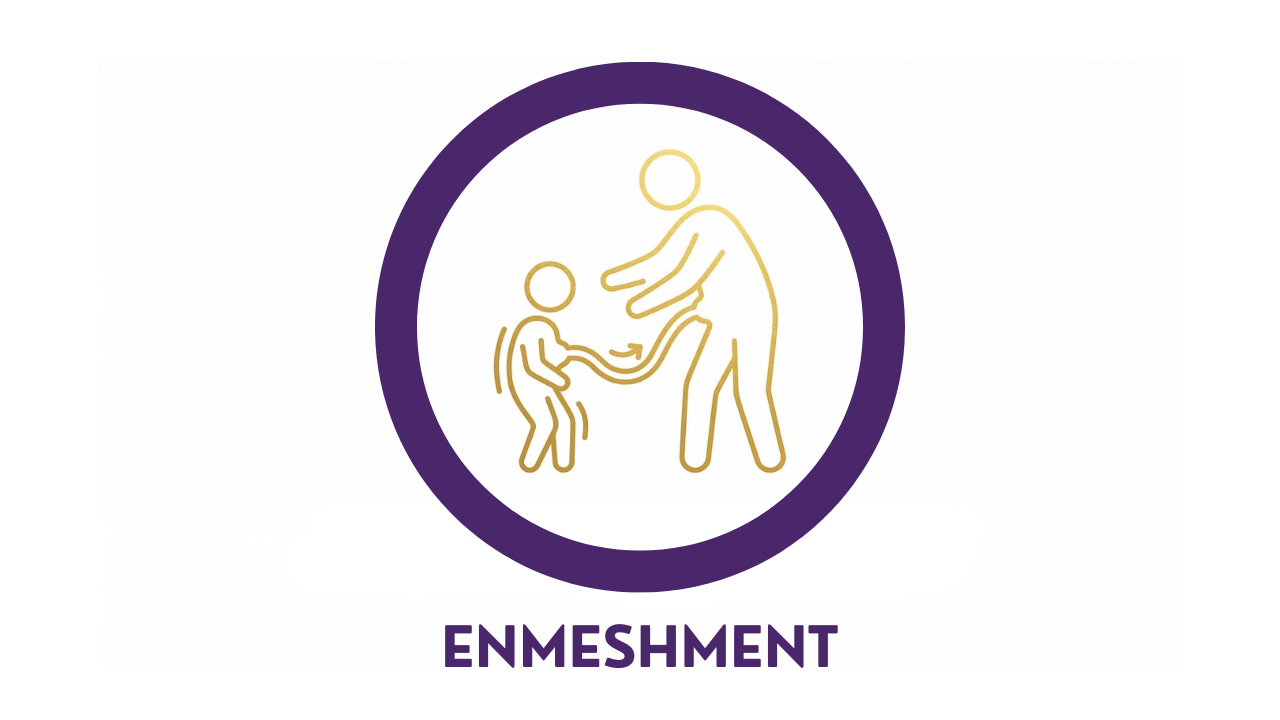
Enmeshment is a family system where the emotional boundaries between parent and child are blurred or completely erased. The parent — usually without realizing it — uses the child as an emotional partner, confidant, therapist, or source of validation. The child’s needs, feelings, and identity get swallowed up by the parent’s emotional world.
This isn’t about a parent who loves their child deeply. Every loving parent wants closeness. Enmeshment is different. In enmeshment, the closeness isn’t for the child’s benefit — it’s for the parent’s. The parent has unmet emotional and psychological needs, usually from their own childhood trauma, and they unconsciously turn to their child to fill the void their partner, their parents, or their own healing should fill.
The child’s nervous system learns one thing above all else: other people’s emotions are your responsibility. Your feelings? Those don’t matter. Your needs? Those are selfish. Your job is to keep the peace, absorb the pain, and make sure nobody in the family falls apart.
That’s you — carrying everyone else’s emotional weight and calling it love.
Why Enmeshment Happens: It Starts With the Parent’s Unhealed Wounds
Here’s something most people don’t understand about enmeshment: the parent doesn’t know they’re doing it. These aren’t bad people. They’re wounded people — adults who never got their own emotional needs met as children, and who unconsciously look to their kids to fill that void.
A mother who was emotionally abandoned by her own parents turns her daughter into her best friend — her emotional support system. A father whose marriage is falling apart starts confiding in his son about things no child should ever hear. A single parent who’s overwhelmed and lonely makes their child their primary companion.
None of this happens with malicious intent. It happens because the parent’s nervous system is in survival mode, and the child is the safest, most available source of emotional regulation they have. The parent may even believe they have the closest, most loving relationship imaginable with their child.
That’s you — and you believed it too. Because it’s all you ever knew.
That’s you — defending the very dynamic that stole your childhood.
Society and media haven’t educated us on what healthy parenting actually looks like. We see enmeshed families on television and call it “close.” We see a mother who knows every detail of her adult daughter’s life and say, “What a great relationship.” We don’t recognize the codependence hiding underneath because it looks so much like love.
But love has boundaries. Enmeshment does not.
How Enmeshment Shows Up in Your Life
Enmeshment doesn’t stay in your childhood home. It follows you — into your relationships, your friendships, your career, and your body. The patterns you learned as a child become the patterns you repeat as an adult, because your nervous system was wired for them before you could even speak.
Enmeshment in Your Family
Your parent still expects you to call daily. They guilt-trip you when you have plans that don’t include them. They share personal information about you with the entire family without your permission. They react with anger, tears, or withdrawal when you try to set boundaries. They say things like, “After everything I’ve done for you” or “Fine, I’ll just be here alone.”
You keep secrets from them — not because you’re dishonest, but because you know they can’t handle the truth without making it about themselves. You sacrifice your own belief system to keep them happy. You feel responsible for their emotional state, even though you’re a grown adult with your own life.
That’s you — still parenting your parent, still abandoning yourself to keep the peace.
Enmeshment in Romantic Relationships
You either lose yourself completely in your partner — becoming whatever they need you to be — or you choose emotionally unavailable people because real intimacy feels suffocating. You confuse intensity for connection. You mistake insecurity for love. You feel responsible for your partner’s happiness and take it personally when they’re in a bad mood.
When there’s conflict, you either shut down completely or over-function — doing more, giving more, trying harder — because that’s what worked with your parent. You don’t know how to have needs in a relationship because you were never allowed to have them as a child.
That’s you — giving everything to your partner and having nothing left for yourself.
Enmeshment in Friendships
You’re the friend everyone calls when they’re in crisis. You absorb other people’s problems like a sponge. You feel guilty saying no to anyone, even when you’re exhausted. People call you an “empath” — but here’s the truth most people won’t tell you: being an “empath” isn’t a gift. It’s a trauma response. It means your boundaries were erased so early that you don’t know where you end and other people begin.
You attract people who take more than they give because that dynamic feels normal to you. It’s familiar. And familiar feels safe to your nervous system, even when it’s destroying you.
That’s you — pouring from an empty cup and wondering why you’re so exhausted.
Enmeshment at Work
You’re the overachiever, the people-pleaser, the one who can’t say no to extra projects. You base your entire self-worth on performance and approval from authority figures — because that’s what you did with your parent. Your boss’s mood determines your mood. A critical email sends you into a spiral. You work late, say yes to everything, and then resent everyone for not noticing how much you give.
You might be wildly successful on the outside — but inside, you feel like a fraud. Because enmeshment taught you that your worth is earned, never inherent.
That’s you — performing your value instead of knowing it.
Enmeshment in Your Body and Health
Your body keeps the score. Dr. Gabor Maté writes in When the Body Says No that when we can’t say no with our words — when our boundaries are erased — our body says no for us. Autoimmune conditions, chronic pain, digestive issues, insomnia, jaw clenching, migraines — these are your nervous system’s way of screaming what your voice was never allowed to say.
You might bounce your leg constantly, clench your jaw at night, or carry tension in your shoulders that never releases. Your body has been in fight-or-flight since childhood, because enmeshment kept your nervous system in a permanent state of hypervigilance — always scanning, always monitoring, always ready to manage someone else’s emotions.
That’s you — your body holding all the pain your words were never allowed to speak.
The Three Survival Personas Enmeshment Creates
When a child grows up in an enmeshed family, they don’t get to develop an authentic self. Instead, they develop a survival persona — a version of themselves designed to keep the parent happy and the family system intact. There are three types:
The Falsely Empowered: This person looks like they have it all together. They’re the high achiever, the controller, the one who takes charge of every situation. But underneath, they’re terrified — terrified that if they stop performing, if they show any weakness, they’ll be abandoned. They learned in childhood that being “strong” was the only way to earn love.
The Disempowered: This person shrinks. They become passive, compliant, invisible. They learned that having needs was dangerous, that taking up space created conflict, and that the safest place was in the background. They attract controlling partners and overbearing friends because they were trained to serve.
The Adapted Wounded Child: This is the person stuck in reactive survival mode — acting out, self-sabotaging, using substances or relationships or chaos to manage the pain they were never taught to process. They’re not “broken” — they’re adapting to wounds that never healed.
That’s you — one of these survival personas running your life on autopilot, making decisions from childhood wounds instead of adult wisdom.
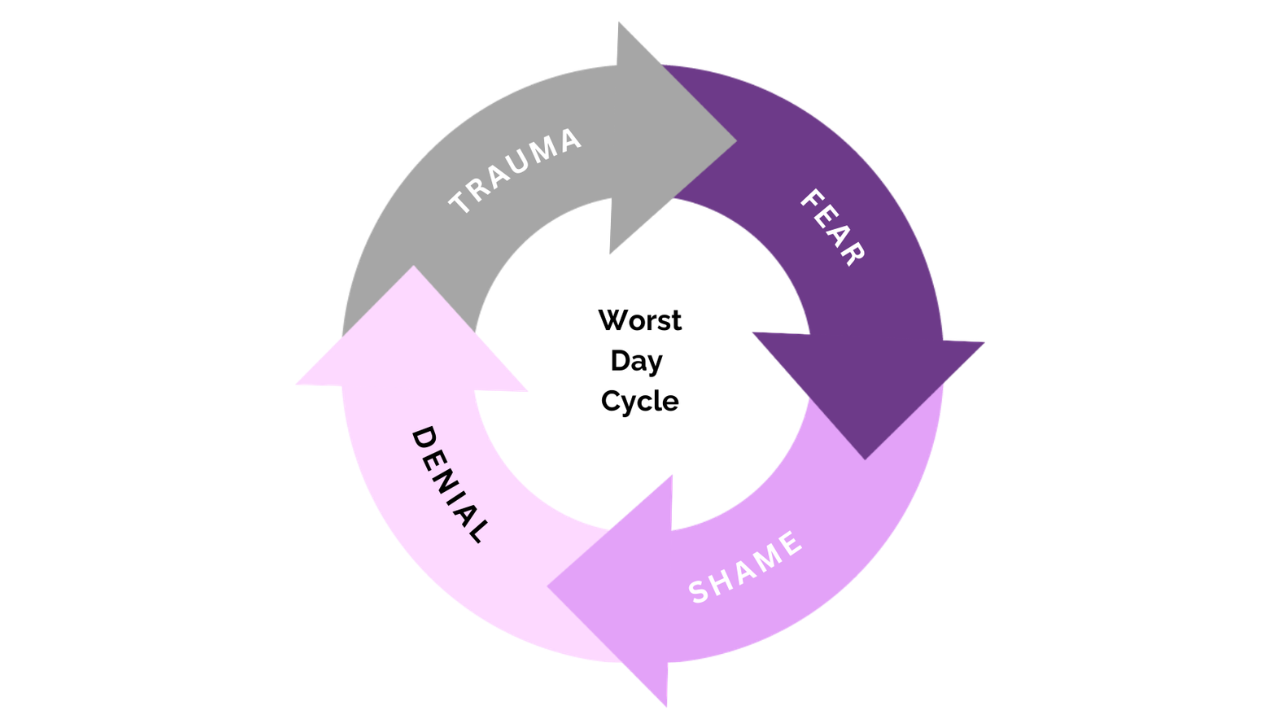
The Worst Day Cycle™: How Enmeshment Keeps You Stuck
Enmeshment doesn’t just wound you once. It creates a cycle that repeats throughout your entire life — what I call the Worst Day Cycle™. Here’s how it works:
Fear: At the core of enmeshment is a deep, primal fear — the fear of being alone, abandoned, rejected, or unloved. Your parent taught you that love is conditional. That if you don’t perform, comply, or manage their emotions, you’ll lose them. So fear runs everything. It drives every decision, every relationship, every moment of people-pleasing.
Shame: That fear creates shame. Not guilt — guilt says “I did something wrong.” Shame says “I am something wrong.” You believe your needs are too much, that you’re fundamentally flawed, that if people really knew you, they’d leave. This shame was installed in childhood, and it sits at the center of your emotional operating system.
Denial: Because the shame is so unbearable, you develop denial — self-deception. You tell yourself the enmeshment was love. You minimize the damage. You say things like, “My parents did their best” without ever looking at what their “best” actually cost you. You deny your own feelings to maintain the story that your family was normal.
And then the cycle repeats. Fear → Shame → Denial → Fear → Shame → Denial. Over and over, keeping you trapped in the same patterns, the same relationships, the same pain.
That’s you — trapped in a cycle you didn’t create and can’t think your way out of.
The Emotional Authenticity Method™: How to Start Healing
You can’t think your way out of enmeshment. You can’t journal your way out. You can’t read enough books or listen to enough podcasts to override what your nervous system learned in childhood. Healing happens in the body, not just the mind.
That’s why I created the Emotional Authenticity Method™ — a five-step somatic process that interrupts the Worst Day Cycle™ in real time. Here’s how it works:
Step 1: Somatic Down-Regulation. When you feel triggered — when the guilt, the shame, the fear hits — stop. Focus on what you can hear around you for 15 to 30 seconds. The sound of the air conditioning. A car outside. Your own breathing. This interrupts your nervous system’s trauma response and brings you back into your body.
Step 2: What am I feeling right now? Name it. Not what you’re thinking — what you’re feeling. Sad. Scared. Angry. Ashamed. Use the Feelings Wheel if you need help — most people raised in enmeshed families were never taught to identify their own emotions.
Step 3: Where in my body do I feel it? Tightness in your chest. A pit in your stomach. A lump in your throat. Tension in your shoulders. Your body has been holding these emotions for decades. Let yourself feel where they live.
Step 4: What is my earliest memory of this exact feeling? This is where the breakthrough happens. That feeling you’re having right now — it’s not new. It’s ancient. It’s the same feeling you had at five, at eight, at twelve, when your parent made you responsible for their emotional world. Let the memory surface.
Step 5: Who would I be if I never had this feeling again? This is the vision of your authentic self — the person underneath the survival persona. The person who doesn’t need to earn love, manage other people’s feelings, or perform their worth. That person is still in there.
That’s you — five steps away from meeting the person you were always meant to be.
The Authentic Self Cycle™: What Healing Actually Looks Like
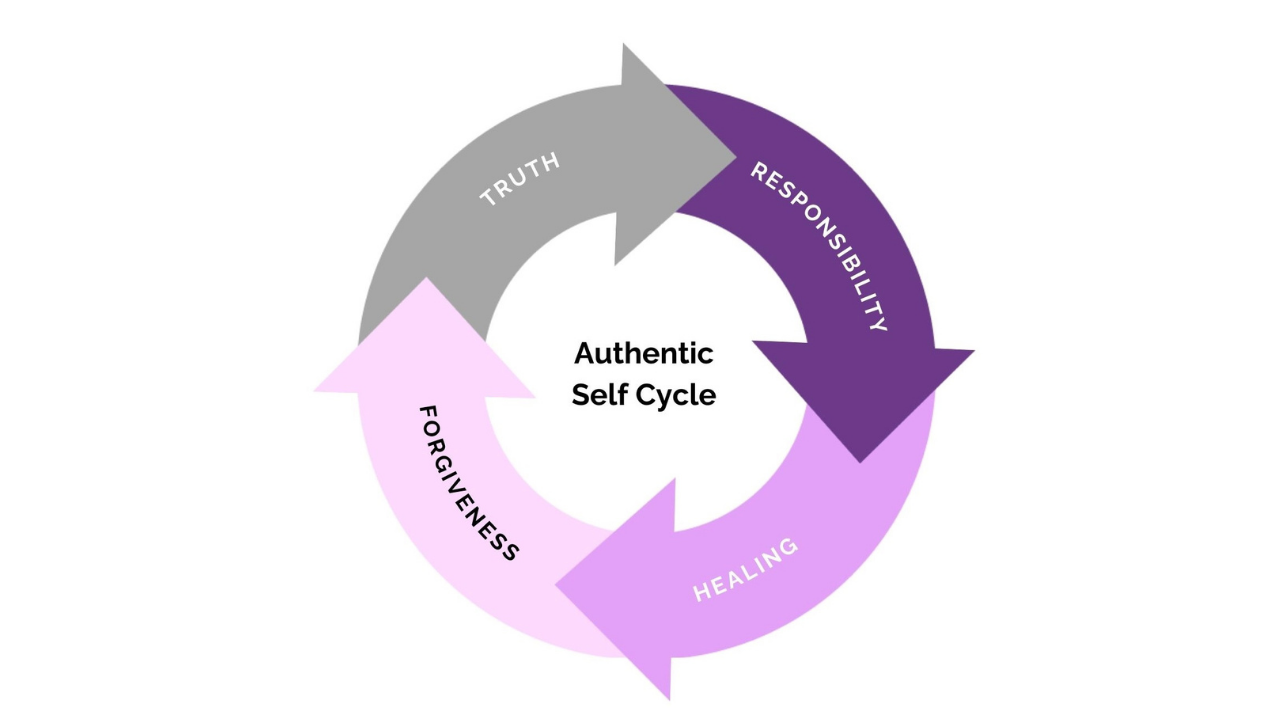
When you start doing this work, the Worst Day Cycle™ begins to lose its grip. In its place, something new emerges — what I call the Authentic Self Cycle™:
Truth: You stop denying what happened to you. You stop calling enmeshment “love.” You tell yourself the truth — that your boundaries were violated, that you were used to meet your parent’s emotional needs, and that you deserved better. Truth is the first act of courage in healing.
Responsibility: You take ownership of your healing. Not blame — responsibility. You didn’t cause the enmeshment, but you’re the only one who can break the cycle. This means doing the uncomfortable work, not just reading about it.
Healing: Real healing — somatic, nervous-system-level healing. Not just understanding what happened, but feeling what you were never allowed to feel. Grieving the childhood you didn’t get. Processing the anger, the sadness, the betrayal. Letting your body release what it’s been holding for decades.
Forgiveness: Not forced forgiveness. Not “I forgive you because I should.” Real forgiveness — the kind that comes naturally when you’ve done the healing work. Forgiveness of your parents for not knowing better. Forgiveness of yourself for all the years you spent in survival mode. Forgiveness is the last step, not the first.
That’s you — stepping out of the Worst Day Cycle™ and into the life you were always meant to live.
Before and After: What Changes When You Heal Enmeshment
Before healing, you feel responsible for everyone else’s emotions. You can’t say no without drowning in guilt. You don’t know what you actually want because you’ve spent your entire life focused on what other people need. Relationships feel like obligations. Your body is tense, exhausted, and running on cortisol. You think this is just “who you are.”
After healing, you discover that you are a whole, separate person with your own needs, feelings, and desires. You set boundaries without guilt. You choose relationships based on mutual respect, not familiar pain. You stop absorbing other people’s emotions and start feeling your own. Your body relaxes. Your nervous system calms. You sleep better, breathe deeper, and show up in the world as you — not as the version of you that was designed to keep someone else comfortable.
That’s you — not someday. That’s the you that’s available right now, the moment you decide to start.
Recommended Reading
If this article hit home, these books will take your understanding deeper:
The Emotional Incest Syndrome by Dr. Patricia Love — The definitive book on enmeshment. Don’t let the title scare you. This book explains exactly how parents use children as emotional partners and what you can do about it.
Facing Codependence by Pia Mellody — The foundational text on how childhood trauma creates codependent patterns. Pia Mellody’s work is the backbone of everything I teach.
When the Body Says No by Dr. Gabor Maté — The science behind how repressed emotions and boundary violations show up as physical illness. Essential reading for anyone whose body is carrying their childhood pain.
Daring Greatly by Brené Brown — A powerful exploration of shame and vulnerability that will help you understand why enmeshment made you so afraid of being seen.
The Bottom Line
Enmeshment is one of the most misunderstood forms of childhood emotional abuse — because it doesn’t look like abuse. It looks like love. It looks like closeness. It looks like a family that “would do anything for each other.” But underneath that closeness is a child who was never allowed to become their own person. A child whose feelings, needs, and identity were consumed by a parent who didn’t know any better.
If you grew up in an enmeshed family, it doesn’t mean your parents were evil. It means they were wounded — and they passed those wounds on to you. The good news is that the cycle can stop. It stops with you. Not by blaming them, but by doing the work they were never able to do.
That’s you — the one who finally breaks the cycle. The one who heals what was passed down. The one who chooses truth over denial, responsibility over blame, and authenticity over survival. That’s you.
FAQ: Enmeshment Meaning and Healing
What is the difference between enmeshment and a close family?
In a healthy close family, each person has their own identity, feelings, and boundaries. They can disagree without consequences. They support each other without losing themselves. In enmeshment, boundaries don’t exist — the parent’s emotions become the child’s responsibility, and independence is treated as betrayal. The key difference is whether closeness comes with freedom or with obligation.
Can you be enmeshed with someone other than a parent?
Yes. Enmeshment can happen in romantic relationships, friendships, and even at work. However, the root almost always traces back to the parent-child relationship. If you’re enmeshed with a partner or friend, it’s because your nervous system was trained for enmeshment in childhood. The pattern repeats until you heal the original wound.
Is enmeshment the same as codependence?
Enmeshment and codependence are closely related but not identical. Enmeshment specifically refers to the boundary violation in the family system — where the parent and child’s emotional worlds become fused. Codependence is the broader pattern of behavior that develops as a result. You could say enmeshment is the cause, and codependence is one of the effects.
How do I know if I grew up in an enmeshed family?
Common signs include: feeling responsible for your parent’s emotions, difficulty making decisions without their approval, guilt when you set boundaries, keeping secrets to avoid their reaction, feeling like you don’t have your own identity, and physical symptoms like chronic tension or digestive issues. If you read this article and thought “that’s my family” — trust that feeling. Read more about the signs of enmeshment here.
Can enmeshment be healed?
Absolutely. But it can’t be healed by thinking about it — it has to be healed in the body, at the nervous system level. The Emotional Authenticity Method™ gives you a practical, five-step somatic process to interrupt enmeshed patterns in real time. Combined with the frameworks of the Worst Day Cycle™ and the Authentic Self Cycle™, healing is not only possible — it’s the most important work you’ll ever do.
What are the long-term effects of enmeshment on relationships?
Enmeshment creates a template for all future relationships. You may attract narcissistic partners because their controlling behavior feels familiar. You may lose yourself in relationships, becoming whatever the other person needs. You may avoid intimacy entirely because real closeness feels threatening. The survival persona you developed in your enmeshed family — whether falsely empowered, disempowered, or adapted wounded child — will run every relationship until you do the healing work.
Your Next Step
If this article described your life, you’re not alone — and you don’t have to figure this out by yourself. Start with the Feelings Wheel exercise to begin reconnecting with your own emotions. Then explore the courses at Greatness U — specifically Why We Can’t Stop Hurting Each Other ($479) for understanding relationship dynamics rooted in enmeshment, or Tier 1: Mapping the Blueprint ($1,379) for the comprehensive healing program that walks you through every step of breaking free from the Worst Day Cycle™ and building your Authentic Self Cycle™.
The work isn’t easy. But you’ve already done the hardest thing — you’ve started looking at the truth. Keep going.