Codependence isn’t about loving someone too much—it’s about losing yourself in the process. When you conquer codependence, you reclaim your emotional autonomy, rebuild your self-esteem, and create relationships based on mutual respect rather than survival patterns. Whether you’re the person who sacrifices everything for others or the person who controls everything to feel safe, the path to recovery follows the same emotional blueprint rewiring. This comprehensive guide reveals the exact 10 steps that work for both personality types, grounded in Kenny Weiss’s Worst Day Cycle™ framework and the transformative Authentic Self Cycle™.
Table of Contents
- What Is Codependence and Why It Damages Your Life
- The Three Survival Personas That Create Codependent Patterns
- How the Worst Day Cycle™ Traps You in Codependence
- The Authentic Self Cycle™: Your Path Out
- 10 Steps for the Disempowered Personality Type
- 10 Steps for the Falsely Empowered Personality Type
- The Emotional Authenticity Method™ for Daily Recovery
- Daily Practices to Stay in Your Authentic Self
- Additional Resources
What Is Codependence and Why It Damages Your Life
Codependence is a pattern of prioritizing others’ emotions and needs above your own to the point of losing your identity. It’s not about being kind or caring—it’s about abandoning yourself emotionally to maintain connection or control in relationships.
At its core, codependence stems from an unmet need for safety and belonging in childhood. When you grew up in an environment where:
- Your emotional needs were inconsistently met (or never met)
- You learned to read the room and adjust yourself to keep the peace
- Love felt conditional on performing or pleasing others
- You witnessed or experienced chaos, addiction, or emotional volatility
You developed a survival strategy. You learned to abandon your authentic self and adopt a persona that would keep you safe. This is where the two codependent personality types emerge:
The Disempowered Personality Type
You learned early that your needs don’t matter and that caretaking is the price of connection. You collapse into others’ problems, sacrifice your own goals, and feel responsible for their emotional state. You say “yes” when you want to say “no.” You’re exhausted from trying to fix, help, or heal people who aren’t ready. You experience shame around having needs at all.
That’s you if the question “What do you want?” makes you freeze — you were trained to only answer “What does everyone else want?”
In a romantic relationship: You over-give, suppress your desires, and blame yourself when your partner is unhappy. You prioritize their recovery over your own healing.
That’s you if your partner’s bad day becomes your entire focus — you’ve abandoned yourself so completely you’ve forgotten you have your own emotional life.
With family: You’re the family therapist, peacemaker, or emotional dumping ground. You carry their burdens as if they’re yours to carry.
That’s you if you’re exhausted from being everyone’s therapist while nobody holds space for you.
The Falsely Empowered Personality Type
You learned that you can’t trust others to take care of themselves, so you take over. You control, manage, and direct others “for their own good.” You appear strong and independent, but you’re equally dependent—you need to be needed. You use control as a substitute for intimacy. You experience shame around being vulnerable or admitting you can’t handle everything.
Sound familiar? If asking for help feels like admitting defeat, that’s your falsely empowered survival persona talking — not reality.
In a romantic relationship: You manage your partner’s life, make decisions for them, and withdraw emotionally if they don’t follow your lead. You use criticism and superiority to maintain control.
That’s you if your partner has ever said “I can’t talk to you” — your controlling survival persona is destroying the intimacy you secretly crave.
With family: You’re the fixer, the responsible one, the one who knows best. You enforce boundaries by distancing rather than connecting.
That’s the falsely empowered survival persona at work — your walls look like strength but they’re built from childhood terror.
Why Codependence Damages You
Both personality types:
- Lose your sense of self. You don’t know what you actually want, feel, or need.
- Experience chronic anxiety. You’re always scanning for signs of abandonment or chaos.
- Burn out emotionally. You exhaust yourself trying to manage relationships that aren’t yours to manage.
- Attract dysfunction. Your patterns attract people who need fixing or controlling, repeating your trauma cycle.
- Stay stuck in shame. You believe there’s something fundamentally wrong with you.
Codependence is not a character flaw. It’s a survival strategy that worked once. Now it’s keeping you trapped.
That’s you if you feel like something is fundamentally wrong with you that no amount of achievement or people-pleasing can fix — that’s your survival persona running a childhood program.
The Three Survival Personas That Create Codependent Patterns
When your emotional needs aren’t consistently met in childhood, you don’t learn to trust your own emotions. Instead, you adopt a survival persona—a protective identity designed to keep you safe, connected, and in control.
Kenny Weiss identifies three survival personas that drive codependent behavior:
1. The Caretaker
The Caretaker learned that your job is to take care of others’ emotions. You believe that if you sacrifice enough, help enough, or fix enough, you’ll finally be safe and loved. You’ve trained yourself to ignore your own needs, emotions, and boundaries. You read the room and adjust yourself constantly.
That’s you if you feel like a different person depending on who you’re with — your adapted wounded child is performing whatever role keeps you safe.
Belief system: “If I take care of them, they’ll take care of me. If I’m good enough, I’ll finally be safe.”
Behavior pattern: Over-functioning, people-pleasing, chronic self-abandonment, difficulty saying no.
2. The Controller
The Controller learned that you can’t trust others. You took responsibility for keeping things organized, preventing chaos, and managing outcomes. You believe that if you control enough, anticipate enough, and plan enough, you’ll finally be safe. You can’t let go because chaos is terrifying.
Belief system: “If I’m in control, nothing bad will happen. If I’m smart enough, I can fix this.”
Behavior pattern: Micromanaging, criticism, emotional withdrawal, difficulty trusting, perfectionism.
3. The Withdrawn
The Withdrawn learned that connection is dangerous. You became emotionally unavailable to protect yourself from further hurt. You maintain distance and independence as a defense against abandonment. You disconnect from your emotions and from others.
Sound familiar? Your hyper-independence isn’t freedom — it’s a prison built from the belief that needing anyone will destroy you.
Belief system: “People can’t be trusted. If I need no one, I can’t be hurt.”
Behavior pattern: Emotional detachment, isolation, difficulty with intimacy, avoidant attachment, self-reliance as defense.
How These Personas Create Codependent Relationships
The Caretaker and Controller often attract each other. The Caretaker finds purpose in fixing the Controller’s emotional unavailability. The Controller finds comfort in the Caretaker’s willingness to manage the relationship. Both abandon their authentic selves in the dynamic.
That’s you if your relationship feels like a seesaw — one person controls while the other collapses, and neither person is actually present.
The Withdrawn often ends up isolated or in relationships where they continuously push partners away, recreating the abandonment they fear.
The key is recognizing which persona you adopted—and understanding that it was an intelligent adaptation to an unsafe environment. You didn’t fail. You survived.
How the Worst Day Cycle™ Traps You in Codependence
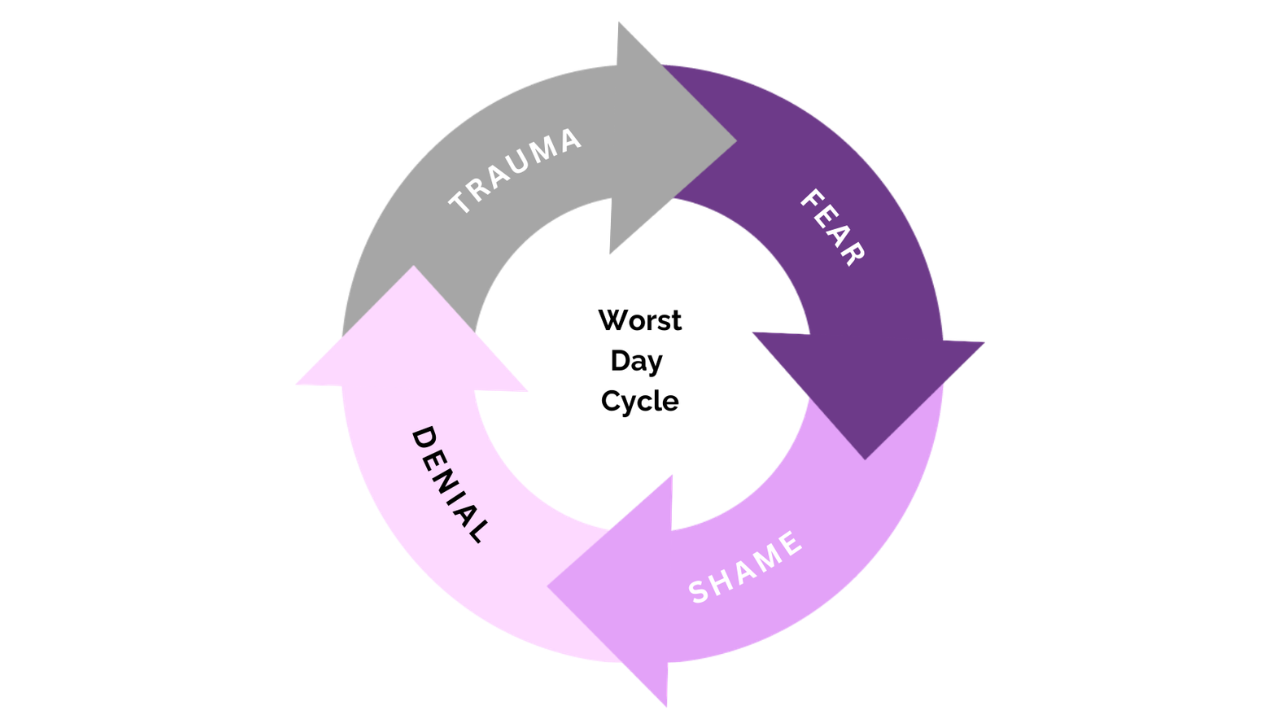
The Worst Day Cycle™ is Kenny Weiss’s framework for understanding how you get stuck in a repeating loop of shame, survival behaviors, and emotional pain. This cycle is the architecture of codependence.
The Four Stages of the Worst Day Cycle™
Stage 1: Shame Activation
Something happens that activates your core shame. Maybe your partner is distant, a friend doesn’t respond, or you make a mistake. Your nervous system interprets this as evidence that you’re fundamentally flawed, not lovable, or not worthy of care.
For the Disempowered: “I didn’t do enough. I’m not enough. I need to try harder.”
For the Falsely Empowered: “They can’t handle this without me. I need to take control.”
Stage 2: Survival Strategy Activation
You activate your survival persona to protect yourself from the shame. The Caretaker over-functions. The Controller tightens control. The Withdrawn disconnects further. You’re not thinking rationally—you’re in survival mode.
The behavior feels urgent and necessary. You’re trying to prevent abandonment, chaos, or further hurt. But your strategy is based on your childhood survival needs, not your adult reality.
Stage 3: Relationship Impact
Your survival behavior affects your relationships. You over-give and enable. You control and criticize. You withdraw and distance. Your partner feels:
- Suffocated (if you’re the Caretaker or Controller)
- Abandoned (if you’re the Withdrawn)
- Like they can’t win or please you
- Responsible for your emotional state
They react, often negatively. They pull away, get frustrated, criticize you back, or escalate the conflict.
Stage 4: Shame Confirmation
Their reaction confirms your original shame: “See? I’m not enough. I can’t fix this. I’m not lovable.” You feel more shame, more fear, more abandonment terror. The cycle intensifies.
And then it starts again—triggered by the next small thing.
Why the Worst Day Cycle™ Is So Sticky
The cycle feels true because it fits your childhood narrative. You learned as a child that you were responsible for keeping others okay. So when your adult relationships feel chaotic, your nervous system says: “See? You need to try even harder.”
You don’t see the cycle as the problem. You see yourself as the problem.
Breaking the Worst Day Cycle™ requires more than willpower or better communication skills. It requires rewiring your emotional blueprint—healing the shame that drives the cycle and learning to meet your own needs.
The Authentic Self Cycle™: Your Path Out
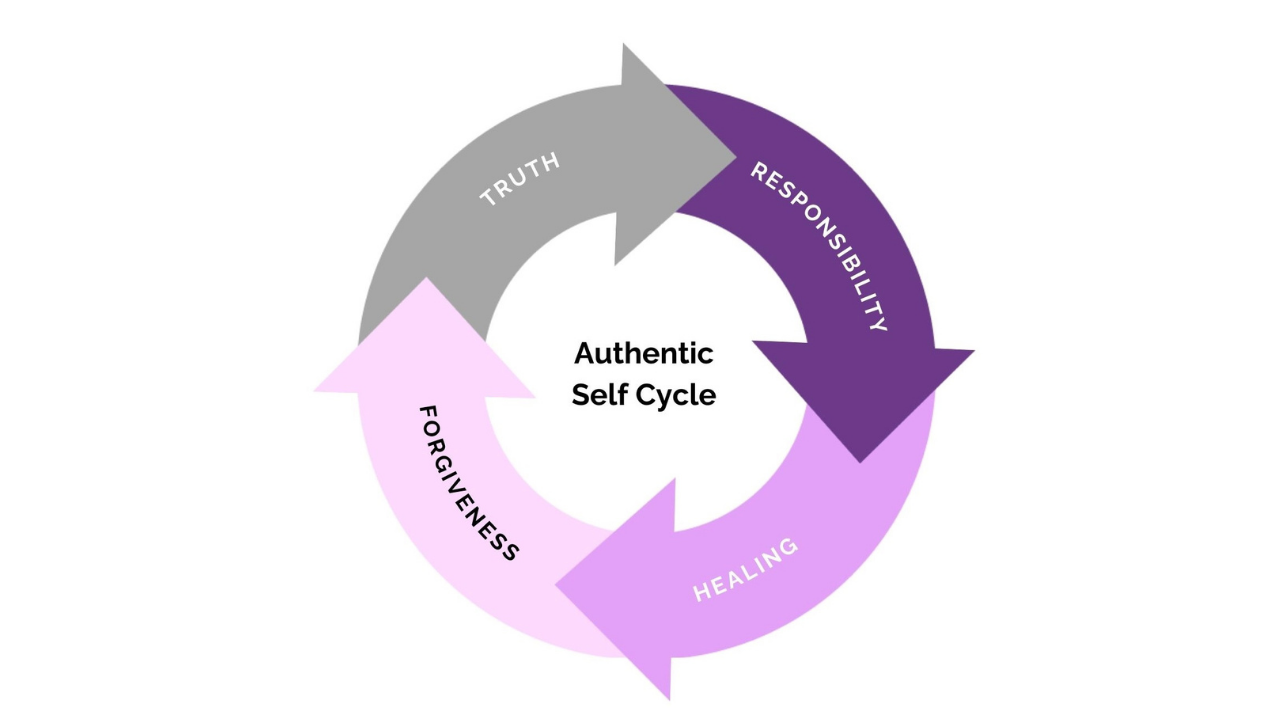
The Authentic Self Cycle™ is the opposite of the Worst Day Cycle™. It’s the path to emotional health, genuine intimacy, and freedom from codependence.
The Four Stages of the Authentic Self Cycle™
Stage 1: Emotional Safety and Self-Awareness
You create internal emotional safety by healing shame and learning to tolerate your own emotions. You develop self-awareness about your triggers, patterns, and unmet needs. You begin to notice when you’re activating your survival persona.
The shift: From “What’s wrong with me?” to “What happened to me?”
Stage 2: Authentic Needs and Boundaries
You identify your actual needs, desires, and values—not the ones you think you should have. You practice setting boundaries based on your authentic self, not your survival persona. Boundaries become an act of love, not rejection.
The shift: From “I need to sacrifice to be loved” to “I deserve to have my needs met.”
Stage 3: Authentic Connection
With your own needs met and your boundaries in place, you can connect with others from a place of wholeness rather than desperation. You’re no longer trying to fix, control, or disappear. You can be genuinely present.
The shift: From “How do I keep you?” to “How can we grow together?”
Stage 4: Mutual Respect and Growth
Healthy relationships naturally follow when both people are in their authentic selves. You experience mutual respect, genuine intimacy, and the freedom to be yourself. Conflicts become opportunities for deeper connection, not abandonment triggers.
The shift: From “I’m not enough” to “We’re enough together.”
The Authentic Self Cycle™ Is Not About Independence
The Authentic Self Cycle™ doesn’t mean becoming a robot who doesn’t care about others. It means caring about others from a full tank, not an empty one. It means having boundaries that create safety, not distance.
Authentic self-connection leads to authentic connection with others.
10 Steps for the Disempowered Personality Type
That’s you if you find yourself saying yes to things you don’t want to do, feeling resentful afterward, but not understanding why you can’t just say no.
If you’re the Disempowered type—the Caretaker who sacrifices yourself to maintain connection—these steps will help you reclaim your identity, heal your shame, and build relationships based on mutual respect.
Step 1: Recognize That Your Needs Matter
The foundation of recovery is the radical realization that your needs are as valid as anyone else’s. Not more important. Not less important. Equally valid.
You’ve spent your life learning that your needs don’t matter. This belief is so deeply embedded that acknowledging your own needs might trigger shame and guilt.
Your practice:
- Each day, identify three things you want or need. They don’t have to be big: “I want tea,” “I need five minutes alone,” “I want to watch this show.”
- Notice the guilt or shame that comes up. That’s your childhood programming. Acknowledge it: “I learned that my needs aren’t important. That’s not true anymore.”
- Practice stating your need to one person: “I need some quiet time today.” Observe what happens. Nothing bad will happen. The sky doesn’t fall when you have a need.
Step 2: Heal the Core Shame That Drives Your Self-Abandonment
Your belief that your needs don’t matter comes from a deep shame story: “I’m not lovable as I am. I only have value if I’m useful to others.”
Healing this shame is the pivotal step. Without this healing, you’ll keep abandoning yourself because you fundamentally don’t believe you’re worth caring for.
Your practice:
- Write out your shame story: “My parent(s) made me feel that my needs were a burden. I learned that love was conditional on caretaking. I believe I’m only valuable if I’m useful.”
- Speak back to that story: “That was true in my childhood. I was a child who needed care, but my caregiver was not able to provide it. That wasn’t about my lovability. That was about their capacity.”
- Journal about what you needed from your caregiver that you didn’t get: connection, attunement, reassurance, protection. Name it specifically. Grieve it.
- Begin to give yourself what you didn’t get: “I see my pain. I’m here for you now. Your needs matter to me.”
Step 3: Meet Your Own Basic Needs Consistently
You can’t heal codependence while ignoring your basic needs. Your nervous system needs evidence that you can be responsible for yourself.
Basic needs include: sleep, nourishment, movement, rest, alone time, play, and connection with people who respect you.
Your practice:
- Choose one basic need you consistently neglect. If you don’t sleep enough, make sleep non-negotiable for one week.
- Notice any guilt or shame: “I’m being selfish,” “I should be doing more,” “They need me.” These are old stories.
- When you meet your own need, you send your nervous system a message: “I’m safe. I can take care of myself. I don’t need to earn the right to rest.”
- Gradually expand to other basic needs. Meeting your needs is not selfish. It’s essential.
Step 4: Recognize and Stop Enabling
Enabling is caretaking for people who haven’t asked for help. You’re solving problems that aren’t yours to solve, protecting people from consequences, and preventing their growth.
Enabling feels like love. It’s not. It’s control wrapped in caretaking.
Your practice:
- Notice what you’re doing for people that they could do for themselves. Making excuses for them? Fixing their mistakes? Managing their emotions? Paying their bills?
- Ask yourself: “If I stopped doing this, what would happen?” Usually, something that person needs to learn.
- Start small. Let one thing go. Maybe you stop reminding someone about a deadline. Or stop giving advice no one asked for.
- Stay present with the guilt and discomfort. That’s your shame activation. Breathe through it. It will pass.
Step 5: Practice Saying No Without Apology or Over-Explanation
No is a complete sentence. You don’t need a reason. You don’t need to justify. “No” is enough.
But if you’ve spent your life saying yes, saying no will feel selfish, rude, and dangerous. Your nervous system will scream that you’re hurting someone, rejecting them, or ending the relationship.
Your practice:
- Start with small no’s. “No, I can’t do that.” Stop. Don’t explain. Don’t apologize.
- Notice what happens. Usually nothing. The person doesn’t leave. They don’t hate you. They just accept your no.
- Gradually build your capacity to say no to bigger things: “No, I can’t manage that for you,” “No, I’m not available then,” “No, I don’t want to.”
- Every time you say no and the sky doesn’t fall, you’re rewiring your nervous system. You’re building trust in yourself.
Step 6: Stop Trying to Fix People or Make Them Understand
You can’t think your way out of someone else’s emotional pain. You can’t explain well enough to make them get it. You can’t fix them with enough effort.
This is one of the hardest lessons for the Disempowered type. You’ve believed that if you just try hard enough, explain clearly enough, love them deeply enough, you can change them or heal them.
You can’t. That’s not your job.
Your practice:
- When you feel the urge to explain, defend, or convince, pause. This is your Caretaker persona trying to keep you safe by controlling the outcome.
- Practice saying: “I understand you see it differently. That’s okay. I don’t need you to understand my perspective for it to be valid.”
- Let people be wrong about you. Let them misunderstand. You don’t need everyone to understand. You need to understand yourself.
- This frees up an enormous amount of energy that you can redirect toward your own life and growth.
Step 7: Take Responsibility for Your Choices (Not Others’ Emotions)
There’s a difference between responsibility and blame. You’re responsible for your own choices, not for managing how others feel about those choices.
If you set a boundary and your partner feels sad or angry, that’s their emotion. You didn’t cause it. You don’t have to fix it.
Your practice:
- When you make a choice, own it: “I decided to say no to that. That was my choice.”
- When someone reacts negfully to your choice, practice separating their emotion from your action: “They’re upset. I can feel compassion for their upset AND maintain my boundary.”
- Notice if you’re still trying to manage their feelings by explaining, comforting, or backing down. That’s old programming.
- You’re learning that you can care about someone and still have boundaries. These aren’t opposites. They’re compatible.
Step 8: Develop Honest Communication About Your Feelings
You’ve spent your life reading the room and adjusting yourself. You’ve lost touch with what you actually feel. Part of reclaiming your authentic self is reconnecting with your emotional truth.
Your practice:
- Each day, check in with yourself: “What am I actually feeling?” Not what you should feel. What you actually feel. Anger, sadness, joy, fear, loneliness—all of it is valid.
- Practice expressing one feeling to one person: “I’m feeling frustrated about X.” Notice how terrifying this is. Good. That means you’re stretching.
- Start with safe people. People who’ve shown they can handle your honesty without judgment or contempt.
- As you practice, you’ll reclaim access to your emotional wisdom. Your feelings are information. They matter.
Step 9: Create Distance From Relationships That Require Your Self-Abandonment
Not all relationships can be healthy. Some people are too embedded in their own trauma to show up for you. Some relationships are fundamentally inequitable.
Part of recovery is recognizing that you can’t earn love from unavailable people. You have the right to choose relationships where you can be yourself.
Your practice:
- Honestly assess your relationships: “Can I be myself here? Can I have needs here? Do I feel respected?”
- If the answer is no, you have choices. You can create distance. You can reduce contact. You can end the relationship.
- This is an act of love—toward yourself and eventually toward them. You’re no longer enabling their dysfunction by accepting mistreatment.
- Grief what you wanted the relationship to be. Then claim your freedom.
Step 10: Seek Professional Support for Deeper Trauma Work
Codependence often has roots in deeper trauma: childhood abandonment, emotional neglect, enmeshment, or abuse. These patterns are wired deep into your nervous system.
A trauma-informed therapist can help you rewire these patterns at the nervous system level. They can help you:
- Access and heal childhood wounds
- Rewire your attachment patterns
- Develop genuine self-compassion
- Build secure relationships
Your practice:
- Find a therapist trained in trauma and codependence. Ask them about their approach to attachment, shame, and nervous system regulation.
- Bring these steps to therapy. Use them as a scaffold for your healing work.
- Be patient with yourself. Rewiring these patterns takes time. You’ve been practicing self-abandonment for decades. Reclaiming yourself is a journey.
10 Steps for the Falsely Empowered Personality Type
That’s you if you pride yourself on never needing anyone — your independence isn’t strength when it’s driven by terror of being seen as weak.
If you’re the Falsely Empowered type—the Controller who needs to be in charge to feel safe—these steps will help you release control, develop genuine vulnerability, and build relationships based on mutual respect rather than domination.
That’s you if your accomplishments look impressive from the outside but feel hollow on the inside — you’ve been medicating shame with achievement your entire life.
Step 1: Recognize That You Can’t Control Outcomes or Other People
Your survival strategy is based on a false belief: “If I control enough, nothing bad will happen.” But the world is inherently uncontrollable. Other people have their own agency. Life is uncertain.
The first step is acknowledging that your need for control is rooted in fear, not wisdom or capability.
Your practice:
- Notice all the ways you try to control: managing others’ decisions, preventing their mistakes, organizing their lives, criticizing their choices.
- For each control behavior, ask: “What am I afraid will happen if I don’t do this?”
- Usually the answer is: “Chaos. Abandonment. Failure. Disaster.”
- These fears came from your childhood. Now you’re acting like that child who needs to prevent catastrophe. You’re not that child anymore. You have adult capacity.
Step 2: Heal the Core Shame That Drives Your Need for Control
Your belief that you can’t trust others—that you have to do everything yourself—comes from a deep shame story: “I’m not safe unless I’m in control. People will hurt me or abandon me if I let my guard down. I have to be perfect and self-sufficient to survive.”
Healing this shame is the pivotal step. Without this healing, you’ll keep controlling because you fundamentally don’t believe the world is safe.
Your practice:
- Write out your shame story: “I learned that the world wasn’t safe. I had to be hypervigilant and in control. I learned that needing help meant being weak or vulnerable. I believe I have to do everything myself to survive.”
- Speak back to that story: “That was true in my childhood. There was chaos or instability. I needed to be vigilant. But that was about my environment, not about my capability or worth.”
- Journal about what you were afraid of in childhood: being hurt, being abandoned, being humiliated, things falling apart. Name it specifically. Grieve it.
- Begin to offer yourself what you needed: “I see your fear. You were trying to keep us safe. You can relax now. I’m here. It’s okay to not be perfect.”
Step 3: Practice Vulnerability With Safe People
Vulnerability is the antidote to control. But if you’ve spent your life maintaining an image of competence and self-sufficiency, vulnerability feels terrifying—like free-falling without a net.
You have to learn that vulnerability doesn’t mean weakness. It means honesty. It means letting people see you—fears and all.
Your practice:
- Choose one person you trust. Someone who’s shown they can handle your humanity without judgment.
- Share something small and real: “I’m worried about this,” “I made a mistake,” “I don’t know how to do this.”
- Notice what happens. Usually, the person doesn’t abandon you or use it against you. They often feel closer to you.
- Gradually, practice being more vulnerable. Let people see that you don’t have it all figured out. You don’t have to.
Step 4: Develop the Capacity to Sit With Uncomfortable Emotions (Yours and Others’)
Controllers often can’t sit with their own or others’ discomfort. You jump into action—fixing, organizing, problem-solving—to escape the discomfort.
But healing requires developing the capacity to feel your own sadness, fear, grief, and anger. And to let others feel theirs without trying to fix it.
Your practice:
- When you feel an uncomfortable emotion, notice your urge to escape it through action. Pause. Just feel it.
- Breathe. Sit with sadness. Sit with fear. It won’t kill you. It will pass.
- When someone else is upset, resist the urge to fix, minimize, or solve. Just be present: “I’m here. You can feel this. I’m not going anywhere.”
- This is revolutionary for Controllers. You’re learning that emotional safety doesn’t come from control. It comes from connection.
Step 5: Set Boundaries That Create Safety, Not Distance
Controllers often confuse boundaries with walls. You create distance to feel safe. You withdraw emotionally when people don’t meet your standards.
Healthy boundaries create safety within connection, not distance from it. A boundary is what you need to show up as your best self. It’s not a punishment for the other person.
Your practice:
- Ask yourself: “What do I need to feel safe in this relationship?” Not “What should the other person do?” What do YOU need?
- Communicate that boundary as a request, not a demand: “I need more honesty from you” instead of “You always lie to me.”
- If they respect the boundary, you can stay connected. If they don’t, you can reassess. But the goal is connection through safety, not safety through distance.
Step 6: Stop Criticizing and Start Appreciating
Controllers often use criticism to maintain control and superiority. You point out what others are doing wrong. You make them feel inadequate. This keeps them dependent on your approval.
This is a form of emotional abuse. It prevents real connection.
Your practice:
- Notice every time you criticize someone internally or out loud. Pause. What’s the fear underneath? Usually it’s fear they’ll abandon you if you’re not criticizing them into shape.
- Practice appreciation instead. Notice something genuine: “I appreciate how you handled that,” “You did well with that,” “I see how hard you’re trying.”
- Appreciation creates safety and motivation. Criticism creates shame and distance.
- As you practice appreciation, you’ll notice people respond differently to you. They’ll be more open. They’ll trust you more.
Step 7: Release Your Responsibility for Others’ Growth or Choices
You believe you’re responsible for making sure others don’t fail. You try to prevent their mistakes, guide their decisions, manage their lives “for their own good.”
But this prevents their growth. It keeps them dependent. It prevents you from having genuine relationships.
Your practice:
- Notice all the ways you’re trying to manage someone’s life. Make a list. Be specific.
- For each one, ask: “Did they ask me to do this?” Usually the answer is no.
- Practice letting go. Let them fail. Let them learn. Let them make their own choices.
- This is an act of love. You’re respecting their agency. You’re allowing them to be competent adults.
Step 8: Learn to Ask for Help and Receive Support
Controllers struggle to ask for help because it means admitting they can’t do it alone. It triggers deep shame around vulnerability and weakness.
But everyone needs help sometimes. Asking for help is not weakness. It’s wisdom. It’s how we build connection.
Your practice:
- Start small. Ask someone to help you with something you could do alone: “Can you help me move this?” “Can you help me decide?”
- Notice the discomfort. Let it be there. You’re learning that you don’t have to be self-sufficient to be worthy.
- Receive the help without taking over: “Thank you. I appreciate your help.”
- Gradually, ask for bigger things. Let people support you. You’ll feel less alone.
Step 9: Recognize When You’re in a Relationship With Genuine Incompatibility
Not all relationships are salvageable. Some people aren’t interested in changing or growing. Some relationships are fundamentally unequal, with you always trying to improve the other person.
Part of recovery is recognizing that you can’t think your way into compatibility. You can’t control someone into loving you or valuing you.
Your practice:
- Honestly assess: “Am I trying to change them into someone I can love? Am I accepting them as they are?”
- If the answer is “I’m trying to change them,” that’s a sign of incompatibility or that your control needs are driving the relationship.
- You have the right to choose relationships with people who are compatible with you and interested in mutual growth.
- Letting someone go is an act of respect—for them and for yourself.
Step 10: Seek Professional Support for Deeper Trauma Work
Your need for control likely comes from deeper trauma: childhood chaos, abuse, witnessed violence, or witnessing loss of control. These patterns are wired deep into your nervous system.
A trauma-informed therapist can help you rewire these patterns at the nervous system level. They can help you:
- Access and heal the original fear of chaos or loss of control
- Develop genuine trust in others
- Build secure relationships where you don’t need to control to feel safe
- Learn that vulnerability is strength, not weakness
Your practice:
- Find a therapist trained in trauma and attachment. Ask them about their approach to shame, control patterns, and nervous system healing.
- Bring these steps to therapy. Use them as a scaffold for your deeper work.
- Be patient with yourself. You’ve been practicing control for decades. Learning to trust and let go is a journey.
The Emotional Authenticity Method™ for Daily Recovery
That’s you if you know the patterns but can’t stop repeating them — understanding isn’t enough without a practice that rewires your nervous system.
These 10 steps work. But they need daily reinforcement. Kenny Weiss’s Emotional Authenticity Method™ gives you a practical tool for staying present to your authentic self—moment by moment.
The Five Core Principles
1. Presence
Show up as your actual self, not your survival persona. When you notice yourself activating your Caretaker or Controller, pause. Take a breath. Ask: “What’s actually true right now?”
2. Honesty
Speak your truth about your feelings and needs, even when it’s uncomfortable. Not aggressively. Honestly.
3. Responsibility
Own your choices and your emotions. Don’t blame others. Don’t play victim. Don’t make yourself the hero. Just take responsibility for your part.
4. Boundaries
Create clear, consistent boundaries that protect your emotional safety. Communicate them calmly and non-defensively.
5. Compassion
For yourself and others. You’re not healing to become a perfect, self-sacrificing saint or a detached, independent robot. You’re healing to become whole.
A Daily Practice
Each morning, before you engage with others, ask yourself:
- What do I actually need today?
- What boundaries do I need to maintain?
- Where might my survival persona activate?
- How can I stay present to my authentic self?
Throughout the day, check in with yourself regularly. When you feel activated—anxious, angry, withdrawn, compelled to fix or control—pause:
- What’s happening right now?
- What am I actually feeling? (Use the Feelings Wheel for precision)
- What do I need?
- Can I communicate that honestly?
This is the practice. Not perfection. Just presence.

Daily Practices to Stay in Your Authentic Self
Morning Practices
- Set your intention: “Today I will stay present to my authentic self. I will honor my needs and boundaries.”
- Body scan: Close your eyes. Notice where you hold tension. Breathe into it. Your body holds your emotional wisdom.
- Journal three needs: What do you need today? Rest? Connection? Play? Boundaries? Name them.
Midday Check-In
- Pause: Stop what you’re doing. Take three conscious breaths.
- Notice: Are you in your authentic self or your survival persona? What triggered the shift?
- Recenter: Ask yourself: “What do I actually need right now?” Then take one action to honor that.
Evening Practice
- Reflect: When did you activate your survival persona today? What triggered it?
- Celebrate: When did you stay authentic? How did that feel?
- Release: Breathe out the day. Let go of expectations and judgments. Rest is part of healing.
Weekly Review
- Patterns: What patterns did you notice this week in your survival activation?
- Wins: Where did you choose authenticity over survival strategy?
- Compassion: What’s one thing you can appreciate about your recovery this week?
Additional Resources
Books
- “The New Codependency” by Melody Beattie—A modern take on codependence and recovery.
- “Attached” by Amir Levine and Rachel Heller—Understanding attachment patterns and how they affect relationships.
- “The Body Keeps the Score” by Bessel van der Kolk—Trauma and how it’s stored in the nervous system.
- “Emotional Intelligence 2.0” by Travis Bradberry and Jean Greaves—Developing emotional awareness and resilience.
Therapy and Support
- Trauma-informed therapy: Look for therapists trained in EMDR, Somatic Experiencing, Internal Family Systems, or other trauma-informed modalities.
- Support groups: Many communities offer support groups for codependence recovery (CoDA).
- 12-Step programs: Codependents Anonymous (CoDA) is available in many areas and online.
Online Communities
- Kenny Weiss’s website: Resources on the Worst Day Cycle™ and Authentic Self Cycle™
- Codependents Anonymous: https://www.coda.org/
- Online therapy platforms: BetterHelp, Talkspace, Headway (look for trauma-informed therapists)
Final Message: You’re Not Broken, You’re Healing
If you’ve spent this article recognizing yourself—the Caretaker or the Controller, the shame and the survival strategies—here’s what you need to know:
You’re not broken. You survived.
Codependence isn’t a character flaw or a sign of weakness. It’s an intelligent adaptation to an emotionally unsafe environment. You learned these patterns to keep yourself safe. They worked. They kept you alive.
But they’re keeping you trapped. And you have the capacity to change them.
Conquering codependence doesn’t happen overnight. It’s not a linear journey. You’ll have days where you fall back into your survival persona. You’ll have moments of clarity followed by moments of old patterns. That’s normal. That’s healing.
What matters is that you keep choosing authenticity, even when it’s uncomfortable.
Every time you acknowledge a need, set a boundary, practice vulnerability, or release control—you’re rewiring your nervous system. You’re teaching yourself that you’re safe. That your needs matter. That genuine connection is possible.
You deserve to be in a relationship where you don’t have to abandon yourself. You deserve to be loved for who you actually are, not for what you do or how perfectly you manage.
That journey starts now. With one breath. With one authentic choice. With one moment of presence.
You’ve got this.