Self-sabotage is the collision between your authentic self and your shame-based survival persona. It’s the pattern where you unconsciously work against your own success, relationships, and wellbeing—not because you want to fail, but because your nervous system learned to equate change with danger during your childhood.
Table of Contents
- What Is Self-Sabotage Really?
- Why You Self-Sabotage (Even When You Want to Succeed)
- Understanding the Worst Day Cycle™
- The Three Survival Persona Types
- The Path to Authentic Self
- The Emotional Authenticity Method™
- Self-Sabotage Signs by Life Area
- How to Actually Stop Self-Sabotaging
- FAQ: People Also Ask
What Is Self-Sabotage Really?
Self-sabotage is the collision between your authentic self and your shame-based survival persona. When you start to succeed, when you begin living differently, when you reach for something real—your adapted wounded child and shame-based survival persona pops up and says no.
Here’s the truth that changes everything: Because if you live in your authentic self, the survival persona loses its connection to your mom and dad—the connection it was built to preserve.
That survival persona? It’s brilliant. It kept you alive as a child when emotional safety was compromised. It learned which way to move, what to say, how to perform to get scraps of attention and avoid more pain. But now you’re an adult, and that child-level adaptation is sabotaging everything you build.
That’s you—working against yourself while telling yourself you want something different. Building something real, then sabotaging it right when it matters most. Choosing the familiar pain over the unfamiliar reward.
Why You Self-Sabotage (Even When You Want to Succeed)
Here’s what nobody talks about: Nobody is ever afraid to fail because in the moment you choose not to do something, you’ve chosen failure—and you’re totally comfortable with it. What we’re actually afraid of is success.
Success requires you to become someone new. It requires you to leave behind the identity your nervous system built to survive your childhood. And the nervous system will fight that shift with everything it has.
When you’re in the Worst Day Cycle™, your brain is flooded with the same emotional chemicals it learned to crave as a child. Cortisol. Adrenaline. Dopamine spikes. Oxytocin misfires. Your hypothalamus got addicted to that cocktail, and your brain conserves energy by repeating known patterns—not because they work, but because they’re known.
The shame piece is critical: Self-sabotage is us choosing to victimize ourselves to get power. We want power and the best way we know how to get power is to be the instigator of our own demise. And the added benefit of that is it keeps me irresponsible, keeps me the child.
That’s what’s really happening when you sabotage at the exact moment success is within reach. You’re not self-destructive—you’re actually choosing what feels powerful in a nervous system that learned to equate suffering with control.
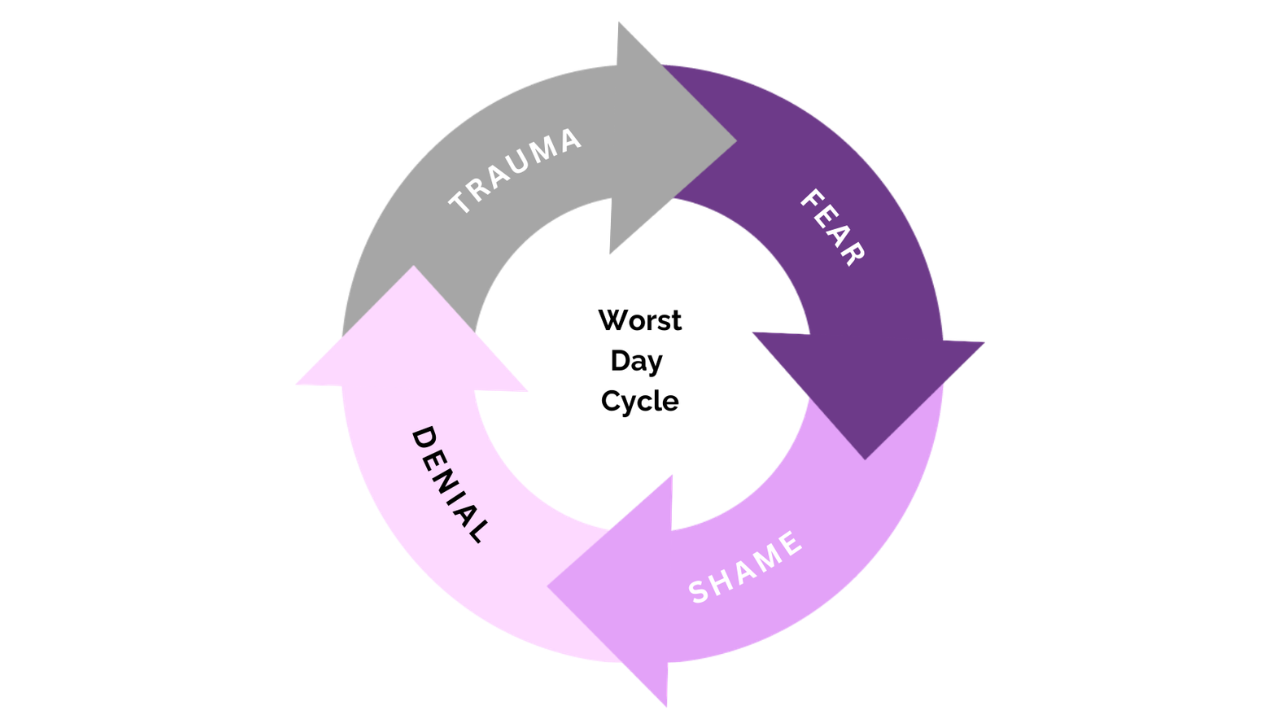
Understanding the Worst Day Cycle™: The Four Stages of Sabotage
The Worst Day Cycle™ has four stages, and understanding them is the foundation of healing. This isn’t clinical psychology—this is what’s actually happening in your nervous system.
Stage 1: Trauma (The Foundation)
Childhood trauma isn’t always a single catastrophic event. It’s any negative emotional experience that created painful meanings about yourself, others, or the world. That critical parent. That emotionally absent parent. That parent who weaponized shame. That parent whose unhealed pain got absorbed into you like a puppy eating rancid peas.
When trauma occurs, the hypothalamus generates a massive chemical reaction. Your brain and body get flooded with neurochemicals designed for survival. The problem: that chemical cocktail becomes your baseline. And your brain, brilliant and efficient, learns to repeat patterns that recreate that chemistry.
Stage 2: Fear (The Repetition Driver)
Fear drives the repetition. Your brain can’t tell right from wrong—it only knows known versus unknown. Since roughly 70% of childhood messaging is negative and shaming, your adult nervous system treats repetition as safety. Even painful repetition.
That’s you choosing the same type of partner. That’s you staying in the same soul-crushing situation. Staying in the same job despite hating it. Repeating the same arguments. Sabotaging at the same threshold of success. Your brain thinks: At least I know what this feels like.
Stage 3: Shame (Where You Lost Your Worth)
Shame is where the real damage happens. Shame is the moment you internalized the painful message and made it about who you are instead of what happened to you. “I am the problem.” “I am unlovable.” “I am not enough.” “I am the reason for everyone’s pain.” Sound familiar?
This is the blueprint—the emotional truth your child-mind created to make sense of adult pain. And every time you self-sabotage, you’re verifying that blueprint. Listen to the words you say to yourself when you self-sabotage. The exact same emotional blueprint words you heard as a child.
Stage 4: Denial (The Survival Persona)
Here’s where the sabotage actually happens. Denial is the survival persona—the adapted identity you created to survive the pain. This persona is brilliant in childhood and absolutely sabotaging in adulthood. That’s you—living from an identity that was built for a child’s world, not the adult life you’re trying to create.
The survival persona has one job: preserve the connection to mom and dad, no matter the cost. It will control, collapse, people-please, rage, disappear, or oscillate wildly between extremes. All of it is designed to keep you connected to your parents’ emotional frequency and your childhood’s familiar pain.
The Three Survival Persona Types (And Which One Is Yours)
Everyone develops a survival persona in response to childhood pain. There are three primary archetypes, and most people oscillate between them depending on the situation.
The Falsely Empowered Persona
The falsely empowered persona operates through control, dominance, and rage. This survival persona learned that if you’re powerful enough, loud enough, aggressive enough—nobody can hurt you.
Sound familiar? You’re the person who needs to be right. You manage situations through control and criticism. You rage when things don’t go your way. You move fast and decisive, often leaving relational carnage in your wake. Your sabotage shows up as burning bridges right when things matter, destroying what you worked for through aggressive choices.
The falsely empowered persona keeps you connected to an angry, controlling, or shaming parent—and keeps you in their power.
The Disempowered Persona
The disempowered persona operates through collapse, people-pleasing, and abdication. This survival persona learned that if you’re small enough, compliant enough, invisible enough—nobody will hurt you further.
That’s you if you’re the person who can’t say no. You feel responsible for everyone’s emotions. You sabotage through inaction—you don’t apply for the job, you don’t have the conversation, you don’t take the leap. Your sabotage is passive but just as effective.
The disempowered persona keeps you connected to a withdrawn, emotionally unavailable, or inadequate parent—and keeps you dependent on rescue.
The Adapted Wounded Child
The adapted wounded child oscillates wildly between falsely empowered and disempowered depending on perceived threat level. One moment you’re controlling; the next you’re collapsing. One moment you’re setting boundaries; the next you’re people-pleasing.
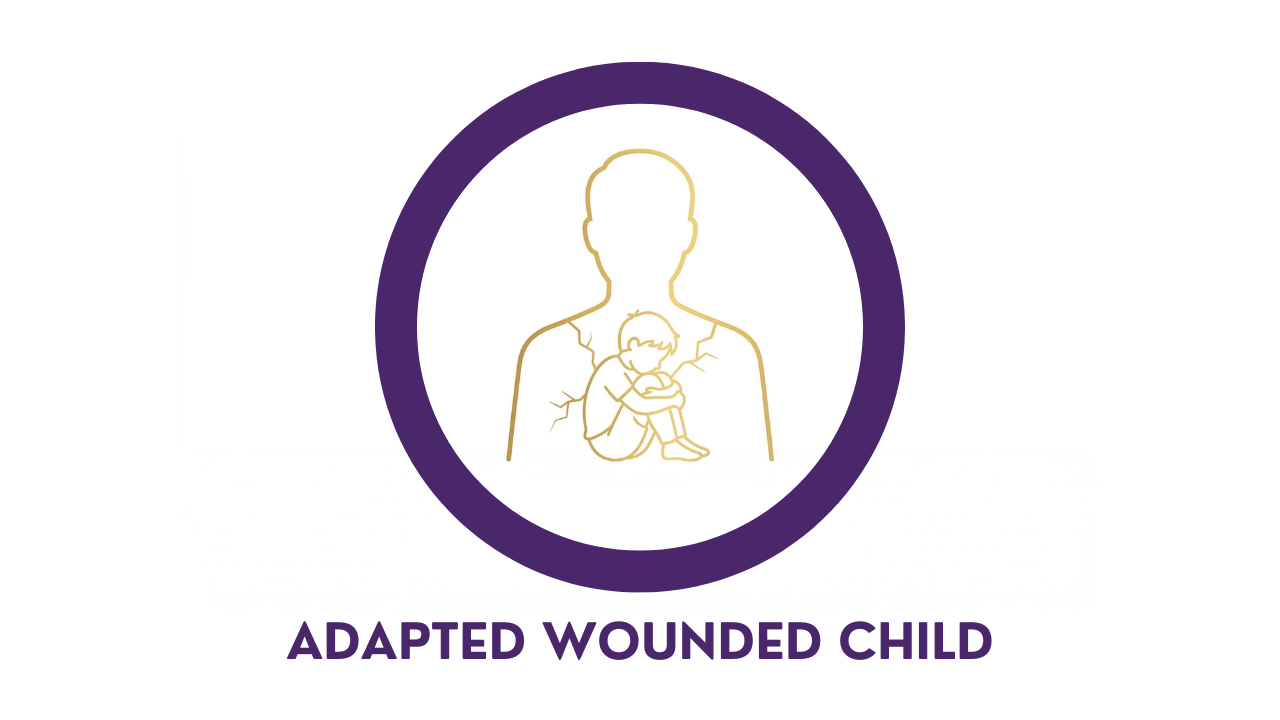
That’s the person who sabotages in every life area because you can never get your nervous system settled enough to build something stable. You swing between codependency and narcissistic rage. You’re wildly inconsistent in relationships and career. Your sabotage is chaotic and unpredictable—sometimes self-directed, sometimes projected onto partners.
The adapted wounded child keeps you connected to a parent (or parents) who were themselves oscillating—perhaps one falsely empowered and one disempowered, perhaps one parent with both personas, creating impossibly conflicting messages.
The Authentic Self Cycle™: Your Path Out
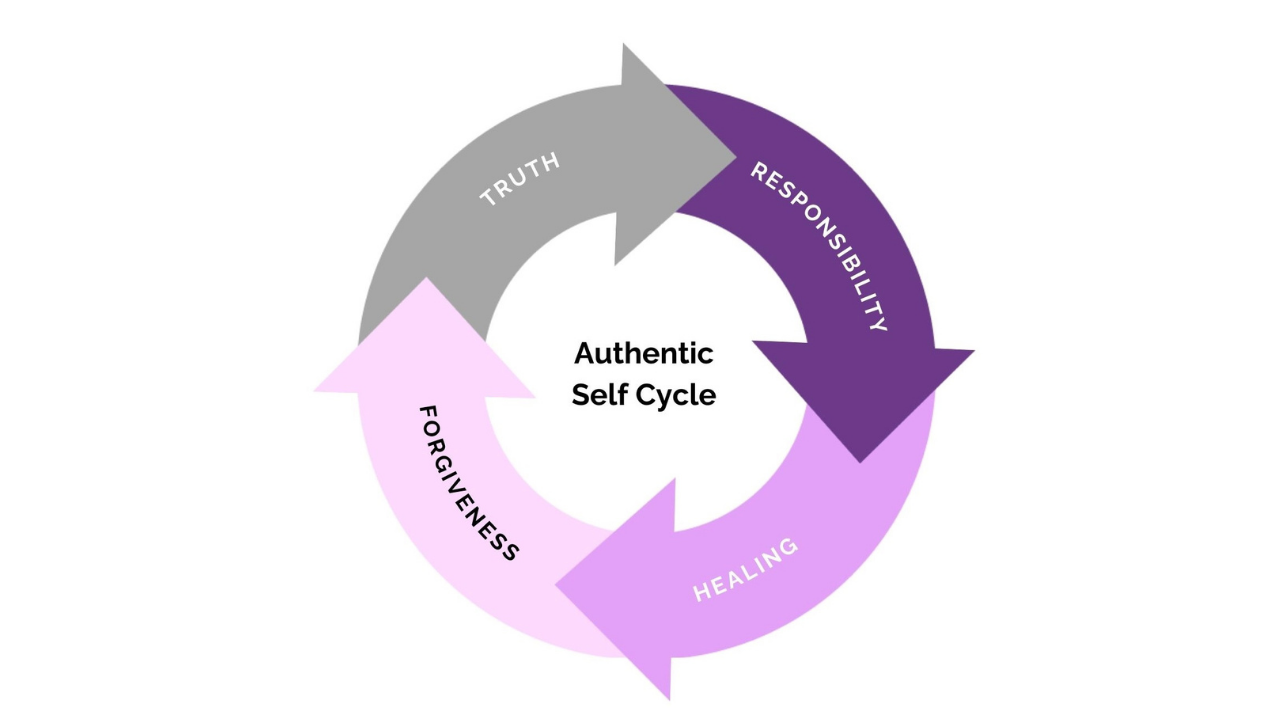
If the Worst Day Cycle™ is the prison, the Authentic Self Cycle™ is the key. This isn’t about positive thinking or willpower. This is about identity restoration—about reclaiming who you actually are underneath all the adaptation.
The Authentic Self Cycle™ has four stages that directly counteract the Worst Day Cycle™.
Stage 1: Truth (Naming the Blueprint)
Truth is seeing your emotional blueprint clearly. It’s naming what happened. It’s understanding that this pattern isn’t about today—it’s about the child inside you trying to survive something that already happened. That’s you finally connecting today’s pain to yesterday’s wound.
This is where you make the connection. “When I get close to success, I panic because my parent abandoned me every time I succeeded.” “When I reach for love, I sabotage because my parent humiliated me for having needs.” “When I set a boundary, I collapse because my parent made me responsible for their feelings.”
Stage 2: Responsibility (Without Blame)
Responsibility means owning your emotional reactions without blaming yourself or your parents. You’re not responsible for what happened to you. You are responsible for what you do with it now.
That’s you starting to notice: “I sabotaged that relationship because I was scared, not because I’m unlovable.” “I stayed quiet in that meeting because my nervous system was flooded, not because I’m weak.” “I self-harmed through food/substances/shopping because I needed to regulate, not because I’m broken.”
Stage 3: Healing (Rewiring the Blueprint)
Healing means rewiring the emotional blueprint so conflict becomes uncomfortable but not dangerous. You’re building a new nervous system baseline where success feels safe, love feels sustainable, and authenticity feels possible. That’s you choosing discomfort over destruction.
This is where the Emotional Authenticity Method™ becomes essential. You can’t think your way here. You have to feel your way here.
Stage 4: Forgiveness (Reclaiming Your Self)
Forgiveness is releasing the inherited emotional blueprint and reclaiming your authentic self. It’s not about absolving your parents of responsibility. It’s about releasing your body’s addiction to their pain.
The Emotional Authenticity Method™: The Six-Step Rewiring Process
This is the practical framework for moving from self-sabotage to self-authorship. The Emotional Authenticity Method™ is based on a non-negotiable truth: You cannot change emotional patterns through thoughts alone. Emotions are biochemical events. Thoughts originate from feelings.
Most people try to cognitive their way out of self-sabotage. “I’ll just think differently.” “I’ll just be more positive.” “I’ll just work harder.” But your nervous system doesn’t speak the language of thoughts—it speaks the language of sensation and emotion.
Step 1: Somatic Down-Regulation
Before you can access your authentic self, your nervous system has to be regulated. This means shifting out of your fight-flight-freeze response into your parasympathetic baseline. That’s you learning to slow down before the survival persona takes the wheel.
Spend 15-30 seconds focusing on what you can hear. Just listen. If you’re highly dysregulated, start with titration—smaller amounts of time, more frequently.
Step 2: Emotional Granularity
Most people describe emotional states in massive categories: “sad,” “angry,” “anxious.” But your emotional blueprint is precise. Use the Feelings Wheel to get specific: Are you ashamed or embarrassed? Afraid or terrified? Disappointed or devastated?
This specificity matters because it helps you trace the blueprint accurately.
Step 3: Somatic Location
Where in your body do you feel it? Emotions aren’t abstract—they’re biochemical and they live in your physical nervous system. Is your chest tight? Is your throat closed? Is your stomach clenched? Is your body frozen? That’s you beginning to decode the language your nervous system has been speaking your entire life.
This is how you start listening to your body instead of just thinking about your feelings.
Step 4: Tracing to Origin
What is your earliest memory of having this exact feeling? Not something similar—something with the exact emotional signature. This is where the blueprint reveals itself.
You’ll often find that the feeling you’re experiencing today is a perfect echo of something a child inside you learned about safety, love, and belonging.
Step 5: The Authentic Self Question
Who would I be if I never had this thought or feeling again? Not the false self. Not the survival persona. The actual person underneath—the one who wants things, who has preferences, who takes up space.
Step 6: Feelization (Emotional Blueprint Remapping)
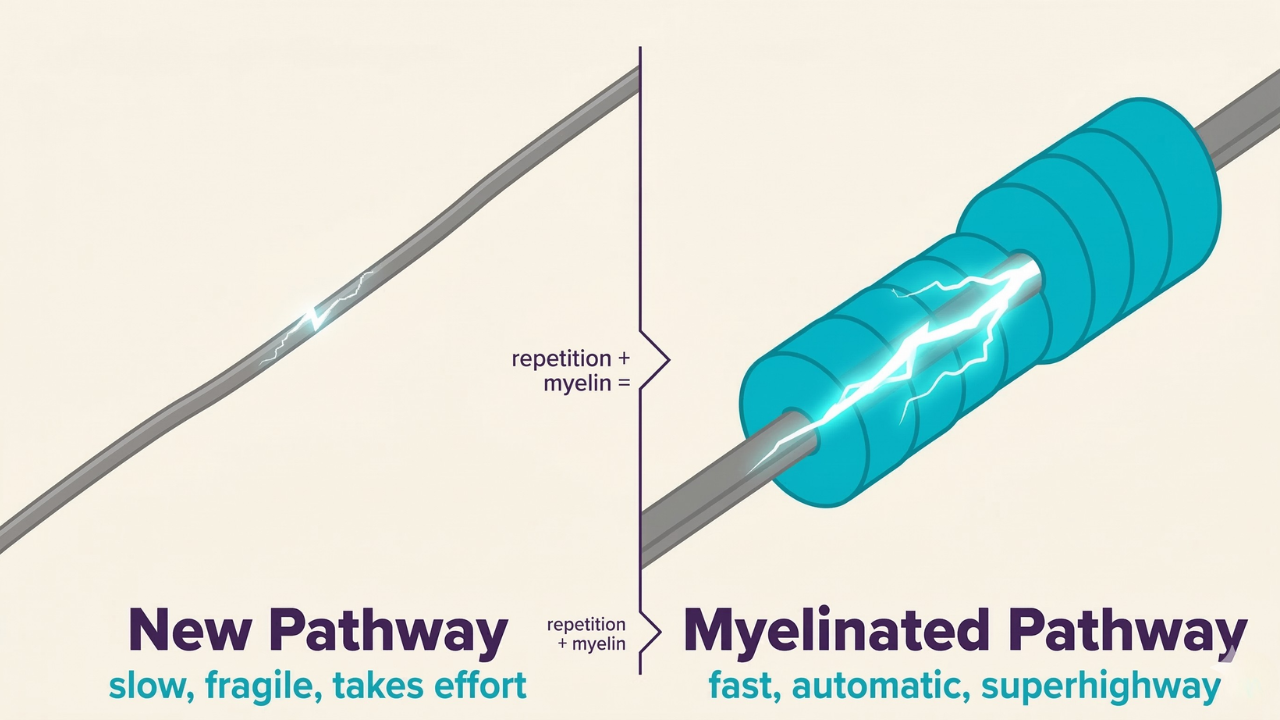
This is the game-changer. Sit in the feeling of your Authentic Self and make it strong. Create a new emotional chemical addiction to replace the old blueprint. Visualize and FEEL yourself operating from your Authentic Self—not just imagining it, but generating the actual emotional and somatic experience of it.
This is neural pathway rewiring at the biochemical level. Most people look at healing as trying to get the hour hand to move. But what makes the hour hand move? The second hand moves first. One second of effort toward something new—and the survival persona’s grip breaks.
That’s you—learning to generate the feeling of your authentic self so consistently that your nervous system stops seeing success as danger.
Self-Sabotage Signs by Life Area
Self-sabotage doesn’t just show up in one life area. It’s a system-wide pattern because the emotional blueprint informs everything. Here’s how to recognize it:
Family Sabotage
That’s you reconnecting with family after setting a boundary, then immediately crossing it. You assert your need for space, then feel crushing guilt and cave. You try to have a healthy conversation, it triggers shame, and you either rage or disappear. You keep hoping this time will be different, but you repeat the same dynamic with your parents and siblings that you’ve been repeating since childhood.
Romantic Sabotage
You attract someone emotionally unavailable because that’s the only emotional frequency you learned to work with. Right when the relationship could deepen, you create distance or conflict. You self-protect by staying emotionally guarded. You test your partner’s love through pain. You sabotage through infidelity, financial irresponsibility, or emotional affairs. You want intimacy but you structure your life to guarantee isolation.
This is the Victim Position Paradox—you want love so badly you sabotage it to prove you don’t deserve it.
Friendship Sabotage
You tell your friend everything, then pull back and ghost. You get close, feel unsafe, and engineer a conflict. You’re the person who only reaches out when you need something. You’re competitive with your friends’ success. You’re jealous of their happiness. You can’t celebrate them without diminishing yourself.
Work/Career Sabotage
You’re on the verge of promotion, then you miss deadlines or make costly mistakes. You set yourself up to fail before you have the chance to succeed. You undercharge your work or give it away. You stay in jobs that don’t pay or value you because leaving feels like abandonment. You build something, then burn it down right when it’s working.
This is especially true if your parent told you that ambition was selfish, that success would isolate you, or that you’d abandoned them if you thrived.
Body/Health Sabotage
You start a fitness routine and abandon it. You lose weight, then sabotage the progress. You get into bed with your emotional thermostat and your body self-corrects back to the baseline trauma set. You know what your body needs and you do the opposite. You use food, substances, or behaviors to self-regulate but then shame yourself for it.
How to Actually Stop Self-Sabotaging: The Practical Steps
Stopping self-sabotage isn’t about discipline or motivation. It’s about nervous system education and emotional blueprint rewiring. Here’s the actual path forward:
1. Get Specific About Your Pattern
Don’t say “I sabotage everything.” Name it: “Every time I get close to intimacy, I create a conflict that pushes my partner away.” “Every time I succeed, I create chaos that derails it.” “Every time I feel good about myself, I say something self-deprecating.”
Specificity reveals the blueprint.
2. Trace the Pattern to Childhood
When did this first happen? Not as an adult—as a child. What did you learn about success, love, boundaries, or authenticity that made this pattern feel safe?
That’s you understanding that your adult sabotage isn’t actually about today. It’s about a child inside you trying to keep you connected to your parents’ emotional frequency.
3. Work the Emotional Authenticity Method™
Don’t skip the steps. Your intellectual understanding of the pattern will not heal the pattern. You have to generate the feeling of your authentic self so your nervous system stops perceiving success as danger.
You can access the complete Feelings Wheel exercise here.
4. Build Tiny Authentic Actions
One second at a time. Not a dramatic identity shift. A small choice in the direction of your authentic self. One vulnerable text. One boundary. One admission of a real feeling. One moment of letting someone see you.
This rewires your nervous system’s association between authenticity and safety.
5. Work with a Guide if Needed
Some emotional blueprints are complex and layered. Some people need professional support to safely access these patterns. This isn’t weakness—this is self-awareness.
FAQ: People Also Ask
What causes self-sabotage according to psychology?
Self-sabotage is a nervous system response to childhood emotional trauma. When a child experiences repeated shaming, emotional abandonment, or pain, their brain creates an emotional blueprint—a set of beliefs about safety, love, and belonging. The survival persona emerges to protect the child from further pain, but this adaptation becomes sabotaging in adulthood because it perceives success and authenticity as threats to the survival connection with parents.
How do I stop self-sabotaging my relationships?
Relationship sabotage follows a pattern: you either create distance when closeness threatens to disrupt your emotional blueprint, or you create chaos to maintain the familiar dynamic from childhood. The Emotional Authenticity Method™ is specifically designed to rewire this. Start by naming your pattern (“I push people away when they get close”), trace it to childhood (“My parent was emotionally unavailable”), and use somatic work to generate the feeling of your authentic self—the part that actually wants connection.
Is self-sabotage a trauma response?
Yes. Self-sabotage is not a character flaw or a sign of being broken. It’s a brilliant adaptation to childhood trauma that has outlived its usefulness. Your survival persona was designed in childhood to keep you connected to your parents and protect you from pain. In adulthood, it keeps you stuck in patterns that feel familiar but increasingly painful.
Why do I keep sabotaging myself when things are going well?
Because your nervous system learned in childhood that good things don’t last, or that success leads to abandonment, or that thriving equals selfishness. When things go well, your survival persona perceives it as a threat to the emotional connection that kept you alive as a child. Your body literally doesn’t know how to sustain that feeling, so it sabotages back to the familiar baseline of the Worst Day Cycle™.
Can self-sabotage be cured?
Yes, through nervous system rewiring and emotional blueprint remapping. This isn’t about positive thinking or willpower. It’s about generating a consistent enough feeling of your authentic self that your body stops perceiving it as dangerous. With sustained practice of the Emotional Authenticity Method™, your nervous system will start to default to your authentic self instead of your survival persona.
What is the connection between shame and self-sabotage?
Shame is the emotional core of self-sabotage. When your child-brain internalized the message “I am the problem,” shame became your emotional baseline. Self-sabotage is how you act on that shame—you prove the blueprint right by creating the failure you expect, which keeps you in the Victim Position Paradox. You get power by being the cause of your own suffering, and you stay connected to the parent who shamed you in the first place.
The Bottom Line
You’re not broken. You’re not inherently self-destructive. You’re carrying a nervous system that learned to equate survival with pain, authenticity with danger, and success with abandonment.
Your survival persona is still doing what it was designed to do—trying to keep you connected to your parents. But you’re not a child anymore. You don’t need that connection the way you did. What you actually need is your authentic self.
And that self is still in there. Under all the adaptation. Under all the shame. Under all the sabotage. That self is the one that wants real love. That wants meaningful work. That wants to show up as who you actually are.
The Emotional Authenticity Method™ isn’t about forcing yourself to be different. It’s about consistently feeling what it’s like to be yourself. One second at a time. Until your nervous system stops fighting you. Until success feels safe. Until love feels possible. Until authenticity stops triggering your survival persona’s need to destroy what you’ve built.
That’s the actual path. Not willpower. Not cognitive reframing. Not positive affirmations. But the feeling of your authentic self—generated so consistently that your body finally believes it’s safe to stop sabotaging and start living.
Recommended Reading
- Pia Mellody – Facing Codependence (The survival persona model and childhood trauma patterns)
- Melody Beattie – Codependent No More (Understanding the roots of people-pleasing sabotage)
- Gabor Maté – When the Body Says No (The connection between unprocessed emotions and self-sabotage)
- Melody Beattie – The Language of Letting Go (Daily work for breaking patterns)
- Brené Brown – Dare to Lead (Shame resilience and authentic leadership)
- Peter Levine – Waking the Tiger (Somatic trauma processing)
Next Steps: Work With Me
If you’re ready to move from understanding your pattern to actually changing it, I have structured pathways depending on where you are:
- Emotional Blueprint Starter Course — Individual ($79) – For those who want to start healing their own emotional blueprint.
- Relationship Starter Course — Couples ($79) – For those who want to understand how their sabotage shows up in relationships.
- Why We Can’t Stop Hurting Each Other ($479) – A deep dive into how emotional blueprints collide in relationships.
- Why High Achievers Fail at Love ($479) – For successful people whose sabotage shows up specifically in intimate relationships.
- The Shutdown Avoidant Partner ($479) – If your sabotage is rooted in avoidant attachment.
- Tier 1: Mapping the Blueprint ($1,379) – The full immersion program in the Emotional Authenticity Method™.
Or start with the Feelings Wheel exercise to begin identifying your emotional blueprint.
Self-sabotage isn’t destiny. It’s a pattern. And patterns can change when you know how.